
The smartphone market moves fast. What felt cutting-edge five years ago can now struggle to keep up with basic apps and modern operating systems. If you're still using a Samsung Galaxy S5 — once a flagship device in 2014 — the question isn't whether you *should* upgrade, but rather: which path makes the most sense? One increasingly popular option is Google’s Pixel series. But is jumping from a decade-old device like the Galaxy S5 to a current Pixel truly transformative — or just an expensive habit?
This isn’t just about specs on paper. It’s about real-world usability, longevity, security, and how much smarter your daily digital life becomes. Let’s break down what’s changed, what matters, and whether making the leap to a Pixel from such an outdated device is not only worth it, but essential.
Performance & Hardware: A Quantum Leap
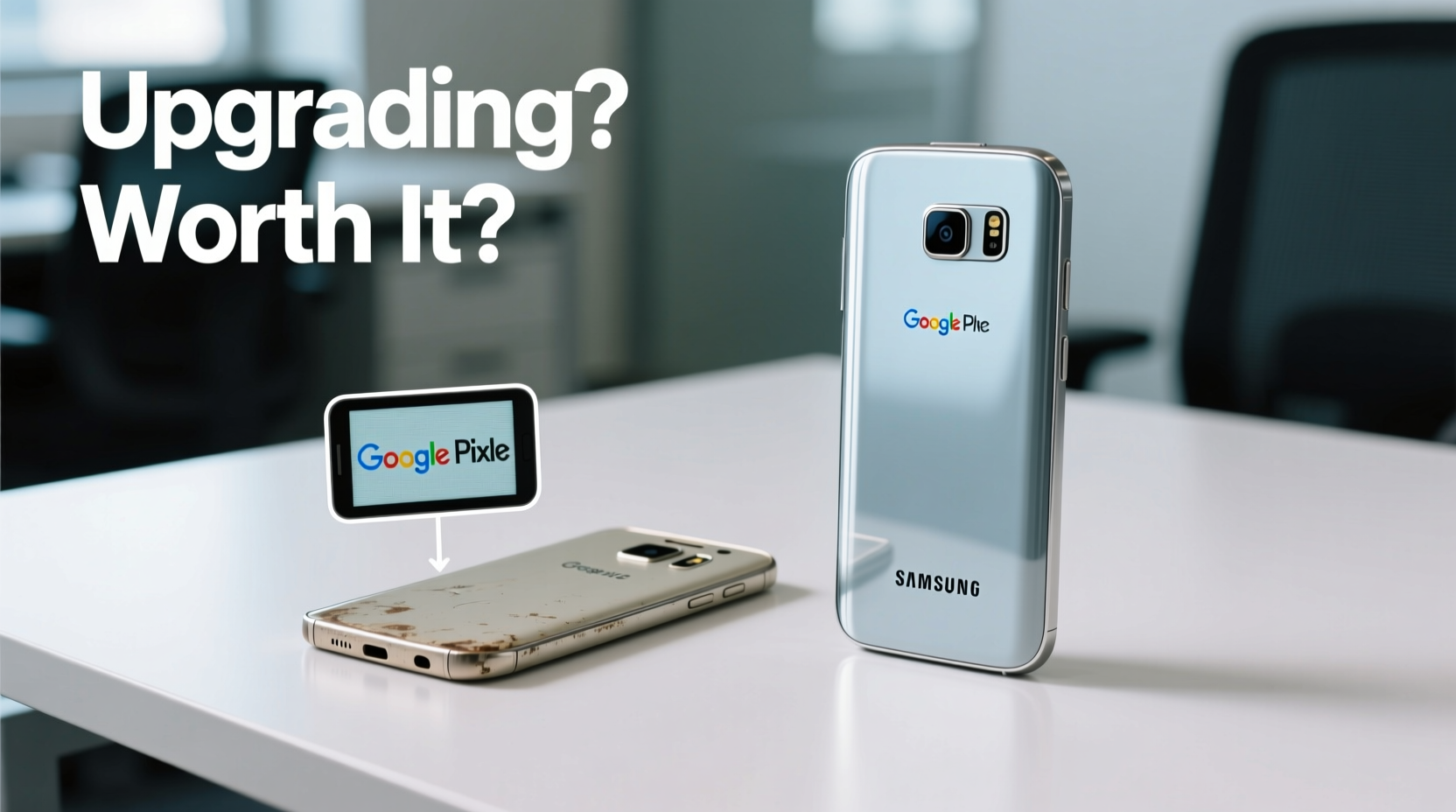
The original Samsung Galaxy S5 launched with a Snapdragon 801 processor, 2GB of RAM, and ran Android 4.4 KitKat. By today’s standards, that hardware would struggle to load a single high-resolution webpage without lag. Modern Google Pixel phones, even mid-range models like the Pixel 7a or Pixel 8, come equipped with Tensor chips designed specifically for AI tasks, at least 8GB of RAM, and far more efficient architectures.
Real-world impact? Apps open instantly. Multitasking is seamless. Background processes don’t freeze your screen. The difference isn’t incremental — it’s revolutionary. Even basic functions like unlocking your phone, switching between messaging apps, or checking email are dramatically faster and smoother.
Software & Security: From Obsolete to Future-Proof
The Galaxy S5 stopped receiving official security updates years ago. That means every app you use, every website you visit, and every message you send could be vulnerable to exploits that no longer exist on supported devices. Running outdated software in 2024 is like leaving your front door unlocked.
In contrast, Google Pixel phones receive guaranteed monthly security updates and major Android OS upgrades for at least five years. This isn’t just about new features — it’s about protection against phishing, malware, and data theft. For anyone who uses their phone for banking, shopping, or communication, this level of support is non-negotiable.
“Security updates are no longer optional. Devices without them pose real risks to personal data.” — Dr. Lena Torres, Cybersecurity Researcher at Mobile Integrity Lab
Camera Comparison: Night and Day (Literally)
The Galaxy S5 had an 16MP rear camera — impressive for its time, but limited by small sensors, poor low-light performance, and minimal software processing. Fast forward to any current Pixel, and you’re looking at computational photography that redefines mobile imaging.
Pixel cameras leverage machine learning to enhance dynamic range, reduce noise, and deliver stunning results even in near-dark conditions. Features like Night Sight, Magic Eraser, and Real Tone ensure photos look natural and vibrant across all skin tones and lighting environments. Video stabilization, HDR+, and portrait mode add professional-grade capabilities previously reserved for dedicated cameras.
If capturing memories matters to you, the camera alone justifies an upgrade. You’re not just getting better pictures — you’re gaining confidence that every moment will be preserved clearly and beautifully.
Detailed Feature Comparison
| Feature | Samsung Galaxy S5 (2014) | Google Pixel 8 (2023) |
|---|---|---|
| Processor | Qualcomm Snapdragon 801 | Google Tensor G3 |
| RAM | 2GB | 8GB |
| Storage | 16GB / 32GB (expandable) | 128GB / 256GB (non-expandable) |
| Rear Camera | 16MP, f/2.2, OIS | 50MP main + 12MP ultrawide, advanced HDR+, Night Sight |
| Front Camera | 2MP | 10.5MP, face unlock, video call enhancement |
| OS Support | Ended in 2017 | Guaranteed until 2028 |
| Battery Life | 2800mAh, average 1 day | 4500mAh, adaptive battery, 2-day potential |
| Charging | Micro USB, 15W max | USB-C, 27W wired, 20W wireless |
| Display | 5.1” Full HD Super AMOLED | 6.2” FHD+ OLED, 120Hz refresh rate |
| Water Resistance | IP67 | IP68 |
Real User Experience: Maria’s Upgrade Journey
Maria, a teacher from Portland, used her Galaxy S5 for nearly nine years. She avoided upgrading due to cost concerns and familiarity with her old device. But last winter, she missed capturing her daughter’s first snowfall because the camera froze while trying to focus. Later that week, her phone failed to load the school’s grading portal during parent-teacher conferences.
She finally upgraded to a Pixel 7a. Within days, she noticed differences beyond speed: voice typing worked accurately, Google Assistant helped organize her schedule, and photo backups happened automatically. “It’s like I got a personal assistant,” she said. “I didn’t realize how much stress my old phone was causing until it was gone.”
Her experience reflects a broader truth: older phones don’t just slow down — they erode confidence in technology itself.
Is It Worth It? A Step-by-Step Decision Guide
Deciding whether to upgrade requires more than comparing specs. Consider these steps before making your move:
- Assess Your Current Pain Points: Does your phone freeze often? Struggle with calls or messages? Fail to install app updates?
- Evaluate Security Needs: Are you storing passwords, banking info, or health data? If yes, outdated software is a liability.
- Test Modern Alternatives: Visit a store or borrow a friend’s recent Android phone to feel the difference firsthand.
- Compare Total Cost of Ownership: Factor in repair costs, productivity loss, and frustration from using an obsolete device.
- Choose Based on Longevity: Pick a phone with long-term update support — Pixels lead here, offering five years of OS upgrades.
Frequently Asked Questions
Can the Galaxy S5 still be used safely in 2024?
Technically, yes — but with serious limitations. Without security patches, it's vulnerable to malware and phishing attacks. App developers no longer optimize for its OS version, so many services either won’t work or run poorly. For casual use only, with extreme caution around links and downloads.
Do I need a high-end Pixel, or will a budget model suffice?
Even entry-level Pixels like the a-series outperform the S5 in every category. They include core features like timely updates, excellent cameras, and clean Android. Unless you demand top-tier gaming performance, a mid-range Pixel delivers 90% of the experience at half the price.
Will my old accessories work with a new Pixel?
Most likely not. The S5 used micro USB and a 3.5mm headphone jack; modern Pixels use USB-C and lack a headphone port. You’ll need new cables and possibly wireless earbuds. However, Bluetooth speakers and smart home devices should pair seamlessly.
Final Verdict: Upgrading Isn’t Luxury — It’s Necessity
Going from a Galaxy S5 to any modern Google Pixel isn’t merely an upgrade — it’s a complete transformation of your digital experience. You gain reliability, security, speed, and peace of mind. The camera, voice assistance, battery intelligence, and seamless integration with cloud services make everyday tasks easier and more enjoyable.
Yes, there’s a cost involved. But consider the alternative: continuing to wrestle with a device that fights you at every turn, puts your data at risk, and limits your ability to stay connected in an increasingly mobile world.
If you’ve held onto your Galaxy S5 out of loyalty or hesitation, now is the time to move forward. Technology should empower you, not hold you back.




 浙公网安备
33010002000092号
浙公网安备
33010002000092号 浙B2-20120091-4
Comments
No comments yet. Why don't you start the discussion?