
Travel photography has evolved dramatically over the past decade. What once required bulky DSLRs and tripods can now be captured in 4K with a device that fits in your palm. The GoPro, long associated with extreme sports and vlogging, has become a staple in many travelers’ packs. But how does it truly stack up against a full-sized DSLR when documenting a journey? Is the convenience worth the compromise on image quality? Or are we sacrificing too much for the sake of portability?
The answer isn’t binary. It depends on your priorities: Are you chasing cinematic landscapes, or do you want to record immersive moments without slowing down? Understanding the strengths and limitations of each tool is essential before deciding which one earns a spot in your luggage.
Image Quality: Resolution, Sensor Size, and Low-Light Performance
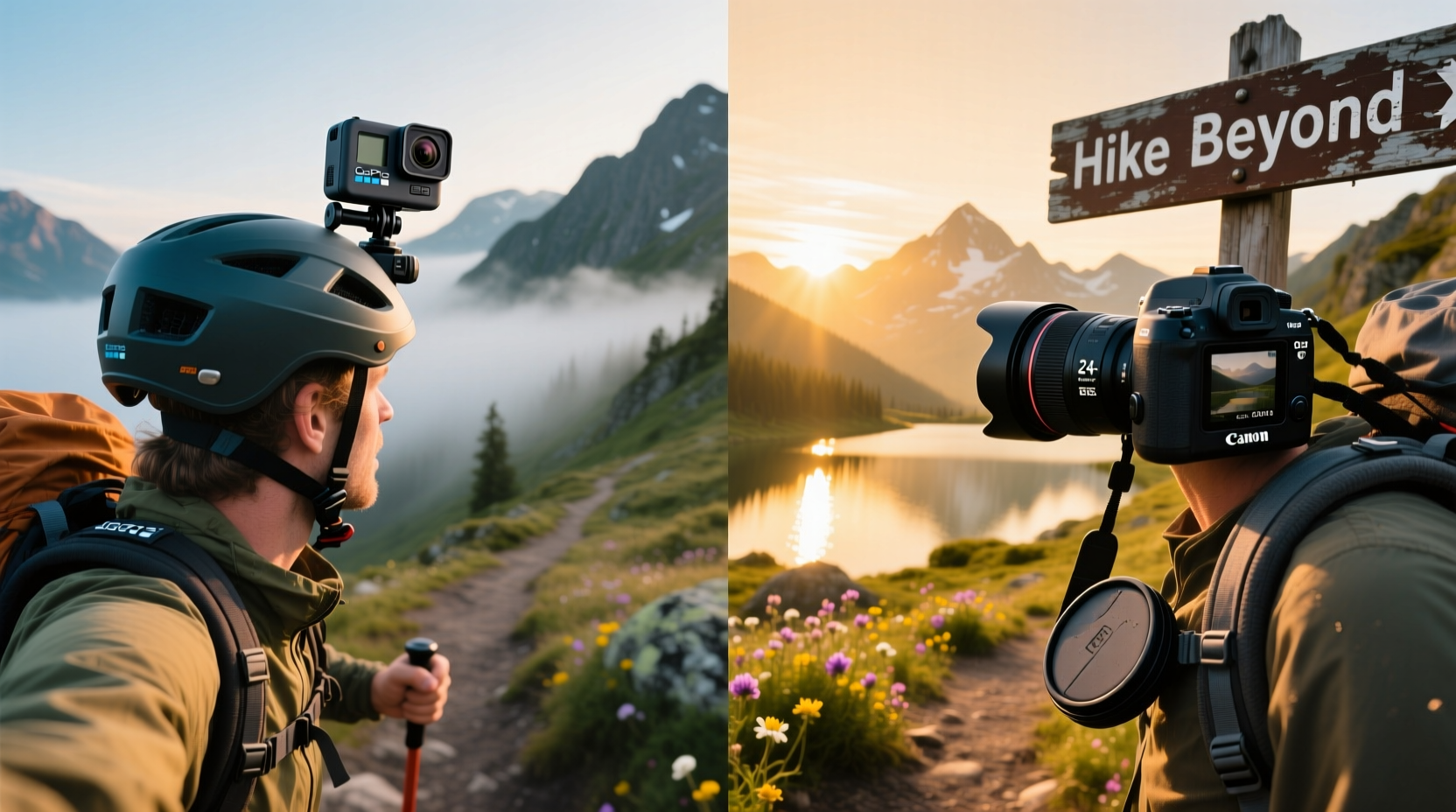
At the heart of any camera decision is image quality. DSLRs have a clear advantage here. With larger sensors—typically APS-C or full-frame—they capture more light and detail than the tiny 1/2.3” sensor in most GoPros. This difference becomes especially apparent in low-light conditions, such as dusk in a Moroccan souk or a candlelit dinner in Venice. DSLRs produce cleaner images with less noise and greater dynamic range, preserving both shadow and highlight details.
While modern GoPros like the HERO11 and HERO12 shoot impressive 5.3K video and 27MP photos, they still struggle with depth and color accuracy compared to even entry-level DSLRs like the Canon EOS 90D or Nikon D7500. The smaller sensor limits depth of field control, making it difficult to achieve the blurred background (bokeh) effect that gives photos a professional look.
“Sensor size matters more than megapixels. A DSLR captures light more efficiently, which translates to richer tones and better post-processing flexibility.” — Daniel Ruiz, Travel Photographer & Workshop Instructor
Portability and Convenience: The GoPro Advantage
Where GoPros dominate is convenience. Weighing under 150 grams and measuring just a few inches, they’re effortlessly portable. You can clip one to your backpack, helmet, or wrist and forget about it—ideal for spontaneous moments like jumping into a mountain lake or navigating a bustling Tokyo subway.
In contrast, a DSLR with lens typically weighs over 700 grams, not including extra batteries, memory cards, or filters. Carrying it all day across cobblestone streets or hiking trails leads to fatigue—and often results in the camera staying in the bag.
GoPros are also rugged by design. Waterproof up to 33 feet without a housing, shock-resistant, and built for motion, they thrive in unpredictable environments. DSLRs require careful handling, protective cases, and additional accessories to survive similar conditions.
Video Capabilities: Stabilization vs Cinematic Control
For videography, GoPros excel in stabilization. HyperSmooth technology (GoPro’s proprietary electronic image stabilization) produces buttery-smooth footage even while running, biking, or riding a scooter. This makes them ideal for capturing dynamic travel vlogs or POV-style clips.
DSLRs, while capable of stunning cinematic video, rely more on optical stabilization (if available) and external gimbals for smooth movement. Handheld walking shots often appear shaky without added gear, increasing setup time and complexity.
However, DSLRs offer far greater creative control. Interchangeable lenses allow for wide-angle cityscapes, telephoto wildlife shots, or macro details of local crafts. Manual settings give precise control over shutter speed, aperture, and ISO—critical for artistic expression.
Comparison Table: GoPro vs DSLR at a Glance
| Feature | GoPro (HERO12) | DSLR (Canon EOS 90D) |
|---|---|---|
| Weight | 153g | 701g (body only) |
| Water Resistance | Up to 33ft (no housing) | No (requires housing) |
| Photo Resolution | 27MP | 32.5MP |
| Video Resolution | 5.3K at 60fps | 4K at 30fps |
| Image Stabilization | HyperSmooth 6.0 | Digital IS + optional gimbal |
| Sensor Size | 1/2.3” | APS-C (22.3 x 14.9mm) |
| Lens Flexibility | Fixed ultra-wide | Interchangeable lenses |
| Battery Life (video) | ~1.5 hours (1080p) | ~1 hour (4K), swappable batteries |
Real-World Use Case: Trekking in Nepal
Consider a trek through the Annapurna Circuit. Each day involves long hikes, variable weather, and limited access to power. Sarah, a travel blogger, brought both a GoPro and a DSLR on her journey. She quickly realized that while the DSLR produced breathtaking sunrise shots from Poon Hill, she rarely had it ready during spontaneous interactions—like sharing tea with a local family or crossing a suspension bridge during a rainstorm.
The GoPro, mounted on her backpack strap, recorded continuous 4K footage of the trail, giving her rich b-roll for her vlog. When she slipped on a muddy path, the camera survived the fall into a stream. The DSLR, meanwhile, stayed zipped in her dry bag after the first day.
Her final takeaway: “I got one perfect DSLR photo I’ll frame forever. But my entire story—the rhythm, the people, the raw experience—was told through GoPro footage.”
When to Choose Which Camera
The best camera is the one you actually use. That simple truth shifts the debate from technical specs to personal behavior.
- Choose a GoPro if: You're active, want hands-free recording, value durability, and prioritize video storytelling.
- Choose a DSLR if: You care deeply about photo quality, enjoy manual control, plan to photograph landscapes or portraits, and don’t mind carrying extra gear.
Many seasoned travelers now opt for both—a DSLR for dedicated shooting sessions at golden hour, and a GoPro for passive documentation throughout the day. Others embrace mirrorless cameras as a middle ground, offering DSLR-level quality in a more compact body.
Checklist: Choosing Your Travel Camera
- Define your primary goal: Photos, video, or both?
- Assess how much weight you’re willing to carry daily.
- Consider environmental factors: Water, dust, altitude?
- Evaluate your skill level and desire for manual controls.
- Think about battery life and charging availability.
- Determine your editing workflow—do you want minimal post-processing?
- Test both options on a short trip before committing.
Frequently Asked Questions
Can a GoPro replace a DSLR entirely?
For casual travelers and vloggers, yes—especially if you prioritize convenience and video. But for photographers seeking maximum image fidelity, dynamic range, and creative control, a GoPro cannot fully replace a DSLR.
Is a GoPro good for still photography while traveling?
It’s functional, not exceptional. The fixed ultra-wide lens distorts edges, and low-light performance lags behind DSLRs. However, its ease of use means you’ll likely take more photos spontaneously, which can outweigh technical shortcomings.
Do DSLRs make travel vlogging harder?
Yes, logistically. They require more setup, stabilization gear, and attention. While the output can be more polished, the process is less fluid. Many vloggers now prefer mirrorless or high-end smartphones for a balance of quality and agility.
Final Thoughts: Beyond the Hype
The GoPro’s popularity isn’t unwarranted. Its ability to capture immersive, stable, and durable footage has redefined how we document travel. But calling it a “replacement” for a DSLR misunderstands the purpose of each tool. They serve different roles.
The hype around GoPros reflects a broader shift: travelers now value experience over perfection. They’d rather live the moment than pause to adjust aperture settings. Yet, there’s still magic in a perfectly composed DSLR shot—the kind that stops a viewer mid-scroll.
Instead of choosing sides, consider synergy. Use a GoPro to record the journey and a DSLR to capture the highlights. Or, if simplicity wins, trust the small camera in your pocket or on your chest. Because in the end, the best travel photos aren’t defined by megapixels or stabilization scores—they’re measured by the memories they preserve.




 浙公网安备
33010002000092号
浙公网安备
33010002000092号 浙B2-20120091-4
Comments
No comments yet. Why don't you start the discussion?