
When shopping for outdoor gear—whether a hiking jacket, ski pants, or trail-running shell—the choice between Gore-Tex and generic waterproof breathable fabrics often comes down to price and reputation. Gore-Tex has dominated the market for decades, but with so many affordable alternatives now available, it’s fair to ask: does the brand name deliver enough extra value to justify the cost?
The answer isn’t always straightforward. While Gore-Tex consistently performs at a high level, newer generic membranes from brands like eVent, Pertex Shield, and proprietary technologies from Patagonia (H2No), The North Face (DryVent), and Columbia (Omni-Tech) have closed the performance gap in many conditions. Understanding how these materials differ—and where they don’t—is essential for making informed decisions that align with your activity level, climate, and budget.
How Waterproof Breathable Fabrics Work
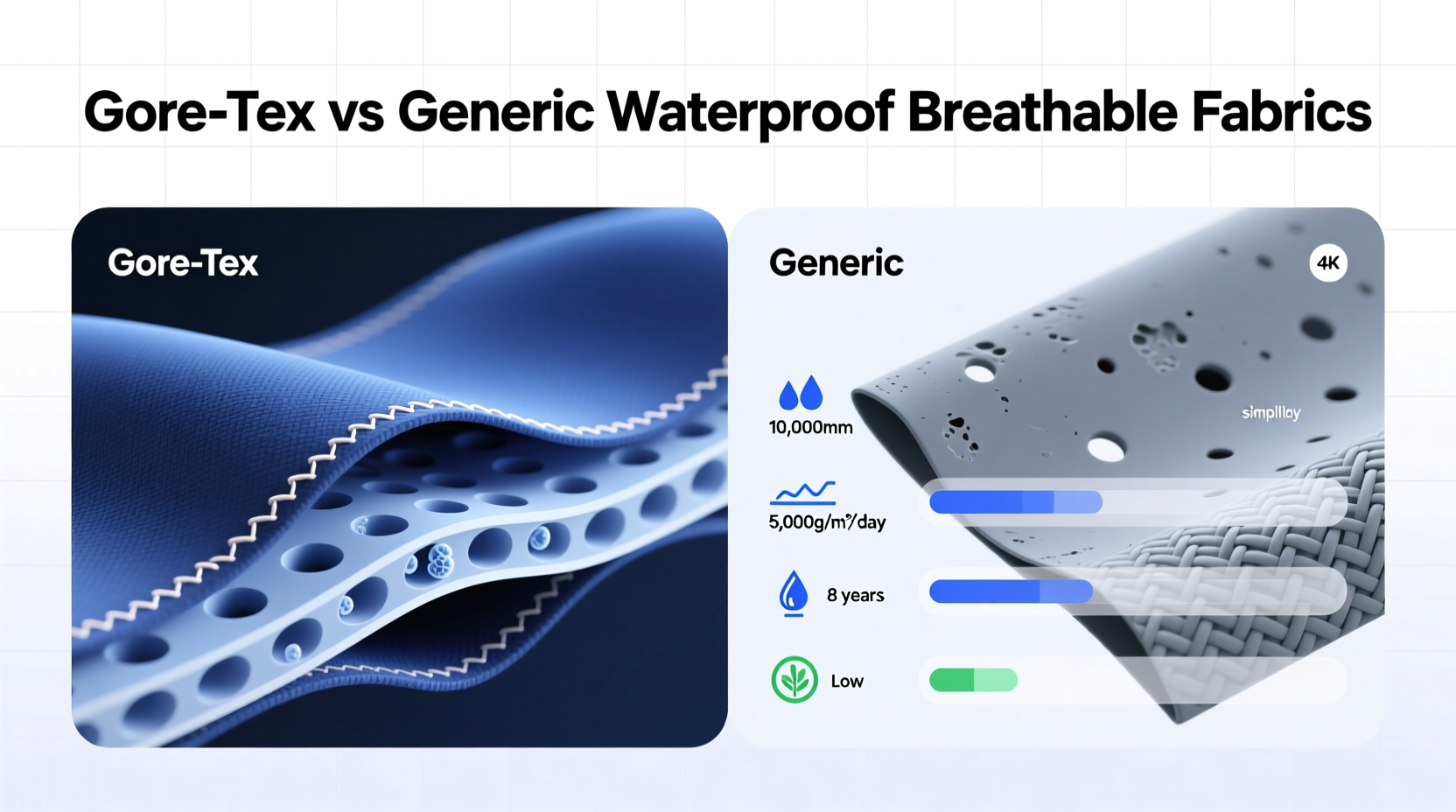
At their core, all waterproof breathable fabrics aim to do two opposing things: keep water out while allowing moisture vapor (sweat) to escape. This balance is critical during physical activity in wet environments. If a fabric fails on either front, you end up either soaked from the outside or clammy from trapped sweat inside.
These fabrics typically consist of three layers:
- Outer Fabric (Face Fabric): Usually nylon or polyester, treated with a durable water repellent (DWR) finish to shed light rain and prevent saturation.
- Membrane or Coating: The middle layer responsible for blocking liquid water while permitting vapor transmission. This is where Gore-Tex and generic versions diverge most significantly.
- Liner (Backer Fabric): Protects the membrane and improves comfort against the skin.
The membrane is the heart of the system. There are two main types: microporous and monolithic (hydrophilic). Gore-Tex uses a microporous expanded polytetrafluoroethylene (ePTFE) membrane with billions of tiny pores—small enough to block water droplets but large enough to let water vapor pass through. Many generic alternatives use similar science, though pore size, coating consistency, and long-term durability vary.
Performance Comparison: Gore-Tex vs. Generic Alternatives
To evaluate whether Gore-Tex is worth the premium, we need to compare key performance metrics under real-world conditions. Below is a breakdown of how top-tier Gore-Tex stacks up against well-regarded generic systems.
| Feature | Gore-Tex (Standard) | Generic Membranes (e.g., DryVent, H2No, Omni-Tech) |
|---|---|---|
| Waterproof Rating (mm) | 28,000+ | 10,000–20,000 (varies widely) |
| Breathability (RET / MVTR) | RET ~9–12; MVTR ~25,000 g/m²/24hr | RET ~12–20; MVTR ~10,000–20,000 g/m²/24hr |
| Durability (Abrasion Resistance) | High – consistent across laminates | Moderate to High – depends on construction quality |
| Long-Term Performance | Excellent – proven over decades | Variable – some degrade faster after repeated washing |
| Cost (Jacket Example) | $350–$600 | $150–$300 |
| Warranty & Reliability | Guaranteed to be waterproof for life | Limited warranties (1–5 years), if any |
The data shows that Gore-Tex leads in both waterproofing and breathability benchmarks. However, many users may not notice the difference unless engaged in sustained aerobic activity in prolonged wet conditions—such as alpine climbing or multi-day backpacking.
“Gore-Tex remains the gold standard for reliability in extreme conditions. But for weekend hikers or urban commuters, modern generics offer 80% of the performance at half the price.” — Dr. Lena Torres, Outdoor Materials Researcher, University of Colorado Boulder
Real-World Use Case: Backpacking in the Pacific Northwest
Consider Sarah, an avid backpacker based in Seattle. She planned a seven-day trek through the Olympic Peninsula, where rainfall averages 120 inches annually and humidity lingers above 85%. Her options were a $550 Gore-Tex Pro shell or a $270 jacket with a branded generic membrane.
On day one, both jackets performed flawlessly in light drizzle. By day three, however, Sarah noticed her cheaper jacket’s outer fabric had begun “wetting out” during a steady downpour, despite initial DWR treatment. The face fabric absorbed water, causing the inner membrane to lose breathability. She started sweating heavily during climbs, leading to discomfort and mild chafing.
In contrast, a friend wearing a Gore-Tex Pro shell reported staying dry both inside and out, even after hours of exposure. The superior DWR reapplication process and more robust membrane structure made a tangible difference during continuous wet conditions.
This scenario illustrates a key point: **the performance gap widens under prolonged stress**. For short hikes or occasional rain, generics suffice. For extended exposure to harsh weather, Gore-Tex’s engineering consistency pays off.
When Generic Fabrics Make Sense
Despite Gore-Tex’s advantages, there are clear situations where generic waterproof breathable fabrics are not only acceptable but smart choices.
- Urban Commuting: Daily walks or bike rides in moderate rain rarely push materials to their limits. A $180 jacket with DryVent or similar tech handles brief showers effectively.
- Warm Climates: In humid areas where breathability matters more than absolute waterproofness, some lightweight generic membranes actually feel less clammy due to thinner constructions.
- Budget Constraints: Not everyone can afford $500 outerwear. Many entry-level and mid-range brands now partner with reliable fabric suppliers like Toray or use in-house innovations that perform respectably.
- Low-Intensity Activities: Casual hiking, dog walking, or festival wear don’t demand elite-level protection.
Step-by-Step Guide: Choosing the Right Fabric for Your Needs
Follow this decision framework to determine whether Gore-Tex or a generic alternative suits your lifestyle best.
- Assess Your Activity Level: Are you a casual user or someone regularly pushing physical limits in adverse weather?
- Evaluate Climate Exposure: Do you face persistent rain, snow, or high humidity? Or mostly dry spells with occasional storms?
- Determine Usage Frequency: Will the garment see weekly use over multiple seasons, or just a few times per year?
- Set a Realistic Budget: Decide how much you’re willing to spend per year of expected use. A $600 Gore-Tex jacket used five times a year for 10 years costs $12 per use—comparable to replacing a $150 generic every two years.
- Check Care Requirements: Gore-Tex demands proper cleaning and DWR reapplication. If you won’t maintain it, performance degrades faster.
- Read Longevity Reviews: Search for “after 2 years” or “long-term review” to see how the fabric holds up.
- Try Before You Buy: Visit stores to feel the weight, flexibility, and noise level of each fabric. Some generics are noisier or stiffer than Gore-Tex.
Common Misconceptions About Brand Names
Many consumers assume “Gore-Tex” means maximum waterproofness, but that’s not always true. Here are a few myths clarified:
- Myth: All Gore-Tex is the same. False. Gore offers different tiers—Gore-Tex Active (lightweight, highly breathable), Gore-Tex Paclite (packable), and Gore-Tex Pro (durable, rugged). Each serves distinct purposes.
- Myth: Generic = low quality. Outdated. Brands like eVent (a direct competitor using hydrophobic membrane technology) often match or exceed standard Gore-Tex in breathability.
- Myth: More layers mean better protection. Not necessarily. A well-made 2-layer generic jacket with a good mesh lining can outperform a poorly constructed 3-layer imitation.
“We’ve tested jackets labeled ‘waterproof’ that failed after 30 minutes in simulated rain. Certification without independent verification is meaningless.” — Mark Jensen, Gear Tester at Trailbreak Labs
FAQ
Is Gore-Tex truly breathable?
Yes, but breathability depends on external conditions. Gore-Tex works best when there’s a humidity gradient—dry air outside helps pull moisture through. In stagnant, humid environments, condensation can build up regardless of membrane quality.
Can I repair a Gore-Tex jacket if it gets damaged?
Minor tears can be patched with seam grip or iron-on patches designed for technical fabrics. However, punctures that breach the membrane compromise waterproofness permanently unless professionally repaired. Gore-Tex offers limited repair support through authorized partners.
Do generic membranes last as long as Gore-Tex?
It varies. High-end generics from reputable brands (e.g., Patagonia’s H2No) are built to last 5–7 years with care. Cheaper membranes may delaminate or lose breathability within 2–3 years, especially with frequent washing or UV exposure.
Final Verdict: Is the Brand Name Worth It?
Gore-Tex earns its premium through consistency, longevity, and rigorous quality control. It’s not magic—but it is reliable. If you're a serious mountaineer, ski tourer, or live in relentlessly wet climates, investing in genuine Gore-Tex is justified. The lifetime guarantee alone provides peace of mind unmatched by competitors.
However, for the majority of outdoor enthusiasts—weekend hikers, city dwellers, or those new to trail adventures—modern generic waterproof breathable fabrics offer excellent value. Advances in textile engineering mean today’s best non-Gore options are far more capable than they were a decade ago.
The key is matching the technology to your actual needs. Paying extra for features you’ll never use isn’t smart. Conversely, skimping on gear for extreme conditions risks safety and comfort.




 浙公网安备
33010002000092号
浙公网安备
33010002000092号 浙B2-20120091-4
Comments
No comments yet. Why don't you start the discussion?