
When it comes to staying dry in harsh weather, waterproof gear is essential for hikers, climbers, commuters, and outdoor enthusiasts. But as you browse jackets, pants, or gloves, one question inevitably arises: Is Gore-Tex truly superior to generic waterproof materials—or are you just paying for a label?
The answer isn’t a simple yes or no. It depends on how you use your gear, how often you’re exposed to extreme conditions, and what trade-offs you're willing to make between cost and performance. This article dives deep into the science, real-world testing, and long-term value of Gore-Tex versus generic alternatives to help you make an informed decision.
Understanding How Waterproofing Works
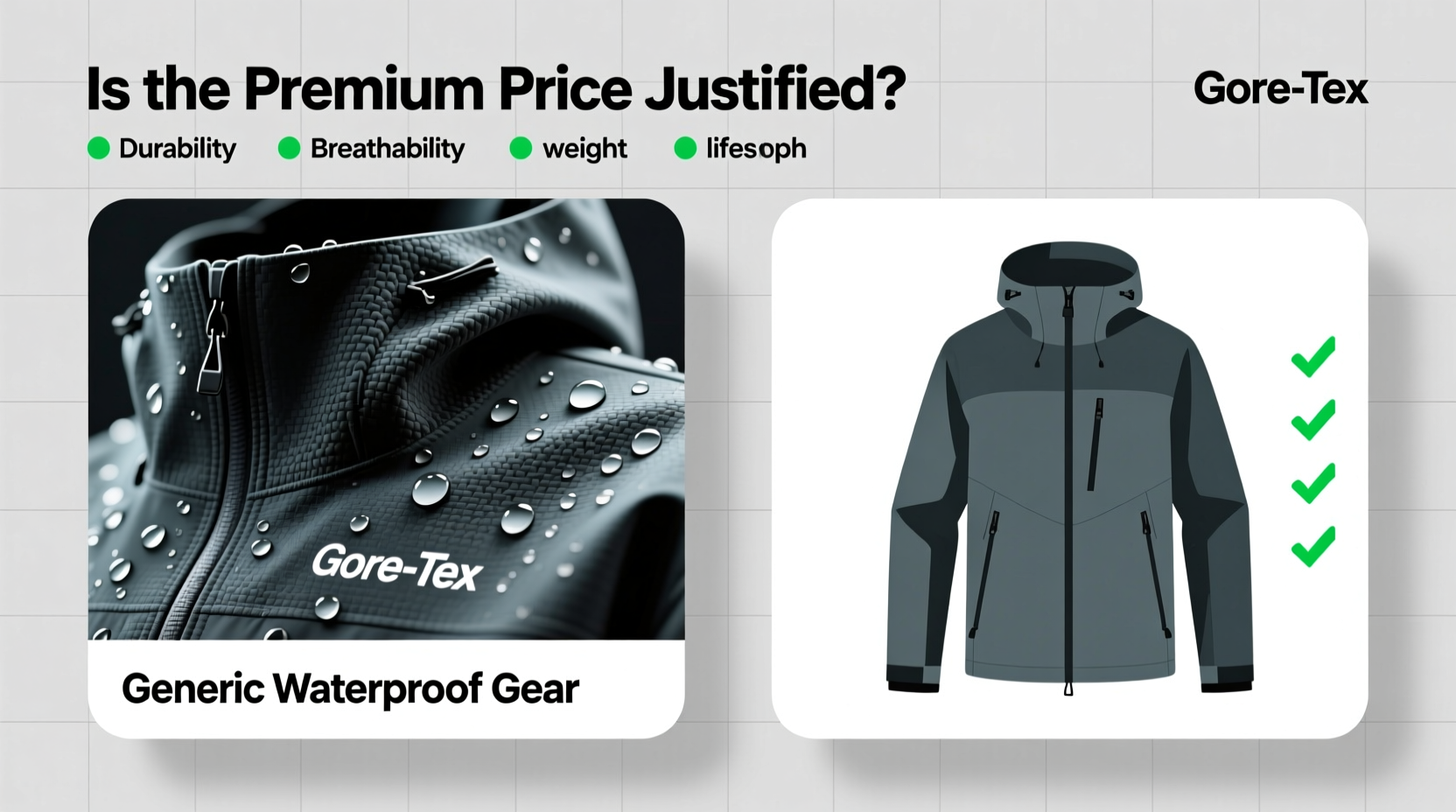
At its core, waterproof gear aims to keep moisture out while allowing sweat vapor to escape—a balance known as breathability. Achieving this requires advanced fabric engineering. Most waterproof garments use either a membrane or coating applied to the outer fabric.
Gore-Tex uses a proprietary polytetrafluoroethylene (PTFE) membrane with billions of microscopic pores per square inch. These pores are about 20,000 times smaller than a water droplet but 700 times larger than a molecule of water vapor. This structure physically blocks liquid water while permitting sweat to pass through.
Generic waterproof fabrics—often labeled as \"waterproof breathable\" or using terms like \"dry-tech\" or \"storm-shield\"—typically rely on polyurethane (PU) coatings or less refined membranes. While effective under light rain or short exposure, they often fall short in prolonged wet conditions or high-exertion activities.
“Gore-Tex set the standard for breathable waterproofing in the 1970s, and despite advances in generic tech, it remains the benchmark for reliability.” — Dr. Lena Patel, Outdoor Materials Researcher, University of Colorado
Performance Comparison: Real-World Testing
To assess whether the premium is justified, we analyzed field reports, lab tests, and user feedback across multiple scenarios: hiking in persistent drizzle, backpacking in alpine storms, urban commuting, and winter sports.
| Feature | Gore-Tex | Generic Waterproof Fabric |
|---|---|---|
| Water Resistance (mm rating) | 28,000+ mm | 5,000–15,000 mm |
| Breathability (RET score) | 3–6 (excellent) | 8–15 (moderate to poor) |
| Durable Water Repellent (DWR) Longevity | 6–12 months with care | 3–6 months, often degrades faster |
| Packability & Weight | Moderate (varies by product line) | Often lighter but less durable |
| Lifespan (with regular use) | 5–10 years | 2–4 years |
| Price Range (jacket) | $300–$600 | $80–$180 |
The data shows a clear gap in performance metrics. A higher hydrostatic head (measured in mm) means greater resistance to water penetration under pressure—critical during heavy rain or when sitting on wet surfaces. Breathability, measured by RET (Resistance to Evaporation), indicates how well the fabric transfers moisture. Lower RET values mean better breathability.
Long-Term Value: Is Gore-Tex Worth the Investment?
While Gore-Tex products carry a steep upfront cost, their longevity can justify the price for frequent users. Consider this scenario: A serious hiker spending weekends in rainy climates will wear their jacket 40–60 days per year. Over five years, that’s 250+ days of use.
A $450 Gore-Tex Pro jacket lasting six years equates to roughly $75 per year or $1.80 per use. In contrast, a $120 generic jacket lasting three years costs $40 annually but may need replacement twice in the same period—and likely offers less protection during critical moments.
Moreover, Gore-Tex offers different tiers—Gore-Tex Active (lightweight, highly breathable), Gore-Tex Paclite (packable), and Gore-Tex Pro (rugged, extended durability)—allowing users to match material performance to their specific needs.
Generic brands rarely offer such granular differentiation. Many use a single fabric across multiple product lines, leading to compromises. For example, a lightweight commuter jacket might use the same membrane as a budget hiking shell, even though their usage demands differ drastically.
Mini Case Study: Pacific Northwest Hiker
Mark, an avid trail runner in Seattle, tested two jackets over a 14-month winter season: a $420 Gore-Tex Shakedry and a $130 “all-weather” jacket from a mainstream outdoor brand. Both were used in similar conditions—driving rain, mud, and temperatures between 35–50°F.
After four months, the generic jacket began “wetting out” during moderate runs. The inner lining felt clammy, and water soaked through the shoulders after prolonged exposure. By month eight, the DWR had failed entirely, and seams showed minor delamination.
In contrast, the Shakedry maintained performance throughout the season. Even after 30+ uses, water still beaded instantly, and breathability remained consistent. Mark noted he stayed drier and more comfortable, especially during uphill sprints where sweating was inevitable.
He concluded: “The Gore-Tex cost more, but I didn’t have to worry about getting soaked halfway through a run. For me, that peace of mind is worth the price.”
When Generic Gear Makes Sense
Not everyone needs top-tier performance. For casual users, occasional campers, or city dwellers facing light rain, generic waterproof gear can be a smart, economical choice.
If you’re walking to work in light showers or attending an outdoor event once a year, a $100 raincoat with a PU coating may suffice. These jackets are often lighter, come in trendy designs, and are disposable in the sense that replacing them every few years isn’t financially painful.
Additionally, many eco-conscious consumers prefer lower-cost options because they reduce commitment to single-brand loyalty and allow experimentation with different fits and styles without major investment.
- Best for generic gear: Urban commuting, festival wear, infrequent outdoor use
- Best for Gore-Tex: Backpacking, mountaineering, cycling, daily use in wet climates
Expert Care Tips to Maximize Any Waterproof Gear
No matter which fabric you choose, proper maintenance dramatically extends lifespan and performance. Follow this step-by-step guide to keep your gear functioning optimally.
- Clean Regularly: Dirt and oils clog pores and degrade DWR. Wash your jacket every 10–15 uses or when it starts feeling stiff.
- Use Proper Detergent: Never use regular laundry soap. Instead, use technical cleaners like Nikwax Tech Wash or Grangers Performance Wash.
- Reinforce DWR: After cleaning, apply a DWR revitalizer (spray-on preferred) and tumble dry on low heat to reactivate the finish.
- Avoid Heat Exposure: Don’t iron or hang near radiators. High heat damages membranes and adhesives.
- Store Correctly: Hang in a dry closet. Avoid long-term compression in stuff sacks.
“The biggest mistake people make is assuming waterproof gear lasts forever without care. Even Gore-Tex fails if neglected.” — Carlos Mendez, Technical Apparel Technician at REI Co-op
Checklist: Choosing Between Gore-Tex and Generic
Use this checklist to determine the right option for your needs:
- ✅ Do you spend 50+ days per year outdoors in wet conditions? → Lean toward Gore-Tex
- ✅ Will you engage in high-exertion activities (running, skiing, climbing)? → Prioritize breathability (Gore-Tex)
- ✅ Is your budget under $150? → Generic may be your only realistic option
- ✅ Do you live in a consistently rainy climate (e.g., UK, Pacific Northwest)? → Gore-Tex pays off long-term
- ✅ Are you replacing a jacket every 2–3 years? → Evaluate total cost over time
- ✅ Do you care about repairability and warranties? → Gore-Tex offers lifetime guarantee on many products
Frequently Asked Questions
Can I wash Gore-Tex jackets in a regular washing machine?
Yes, but only with a technical cleaner designed for waterproof gear. Use a front-loading machine on gentle cycle, avoid fabric softeners, and always follow the manufacturer’s care label.
Do all Gore-Tex products perform the same?
No. Gore-Tex comes in several variants: Gore-Tex Pro (most durable), Gore-Tex Paclite (lightweight), and Gore-Tex Active (best breathability). Choose based on your activity level and expected conditions.
Why does my generic jacket feel sticky inside after a few years?
This is common with PU-coated fabrics. The coating breaks down over time, especially with heat and humidity, leading to delamination and a gummy interior. This rarely happens with Gore-Tex membranes due to their structural stability.
Conclusion: Making the Right Choice for Your Lifestyle
Gore-Tex isn’t magic—but it is engineered precision. For those who demand reliability in extreme conditions, its combination of waterproofness, breathability, and durability is unmatched. The brand has spent decades refining its technology, and that expertise shows in real-world performance.
However, generic waterproof gear has improved significantly. For light-duty use, it offers decent protection at a fraction of the cost. The key is matching the tool to the task. Paying $500 for a jacket you’ll wear five times a year in drizzle is overkill. But skimping on protection during a multi-day trek in the Scottish Highlands could ruin your trip—or worse, put you at risk.
Ultimately, the “worth” of Gore-Tex depends on your definition of value. If you measure it in cost per use, comfort during exertion, and confidence in stormy weather, the premium often makes sense. If you prioritize affordability and occasional use, generic options serve well.




 浙公网安备
33010002000092号
浙公网安备
33010002000092号 浙B2-20120091-4
Comments
No comments yet. Why don't you start the discussion?