
For city dwellers navigating unpredictable weather, a reliable rain jacket is more than a convenience—it’s a daily necessity. But when shopping, one question lingers: Is a Gore-Tex jacket worth the premium price tag over a generic waterproof alternative? With some models costing three or four times as much, consumers are right to wonder whether advanced fabric technology delivers real benefits in urban environments—or if it’s just marketing hype.
This article examines the technical differences between Gore-Tex and generic waterproof jackets, evaluates their performance in typical city conditions, and helps you decide whether brand-name membrane technology is truly necessary for your rainy-day commute.
How Waterproofing Works: Membranes, Coatings, and Laminates
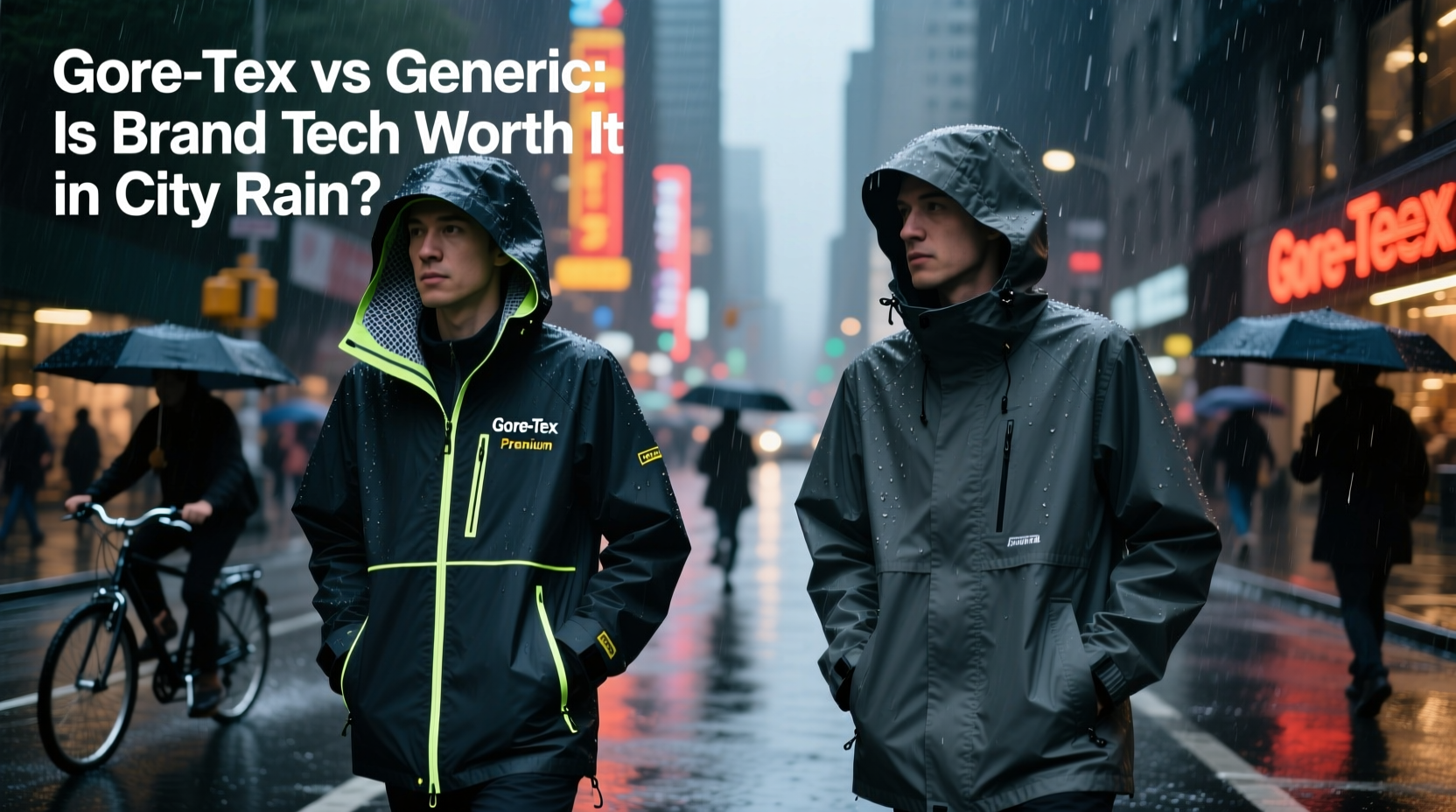
Not all waterproof jackets function the same way. The effectiveness of a jacket in keeping you dry depends on its construction, particularly how water resistance and breathability are achieved.
Gore-Tex uses a proprietary ePTFE (expanded polytetrafluoroethylene) membrane laminated between outer fabric and inner lining. This membrane has around 9 billion microscopic pores per square inch—each 20,000 times smaller than a water droplet but 700 times larger than a water vapor molecule. This allows sweat to escape while blocking liquid water from entering—a balance known as “waterproof-breathable.”
In contrast, many generic waterproof jackets rely on a polyurethane (PU) coating applied to the inside of the outer fabric. While effective at repelling water initially, PU coatings can degrade over time, especially with UV exposure and repeated washing. They also tend to be less breathable, leading to internal condensation during physical activity.
Some mid-tier jackets now incorporate non-branded membranes (e.g., HyVent, DryVent, or proprietary fabrics from outdoor brands), attempting to replicate Gore-Tex performance at lower prices. However, consistency and long-term durability vary significantly across manufacturers.
Performance Comparison: Real-World City Use
Cities present unique challenges: short commutes, frequent transitions between indoor and outdoor spaces, moderate exertion (walking, biking, climbing stairs), and exposure to light to moderate rain. In this context, extreme weather performance matters less than comfort, packability, and longevity.
To assess real-world value, consider these factors:
- Durability: Gore-Tex garments typically use higher-denier fabrics and reinforced stitching. Generic jackets may use thinner materials to cut costs, making them prone to abrasion from backpacks or transit use.
- Breathability: During a brisk 20-minute walk in light rain, a non-breathable jacket can feel clammy inside—even without heavy sweating. Gore-Tex excels here by allowing moisture vapor to escape.
- Packability: Many generic jackets fold into their own pocket, a feature prized by urban commuters. Some Gore-Tex models are bulkier due to multi-layer construction, though specialized lines like Shakedry are highly packable.
- Weather Resistance: Both types perform well in light to moderate rain. However, under prolonged downpours or high humidity, generic coatings may begin to leak or delaminate over time.
“Breathability is often overlooked until you’re halfway to work and your back is soaked—not from rain, but from trapped sweat.” — Daniel Ruiz, Outdoor Gear Tester, Urban Climate Labs
Jacket Showdown: Feature-by-Feature Breakdown
| Feature | Gore-Tex Jacket | Generic Waterproof Jacket |
|---|---|---|
| Waterproof Technology | ePTFE membrane (durable, consistent) | PU coating or basic membrane |
| Breathability | High (especially in active models) | Low to moderate (prone to condensation) |
| Durability | Excellent (resists abrasion, UV, wear) | Fair to poor (coating degrades over time) |
| Lifespan | 5–10 years with care | 1–3 years average |
| Price Range | $200–$500+ | $30–$120 |
| Packability | Moderate to excellent (varies by model) | Often excellent (compact design) |
| Seam Sealing | Always fully taped | Sometimes partial or poorly sealed |
| Warranty & Repair | Gore-Tex Guaranteed to Keep You Dry® | Limited or no performance warranty |
The data shows a clear trade-off: Gore-Tex offers superior long-term performance and reliability, while generic jackets win on upfront affordability and compactness. But for city use, where conditions are rarely extreme, does the performance gap justify the cost?
A Case Study: Two Commuters, Two Jackets
Consider two professionals in London, where rain falls on 110 days per year on average.
Sarah, a graphic designer, bought a £45 generic waterproof jacket from a high-street retailer. It’s lightweight, folds into a pouch, and looks clean with her workwear. After six months, she notices dampness forming on the inside during her 25-minute walk to the office. By winter’s end, the shoulders feel stiff—likely from coating breakdown—and water begins to seep through during heavier showers.
James, an architect, invested in a £320 Gore-Tex Paclite jacket. He wears it almost daily from October to March. After two full seasons, the jacket still performs flawlessly. Though slightly heavier, he appreciates the lack of internal moisture buildup and the confidence it provides during sudden downpours.
Sarah replaces her jacket annually. James hasn’t needed a new one in five years. Over that time, Sarah spends £225; James spent £320 once. The long-term value shifts dramatically in favor of Gore-Tex.
When Brand-Name Tech Matters (And When It Doesn’t)
The necessity of Gore-Tex in city environments depends on usage patterns, climate, and personal priorities.
You likely need Gore-Tex if:
- You walk or bike more than 30 minutes daily in rain.
- Your city experiences persistent drizzle or high humidity.
- You value long-term investment over low upfront cost.
- You carry a backpack, which increases back sweat and abrasion.
A generic jacket may suffice if:
- Your commute is short (under 15 minutes).
- You mostly use public transit or drive.
- You only need occasional rain protection.
- You prefer rotating seasonal outerwear and don’t mind replacing gear every few years.
It’s also worth noting that not all Gore-Tex is equal. The brand offers multiple tiers:
- Gore-Tex Paclite: Lightweight, packable, ideal for urban use.
- Gore-Tex Shakedry: Extremely breathable, sheds water instantly, but delicate.
- Gore-Tex Pro: Heavy-duty, built for alpine conditions—overkill for city rain.
For city dwellers, Paclite or Shakedry models offer the best balance of performance and practicality.
Expert Advice: Maximizing Value in Rainwear
Whether you choose Gore-Tex or a budget alternative, proper care extends lifespan and maintains performance.
“The biggest mistake people make is treating waterproof jackets like regular clothes. They toss them in the washer with detergent, never reproof them, and expect them to last. Fabric performance depends on maintenance.” — Lena Choi, Technical Apparel Engineer
Step-by-Step Care Routine
- Clean Properly: Use a technical apparel cleaner (not regular detergent) every 10–15 wears. Dirt clogs membrane pores.
- Re-Waterproof: After cleaning, apply a DWR (Durable Water Repellent) spray to restore the jacket’s ability to bead water.
- Avoid Heat: Never tumble dry on high heat. Low heat is acceptable for reactivating DWR, but air drying is safer.
- Store Correctly: Hang in a dry closet. Avoid folding long-term, which can stress seams and coatings.
- Inspect Seams: Check for peeling tape or worn areas annually, especially at stress points like shoulders.
Cost vs. Value: The Long-Term Perspective
While a £40 jacket seems like a bargain, its functional lifespan is often short. Many users report failure within 1–2 seasons due to seam leaks, coating delamination, or loss of water repellency.
Gore-Tex, backed by a lifetime guarantee (if purchased from authorized retailers), ensures replacement if the membrane fails. This isn’t just a marketing perk—it reflects confidence in material science and manufacturing standards.
Additionally, high-end jackets often feature better ergonomics: adjustable hoods that fit over helmets or glasses, pit zips for ventilation, and thoughtful pocket placement. These details enhance usability in daily life, even if they seem minor at first glance.
Still, innovation has narrowed the gap. Brands like Decathlon (with their Quechua line), Columbia (Omni-Tech), and even Uniqlo (with Ultra Light Down hybrids) now offer decent waterproof-breathable options under £100. While not matching Gore-Tex in lab tests, they perform adequately for casual city use.
FAQ: Common Questions About Rain Jackets
Do I need Gore-Tex for walking in the city in the rain?
Not necessarily. If your walks are short and infrequent, a well-made generic jacket will suffice. But if you’re regularly exposed to rain and want to stay dry and comfortable, Gore-Tex’s breathability and durability offer meaningful advantages.
Why do cheap rain jackets make me sweat so much?
Most budget jackets use non-breathable coatings that trap moisture inside. As you move, your body produces sweat vapor that can’t escape, leading to a damp, clammy feeling. This isn’t a leak—it’s condensation caused by poor breathability.
Can I repair a failing waterproof jacket?
Yes, to an extent. Seam sealing can be redone with iron-on tape. DWR can be restored with sprays. But if the membrane or coating has failed internally, repair isn’t feasible. Prevention through proper care is far more effective.
Final Verdict: Is Gore-Tex Worth It for City Rain?
The answer depends on how you define “worth.”
If your priority is minimizing upfront cost and you only face rain occasionally, a generic jacket is a reasonable choice. But if you value comfort, longevity, and reliability—especially during long walks, variable weather, or humid conditions—Gore-Tex delivers tangible benefits that generic alternatives struggle to match.
Brand-name technology isn’t necessary for everyone, but it solves real problems: staying dry from both outside rain and internal sweat, enduring daily wear, and performing consistently year after year. For the urban commuter who faces rain as a routine challenge, that reliability has value.
Ultimately, Gore-Tex isn’t about surviving storms—it’s about making rainy days more bearable, one dry stride at a time.




 浙公网安备
33010002000092号
浙公网安备
33010002000092号 浙B2-20120091-4
Comments
No comments yet. Why don't you start the discussion?