
Selecting the right electric pickup is one of the most impactful decisions a guitarist can make. More than just a component, pickups shape your instrument’s voice—determining brightness, warmth, output level, and dynamic response. Whether you're chasing vintage blues tones, searing metal leads, or pristine jazz clarity, the wrong pickup can leave your sound flat or mismatched. The right one transforms your playing experience. With countless models, configurations, and technologies available, navigating this landscape requires both technical understanding and tonal awareness.
Understanding Pickup Types and Their Tonal Characteristics
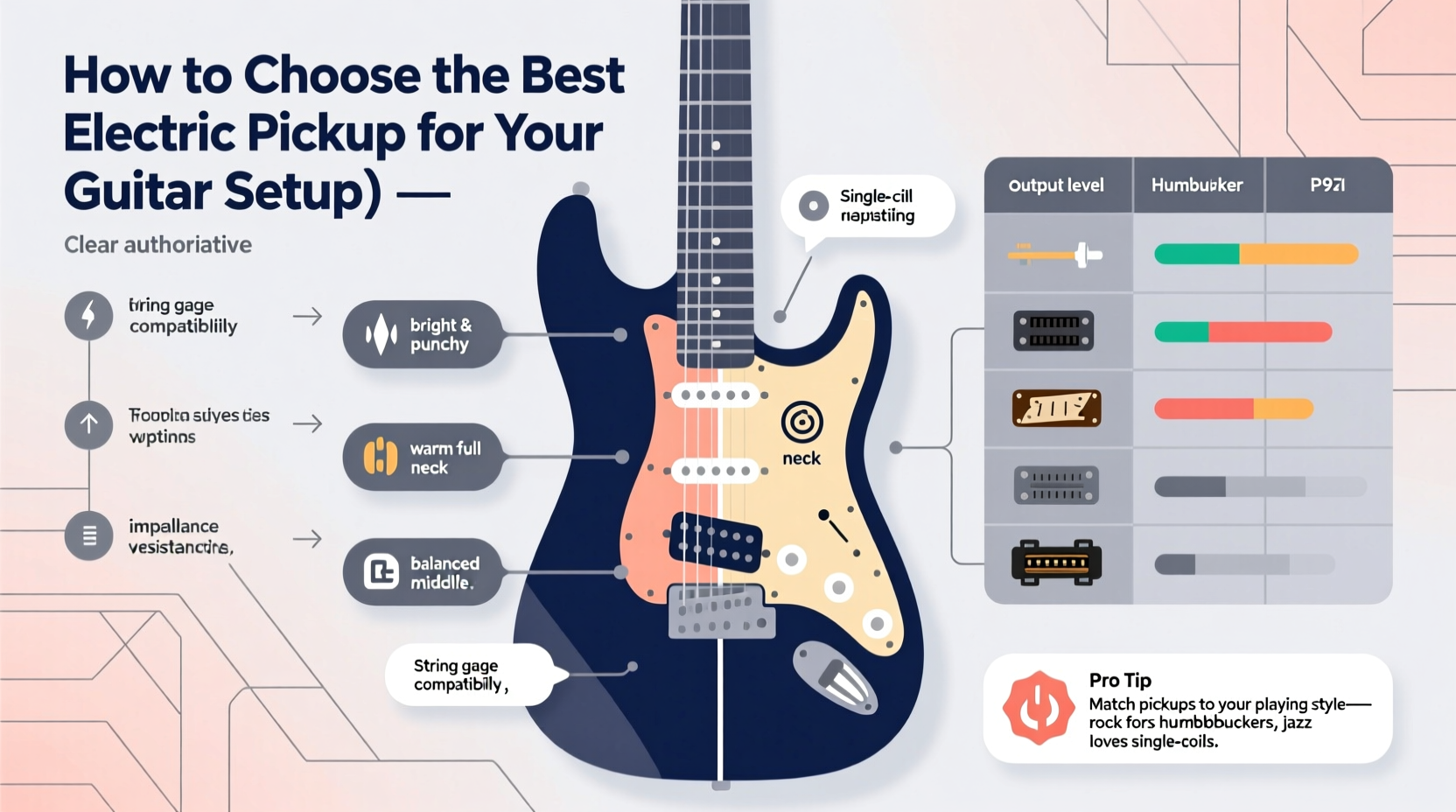
Pickups convert string vibrations into electrical signals, but they do so in different ways, producing distinct sonic profiles. The three primary types are single-coil, humbucker, and P90 pickups—each with unique strengths and trade-offs.
- Single-Coil Pickups: Known for their bright, clear, and articulate tone, single-coils are staples in genres like country, surf rock, and classic rock. Fender Stratocasters and Telecasters use them extensively. However, they are prone to picking up electromagnetic interference, resulting in a noticeable 60-cycle hum.
- Humbuckers: Designed to “buck” the hum, these dual-coil pickups deliver higher output, thicker mids, and reduced noise. They excel in rock, hard rock, and metal due to their sustain and power. Gibson Les Pauls and SGs typically feature humbuckers.
- P90 Pickups: A middle ground between single-coils and humbuckers, P90s offer punchy mids, moderate output, and a gritty character. Often found in vintage-style guitars, they suit blues, garage rock, and alternative styles.
Matching Your Pickup to Playing Style and Genre
Your musical genre heavily influences the ideal pickup choice. A jazz player needs clean headroom and warm articulation, while a death metal guitarist demands tight low end and aggressive attack.
| Genre | Recommended Pickup Type | Tonal Priorities |
|---|---|---|
| Blues / Jazz | P90 or Low-Output Humbucker | Warmth, dynamics, clean breakup |
| Rock / Classic Rock | Alnico Humbucker or Vintage Single-Coil | Balanced EQ, midrange presence |
| Country / Pop | Single-Coil (Strat/Tele) | Clarity, sparkle, note separation |
| Metal / Hard Rock | High-Output Humbucker (Ceramic or Active) | Compression, tight bass, cut through mix |
| Indie / Alternative | P90 or Filter’Tron | Edgy mids, slight grit, versatility |
“Pickups are the first link in your signal chain. No pedal or amp can fully compensate for a mismatched magnetic transducer.” — David Langston, Guitar Electronics Designer at Mojotone
Key Technical Factors to Evaluate
Beyond genre, several technical aspects determine whether a pickup suits your guitar and playing technique.
Magnet Type
The magnet material affects tone and responsiveness. Alnico II offers smooth, warm highs; Alnico V delivers brighter attack and more output; ceramic magnets provide maximum output and tight lows—ideal for metal but often criticized for being too harsh in clean settings.
Output Level
Measured in DC resistance (kΩ), output determines how hot the signal is. Low-output pickups (e.g., 7–8 kΩ) respond dynamically to picking nuance and work well with tube amps. High-output pickups (14+ kΩ) drive preamps harder, useful for saturated distortion but may compress clean tones prematurely.
Coil Windings
Hand-wound pickups often have uneven windings that introduce subtle harmonic complexity. Machine-wound units offer consistency and tighter tolerances. Scatter-wound techniques aim to replicate vintage irregularity for authentic tonal character.
Active vs. Passive
Passive pickups rely solely on magnetic induction and require no external power. Active pickups (like EMG 81/85) use onboard preamps powered by a 9V battery, offering ultra-low noise and consistent output across frequencies. They’re popular in modern metal but require routing modifications and battery access.
Step-by-Step Guide to Choosing and Installing Your Pickup
- Assess Your Current Tone Gaps: Record yourself playing through your existing setup. Identify what’s missing—lack of clarity? Too much noise? Weak sustain?
- Determine Compatibility: Check your guitar’s body depth, pickguard layout, and routing. Not all humbuckers fit standard routes without modification.
- Research Reputable Brands: Seymour Duncan, DiMarzio, Bare Knuckle, Lollar, and Fralin are known for quality and tonal diversity. Read user reviews focused on players in your genre.
- Test Before Committing: If possible, demo guitars equipped with your target pickups. Attend guitar shows or borrow from friends.
- Install with Care: Use a soldering iron with temperature control. Follow wiring diagrams precisely. Shield cavities with conductive paint to reduce noise.
- Break-In and Evaluate: New pickups need hours of playing to settle. Test them across amps and effects before final judgment.
Real-World Example: Upgrading a Budget Stratocaster
Mark, an intermediate guitarist, played a budget Squier Strat through a Fender Blues Junior. While he loved the guitar’s feel, his solos lacked cut, and stage noise was problematic. After research, he replaced the stock single-coils with Seymour Duncan SSL-5 (bridge) and ’59 Models (neck/middle). The upgrade brought pronounced midrange, improved note definition, and a more responsive touch. Combined with a noise gate pedal, his live tone became reliable and expressive. The cost was under $150—a fraction of a new guitar—and the transformation revitalized his confidence on stage.
Checklist: Before You Buy a New Pickup
- ✅ Confirm physical fit (size, height, screw placement)
- ✅ Match impedance/output to your amp’s input sensitivity
- ✅ Decide between vintage-correct or modern-performance design
- ✅ Verify polarity and phase compatibility if mixing brands
- ✅ Plan for potentiometer values (250k vs. 500k ohms affect brightness)
- ✅ Consider whether you want wax-potted coils to prevent microphonics
Frequently Asked Questions
Can I mix different pickup brands in one guitar?
Yes, many players combine pickups for custom voicing—such as a DiMarzio bridge with Seymour Duncan neck. Ensure similar output levels and tonal goals to avoid imbalance. Test combinations via online forums or tone-matching guides.
Do expensive pickups always sound better?
Not necessarily. While premium handwound pickups offer refinement and attention to detail, some mass-produced models deliver excellent performance for the price. Personal preference and context matter more than cost.
How often should pickups be replaced?
Pickups rarely wear out mechanically. However, demagnetization over decades or physical damage may warrant replacement. Most guitarists upgrade for tonal evolution rather than necessity.
Final Thoughts: Shape Your Sound with Intention
Choosing the best electric pickup isn’t about finding the “best” model overall—it’s about identifying the one that serves your music. A boutique PAF-style humbucker might be perfect for soulful bends but overwhelming for funk rhythm. The right pickup enhances your touch, responds to your dynamics, and integrates seamlessly with your gear. Don’t rush the decision. Listen critically, research thoroughly, and trust your ears over trends. Whether you’re restoring vintage authenticity or building a modern tone monster, the pickup is where your voice begins.




 浙公网安备
33010002000092号
浙公网安备
33010002000092号 浙B2-20120091-4
Comments
No comments yet. Why don't you start the discussion?