
Upgrading your Toyota 4Runner’s suspension with a lift kit transforms both its capability and appearance. Whether you’re aiming for improved off-road clearance, larger tires, or a more aggressive stance, selecting the right lift kit is critical. A poorly chosen system can lead to compromised handling, premature wear, or even safety issues. This guide breaks down the essential factors—lift height, type, brand quality, compatibility, and legal considerations—to help you make an informed decision that matches your driving needs and budget.
Understanding Lift Kit Types
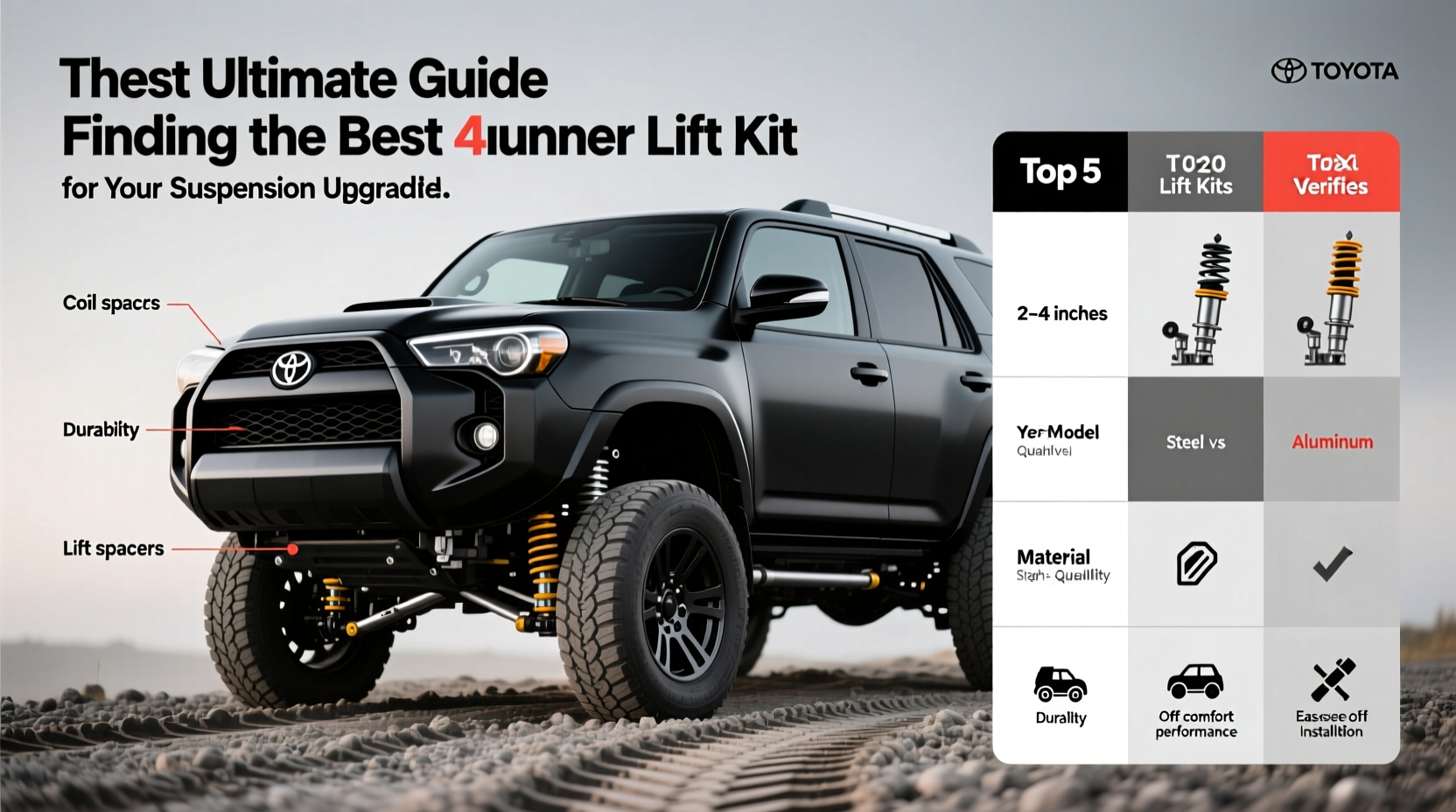
Lift kits come in several configurations, each with distinct advantages and trade-offs. The most common types for the 4Runner are spacer lifts, coilover lifts, and full long-travel suspension systems.
- Spacer Lifts: These sit on top of the strut assembly and push the body higher without altering the suspension geometry significantly. They are affordable and easy to install but typically limited to 1–3 inches of lift.
- Coilover Lifts: Replace the factory coil springs and shocks with taller, performance-tuned units. Offer better ride quality and up to 3 inches of lift, often with adjustable height options.
- Long-Arm Suspension Systems: Full front and rear replacements that modify control arms, linkages, and shock mounts. Ideal for serious off-roaders needing 3+ inches of lift and enhanced articulation.
How Much Lift Do You Really Need?
The ideal lift height depends on your goals. Many owners assume “bigger is better,” but excessive lift introduces new problems—increased center of gravity, steering instability, and drivetrain angles that accelerate wear.
| Lift Height | Tire Size Compatibility | Best Use Case | Potential Drawbacks |
|---|---|---|---|
| 1–2 inch | 33” tires (with minor trimming) | Light trail use, improved aesthetics | Minimal impact on handling |
| 2.5–3 inch | 34–35” tires | All-around off-road performance | May require alignment and brake line extensions |
| 3+ inch | 35”+ tires | Rock crawling, deep backcountry | Reduced stability, possible need for gearing changes |
Most 4Runner enthusiasts find that a 2.5- to 3-inch lift delivers optimal versatility. It allows fitment of popular all-terrain tires like the BFG KO2 or Nitto Ridge Grappler while maintaining highway manners and fuel efficiency.
Step-by-Step Guide to Choosing Your Lift Kit
- Determine Your Primary Use: Will you drive mostly on pavement, tackle rocky trails, or embark on overlanding trips? This defines whether you prioritize comfort, articulation, or durability.
- Check Vehicle Generation: The 4th-gen (2003–2009) and 5th-gen (2010–present) 4Runners have different suspension designs. Ensure the kit is specifically designed for your model year.
- Verify Tire Clearance: Measure current wheel well space and confirm if fender trimming or aftermarket bumpers are needed for your desired tire size.
- Research Reputable Brands: Compare products from ICON, ARB, Total Chaos, Old Man Emu, and Eibach. Look for lifetime warranties and real-world testing data.
- Budget for Complete Installation: Include costs for professional alignment, extended brake lines, differential drops, and possibly upgraded driveshafts.
“Many customers come in wanting a 4-inch lift, but after discussing their daily commute and weekend trails, we steer them toward a 2.5-inch performance coilover system. It gives them what they need without sacrificing reliability.” — Mark Reynolds, Lead Technician at Overland Suspension Works
Real-World Example: Sarah’s Overlanding Build
Sarah, a photographer based in Colorado, wanted her 2018 4Runner TRD Off-Road to handle high-altitude forest roads and carry rooftop camping gear. She initially considered a 4-inch lift but consulted with a local shop first. After evaluating her route profiles and load requirements, she opted for a 3-inch ICON Stage 2 lift with remote-reservoir shocks.
The result? She cleared 35-inch tires without extensive trimming, maintained stable highway handling during long drives, and experienced no CV joint strain even when fully loaded. Her build became a reference point for others in regional off-road groups—proof that thoughtful planning beats maximum lift every time.
Must-Have Accessories When Installing a Lift Kit
A lift kit is rarely a standalone upgrade. Several supporting components ensure longevity and safety:
- Extended Brake Lines: Prevents hose strain caused by increased suspension travel.
- Upper Control Arms (UCAs): Critical for correcting ball joint angles, especially above 2.5 inches of lift.
- Differential Drop Kit: Reduces stress on the front driveshaft and CV axles.
- Steering Stabilizer (Optional): Helps dampen vibrations on rough terrain, though not always necessary with modern systems.
- Professional Alignment: Essential post-installation service to correct caster, camber, and toe settings.
Frequently Asked Questions
Will a lift kit void my 4Runner’s warranty?
Not automatically. Under the Magnuson-Moss Warranty Act, manufacturers cannot void your entire warranty due to aftermarket parts unless they directly cause a failure. However, dealership service centers may refuse to cover suspension-related repairs if a lift kit is present. Keep receipts and consider purchasing from brands offering their own warranties.
Can I install a lift kit myself?
Spacer lifts and some coilover systems can be DIY projects for mechanically inclined owners with proper tools and a safe workspace. However, anything involving control arms, axle disassembly, or welding should be handled by a certified shop. Mistakes can compromise braking, steering, and structural integrity.
Do I need to re-gear after lifting and fitting larger tires?
It depends on your driving style. Larger tires effectively reduce gear ratio, making the engine work harder. If you notice sluggish acceleration or excessive RPM at highway speeds, re-gearing (e.g., from 3.73 to 4.56) may restore performance—especially if you frequently tow or drive in mountainous areas.
Final Checklist Before Buying
- ✅ Confirm compatibility with your 4Runner generation
- Double-check part numbers and consult manufacturer fit guides.
- ✅ Decide on lift height based on actual needs—not aesthetics alone
- Be honest about where and how you drive.
- ✅ Factor in total installed cost
- Include shocks, UCAs, brake lines, alignment, and labor.
- ✅ Choose a brand with proven track record and customer support
- Look for U.S.-based tech support and real owner reviews.
- ✅ Verify return policy and warranty terms
- Some vendors offer 30-day returns; others do not accept used components.
Conclusion
Selecting the best 4Runner lift kit isn’t about chasing the tallest stance—it’s about aligning performance upgrades with your real-world adventures. Whether you're navigating snowy mountain passes, exploring desert trails, or simply want a bolder look, the right suspension system enhances capability without compromising safety. Take the time to assess your needs, consult trusted sources, and invest in quality components backed by expert installation.




 浙公网安备
33010002000092号
浙公网安备
33010002000092号 浙B2-20120091-4
Comments
No comments yet. Why don't you start the discussion?