
Cornerback is one of the most demanding positions in professional football. Tasked with covering elite wide receivers, disrupting passing lanes, and often serving as the last line of defense, the greats at this position have shaped Super Bowl outcomes, defined eras, and redefined what’s possible on the gridiron. From shutdown coverage to game-changing interceptions, the legacy of the NFL’s finest cornerbacks transcends statistics—they are remembered for dominance, consistency, and an uncanny ability to rise in critical moments.
The Evolution of the Cornerback Position
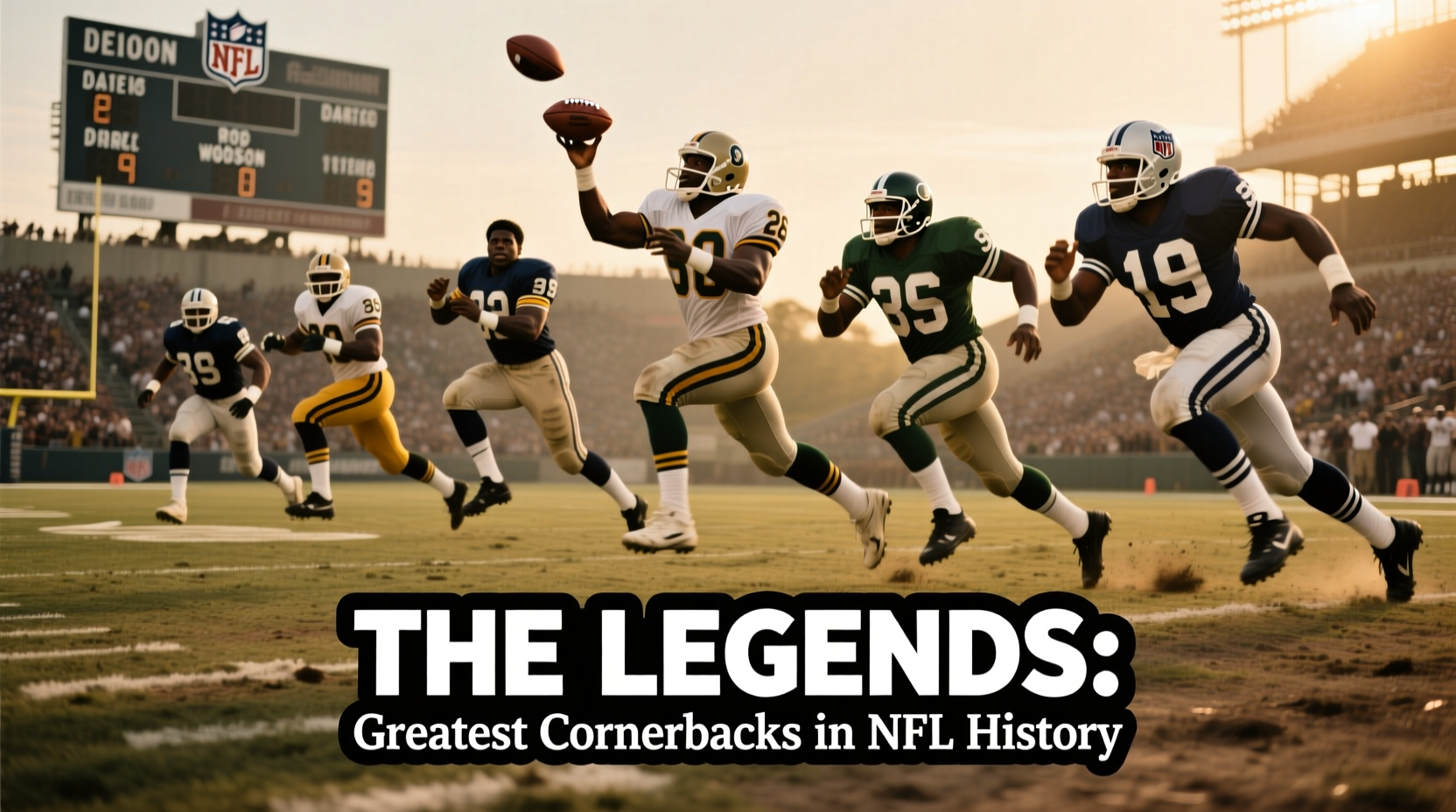
In the early days of the NFL, defenses were built around stopping the run. Pass coverages were simpler, and man-to-man was common. As offenses evolved—especially with the rise of the West Coast offense and modern spread concepts—the importance of the cornerback grew exponentially. Today’s top corners must be fast, intelligent, technically sound, and physically tough enough to handle press coverage and route recognition week after week.
The transition from zone-heavy schemes to aggressive man coverage in the 1980s and 1990s elevated stars like Deion Sanders and Rod Woodson. Then, the 2000s ushered in the era of true lockdown corners—players who could erase half the field simply by lining up across from a receiver. This evolution reflects not just changes in strategy but also the growing respect for the cornerback as a cornerstone of championship defenses.
All-Time Greats: The Legends Who Defined Excellence
Certain names stand out when discussing the greatest cornerbacks in NFL history. These players didn’t just perform—they dominated, led, and left an indelible mark on the game.
Deion Sanders – “Prime Time”
Deion Sanders wasn’t just a cornerback; he was a cultural phenomenon. With electrifying speed, unparalleled confidence, and a flair for the dramatic, Sanders played at an All-Pro level for over a decade. He earned eight Pro Bowl selections, was named NFL Defensive Player of the Year in 1994, and won two Super Bowls (XXIX with the 49ers, XXX with the Cowboys). His ability to shut down elite receivers while contributing as a punt returner made him a once-in-a-generation talent.
Lawrence Taylor vs. Jerry Rice – A Rare Challenge
While Lawrence Taylor was a linebacker and Jerry Rice a receiver, their presence underscores how rare it was for any defender to consistently neutralize Rice. Only a few corners, like Charles Woodson and Ronde Barber, had success against him in big games. This highlights the difficulty of the position—true greatness isn’t measured only in stats, but in matchups won under pressure.
Champ Bailey – Consistency and Clutch Play
Champ Bailey holds the record for most career interceptions among active-era cornerbacks not in the Hall of Fame (initially snubbed, later corrected). His 52 interceptions and 791 passes defended reflect elite consistency. In Super Bowl XLVIII, despite Denver’s defensive collapse, Bailey’s career remains a model of longevity and high-level play across two decades.
Rod Woodson – Versatility and Longevity
Rod Woodson played 17 seasons, transitioning from cornerback to safety late in his career without losing effectiveness. With 71 career interceptions (third all-time), 12 Pro Bowls, and a Super Bowl ring with the Ravens, Woodson combined athleticism with football IQ. He remains one of the most versatile defensive backs ever.
Charles Woodson – The Complete Package
The only defensive player to win the Heisman Trophy, Charles Woodson brought swagger and substance to the cornerback role. With 55 career interceptions, nine Pro Bowls, and a Defensive Player of the Year award (2009), Woodson excelled in both man and zone coverage. His performance during Green Bay’s Super Bowl XLV run solidified his legacy as a leader and playmaker.
Modern Era Dominance: Shutdown Corners of the 2000s and 2010s
The 2000s introduced a new standard for cornerback excellence—one defined by physicality, technique, and near-total isolation of opposing No. 1 receivers.
Shut Down Half the Field: The Darrelle Revis Blueprint
Darrelle Revis earned the nickname “Revis Island” for a reason. During his peak with the Jets (2008–2011), quarterbacks avoided throwing to his side of the field. In 2009, he allowed just 26 completions for 298 yards and zero touchdowns when targeted—stats that remain unmatched. His combination of footwork, hand usage, and mental discipline set a new benchmark.
Richard Sherman – Mind Games and Mastery
Richard Sherman combined elite size, intelligence, and psychological warfare to dominate in Seattle’s Legion of Boom secondary. His famous post-game interview in 2013 became iconic, but his film study habits and route anticipation were what made him elite. Sherman led the league in passer rating allowed multiple times and helped anchor one of the best defenses of the modern era.
Patrick Peterson – All-Around Excellence
Peterson has been a Pro Bowler in more than half of his seasons, showcasing durability and adaptability. Known for his long arms, quick recovery speed, and punt return prowess, he exemplifies the modern multi-threat cornerback.
“Great cornerbacks don’t just react—they anticipate. They know the playbook as well as the quarterback.” — Tony Dungy, Hall of Fame Coach
Comparing the Greats: Key Metrics and Career Highlights
| Player | Career Span | Interceptions | Pro Bowls | Super Bowls Won | Hall of Fame |
|---|---|---|---|---|---|
| Deion Sanders | 1989–2005 | 53 | 8 | 2 | Yes (2011) |
| Rod Woodson | 1987–2003 | 71 | 12 | 1 | Yes (2009) |
| Champ Bailey | 1999–2013 | 52 | 12 | 0 | Yes (2023) |
| Charles Woodson | 1998–2015 | 55 | 9 | 1 | Yes (2021) |
| Darrelle Revis | 2007–2017 | 29 | 7 | 1 | No (Eligible 2023) |
| Richard Sherman | 2011–2022 | 37 | 5 | 1 | TBD |
What Made Them Legendary? Traits Shared by the Elite
Beyond raw talent, the greatest cornerbacks share several key characteristics:
- Exceptional Footwork: Precision in backpedaling, transitions, and mirroring routes.
- Route Recognition: Anticipating cuts and breaks before they happen.
- Mental Toughness: Handling trash talk, double moves, and high-pressure situations.
- Film Study Discipline: Studying quarterbacks’ tendencies and timing.
- Competitive Fire: A relentless desire to win every matchup.
These traits turn good players into legends. For example, Revis spent hours studying opposing receivers’ splits and stance tells. Sherman famously memorized entire offensive playbooks. Their preparation was as important as their physical gifts.
Mini Case Study: Revis vs. Calvin Johnson, 2010
In a 2010 matchup between the Jets and Lions, Calvin Johnson—then arguably the most dominant receiver in football—was held to three catches for 38 yards with no touchdowns. Revis shadowed him all game, using tight press coverage and inside leverage to disrupt timing. This performance wasn’t an outlier—it was typical of Revis at his peak, demonstrating how a single defender can alter an entire offense’s game plan.
Frequently Asked Questions
Who is considered the greatest cornerback of all time?
There’s no definitive answer, but Deion Sanders and Rod Woodson are most frequently cited due to their combination of stats, accolades, and cultural impact. Darrelle Revis is often called the best pure coverage cornerback ever.
Why do some great cornerbacks not win Defensive Player of the Year?
Cornerbacks often go unnoticed because their best plays are non-events—when a quarterback avoids throwing their way. Unlike sack artists or ball-hawking safeties, shutdown corners succeed by preventing action, which doesn’t always show up in traditional awards voting.
Can a cornerback make a team a contender?
Absolutely. A true No. 1 cornerback allows defensive coordinators to disguise coverages, blitz more freely, and focus resources elsewhere. Teams like the 2013 Seahawks and 2002 Buccaneers relied heavily on their secondary to win championships.
How to Appreciate Cornerback Play Like a Pro
To truly understand a cornerback’s impact, watch for these details:
- Press Technique: How they use hands at the line to disrupt release.
- Backpedal Smoothness: Look for balance and control when retreating.
- Hip Turn and Recovery: Can they flip and accelerate when the receiver breaks?
- Eye Discipline: Are they watching the quarterback or getting tricked by fake routes?
- Third-Down Success Rate: Do they win critical downs?
Conclusion: The Legacy Lives On
The greatest cornerbacks in NFL history weren’t just athletes—they were artists of anticipation, masters of space, and warriors of willpower. From Deion Sanders’ flamboyant brilliance to Champ Bailey’s quiet consistency, each legend brought something unique to the position. Today’s young defenders study their film, emulate their techniques, and strive to match their impact.
As the passing game continues to evolve, so too will the demands on cornerbacks. But the core qualities of the legends—discipline, intelligence, and unshakable confidence—will never go out of style. Whether you’re a fan, a player, or a coach, understanding these icons offers deeper insight into what makes football not just a game of strength, but of strategy, timing, and heart.




 浙公网安备
33010002000092号
浙公网安备
33010002000092号 浙B2-20120091-4
Comments
No comments yet. Why don't you start the discussion?