
In the world of collectible figures—whether they’re fantasy miniatures, anime characters, or custom sculptures—the debate between handmade and 3D printed figures continues to divide enthusiasts. On one side, you have meticulously handcrafted pieces shaped by human touch, each bearing subtle flaws and unique character. On the other, precision-engineered 3D printed models that offer consistency, scalability, and intricate detail with mechanical perfection. But beneath the surface lies a deeper question: Are the imperfections of handmade figures not just acceptable, but essential to their value?
This isn’t merely about aesthetics or production methods—it’s about what we value in art, authenticity, and ownership. The answer depends on who you are as a collector, artist, or hobbyist.
The Soul of Handmade: Imperfection as Identity
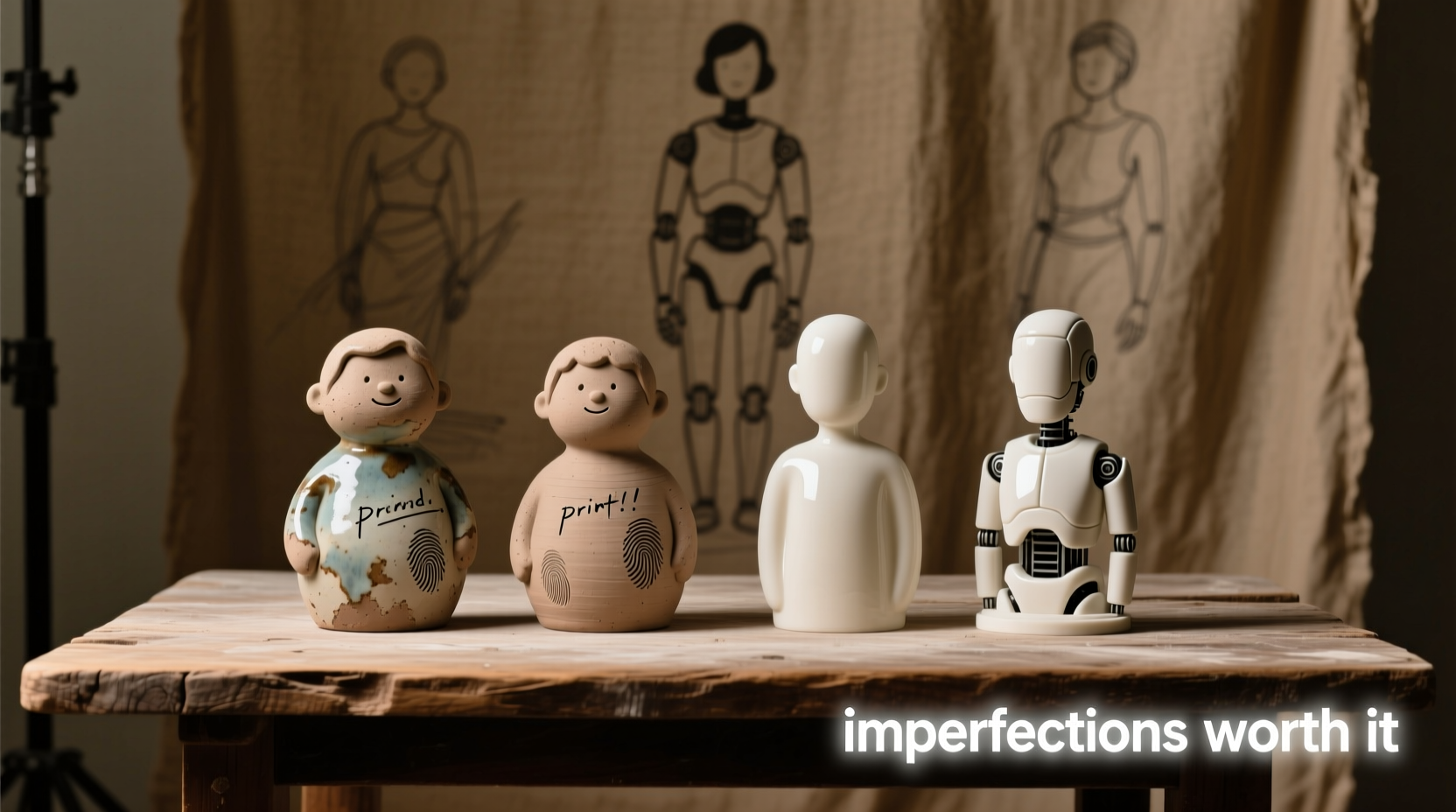
Handmade figures are born from clay, resin, paint, and patience. Each is sculpted, cast, and finished by hand, often by a single artist. This process introduces variation: slight asymmetries, brushstroke textures, minor casting bubbles, or color gradients that no machine can replicate. These so-called “flaws” are not failures—they are fingerprints of creation.
Consider porcelain ceramics: a Japanese raku bowl is prized not despite its cracks, but because of them. The philosophy of *wabi-sabi* celebrates impermanence and imperfection as core components of beauty. Similarly, a handmade figure carries a narrative. You’re not just owning an object—you’re holding a moment in time, shaped by intention, fatigue, inspiration, and emotion.
“Every tiny irregularity in a hand-sculpted piece tells me it was made by someone who cared. That’s irreplaceable.” — Lena Torres, Independent Figure Artist
For collectors, this means no two figures are truly identical. Limited editions gain emotional weight because they are finite, personal, and human. A misaligned eye or uneven seam might lower resale value in strict market terms, but for many, it increases sentimental worth.
The Precision of 3D Printing: Consistency Meets Innovation
3D printing has revolutionized figure production. Using digital models and layer-by-layer fabrication, artists and manufacturers can produce highly detailed figures with near-perfect repeatability. From microscopic texture work to complex internal geometries, modern printers achieve results unattainable through traditional sculpting alone.
Moreover, 3D printing democratizes access. Independent creators can design a model once and sell hundreds or thousands of copies without outsourcing to factories. Platforms like Etsy and MyMiniFactory host countless designers who offer affordable, high-detail prints directly to consumers.
Yet this very strength becomes a point of contention. When every copy is identical, does the figure lose soul? Can something mass-produced via algorithm and resin feel personal? For some, the answer is yes—especially when customization options (paint jobs, bases, accessories) are added post-print.
Comparing Key Attributes
| Attribute | Handmade Figures | 3D Printed Figures |
|---|---|---|
| Uniqueness | High – each piece varies slightly | Low – identical across units |
| Detail Precision | Moderate – limited by manual skill | High – sub-millimeter accuracy |
| Production Time | Long – hours to days per unit | Short – scalable with multiple printers |
| Cost (per unit) | Higher – labor-intensive | Lower – after initial setup |
| Emotional Value | Often high – connection to artist | Variable – depends on customization |
| Sustainability | Mixed – materials vary, often low waste | Mixed – resin waste, energy use |
When Imperfections Matter—and When They Don’t
The real issue isn’t whether imperfections exist, but whether they serve a purpose. In functional engineering, flaws compromise integrity. In art, they can enhance meaning.
A chipped edge on a factory-painted action figure is a defect. But a faint tool mark on a hand-carved demon king sculpture? That’s evidence of the artist pausing mid-flow, adjusting pressure, responding to the material. It breaks the illusion of automation and reminds us that creativity is messy.
That said, not all imperfections are meaningful. Poorly mixed resin, weak joints, or rushed paint jobs reflect inexperience or carelessness—not artistry. The distinction lies in intent. Was the variation deliberate? Does it contribute to the overall expression?
Real Example: The Collector’s Dilemma
Take Mark, a long-time fantasy miniature collector. He owns both mass-market Warhammer kits and a set of five hand-sculpted dragons from an indie artist. The Warhammer pieces are flawless—clean lines, consistent colors, interchangeable parts. The dragons, however, vary in scale size, wing curvature, and flame patterns.
When asked which he values more, he points to the handmade set. “I know where these came from. I followed the artist’s updates, saw works-in-progress, even suggested a color scheme. One dragon has a tiny fingerprint in the base clay. I love it. It feels alive.”
His 3D printed figures? He enjoys them too—but primarily as display pieces or painting practice. They lack narrative. They don’t carry stories beyond their design.
Hybrid Approaches: Best of Both Worlds
Many modern artists blend techniques. A figure may begin as a digital model, 3D printed as a prototype, then hand-finished with custom paints, weathering effects, or sculpted additions. This hybrid method leverages machine precision while preserving artisanal touch.
Some creators even release 3D files of their original hand-sculpted designs, allowing fans to print and personalize them. In this model, the “original” remains a one-of-a-kind physical artwork, while digital versions extend its reach.
This fusion suggests a future where imperfection and precision coexist—not in competition, but in dialogue.
Checklist: Choosing Between Handmade and 3D Printed
- Evaluate your priorities: Do you value uniqueness over uniformity?
- Assess your budget: Handmade often costs more due to labor.
- Consider customization: Can you paint or modify the figure yourself?
- Support independent artists: Buying handmade often supports small creators directly.
- Think about longevity: Resin durability varies; UV-cured prints may yellow over time.
- Ask about provenance: Who made it? What tools were used? Is it signed or numbered?
Frequently Asked Questions
Can 3D printed figures be considered art?
Absolutely. The artistic value lies in the design, concept, and execution—not solely in the production method. A digitally sculpted figure conceived and modeled with creative intent is as much art as a clay original.
Do handmade figures hold value better than 3D printed ones?
Generally, yes—especially if they’re limited edition, signed, or created by a recognized artist. Scarcity and provenance drive collectible markets. Most 3D printed figures are not inherently rare unless produced in limited runs.
Are imperfections fixable in handmade figures?
Yes, many can be repaired or enhanced. Air bubbles in resin casts can be filled and sanded. Paint errors can be touched up. Some collectors even view restoration as part of engagement with the piece.
Conclusion: Embrace the Flaw, Honor the Craft
The choice between handmade and 3D printed figures isn’t about superiority—it’s about alignment with your values as a collector or creator. If you seek perfection, scalability, and affordability, 3D printing delivers. But if you crave connection, individuality, and the warmth of human effort, handmade figures offer something machines cannot replicate: soul.
The imperfections aren’t worth enduring—they’re worth celebrating. They remind us that behind every curve and contour, there was a person who chose to make something beautiful, knowing it wouldn’t be perfect. And in that choice lies authenticity.




 浙公网安备
33010002000092号
浙公网安备
33010002000092号 浙B2-20120091-4
Comments
No comments yet. Why don't you start the discussion?