
In formal or professional settings, the decision to wear or remove a hat during a speech is more than just fashion—it’s a reflection of respect, decorum, and situational awareness. While hats can serve as powerful symbols of identity, heritage, or personal style, they often carry unspoken rules in public speaking environments. Understanding when and why you should refrain from wearing a hat while addressing an audience is essential for maintaining credibility, showing deference, and aligning with social expectations.
The Historical Context of Hat Etiquette
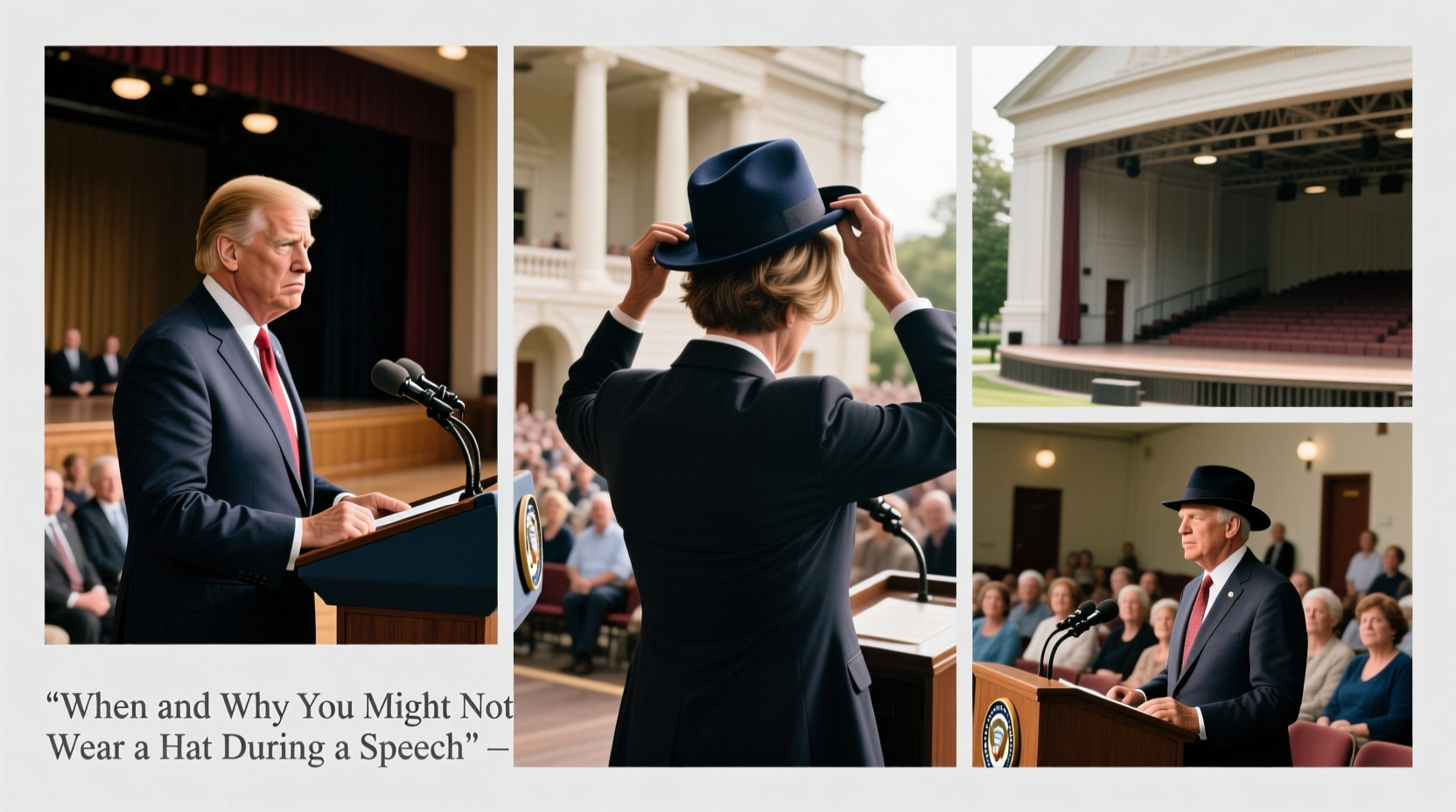
Hat-wearing customs have deep roots in Western etiquette, particularly among men. For much of the 19th and early 20th centuries, removing one’s hat indoors—especially in homes, churches, or formal gatherings—was considered a basic sign of respect. This tradition extended to public speaking: a speaker would uncover their head as a gesture of humility and openness. Even today, military personnel salute by removing their headgear, and many civic oaths are taken bareheaded.
While modern culture has relaxed many of these norms, remnants persist in formal events, political addresses, academic ceremonies, and religious services. Wearing a hat during such moments can unintentionally signal disrespect or detachment from the occasion.
“Removing your hat when speaking publicly isn’t about fashion—it’s about presence. It signals that you’re fully engaged and respectful of your audience.” — Dr. Lydia Chen, Communication Historian, Georgetown University
Professionalism and Public Perception
In business presentations, conference keynotes, or media interviews, visible accessories like hats can distract from your message. Audiences tend to focus on facial expressions, eye contact, and body language—elements that a brimmed hat may partially obscure. A hat can create a shadow over the eyes, limit nonverbal communication, and project an air of aloofness or informality, even if unintended.
Moreover, in corporate or governmental environments, headwear is typically reserved for outdoor use or specific roles (e.g., security, event staff). A CEO delivering a quarterly update in a boardroom or a politician giving a press briefing on the Capitol steps is expected to appear polished and accessible—qualities undermined by inappropriate headwear.
Situations Where You Should Not Wear a Hat While Speaking
Certain contexts demand the removal of hats as a matter of protocol or common courtesy. These include:
- Indoor venues: Conference halls, auditoriums, classrooms, and offices generally expect attendees—and especially speakers—to be hatless.
- Formal ceremonies: Weddings, funerals, award banquets, and graduation speeches require adherence to traditional decorum.
- National observances: During the national anthem, flag ceremonies, or memorial tributes, wearing a hat (unless religiously required) is widely seen as improper.
- Religious settings: Many faith traditions require uncovered heads for men during prayer or worship; speaking in such spaces follows the same rule.
- Media appearances: Television interviews, podcasts, or public broadcasts benefit from clean visuals and unobstructed facial visibility.
Exceptions and Cultural Sensitivity
It’s important to recognize that some individuals wear hats for religious or cultural reasons. For example, observant Jewish men wear kippahs (yarmulkes), Sikh men wear turbans, and certain Christian denominations encourage head coverings for women. In these cases, the hat is not a fashion choice but a sacred practice, and it should be respected regardless of setting.
The key distinction lies in intent and context. Religious or cultural headwear is generally accepted—even honored—when worn during speeches, provided it aligns with the values of the event. The etiquette concern arises primarily with casual or decorative hats in formal or solemn environments.
Do’s and Don’ts of Headwear in Public Speaking
| Do’s | Don’ts |
|---|---|
| Remove baseball caps, fedoras, or sun hats before stepping to the podium. | Wear a wide-brimmed hat that casts shadows on your face during a presentation. |
| Hold your hat neatly at your side if needed, or place it out of sight. | Adjust or fidget with your hat while speaking—it distracts the audience. |
| Respect religious head coverings as protected expressions of faith. | Assume all headwear follows secular etiquette rules. |
| Follow venue-specific guidelines (e.g., military bases, houses of worship). | Challenge someone’s religious head covering as “inappropriate” in a formal speech. |
A Real-World Example: The Political Gaffe That Made Headlines
In 2015, a local council candidate in Pennsylvania drew criticism after delivering a campaign speech at a veterans’ memorial event while wearing a cowboy hat. Though he claimed it was part of his personal brand, attendees—including several veterans—interpreted the act as disrespectful, especially during a moment of silence. Photos circulated on social media with captions like “No honor, no hat off.”
The backlash wasn’t about the hat itself, but about the perceived lack of reverence. Within days, the candidate issued a public apology, acknowledging that he had overlooked the symbolic weight of the gesture. He later stated in an interview: “I thought I was being authentic. I didn’t realize I was being inconsiderate.”
This case underscores how deeply ingrained hat etiquette remains in collective memory, especially in emotionally charged or ceremonial settings.
Step-by-Step Guide: Deciding Whether to Wear a Hat While Speaking
- Assess the setting: Is it indoors, formal, or ceremonial? If yes, plan to go bareheaded.
- Consider the audience: Are elders, officials, or veterans present? These groups often uphold traditional etiquette.
- Evaluate your role: As a speaker, you’re in a position of visibility and influence—your choices set tone and precedent.
- Check cultural or religious factors: Are there community norms around head coverings? When in doubt, ask a local organizer.
- Prepare accordingly: Bring your hat if needed for travel or sun protection, but remove it before speaking.
Frequently Asked Questions
Can I wear a hat during a speech if it’s part of my brand or uniform?
Yes, in certain contexts—such as a chef speaking at a culinary event or a construction executive presenting safety protocols—a branded or occupational hat may be appropriate. However, even in these cases, it’s wise to remove it during solemn moments (e.g., memorials, introductions of dignitaries) unless doing so would violate safety regulations.
What if I’m speaking outdoors and need sun protection?
If you’re at an outdoor event and sun exposure is a genuine concern, consider wearing a hat during setup or audience seating, but remove it once you begin speaking. Alternatively, schedule your speech during shaded hours or use temporary coverings like tents. The priority is balancing comfort with respect for the occasion.
Are there any modern trends reversing this etiquette?
Some informal events, particularly in creative industries or youth-focused gatherings, embrace casual attire—including hats—as part of a relaxed culture. However, even in these spaces, speakers who remove their hats often gain greater attention and perceived sincerity. Tradition still holds persuasive power.
Final Thoughts: Presence Over Presentation
Ultimately, the choice to wear a hat during a speech reflects broader principles of audience awareness and emotional intelligence. It’s not merely about following rules, but about connecting authentically with those listening. Removing a hat symbolizes openness—literally and figuratively—inviting trust and engagement.
Whether you’re addressing a boardroom, a town hall, or a wedding toast, your appearance contributes to your message. By understanding the subtle yet significant role of headwear, you demonstrate not only professionalism but also empathy for shared social codes.




 浙公网安备
33010002000092号
浙公网安备
33010002000092号 浙B2-20120091-4
Comments
No comments yet. Why don't you start the discussion?