
There are few kitchen moments more satisfying than transforming a humble ham bone—leftover from a holiday dinner or weekend roast—into a deeply flavorful, velvety bowl of soup that warms the soul. Hearty Ham and Potato Soup made with a ham bone is not only economical and sustainable but also yields a broth with a richness no store-bought stock can replicate. The collagen-rich marrow, residual meat, and smoky-savory notes from the bone infuse every spoonful with complexity, while tender potatoes, aromatic vegetables, and herbs round out a dish that’s equally at home on a farmhouse table or served in a modern bistro. This soup transcends seasonal boundaries: ideal for cold winter nights yet adaptable enough for lighter spring versions with fresh herbs and peas. Beyond comfort, it represents a timeless culinary principle—waste nothing, extract maximum flavor, and honor ingredients through slow, intentional cooking.
Definition & Overview
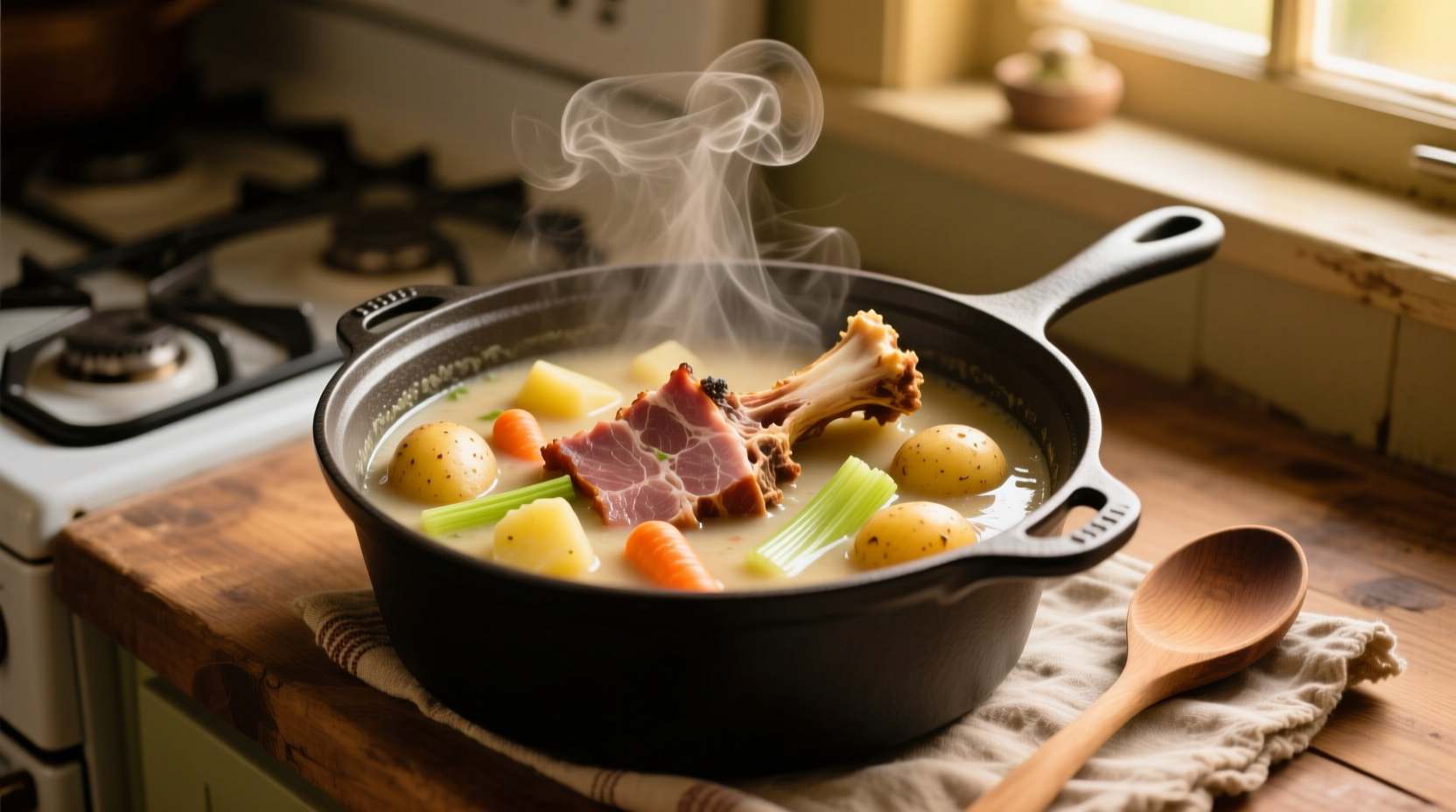
Ham and Potato Soup made with a ham bone is a rustic, creamy-textured soup rooted in American, British, and Central European peasant traditions. It belongs to the broader category of chowders and potages—thick, stew-like soups built around starches and proteins simmered in seasoned liquid. What distinguishes this version is its foundation: a smoked or baked ham bone, which acts as both flavor catalyst and umami booster. Unlike clear broths or consommés, this soup relies on body—achieved through potato breakdown, dairy enrichment (often cream or milk), and sometimes roux or flour—as much as taste.
The soup typically includes onions, celery, carrots (a mirepoix base), garlic, bay leaf, thyme, diced potatoes, and the meat picked from the bone. Variations may incorporate leeks, cabbage, corn, or green beans. Its consistency ranges from brothy and chunky to luxuriously thick, depending on regional preferences and household traditions. In professional kitchens, chefs often finish the soup with crème fraîche, chives, or grated aged cheese to elevate presentation and balance saltiness.
Historically, ham bones were saved after roasting because they represented value—a single cut of meat could feed a family twice: once roasted, once simmered into soup. This practice remains relevant today, especially among home cooks focused on reducing food waste and maximizing pantry efficiency.
Key Characteristics
- Flavor Profile: Savory, smoky, slightly salty, with underlying sweetness from vegetables and potatoes.
- Aroma: Deeply meaty and warm, with herbal notes (thyme, bay) and toasted onion.
- Texture: Creamy to chunky; depends on whether potatoes are mashed partially or left whole.
- Color: Pale golden to light amber, sometimes creamy white when dairy is added.
- Heat Level: Mild; occasionally accented with black pepper, cayenne, or mustard seed for subtle warmth.
- Culinary Function: Comfort food, meal extender, use-for-leftovers strategy, cold-weather staple.
- Shelf Life: Up to 5 days refrigerated; freezes well for up to 3 months.
Practical Usage: How to Make Ham and Potato Soup with a Ham Bone
The process begins long before the first chop: saving the ham bone. After roasting or baking a ham, remove usable meat for sandwiches or salads, then wrap and refrigerate the bone within two hours. Use within 4–5 days or freeze indefinitely. When ready to cook, follow this structured method for optimal results.
- Simmer the Bone for Broth: Place the ham bone (with any remaining meat and fat) in a large stockpot. Cover with 8–10 cups of cold water. Add one roughly chopped onion, two celery stalks, two carrots, 2 cloves garlic, 1 bay leaf, and 5–6 sprigs of fresh thyme. Bring to a gentle boil, then reduce to a bare simmer. Skim any foam that rises in the first 15 minutes. Simmer uncovered for 2 to 3 hours. Do not rush—time extracts gelatin and deepens flavor.
- Strain and Debone: Remove the bone and set aside to cool. Strain the broth through a fine-mesh sieve into a clean container. Discard solids except for the reserved vegetables if desired (some retain softened carrots for texture). Once the bone is cool, pick off all edible meat, discarding cartilage and excess fat. Chop meat into bite-sized pieces and reserve.
- Sauté Aromatics: In the same pot, heat 2 tablespoons of butter or olive oil over medium heat. Add 1 diced onion, 2 diced celery ribs, and 2 diced carrots. Cook until softened—about 8–10 minutes. Add 2 minced garlic cloves and cook 1 minute more.
- Add Potatoes and Broth: Stir in 1.5 to 2 pounds of peeled and diced Yukon Gold or Russet potatoes (½-inch cubes). Pour in the strained broth. Bring to a simmer and cook until potatoes are tender—15 to 20 minutes.
- Adjust Texture: For a thicker soup, mash ⅓ to ½ of the cooked potatoes against the side of the pot using a wooden spoon or potato masher. Alternatively, blend 2 cups of soup in a blender and return it to the pot. Avoid over-blending unless aiming for bisque-like consistency.
- Incorporate Dairy (Optional): Stir in ¾ to 1 cup of heavy cream, half-and-half, or whole milk. Heat gently—do not boil after adding dairy to prevent curdling. For a dairy-free version, use unsweetened oat or cashew milk with a teaspoon of nutritional yeast for depth.
- Season and Finish: Add reserved ham meat. Season with freshly ground black pepper, a pinch of cayenne (optional), and additional salt only if needed—the ham contributes significant sodium. Taste and adjust. Stir in 1 tablespoon chopped fresh parsley or chives. Let soup rest off heat for 10 minutes before serving to allow flavors to meld.
Pro Tip: For enhanced body without dairy, stir in 2 tablespoons of instant potato flakes at the end. They dissolve instantly and add creaminess while helping stabilize the soup during reheating.
Variants & Types
While the core recipe remains consistent, regional and cultural adaptations offer variety in texture, ingredients, and richness. Understanding these types helps tailor the soup to dietary needs or occasions.
| Variant | Key Features | Best Used For |
|---|---|---|
| Classic Creamy | Includes roux (butter + flour) and heavy cream; smooth, rich texture. | Dinner entree, holiday leftovers, restaurant-style service. |
| Bare-Bones Brothy | No dairy or thickener; emphasizes clarity of ham flavor and vegetable chunks. | Light meals, low-fat diets, grain bowls (add barley or rice). |
| Loaded Style | Topped with shredded cheddar, bacon bits, green onions, sour cream. | Game-day entertaining, casual family dinners. |
| Smoked Paprika Twist | Adds 1 tsp smoked paprika and replaces some ham with smoked sausage. | Elevating flavor profile, Spanish-inspired fusion. |
| Vegetable-Forward | Includes leeks, kale, corn, or green beans; less meat, more fiber. | Spring/summer batches, plant-based emphasis, nutrition-focused diets. |
Each variant maintains the foundational role of the ham bone but shifts focus based on context. The classic creamy version shines in winter; the brothy type suits lunch portions or pairing with sandwiches. Loaded versions work well at gatherings where customization is encouraged—offer toppings in small bowls for guests to personalize their bowls.
Comparison with Similar Ingredients
Ham bones are sometimes confused with other pork bones or meat scraps. Clarifying differences ensures proper usage and flavor expectations.
| Ingredient | Flavor Profile | Best Use | Substitution Notes |
|---|---|---|---|
| Ham Bone | Salty, smoky, cured, high in gelatin | Potato soups, bean stews, split pea | Ideal for savory depth; cannot be replaced 1:1 by raw bones |
| Pork Neck Bones | Mild pork, less salty, requires seasoning | Slow-cooked greens, pho base, braises | Can substitute with added smoked salt or liquid smoke |
| Smoked Turkey Wing/Neck | Leaner, poultry-smoked, lower sodium | Bean pots, collard greens, turkey soup | Good low-sodium alternative; lacks pork fat richness |
| Bacon Ends/Trim | Intensely smoky, fatty, crisp texture | Flavoring bases, garnish, flavor boosters | Use sparingly; too greasy for full broth substitution |
Crucially, ham bones differ from raw pork bones due to curing and smoking processes. These treatments introduce salt and phenolic compounds that inhibit bacterial growth and deepen flavor. Substituting raw bones will result in a milder, less complex broth requiring longer simmering and aggressive seasoning.
Practical Tips & FAQs
How much soup does one ham bone yield?
A standard ham bone (from a 7–10 lb ham) produces about 6 to 8 cups of flavorful broth. Larger hocks or picnic shoulders may yield more. Adjust water volume accordingly—start with 8 cups and add more during simmering if needed.
Can I use a frozen ham bone?
Yes. Thaw overnight in the refrigerator or place directly in cold water in the pot and bring to a simmer slowly. Never thaw at room temperature for food safety.
Is the ham bone reusable?
Generally, no. After a 2–3 hour simmer, most collagen and flavor have been extracted. Re-simmering yields thin, weak broth. Compost the spent bone or discard.
How do I reduce saltiness?
If the soup tastes too salty, dilute with unsalted broth or water. Add raw diced potatoes (remove after 10 minutes of simmering—they absorb salt). A splash of acid like apple cider vinegar or lemon juice can also balance perception of salt.
What potatoes work best?
Yukon Golds are ideal—naturally buttery, waxy enough to hold shape, yet creamy when cooked. Russets break down easily, aiding thickening. Avoid red potatoes unless you prefer very firm textures.
Can I make it in a slow cooker or Instant Pot?
Absolutely. For a slow cooker: combine bone and aromatics, cook on Low 8 hours or High 4–5. Strain, then proceed with sauté and potato steps. In an Instant Pot: pressure cook bone and veggies 60 minutes with natural release. Strain, then use Sauté mode for aromatics and potatoes (Manual: 8 minutes). Quick release, then finish with dairy.
How should I store leftovers?
Cool within 2 hours and refrigerate in airtight containers. Consume within 5 days. Freeze in portion-sized containers for up to 3 months. Thaw overnight in fridge. Reheat gently over medium-low to preserve texture—dairy-heavy versions may separate if boiled.
Storage Hack: Leave dairy out until reheating. Store soup base (without cream) separately, then add fresh cream when serving. This prevents graininess and extends shelf life.
Are there vegetarian alternatives to ham bone flavor?
True ham bone flavor cannot be replicated exactly, but umami-rich substitutes include dried mushrooms (porcini), soy sauce, miso paste, smoked sea salt, or liquid smoke. Combine with white beans and kombu for mineral depth. Note: this creates a different dish—“ham-like” but not authentic.
\"The ham bone is the silent hero of the pantry. It doesn’t shout, but it builds foundations. One simmer unlocks layers that canned broth can’t touch.\" — Chef Miriam Tran, Culinary Institute of America Faculty
Summary & Key Takeaways
Hearty Ham and Potato Soup made with a ham bone is more than a recipe—it’s a philosophy of mindful cooking. By leveraging a leftover ingredient, home cooks access a level of flavor depth and economy that defines resourceful cuisine. The ham bone provides collagen for mouthfeel, smoke for aroma, and salt for savoriness, forming a broth that supports potatoes, vegetables, and cream in harmonious balance.
Success hinges on patience: slow simmering extracts maximum flavor. Proper seasoning avoids over-salting. Texture control—whether creamy or brothy—depends on potato treatment and thickening choices. Variants allow adaptation across seasons and diets, while storage and freezing extend usability.
Ultimately, this soup exemplifies how technique and tradition converge in everyday meals. It invites improvisation—add corn in summer, kale in winter, swap cream for coconut milk—but always returns to the ham bone as its anchor. Whether reviving a holiday remnant or planning ahead with a smoked ham hock, the result is a nourishing, satisfying dish that honors both palate and principle.
Call to Action: Save your next ham bone. Label and date it. When ready, follow this guide to create a batch of soup that transforms leftovers into legacy. Share your version with family—and pass down the habit of extraction, respect, and flavor.




 浙公网安备
33010002000092号
浙公网安备
33010002000092号 浙B2-20120091-4
Comments
No comments yet. Why don't you start the discussion?