
When the weather turns cold or energy runs low, few dishes deliver comfort and nourishment as reliably as a well-made soup. Among home-cooked classics, Hearty Soup with Ground Beef and Mixed Vegetables stands out for its balance of protein, fiber, and deep savory flavor. This isn’t just a quick meal—it’s a culinary anchor, capable of feeding families, stretching ingredients, and providing leftovers that taste even better on day two. More than a recipe, it represents a cooking philosophy: resourceful, nutritious, and deeply satisfying.
This soup transforms humble pantry staples and affordable proteins into a dish with restaurant-quality depth. Ground beef offers richness and umami; mixed vegetables add texture, color, and essential nutrients; while broth and seasonings build layers of flavor. Whether you're feeding children after school, preparing meals for the week, or seeking a one-pot solution after a long day, this soup delivers both practicality and pleasure.
Definition & Overview
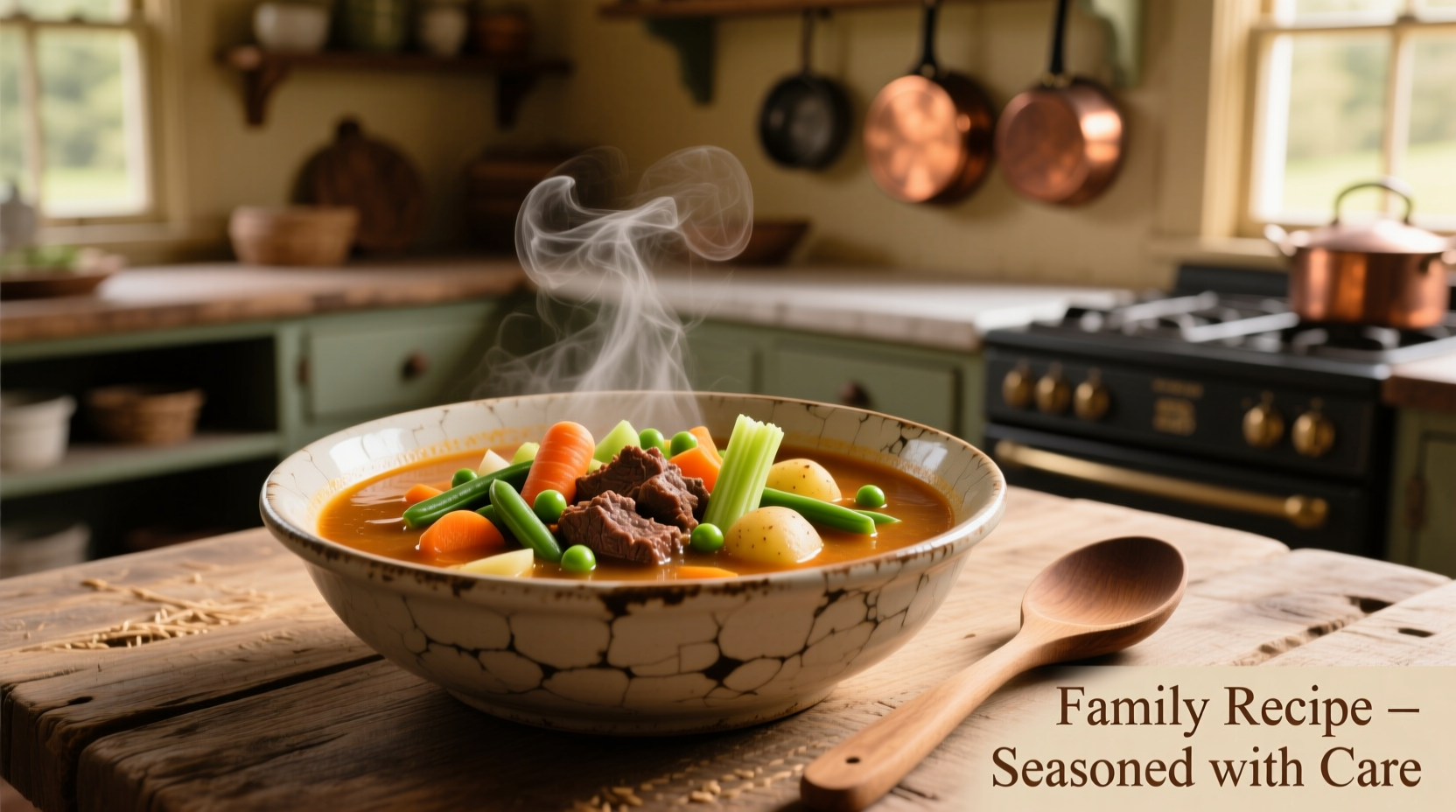
Hearty Soup with Ground Beef and Mixed Vegetables is a category of American-style stovetop soup characterized by its use of browned ground beef, frozen or fresh diced vegetables (typically carrots, peas, corn, green beans), aromatic herbs, and a broth or tomato-based liquid. It falls within the broader family of “minestrone-inspired” or “beef vegetable soups,” though it is distinct from Italian minestrone due to its reliance on ground meat and simplified preparation.
The dish likely emerged in mid-20th century American home kitchens, where convenience foods like frozen mixed vegetables and canned tomatoes became widely available. Its evolution reflects a shift toward time-efficient, nutrition-conscious cooking without sacrificing flavor. Unlike brothy consommés or delicate bisques, this soup is thick-bodied, chunky, and designed to be filling—ideal as a standalone meal.
Culinarily, it functions as a hybrid between stew and soup: thinner than a beef stew but heartier than chicken noodle. The flavor profile is savory, slightly sweet from the vegetables, with herbal notes from thyme or bay leaf and a subtle tang if tomatoes are included. Salt, black pepper, and Worcestershire sauce often enhance depth, while a splash of red wine vinegar or lemon juice at the end brightens the final dish.
Key Characteristics
| Characteristic | Description |
|---|---|
| Flavor | Savory, meaty base with natural sweetness from vegetables; can be slightly acidic if tomatoes are used. |
| Aroma | Warm, earthy scent from sautéed onions and garlic, enhanced by simmering herbs and beef. |
| Color & Texture | Brownish-red base with visible chunks of orange (carrots), green (peas, beans), yellow (corn); medium-thick consistency. |
| Heat Level | Mild unless spiced with red pepper flakes or hot sauce (optional). |
| Culinary Function | Main-dish soup; excellent for meal prep, freezing, and batch cooking. |
| Shelf Life | 3–4 days refrigerated; up to 6 months frozen. |
Practical Usage: How to Make & Use the Soup
The strength of this soup lies in its adaptability. While a standard method exists, skilled cooks adjust based on available ingredients, dietary needs, and desired outcomes. Below is a professional-grade approach suitable for both novice and experienced home cooks.
- Sauté Aromatics: In a large stockpot or Dutch oven over medium heat, warm 1–2 tablespoons of olive oil. Add 1 diced onion, 2 minced garlic cloves, and optionally 1 diced celery stalk and 1 diced carrot. Cook until softened (5–7 minutes), building a flavor foundation known as a *mirepoix*.
- Brown the Beef: Add 1 pound (450g) of 80–90% lean ground beef. Break it apart with a wooden spoon and cook until no pink remains. Drain excess fat if desired, though retaining some enhances mouthfeel.
- Build Flavor: Stir in 1 tablespoon tomato paste and cook for 1–2 minutes to deepen color and add richness. Deglaze the pot with ½ cup dry red wine or beef broth, scraping up browned bits (*fond*) from the bottom—this step is critical for flavor development.
- Add Liquids & Seasonings: Pour in 4–6 cups low-sodium beef or chicken broth. Add 1 (14.5 oz) can diced tomatoes (undrained), 1 teaspoon dried thyme, 1 bay leaf, salt, and black pepper to taste.
- Incorporate Vegetables: Stir in 3–4 cups frozen mixed vegetables (no need to thaw). Alternatively, use fresh or canned, adjusting cook time accordingly.
- Simmer: Bring to a boil, then reduce heat and simmer uncovered for 20–30 minutes. This allows flavors to meld and vegetables to absorb seasoning.
- Finish & Serve: Remove the bay leaf. Adjust seasoning with Worcestershire sauce (½–1 tsp), a splash of vinegar, or fresh parsley. For creaminess, stir in ¼ cup heavy cream or milk (optional).
Pro Tip: For deeper flavor, substitute 1 cup of broth with unsweetened tomato juice or V8. If you prefer a thicker soup, mash a small portion of the vegetables against the side of the pot during simmering to create a natural slurry.
In professional kitchens, this soup might be finished with a Parmesan rind added during simmering, which imparts umami and body. At home, similar results can be achieved with a tablespoon of grated Parmesan stirred in at the end.
Pairing Suggestions
- Bread: Crusty sourdough, garlic toast, or warm dinner rolls for dipping.
- Salad: A simple arugula salad with lemon vinaigrette cuts through the richness.
- Dairy: A dollop of sour cream or shredded cheddar adds creaminess and contrast.
- Grains: Serve over cooked rice, quinoa, or egg noodles to transform it into a stew-like entrée.
Variants & Types
While the core concept remains consistent, regional and household variations abound. Understanding these helps tailor the soup to specific tastes or dietary goals.
1. Classic American Home Version
The most common form: ground beef, frozen mixed vegetables, canned tomatoes, onion, garlic, and beef broth. Often includes Worcestershire and bay leaf. Served simply, sometimes with elbow macaroni added in the last 10 minutes of cooking.
2. Southwestern Style
Uses fire-roasted tomatoes, black beans, corn, cumin, chili powder, and a touch of cayenne. Garnished with avocado, cilantro, and lime. Omit traditional herbs like thyme in favor of Mexican oregano.
3. Italian-Inspired
Adds zucchini, spinach, cannellini beans, and pasta (like ditalini). Seasoned with basil, rosemary, and Parmesan. Closer to an Americanized minestrone with beef.
4. Low-Carb / Keto-Friendly
Excludes starchy vegetables like corn and peas. Uses cauliflower, broccoli, mushrooms, and green beans instead. Thicken with xanthan gum rather than flour or potato.
5. Slow Cooker / Instant Pot Adaptation
After browning meat and aromatics, transfer everything to a slow cooker and cook on low for 6–8 hours. In an Instant Pot, use the Sauté function, then pressure cook for 10 minutes with quick release.
| Variant | Best For | Key Modifications |
|---|---|---|
| Classic American | Family dinners, beginners | Standard ingredients, easy to find |
| Southwestern | Tex-Mex lovers, spice seekers | Chili spices, beans, lime finish |
| Italian-Inspired | Vegetable-forward, comfort food | Pasta, beans, fresh herbs |
| Low-Carb | Keto, diabetic diets | No corn/peas, non-starchy veggies |
| Slow Cooker | Meal prep, hands-off cooking | Brown first, then slow-cook |
Comparison with Similar Ingredients/Dishes
Several soups share traits with Hearty Soup with Ground Beef and Mixed Vegetables, but key distinctions set them apart.
| Dish | Similarities | Differences |
|---|---|---|
| Beef Stew | Uses beef, carrots, potatoes, onions | Stew uses cubed beef (not ground), longer cook time, thicker gravy-like consistency |
| Minestrone | Vegetable-heavy, often includes beans and pasta | Traditionally vegetarian; uses pancetta only as accent, not primary protein |
| Chili | Ground beef, tomatoes, beans, spices | Chili is spicier, bean-dominant, and lacks mixed vegetables like peas or green beans |
| Chicken Noodle Soup | One-pot, comforting, uses mixed vegetables | Lighter broth, poultry-based, includes noodles, less meat-heavy |
“The beauty of this soup is in its flexibility. I’ve made it with turkey instead of beef, swapped in kale for peas, and even added barley for extra chew. It’s not about rigid rules—it’s about creating something nourishing from what you have.”
— Chef Elena Martinez, Culinary Instructor, Portland Community College
Practical Tips & FAQs
Can I use a different type of meat?
Yes. Ground turkey, chicken, pork, or plant-based crumbles work well. Adjust cooking times as needed—poultry browns faster and may require less fat. For richer flavor, blend 70% lean beef with 30% ground pork.
How do I prevent the soup from becoming watery?
Avoid over-diluting with broth. Start with 4 cups and add more only if needed. Simmer uncovered to reduce and concentrate flavors. Using frozen vegetables (which release water) means less added liquid is required compared to fresh.
Is this soup freezer-friendly?
Yes. Cool completely, then store in airtight containers for up to 6 months. Thaw overnight in the refrigerator and reheat gently on the stove. Avoid boiling vigorously upon reheating to preserve vegetable texture.
What are good substitutions for mixed vegetables?
Use any combination of diced carrots, peas, corn, green beans, bell peppers, or zucchini. Fresh vegetables should be cut uniformly and added earlier (simmer 15–20 minutes). Canned vegetables should be drained and rinsed to reduce sodium.
How can I boost the nutritional value?
Add leafy greens like spinach or chopped kale in the last 5 minutes of cooking. Incorporate white beans or lentils for fiber and plant-based protein. Use whole grain pasta if including noodles.
Can I make it dairy-free and gluten-free?
Easily. Omit cream and cheese. Ensure broth and Worcestershire sauce are gluten-free (many brands are, but check labels—Lea & Perrins original contains barley malt).
Why did my soup turn out bland?
Underseasoning is the most common issue. Taste before serving and adjust: salt enhances all flavors, acid (vinegar, lemon) brightens, umami (Worcestershire, soy sauce) deepens. Also, browning the meat properly creates Maillard reaction compounds essential for savoriness.
Storage Checklist:
✓ Cool soup within 2 hours of cooking
✓ Store in containers no more than 2 inches deep for rapid cooling
✓ Label with date
✓ Refrigerate for up to 4 days
✓ Freeze for up to 6 months
Summary & Key Takeaways
Hearty Soup with Ground Beef and Mixed Vegetables is more than a recipe—it’s a foundational skill in home cooking. Its enduring popularity stems from its ability to deliver balanced nutrition, robust flavor, and emotional comfort with minimal effort.
- The dish centers on browned ground beef and a medley of colorful, nutrient-rich vegetables simmered in a savory broth.
- Flavor development hinges on proper browning, deglazing, and layering of seasonings—not just dumping ingredients into a pot.
- Variations allow adaptation to dietary preferences, from keto to Tex-Mex to Italian-inspired versions.
- It outperforms many commercial soups in both cost and quality, especially when made in batches.
- Freezer stability makes it ideal for meal planning, reducing food waste, and ensuring healthy options are always on hand.
Mastering this soup empowers cooks to navigate ingredient shortages, accommodate picky eaters, and respond to seasonal shifts. It teaches fundamental techniques—sautéing, deglazing, balancing flavors—that apply across cuisines. Whether served in a bowl with crusty bread or packed into a thermos for lunch, it remains a testament to the power of simple ingredients thoughtfully combined.




 浙公网安备
33010002000092号
浙公网安备
33010002000092号 浙B2-20120091-4
Comments
No comments yet. Why don't you start the discussion?