
For many, writing by hand remains a sanctuary in an increasingly digital world. Whether jotting down ideas, planning the week, or reflecting on life, the tool you choose matters. But when faced with a $200 leather-bound journal versus a $5 spiral notebook, the question arises: is the premium product truly worth the investment? The answer isn’t just about price—it’s about purpose, longevity, and personal experience.
Durability and Material Quality
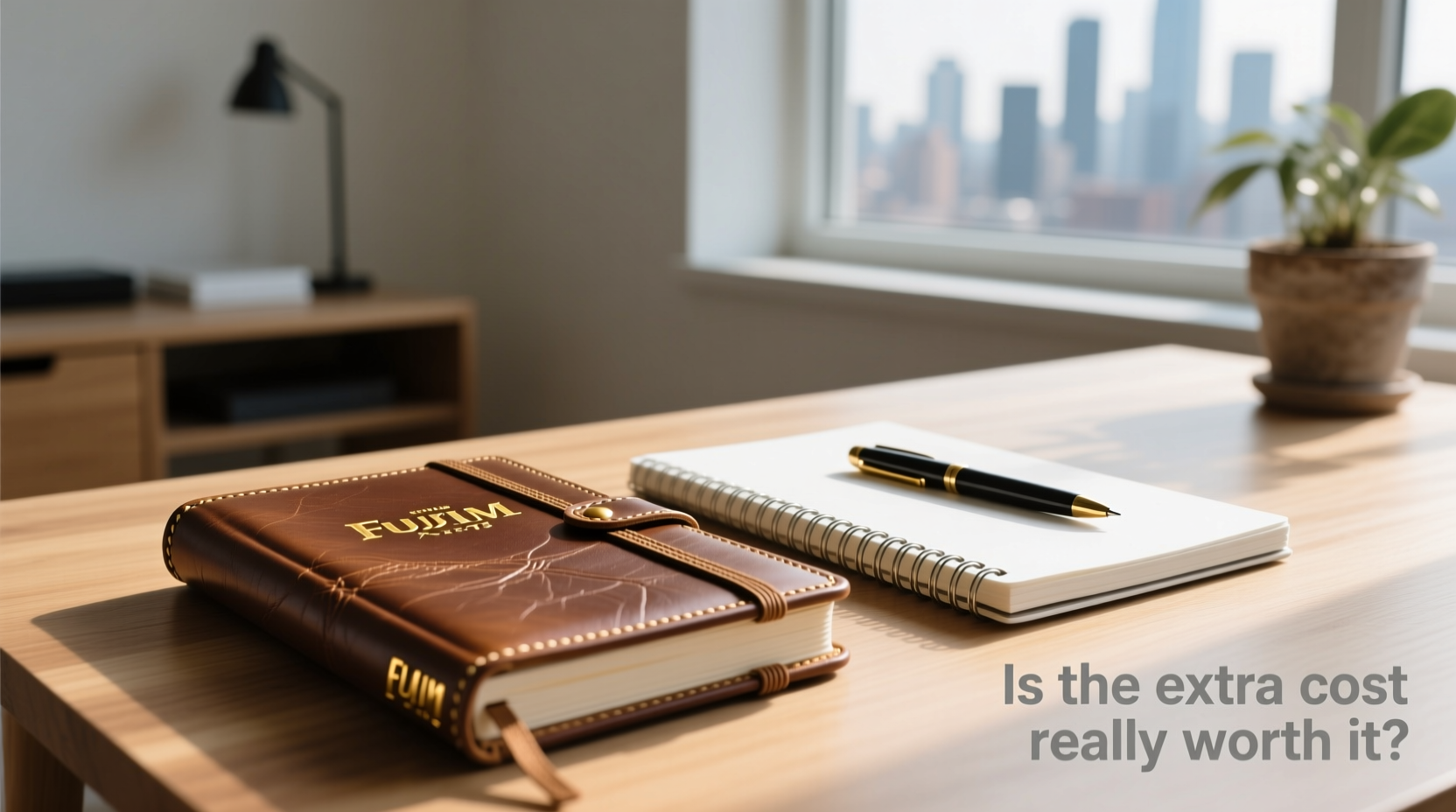
The most immediate difference between a high-end journal and a regular notebook lies in construction. Standard notebooks are typically made from wood pulp paper, glued spines, and plastic or thin cardstock covers. They serve their function but often fall apart after weeks of use—pages tear, bindings loosen, and corners crease.
In contrast, premium journals use materials designed to endure. Think acid-free, heavyweight paper (often 100 gsm or higher) that resists bleed-through and feathering, even with fountain pens. Covers are crafted from full-grain leather, sustainable cork, or durable synthetic fabrics like Tyvek. Sewn binding—not glue—ensures pages stay intact through years of use.
Writing Experience and Paper Performance
Paper quality directly impacts how enjoyable writing feels. Most standard notebooks use lower-grade paper optimized for cost, not performance. Ink bleeds through, smudges easily, and the surface can feel rough under the pen.
Premium journals prioritize tactile satisfaction. Brands like Moleskine, Leuchtturm1917, and Rhodia use smooth, fountain-pen-friendly paper. High-end options such as Midori MD Notebooks or Field Notes’ Space Explorer edition offer near-perfect ink absorption and minimal ghosting. This makes writing not just functional, but pleasurable—an experience akin to driving a well-tuned car versus a basic commuter model.
“Paper isn’t passive. It responds to the pen, influences speed, tone, and even thought flow. A good page invites deeper engagement.” — Sarah Lin, Journaling Educator & Analog Advocate
Design, Functionality, and Personalization
Beyond materials, high-end journals excel in thoughtful design. Features like numbered pages, table of contents, elastic closures, ribbon bookmarks, and expandable inner pockets transform a simple notebook into a personalized system. These aren’t luxuries—they’re usability upgrades that save time and reduce friction.
Consider a professional using a journal for client notes. With a Leuchtturm1917, they can quickly reference past entries via page numbers and index tabs. A student using a premium bullet journal benefits from consistent grid layouts and durable pages that withstand erasing and reworking.
Moreover, many luxury journals develop a patina over time. Leather covers soften and darken, acquiring character unique to the owner. This emotional connection elevates the object from tool to artifact—a companion in growth, creativity, or decision-making.
Cost Over Time: Value vs. Expense
At first glance, spending $50–$150 on a single journal seems excessive. But evaluating cost per use changes the equation. Suppose you use a $120 journal daily for two years—that’s less than 17 cents per day. Compare that to buying a new $5 notebook every month: $60 annually, totaling $120 over two years, with inferior quality and shorter lifespan.
Additionally, high-end journals often encourage more consistent use. Their aesthetic appeal and tactile pleasure motivate people to write more regularly. In behavioral psychology, this is known as *environmental cueing*—your surroundings influence habits. A beautiful, well-made journal sitting on your desk subtly invites use, unlike a crumpled notebook buried in a drawer.
| Feature | Regular Notebook | High-End Journal |
|---|---|---|
| Average Cost | $1–$7 | $30–$150 |
| Paper Quality | Low (60–70 gsm), prone to bleed | High (90–120 gsm), bleed-resistant |
| Binding | Glued or stapled | Sewn or stitched |
| Lifespan | Weeks to months | 1–5+ years |
| Additional Features | Minimal (maybe a pocket) | Index, ribbon, pocket, numbered pages |
| Emotional Value | Disposable | Keepsake, collectible |
When a Premium Journal Makes Sense (And When It Doesn’t)
Not every situation calls for a high-end journal. The key is matching the tool to the task.
- Worth the investment: Daily journaling, creative work, long-term projects, gift-giving, or professional note-taking where organization and durability matter.
- Overkill: Temporary lists, classroom note-taking (especially for young students), disposable brainstorming sessions, or environments where loss/damage is likely (e.g., construction sites).
Mini Case Study: From Spiral to Leather
Mark, a freelance designer, used cheap spiral notebooks for client meetings and idea sketches. He went through four per quarter, often losing them or damaging pages. After a recommendation, he bought a Midori Traveler’s Notebook with a leather cover and refillable inserts. Initially skeptical, he found himself organizing better, keeping more consistent records, and even archiving old covers. Two years later, he still uses the same base, rotating refills. “It felt like I started taking my work more seriously the moment I upgraded,” he says. “The notebook didn’t change my talent—but it changed my discipline.”
Step-by-Step Guide to Choosing the Right Journal
- Define your purpose: Is it for daily reflection, sketching, meeting notes, or bullet journaling?
- Assess frequency: Will you use it daily, weekly, or occasionally?
- Choose paper type: Ruled, dotted, grid, or blank? Consider ink type (ballpoint, gel, fountain pen).
- Evaluate portability: Do you carry it in a bag, or keep it at a desk?
- Set a budget: Decide if you’re paying for function, longevity, or emotional value.
- Test before committing: Try a mid-range option (e.g., Leuchtturm1917) before investing in luxury brands.
FAQ
Can I get the same benefits with a cheaper journal?
You can achieve functionality with a budget notebook, but not durability or refined writing experience. If you're serious about consistency and preservation, cheaper options will require more frequent replacement and may hinder enjoyment.
Do high-end journals improve writing quality?
Not directly—but they create conditions that support better habits. A well-made journal encourages care, focus, and regular use, which indirectly improves clarity, depth, and consistency in writing.
Are eco-friendly premium journals available?
Yes. Brands like Decomposition Books use 100% recycled paper, while Quino and Nock Co. emphasize sustainable sourcing and refillable designs that reduce waste.
Final Verdict: Is the Extra Cost Worth It?
The value of a high-end journal isn’t measured solely in paper and thread—it’s in the ritual it supports. For someone who writes occasionally, a regular notebook suffices. But for those who rely on writing to think, plan, heal, or create, a premium journal becomes an instrument of clarity and continuity.
Think of it like fine kitchen knives: a dull supermarket blade cuts food, but a sharp, balanced knife transforms cooking into a precise, enjoyable act. Similarly, a great journal doesn’t just hold words—it elevates the act of writing itself.
If you find yourself discarding notebooks due to poor quality, losing track of important notes, or avoiding writing because the process feels clunky, upgrading could be one of the smallest changes with the largest return on mental clarity and creative output.




 浙公网安备
33010002000092号
浙公网安备
33010002000092号 浙B2-20120091-4
Comments
No comments yet. Why don't you start the discussion?