
When selecting a blazer, most people focus on fabric, fit, and color—yet one of the most consequential design choices happens behind the scenes: whether the jacket is lined or unlined. Known in tailoring circles as “solid” (fully lined) versus “hollow” (partially or completely unlined), this distinction affects more than just appearance. It influences breathability, structure, longevity, and even seasonal versatility. Understanding the real-world impact of lining helps you make smarter wardrobe investments, especially if you wear suits or sport coats regularly.
The Anatomy of a Lined vs Unlined Blazer
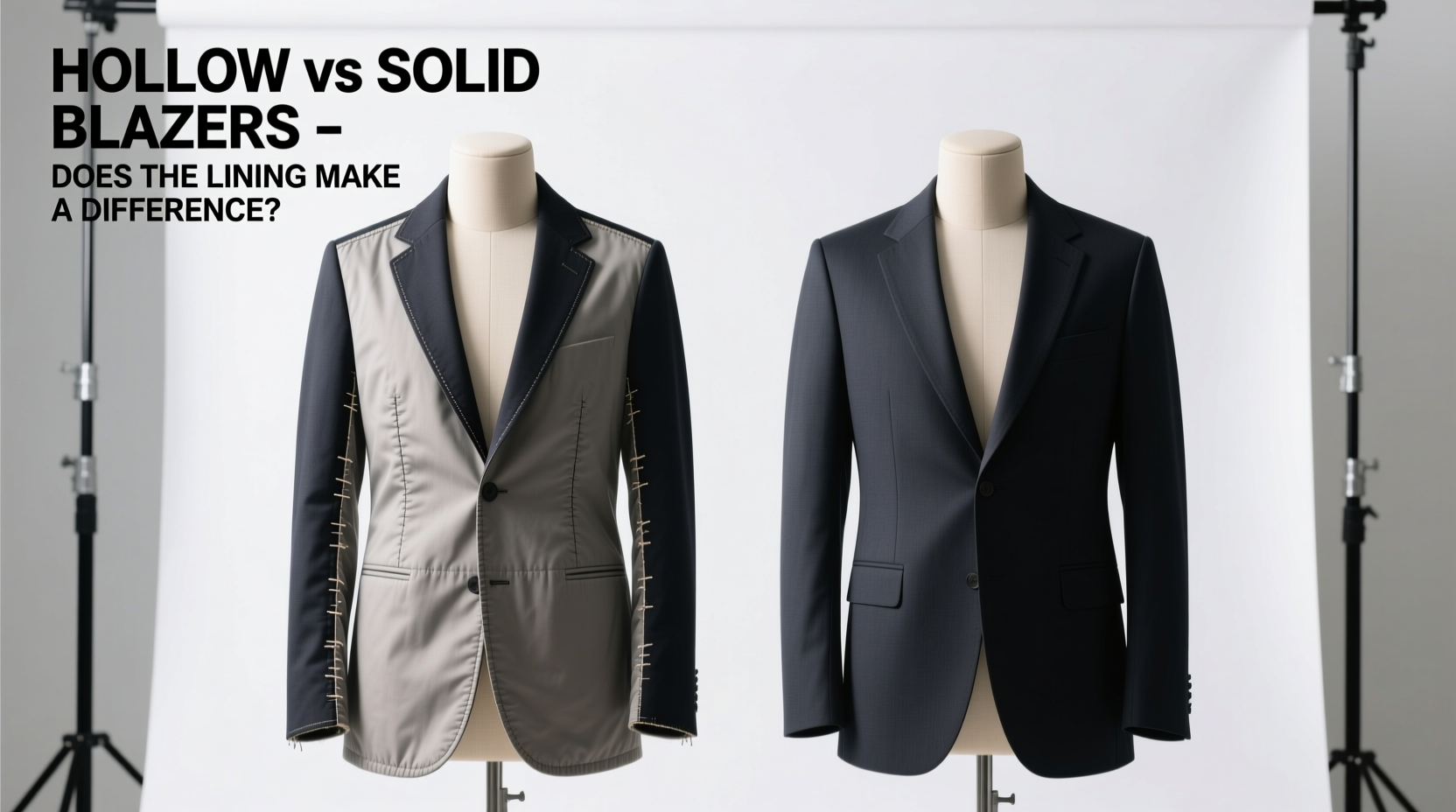
A solid (lined) blazer features a full inner lining, typically made from Bemberg, cupro, silk, or polyester, that covers the interior of the jacket from collar to hem. This lining conceals seams, interlinings, and canvas layers while providing a smooth surface for slipping the jacket on and off. In contrast, a hollow blazer omits some or all of the internal fabric. A partially lined version may have sleeves lined but not the body; a fully unlined jacket has no internal fabric at all, exposing raw edges and construction details.
The presence or absence of lining alters how the garment behaves under movement and stress. Lining adds stability and protects delicate fabrics from sweat and friction. Conversely, removing it reduces weight and enhances airflow—a key advantage in warm climates or during active use.
Performance Comparison: Comfort and Climate Adaptability
One of the most tangible differences between hollow and solid blazers lies in thermal regulation. A fully lined jacket traps heat, making it ideal for cooler seasons. However, in summer or indoor environments with strong air conditioning, this insulation can become uncomfortable.
Hollow blazers excel in breathability. Without synthetic linings blocking airflow, moisture evaporates faster, reducing clamminess. Natural fiber jackets like cotton, linen, or tropical wool benefit greatly from being unlined, as their inherent cooling properties aren’t compromised by an additional layer.
That said, going unlined comes with trade-offs. The lack of protection means body oils, deodorant residue, and perspiration come into direct contact with the shell fabric. Over time, this can lead to staining and degradation—especially in armpit areas where abrasion is constant.
“Unlined jackets are like open-top cars—they’re exhilarating in the right conditions, but they demand more care and aren’t suited for every season.” — Daniel Reyes, Master Tailor, Savile Row Atelier
Structural Integrity and Longevity
Lining doesn't just improve glide—it reinforces the jacket’s shape. A well-constructed solid blazer uses lining to anchor the canvas, helping maintain lapel roll and shoulder drape over years of wear. Without this support, hollow blazers rely entirely on the integrity of the outer fabric and internal canvas (if present).
In soft-shouldered, casual sport coats, this isn’t necessarily a drawback. Many Neapolitan-style jackets are intentionally unlined or half-lined to preserve their relaxed, fluid silhouette. But for structured business blazers, losing internal reinforcement can result in premature sagging, particularly across the chest and back.
Additionally, linings help distribute stress across the garment. When you move, sit, or reach, the force is absorbed by both the outer fabric and the inner layer working together. In an unlined jacket, all strain falls on the exterior material, increasing the risk of stretched seams or torn armholes.
Durability Factors at a Glance
| Factor | Solid (Lined) | Hollow (Unlined) |
|---|---|---|
| Breathability | Moderate to low | High |
| Heat Retention | High | Low |
| Stain Resistance | Higher (lining shields fabric) | Lower (direct skin contact) |
| Shape Retention | Superior | Varies by construction |
| Weight | Heavier | Lighter |
| Lifespan (with care) | 5–10+ years | 3–7 years |
Style Implications: Formality and Aesthetic Appeal
The choice between hollow and solid also sends subtle sartorial signals. A fully lined blazer reads as more formal, polished, and office-appropriate. The clean interior suggests precision and attention to detail—qualities associated with traditional tailoring.
Conversely, an unlined or partially lined jacket conveys a sense of ease and informality. Exposed stitching, raw hems, and visible padding suggest craftsmanship without pretense. These details are often celebrated in high-end casual tailoring, particularly in Italian and Japanese designs where understated elegance is prized.
However, aesthetics come with practical consequences. An unlined jacket worn frequently will show wear faster—pilling, discoloration, and fraying become visible sooner. For those who value a consistently pristine look, especially in professional settings, a lined option remains the safer bet.
Real-World Scenario: The Travel Executive’s Dilemma
Consider Mark, a financial consultant based in Miami who travels weekly between tropical destinations and air-conditioned boardrooms. He initially favored unlined linen blazers for their coolness and packability. While they performed well in humidity, he noticed visible sweat stains after only a few months and frequent wrinkling from being folded in luggage.
After switching to a lightweight, fully lined tropical wool blazer with Bemberg lining, his experience improved dramatically. The natural fiber wove allowed breathability, while the lining protected the fabric, reduced creasing, and provided smoother movement under arm. Though slightly heavier, the jacket maintained its appearance longer and transitioned seamlessly from plane cabins to client meetings.
This case illustrates that lining isn’t just about tradition—it’s a functional upgrade when durability and versatility matter.
Choosing What Works for You: A Practical Checklist
Selecting between hollow and solid depends on your lifestyle, climate, and usage patterns. Use this checklist to guide your decision:
- ✅ Do you wear the blazer daily in climate-controlled offices? → Choose solid (lined)
- ✅ Will you wear it in hot or humid conditions? → Lean toward hollow or partially lined
- ✅ Is it primarily for formal events or business attire? → Prioritize a lined construction
- ✅ Do you value a soft, broken-in feel over crisp structure? → Hollow may suit you better
- ✅ Are you looking for maximum longevity with minimal maintenance? → Go solid
- ✅ Do you travel frequently and need a packable jacket? → Consider unlined—but expect faster wear
Frequently Asked Questions
Can I wash a lined blazer at home?
No. Most lined blazers require dry cleaning. Home washing risks shrinking the outer fabric or delaminating the canvas. Always check the care label, but assume professional cleaning is necessary, especially for wool or structured garments.
Does partial lining offer the best of both worlds?
For many, yes. Partially lined blazers (e.g., lined sleeves with an unlined body) balance breathability and structure. They reduce bulk while still protecting high-friction areas like underarms. This hybrid approach works well for transitional seasons and smart-casual wear.
Are expensive unlined blazers worth it?
Only if you appreciate their aesthetic and understand their limitations. High-end unlined jackets use superior fabrics and hand-stitching, which improves drape and durability. But they won’t last as long as lined counterparts under heavy use. Think of them as seasonal pieces rather than workhorses.
Final Thoughts: Function Over Fashion Clichés
The debate between hollow and solid blazers isn’t about which is universally better—it’s about alignment with your needs. Lining isn’t merely decorative; it serves critical roles in protection, structure, and longevity. Dismissing it as outdated misses the point of enduring quality.
If you prioritize comfort in heat, embrace the unlined look—but commit to rotating pieces and diligent care. If you want a reliable, long-term investment that withstands daily wear, a well-lined blazer with natural fibers like Bemberg or cupro offers unmatched performance.




 浙公网安备
33010002000092号
浙公网安备
33010002000092号 浙B2-20120091-4
Comments
No comments yet. Why don't you start the discussion?