
For families shopping for a three-row midsize SUV in 2024, two models consistently rise to the top: the Honda Pilot and the Volkswagen Atlas. Both offer seating for up to eight, modern tech, and strong utility—but when it comes down to daily life with kids, groceries, road trips, and carpool runs, which one truly delivers more value? The answer depends on your priorities: long-term reliability and fuel efficiency versus bold styling and driving dynamics. Let’s break down the key differences to help you decide.
Space and Seating: Practicality for Growing Families
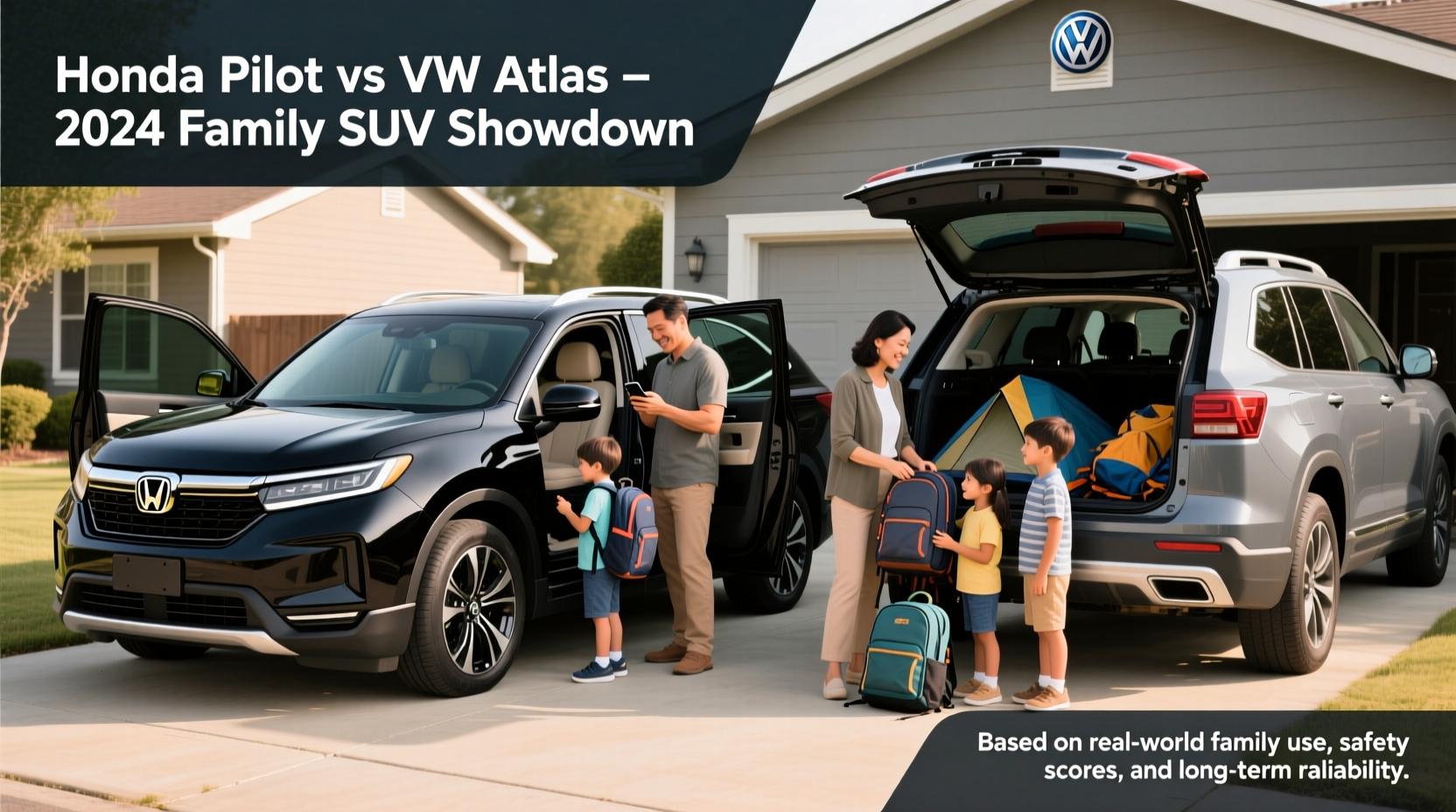
When you're transporting multiple kids, sports gear, strollers, and weekend luggage, interior space isn’t just nice—it’s essential. Both the Honda Pilot and VW Atlas are built around maximizing passenger and cargo room, but they approach it differently.
The Honda Pilot offers 18.5 cubic feet of cargo space behind the third row, expanding to 94.7 cubic feet with both rear rows folded. Its third-row seat is best suited for children or smaller adults, but it’s among the most accessible in its class thanks to a walk-through feature between the second-row captain’s chairs (on higher trims).
The VW Atlas counters with a larger footprint—especially in width. It boasts 20.6 cubic feet behind the third row and up to 96.8 cubic feet max. More importantly, the Atlas has one of the roomiest third rows in the segment, comfortably fitting two adults on longer drives. This makes it ideal for families who regularly carry older kids or extended relatives.
| Feature | Honda Pilot (2024) | VW Atlas (2024) |
|---|---|---|
| Cargo Space (Behind 3rd Row) | 18.5 cu ft | 20.6 cu ft |
| Cargo Space (Max) | 94.7 cu ft | 96.8 cu ft |
| Third-Row Legroom | 34.4 inches | 37.6 inches |
| Seating Capacity | 8 (6 or 7 optional) | 7 or 8 |
| Second-Row Configurations | Bench or captain’s chairs | Bench only |
Reliability and Long-Term Ownership
Family vehicles need to last. You’re not just buying a car—you’re investing in school drop-offs, vacation hauls, and years of dependable service. Here, Honda’s reputation shines.
The Pilot has consistently ranked at the top of reliability surveys. J.D. Power gives the 2024 model a 4-out-of-5 predicted reliability rating, citing strong powertrain durability and low ownership costs. Honda’s 3.5L V6 engine has been refined over generations and is known for exceeding 200,000 miles with regular maintenance.
In contrast, the VW Atlas has made strides in quality, but Volkswagen as a brand still lags behind Honda in long-term dependability. Consumer Reports notes that while the 2024 Atlas has improved infotainment and fewer mechanical issues than past models, its overall reliability remains average. Extended warranty enrollment is common among owners, and some report higher-than-average maintenance costs after the first five years.
“Families should prioritize longevity and repair costs. A vehicle like the Honda Pilot may cost slightly more upfront but often saves thousands over a decade.” — Mark Tran, Automotive Analyst at Kelley Blue Book
Driving Experience and Fuel Efficiency
The Honda Pilot uses a 285-horsepower 3.5L V6 engine paired with a smooth 10-speed automatic transmission. It returns an EPA-estimated 20 mpg city and 27 mpg highway. While not sporty, it delivers predictable handling and a comfortable ride, especially on rough roads. The available torque-vectoring AWD enhances traction in snow—a plus for northern families.
The VW Atlas also features a 272-horsepower 2.0L turbo-four (standard) or a 3.6L V6 (optional), the latter producing 276 hp. The V6 version feels more responsive and pairs well with the 8-speed automatic. However, it only manages 17 mpg city and 23 mpg highway—significantly less efficient than the Pilot. The trade-off is a firmer, more engaging drive; the Atlas handles corners better and feels more planted at highway speeds.
If you value a quiet cabin and soft suspension for long drives, both deliver. But the Pilot edges ahead in ride comfort, particularly with adaptive dampers on Elite trims. The Atlas excels in steering feedback and driver engagement, making it a better pick for parents who enjoy driving.
Safety and Technology Features
Safety is non-negotiable for family buyers. Both SUVs come standard with robust driver-assistance suites.
The Honda Pilot includes Honda Sensing® as standard: adaptive cruise control, lane-keeping assist, collision mitigation braking, and road departure mitigation. Higher trims add blind-spot monitoring, rear cross-traffic braking, and hands-free parking assist. The 2024 model earns a Top Safety Pick+ from the IIHS, with “Good” ratings in all crash tests.
The VW Atlas comes with IQ.DRIVE® standard, featuring similar features: Travel Assist (adaptive cruise with lane centering), Front Assist, and emergency stop assist. Blind-spot monitoring and rear traffic alert are included on most trims. It also earns top marks from the IIHS, though its headlights vary by trim—some receive “Acceptable,” others “Good.”
Mini Case Study: The Miller Family's Decision
The Millers, a family of six in Colorado, needed a reliable SUV for mountain commutes and annual cross-country trips. They tested both the Honda Pilot TrailSport and the VW Atlas V6 SEL. While they loved the Atlas’s bold styling and spacious third row, their mechanic advised against it due to expected maintenance costs beyond 80,000 miles. They ultimately chose the Pilot, citing peace of mind, better fuel economy, and Honda’s stronger resale value. After 10 months, they report excellent traction in snow, minimal road noise, and no issues with the drivetrain.
Ownership Costs and Resale Value
According to iSeeCars, the Honda Pilot retains about 62% of its value after five years, ranking it among the top three in its class for resale. Maintenance costs over 10 years average $7,300—well below average.
The VW Atlas holds only 48% of its value in the same period. RepairPal estimates 10-year maintenance costs at $9,700, driven by pricier parts and labor. While VW offers a competitive 4-year/50,000-mile bumper-to-bumper warranty (with 3 years of free maintenance), long-term ownership proves costlier.
“Resale value and reliability matter most for families. The Pilot might feel less exciting, but it’s a smarter financial decision over time.” — Sarah Kim, Senior Editor at Car and Driver
Frequently Asked Questions
Is the Honda Pilot more reliable than the VW Atlas?
Yes. Multiple sources, including Consumer Reports and J.D. Power, rank the Honda Pilot significantly higher in predicted reliability. The Atlas has improved but still faces higher repair frequency and cost.
Which SUV has the easier-to-use infotainment system?
The 2024 Honda Pilot uses a 9-inch touchscreen with wireless Apple CarPlay and Android Auto. It’s intuitive and responsive. The VW Atlas features a 12-inch Discover Pro system with sharper graphics but a steeper learning curve. Some users report lag and menu complexity.
Can both SUVs tow a camper or small trailer?
Absolutely. The Honda Pilot can tow up to 5,000 pounds when properly equipped. The VW Atlas matches this with its V6 engine. Both are capable for family camping trips or hauling jet skis.
Final Verdict: Which Is Better for Families in 2024?
The choice between the Honda Pilot and VW Atlas comes down to values. If you prioritize long-term reliability, lower running costs, better fuel economy, and strong resale value, the Honda Pilot is the smarter, more practical choice. It’s the dependable workhorse that won’t surprise you with expensive repairs.
However, if you want a roomier third row, a more engaging drive, and prefer European styling and tech, the VW Atlas deserves serious consideration—especially if you plan to keep it under five years and can budget for higher maintenance.
For most families focused on value, safety, and hassle-free ownership, the Honda Pilot emerges as the winner in 2024. It strikes the ideal balance between space, efficiency, and peace of mind.




 浙公网安备
33010002000092号
浙公网安备
33010002000092号 浙B2-20120091-4
Comments
No comments yet. Why don't you start the discussion?