
Losing weight doesn’t require extreme diets or complicated formulas. At its core, weight loss comes down to one principle: energy balance. If you consume fewer calories than your body burns, you will lose weight. But determining exactly how many calories to eat—and how much of a deficit is safe and effective—can be confusing. This guide breaks down the science of calorie management, offers real-world strategies, and provides tools to help you set a personalized plan that works long-term.
Understanding Your Calorie Needs
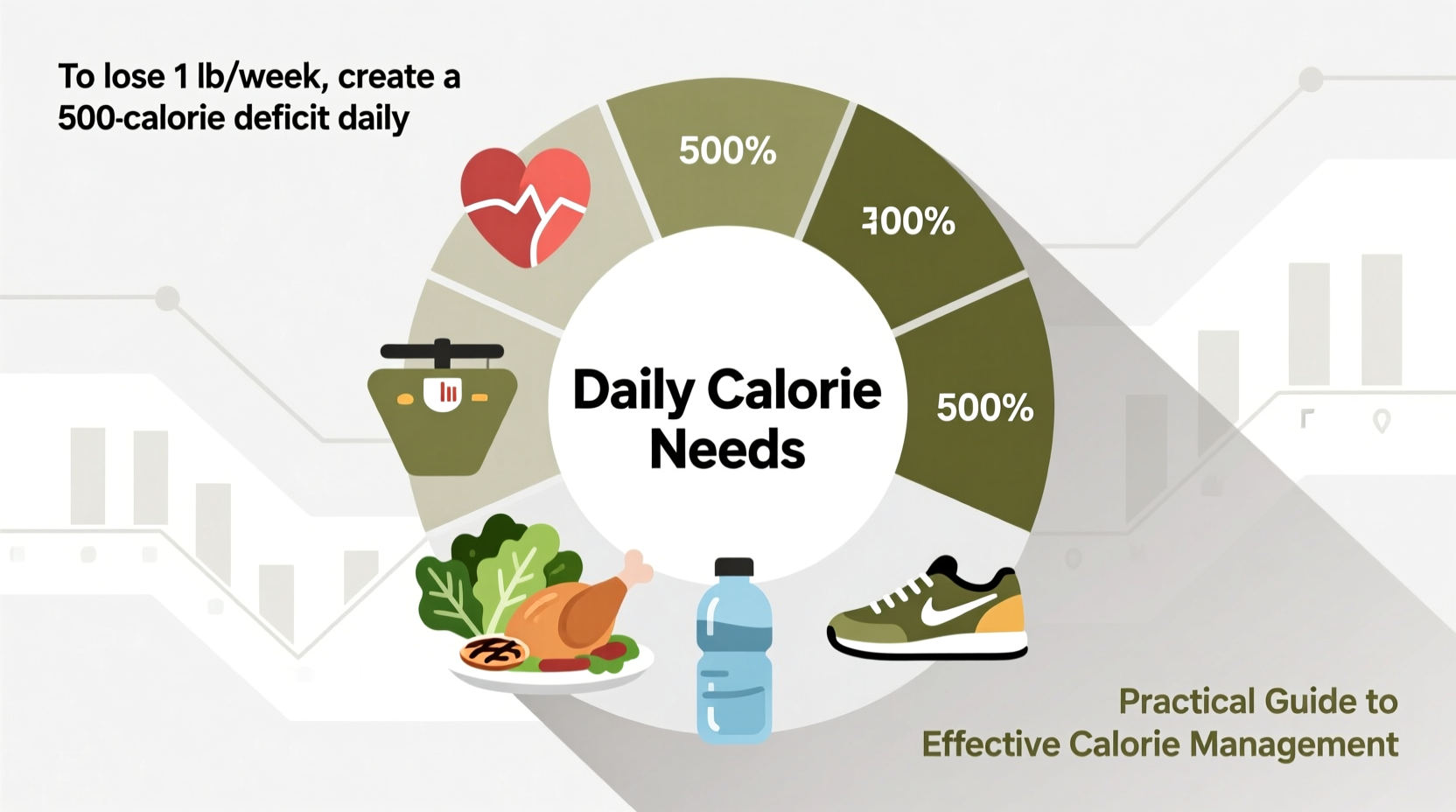
Your total daily energy expenditure (TDEE) is the number of calories your body burns in a day, including all physical activity and basic metabolic functions like breathing and digestion. To lose weight, you must consume fewer calories than your TDEE. However, cutting too much too fast can backfire by slowing metabolism, increasing hunger, and reducing energy levels.
TDEE is influenced by four main factors:
- Basal Metabolic Rate (BMR): Calories burned at rest to maintain vital functions.
- Thermic Effect of Food (TEF): Energy used to digest and process food (~10% of intake).
- Physical Activity Level (PAL): Includes both structured exercise and daily movement (NEAT).
- Exercise Activity Thermogenesis (EAT): Calories burned during workouts.
To estimate your TDEE, start by calculating your BMR using the Mifflin-St Jeor equation:
Men: BMR = 10 × weight (kg) + 6.25 × height (cm) – 5 × age (y) + 5
Women: BMR = 10 × weight (kg) + 6.25 × height (cm) – 5 × age (y) – 161
Multiply your BMR by an activity factor:
| Activity Level | Description | Multiplier |
|---|---|---|
| Sedentary | Little or no exercise | BMR × 1.2 |
| Lightly active | Light exercise 1–3 days/week | BMR × 1.375 |
| Moderately active | Exercise 3–5 days/week | BMR × 1.55 |
| Very active | Hard exercise 6–7 days/week | BMR × 1.725 |
| Extra active | Very hard exercise & physical job | BMR × 1.9 |
Creating a Sustainable Calorie Deficit
A common misconception is that drastic cuts lead to faster results. In reality, aggressive deficits often result in muscle loss, fatigue, and rebound weight gain. A moderate deficit of 500–750 calories per day typically leads to a safe weight loss of 1–1.5 pounds per week.
For example:
- If your TDEE is 2,300 calories, aim for 1,550–1,800 calories daily.
- If you're larger or more active, your TDEE may exceed 3,000, allowing a higher intake while still losing weight.
The key is consistency. Short-term starvation diets disrupt hormones like leptin and ghrelin, increasing hunger and reducing satiety. A steady, manageable deficit preserves lean mass and supports adherence.
“The most effective diet is the one you can stick to without feeling deprived.” — Dr. Susan Jenkins, Registered Dietitian and Obesity Specialist
Step-by-Step Guide to Managing Calories
Follow this six-step process to build a realistic calorie management strategy:
- Determine your current weight and goals. Are you aiming for slow, steady loss or more aggressive reduction? Define your target weight and timeline.
- Calculate your TDEE. Use the formula above or a trusted calculator. Record it clearly.
- Set your daily calorie target. Subtract 500 from your TDEE for a 1 lb/week loss. Adjust based on progress after two weeks.
- Track your intake for 7–10 days. Use apps like MyFitnessPal or Cronometer to log everything you eat. Accuracy matters.
- Weigh yourself weekly. Track trends, not daily fluctuations. If weight stalls for two consecutive weeks, reduce intake by 100–200 calories/day.
- Adjust based on results. If you’re losing more than 2 lbs/week, consider eating slightly more to preserve muscle. If no change, recheck portion sizes or activity levels.
Nutrition Quality Matters Just as Much as Quantity
You can technically lose weight eating only junk food if you stay under your calorie limit—but that approach harms health, energy, and sustainability. Prioritize nutrient-dense foods that support fullness and metabolic function.
Focus on:
- Lean proteins (chicken, fish, eggs, legumes)
- Fiber-rich vegetables and fruits
- Whole grains and complex carbohydrates
- Healthy fats (avocado, nuts, olive oil)
These foods increase satiety, stabilize blood sugar, and protect muscle during weight loss. Protein, in particular, has a high thermic effect and helps maintain lean tissue when in a deficit.
Mini Case Study: Realistic Weight Loss in Action
Meet James, a 38-year-old office worker who weighs 220 lbs and wants to lose 30 pounds. He’s sedentary but walks occasionally. Using the Mifflin-St Jeor equation:
BMR = (10 × 100 kg) + (6.25 × 178 cm) – (5 × 38) + 5 = 1,910
TDEE = 1,910 × 1.2 (sedentary) = ~2,290 calories
James sets a target of 1,800 calories per day—a 490-calorie deficit. He focuses on meals rich in protein and vegetables, avoids sugary drinks, and starts walking 30 minutes daily. After three weeks, he loses 4.2 pounds—slightly more than expected. He adjusts his intake to 1,850 calories to slow the rate and preserve energy.
Over five months, James reaches 190 lbs. His clothes fit better, energy improves, and he maintains the loss by gradually increasing intake to match his new TDEE.
Common Pitfalls and How to Avoid Them
Even with the right calorie math, people often stall due to hidden mistakes:
| Pitfall | Why It Happens | Solution |
|---|---|---|
| Underestimating portions | Guessing instead of measuring oils, nuts, dressings | Use measuring spoons and a food scale for accuracy |
| Drinking empty calories | Soda, juice, alcohol add up quickly | Limit sugary drinks; choose water, tea, black coffee |
| Inconsistent tracking | Skipping logs on weekends or busy days | Treat tracking like brushing teeth—non-negotiable |
| Over-restricting then binging | Too steep a deficit causes cravings | Start with a moderate cut; allow flexibility |
FAQ
Can I lose weight without counting calories?
Yes, but it’s less precise. Strategies like portion control, mindful eating, and choosing whole foods can create a natural deficit. However, tracking initially helps you understand serving sizes and identify problem areas.
What if my weight stops dropping?
This is normal. As you lose weight, your TDEE decreases. Recalculate your needs every 10–15 pounds lost. Also, check for hidden calories, reduced activity, or water retention from increased sodium or carbs.
Is it safe to eat below 1,200 calories a day?
Generally, no—unless supervised by a healthcare provider. Very low-calorie diets risk nutrient deficiencies, muscle loss, and metabolic slowdown. Women should rarely go below 1,200, men below 1,500 without medical guidance.
Checklist: Your Calorie Management Action Plan
- ☐ Calculate your BMR and TDEE
- ☐ Set a realistic calorie target (500–750 deficit)
- ☐ Choose a tracking app and commit to logging
- ☐ Weigh and measure portions for accuracy
- ☐ Eat at least 0.7g protein per pound of body weight
- ☐ Reassess every 2–3 weeks based on progress
- ☐ Stay hydrated and prioritize sleep to support metabolism
Conclusion
Effective weight loss isn’t about perfection—it’s about consistency, awareness, and balance. Knowing how many calories you need is the foundation, but success comes from applying that knowledge with patience and self-awareness. Whether you're starting from scratch or restarting after a setback, the principles remain the same: eat slightly less than you burn, choose nourishing foods, and adjust based on real results.




 浙公网安备
33010002000092号
浙公网安备
33010002000092号 浙B2-20120091-4
Comments
No comments yet. Why don't you start the discussion?