
Before the age of smartphones and instant messaging, staying in touch required patience, planning, and a reliance on physical and mechanical systems. Communication was slower, but often more meaningful. People cultivated relationships through handwritten letters, scheduled phone calls, and public messaging systems that shaped social norms around connection. Understanding these older methods offers insight into how technology has transformed not just how we communicate, but how we relate to one another.
The Role of Written Correspondence: Letters and Postcards
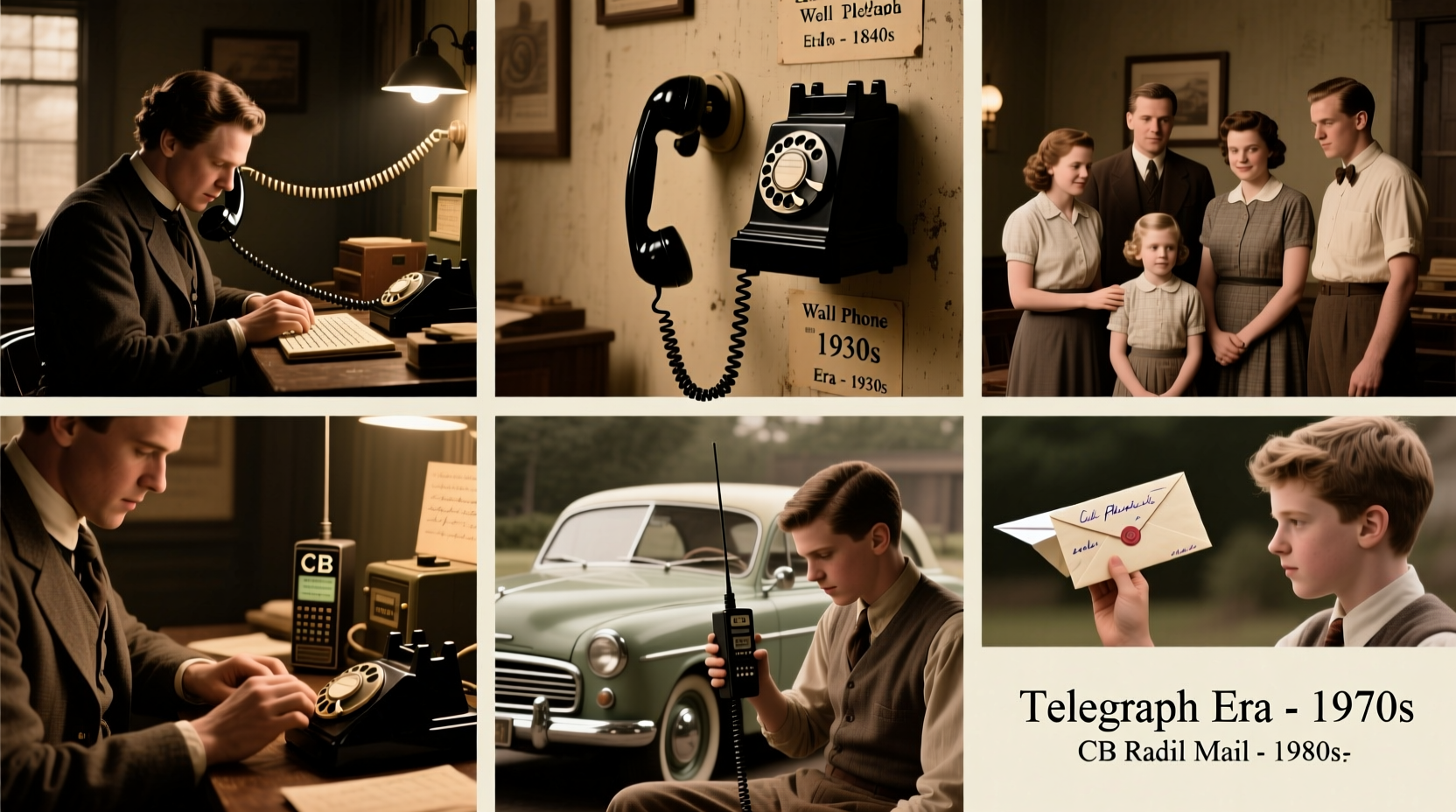
For centuries, written letters were the primary way individuals maintained long-distance relationships. Whether between family members separated by migration, soldiers at war, or lovers in different cities, letters carried both information and emotional weight. The process began with pen and paper—often high-quality stationery for formal correspondence—and ended at a mailbox, where postal workers ensured delivery, sometimes taking days or even weeks.
Postal systems varied by country, but most developed robust networks by the 19th century. In the United States, the introduction of adhesive postage stamps in 1847 made mailing more accessible. In Britain, the Penny Post reform of 1840 allowed letters to be sent anywhere in the UK for one penny, dramatically increasing mail volume.
Postcards emerged in the late 1800s as a quicker, cheaper alternative for short updates, especially during travel. Their lack of privacy (messages were visible) encouraged lighthearted or formal content rather than intimate revelations.
Landline Telephones: The Voice Connection
The invention of the telephone by Alexander Graham Bell in 1876 revolutionized personal communication. By the mid-20th century, landline phones were common in homes across industrialized nations. Unlike letters, phone calls enabled real-time conversation, fostering immediacy and emotional nuance through tone of voice.
Early systems relied on switchboard operators who manually connected calls by plugging cables into panels. By the 1960s, automated dialing with rotary phones became standard. Households typically had one shared line, meaning private conversations were rare and timing mattered—calling after dinner hours was considered polite.
Long-distance calls were expensive and often reserved for special occasions. Families would schedule calls in advance, sometimes booking “party lines” where multiple households shared a single line, requiring etiquette and discretion.
“Hearing a loved one’s voice across miles was once a luxury. Today it’s taken for granted.” — Dr. Helen Torres, Historian of Communication Technology
Telegrams and Teletype: Speed Over Sentiment
When speed was essential, people turned to telegrams. Using Morse code transmitted over telegraph wires, telegrams could cross continents in minutes—a breakthrough in the 1800s. Operated by companies like Western Union, they were used for urgent news: births, deaths, job offers, or travel delays.
Because cost was based on word count, telegrams were concise, often beginning with “STOP” to mark sentence ends. A typical message might read: “ARRIVING THURSDAY STOP MEET AT STATION STOP LOVE MOTHER.” This brevity influenced early digital communication styles, including texting abbreviations decades later.
Teletype machines expanded this system in the 20th century, enabling typed text transmission between businesses, news agencies, and government offices. Though impersonal, they laid the groundwork for email and digital messaging.
A Step-by-Step Timeline of Pre-Cell Phone Communication
Understanding how communication evolved helps contextualize the shift to mobile technology. Here’s a chronological overview of key milestones:
- 1837: Samuel Morse develops the electric telegraph, enabling coded long-distance messaging.
- 1876: Alexander Graham Bell patents the telephone, introducing voice transmission.
- 1880s–1900s: Postal services expand globally; letter writing peaks in personal and business use.
- 1915: First transcontinental phone call in the U.S., though still rare and costly.
- 1947: Introduction of the teletypewriter exchange (TWX) for business communication.
- 1960s–1980s: Rotary and touch-tone phones become household staples; answering machines appear.
- 1970s–1990s: Fax machines allow document transmission, widely adopted in offices.
- 1990s: Email and internet chat begin replacing some traditional methods, setting stage for mobile era.
Communication in Daily Life: A Real Example
Consider Maria, a college student in 1985 studying abroad in Spain. To stay in touch with her parents in Chicago:
- She writes a letter every two weeks, describing classes and weekend trips. It takes 7–10 days to arrive.
- She schedules a monthly Sunday morning call using a prepaid calling card from a campus phone booth. Rates are high, so conversations last 15 minutes.
- When she misses her flight home, she sends a telegram to her parents: “DELAYED BY STORM STOP NEXT FLIGHT MONDAY STOP NO WORRIES STOP MARIA.”
This mix of methods reflects the reality of pre-cell phone life: deliberate, planned, and fragmented—but effective.
Comparison of Pre-Mobile Communication Methods
| Method | Speed | Cost | Privacy | Best Use Case |
|---|---|---|---|---|
| Letters | Days to weeks | Low | High | Personal updates, emotional expression |
| Landline Calls | Instant | Moderate (long distance = high) | Moderate (shared lines) | Urgent news, family check-ins |
| Telegrams | Minutes to hours | High per word | Moderate | Time-sensitive announcements |
| Fax | Minutes | Moderate (machine + phone line) | High | Business documents, contracts |
| Email (pre-smartphone) | Seconds to hours | Low (with internet access) | Moderate (security concerns) | Work communication, quick updates |
Essential Tips for Understanding Historical Communication
- Plan ahead: Without instant replies, scheduling was essential for coordination.
- Write clearly: Poor handwriting or vague phrasing could delay understanding by days.
- Respect timing: Calling outside agreed hours was intrusive; letters respected the recipient’s time.
- Value permanence: Handwritten letters were kept for years, unlike fleeting digital texts.
Frequently Asked Questions
How did people make international calls before cell phones?
International calls required operator assistance or direct dialing through long-distance carriers. They were expensive and often scheduled in advance. Many used collect calls or calling cards accessed via payphones. Time zone differences also required careful planning.
Were answering machines common before mobile phones?
Yes, by the 1980s, many households had answering machines. These devices recorded voice messages when no one was home. They reduced missed connections but lacked the portability of voicemail on mobile phones.
Did people really use telegrams for personal messages?
Absolutely. While associated with official news, telegrams were used for birthdays, condolences, and urgent personal updates. Western Union reported delivering over 200 million telegrams annually at its peak in the 1940s.
Final Thoughts: What We’ve Gained—and Lost
The shift from letters, landlines, and telegrams to smartphones has brought unmatched convenience. Yet, something subtle has been lost: the intentionality behind each message. Writing a letter forced reflection. Waiting for a reply built anticipation. Scheduling a call showed respect.
Today’s constant connectivity can feel overwhelming, but revisiting older methods offers balance. Consider writing a thoughtful note instead of a text. Make a voice call instead of firing off a quick message. Embrace slowness in communication—not out of necessity, but by choice.




 浙公网安备
33010002000092号
浙公网安备
33010002000092号 浙B2-20120091-4
Comments
No comments yet. Why don't you start the discussion?