
Choosing the right puffy jacket isn’t just about style or brand reputation—it’s about performance. At the heart of that performance lies insulation, specifically the amount and distribution of padding. Too little, and you’ll be cold in freezing conditions; too much, and you’ll overheat or lose mobility. The key is balance. Accurately calculating the right padding amount ensures your jacket delivers maximum thermal efficiency while maintaining breathability, flexibility, and comfort. This guide breaks down the science, materials, and practical steps to help you determine the ideal fill weight and loft for your needs.
Understanding Insulation: Fill Power vs. Fill Weight
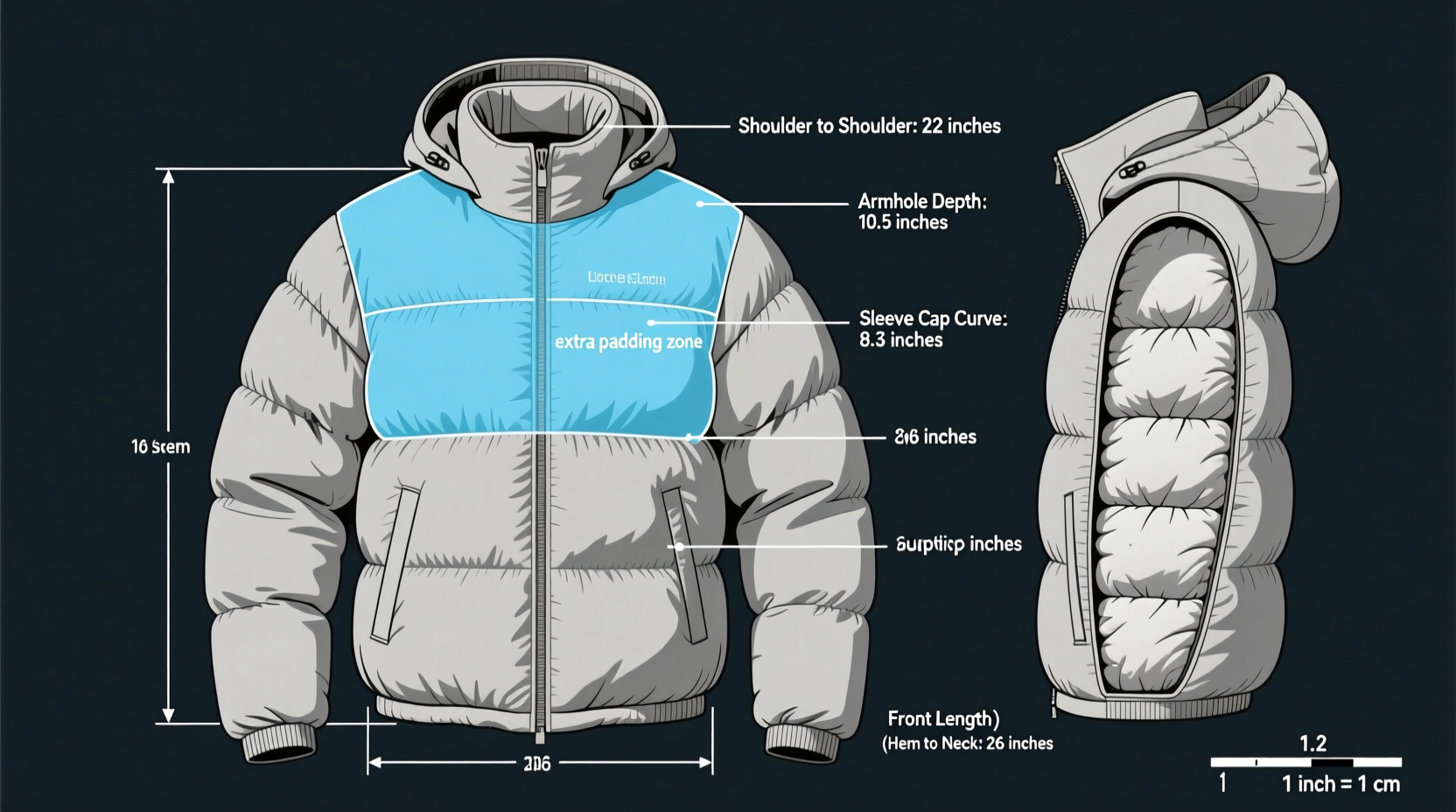
Before calculating padding, it's essential to distinguish between two critical metrics: fill power and fill weight. Both influence warmth but serve different purposes.
Fill power measures the volume one ounce of down (or synthetic equivalent) occupies in cubic inches. A higher fill power—such as 700, 800, or 900—means the down clusters are larger and trap more air per ounce, offering greater warmth-to-weight ratio. High-fill-power down is lighter and more compressible, making it ideal for mountaineering or ultralight backpacking.
Fill weight, on the other hand, refers to the actual mass of insulation used in the jacket, typically measured in grams. A jacket with lower fill power may compensate with higher fill weight to achieve similar warmth—but at the cost of added bulk and reduced packability.
For example, a 650-fill-power jacket with 200g of down might feel warmer than an 850-fill-power jacket with only 120g, despite the latter being more efficient. Understanding this relationship allows you to tailor insulation to your climate, activity level, and layering system.
Factors That Influence Ideal Padding Amount
The “right” padding amount isn't universal—it depends on several personal and environmental factors:
- Climate and temperature range: Colder environments demand higher total insulation. A jacket rated for -10°C will require significantly more padding than one designed for 5°C.
- Activity level: High-exertion activities like skiing or snowshoeing generate body heat. Excessive padding can lead to sweat buildup and dampened insulation. Opt for moderate fill weight with excellent breathability.
- Layering strategy: If you plan to wear multiple mid-layers underneath, you may not need a heavily padded jacket. In such cases, a lighter insulated piece works better as a mid-layer rather than an outer shell.
- Body composition and metabolism: Individuals with lower body fat or slower metabolisms often run colder and may benefit from additional insulation.
- Jacket cut and design: Longer jackets or those with extended hoods and longer sleeves naturally require more padding to cover the same surface area evenly.
“Warmth isn’t just about how much insulation you have—it’s about how well it’s distributed and protected from compression.” — Dr. Lena Torres, Outdoor Gear Engineer, Alpine Performance Labs
Step-by-Step Guide to Calculating Optimal Padding
To determine the ideal padding amount for your puffy jacket, follow this structured approach:
- Define your primary use case: Are you hiking in sub-zero alpine zones? Commuting in urban winters? Backpacking in shoulder seasons? Write down expected temperatures and activity intensity.
- Assess your existing layering system: List what base and mid-layers you typically wear. Thicker fleeces or wool layers reduce the need for a heavily insulated jacket.
- Check manufacturer specs: Look up jackets in your target category. Note their fill power, fill weight, and temperature ratings. Create a comparison chart (see below).
- Estimate surface coverage: Measure your torso height and width. Multiply by 2 (front and back). Add ~30% for arms, hood, and overlap. This gives approximate surface area needing insulation.
- Apply the warmth-per-gram rule: As a general benchmark:
- Light insulation: 80–120g (suitable for 5°C to 10°C or active use)
- Moderate insulation: 130–180g (comfortable in 0°C to 5°C)
- Heavy insulation: 190g+ (designed for -5°C and below, especially for low-movement scenarios)
- Adjust for fill power: Higher fill power means less weight needed. Use this formula: Relative Warmth = Fill Weight × (Fill Power / 100). For instance, a 150g 700-fill jacket scores 1,050; a 120g 850-fill scores 1,020—nearly equivalent warmth with less weight.
- Test real-world performance: If possible, try jackets in similar conditions. Pay attention to cold spots, underarm ventilation, and whether the padding shifts or compresses under load (e.g., wearing a backpack).
Comparison Table: Fill Power vs. Fill Weight Scenarios
| Jacket Type | Fill Power | Fill Weight (g) | Relative Warmth Score | Best Use Case |
|---|---|---|---|---|
| Ultralight Packable | 850 | 110 | 935 | Active use, spring/fall, emergency layer |
| Urban Winter Coat | 650 | 220 | 1,430 | Daily wear in -5°C to 0°C, minimal activity |
| Backpacking Mid-Layer | 750 | 160 | 1,200 | Hiking in cold weather, worn under shell |
| Expedition-Grade | 800 | 250 | 2,000 | Arctic expeditions, static camping |
Real Example: Choosing for a Winter Trek in the Rockies
Sarah, an experienced hiker planning a 5-day winter trek in Colorado, needed a reliable puffy jacket. Temperatures would range from -10°C at night to 2°C during the day. She planned to ski uphill and camp in a tent, so her activity level varied.
She tested three options:
- A 600-fill jacket with 200g of down: warm but bulky, overheated during skiing.
- An 850-fill jacket with 130g: too light for evenings, required constant layering.
- A 750-fill jacket with 180g: balanced warmth and breathability, performed well across conditions.
Using the relative warmth formula, Sarah calculated:
- Option 1: 600 × 200 = 1,200
- Option 2: 850 × 130 = 1,105
- Option 3: 750 × 180 = 1,350
The third option scored highest and matched her needs perfectly—proving that neither the heaviest nor the highest-fill-power jacket was best. The optimal padding came from strategic balance.
Common Mistakes and How to Avoid Them
Many buyers make assumptions that compromise performance:
- Mistake: Equating price with warmth. Expensive doesn’t always mean warmer—check fill weight and construction.
- Mistake: Ignoring baffling design. Poorly constructed baffles allow insulation to shift, creating cold spots even with high fill weight.
- Mistake: Overlooking durability. Lightweight high-fill-power jackets may use thinner shells that snag easily. Balance performance with resilience.
- Mistake: Not considering moisture. Down loses insulating ability when wet. In humid climates, consider hydrophobic-treated down or synthetic insulation.
Frequently Asked Questions
Can I layer instead of buying a heavier puffy jacket?
Yes. Layering a lightweight puffy under a windproof shell offers greater versatility than a single ultra-heavy jacket. You can add or remove layers based on exertion and temperature, avoiding overheating.
Is synthetic padding easier to size than down?
In some ways, yes. Synthetic insulation retains warmth when wet and doesn’t require fluffing after compression. However, it’s heavier and bulkier for the same warmth. Use the same calculation method—focus on grams per square meter of coverage.
How do I know if my jacket has enough padding?
Perform a simple test: zip up the jacket and move through your typical motions (raising arms, bending). If you feel tightness or restriction, the padding may be excessive. If cold air seeps through easily or the fabric collapses under light pressure, there’s likely insufficient loft or fill weight.
Final Checklist: Choosing the Right Padding Amount
- ☑ Define your coldest expected temperature
- ☑ Determine your typical activity level
- ☑ Assess your current layering system
- ☑ Compare fill power and fill weight across models
- ☑ Calculate relative warmth score (Fill Weight × Fill Power ÷ 100)
- ☑ Check for even baffle distribution and durable shell material
- ☑ Test fit with layers you plan to wear
Conclusion
Selecting the right padding amount for a puffy jacket is both art and science. It requires understanding technical specifications, personal needs, and real-world performance. By focusing on fill weight, fill power, and intended use—not just marketing claims—you can find a jacket that keeps you warm without weighing you down. Whether you're braving city winters or summiting snowy peaks, precision in insulation choice makes all the difference. Take the time to calculate, compare, and test. Your comfort—and safety—depends on it.




 浙公网安备
33010002000092号
浙公网安备
33010002000092号 浙B2-20120091-4
Comments
No comments yet. Why don't you start the discussion?