
Selecting the right pendant necklace isn’t just about aesthetics—it’s about fit, proportion, and personal expression. A poorly measured chain can sit awkwardly on the neckline, fail to highlight a pendant properly, or even feel uncomfortable throughout the day. Whether you’re shopping online, gifting jewelry, or designing your own piece, knowing how to measure a pendant necklace accurately ensures it complements your body type, outfit, and lifestyle. This guide walks through every essential step—from understanding standard lengths to customizing for unique styles—so you can choose or create a necklace that feels intentional and looks flawless.
Understanding Necklace Length Categories
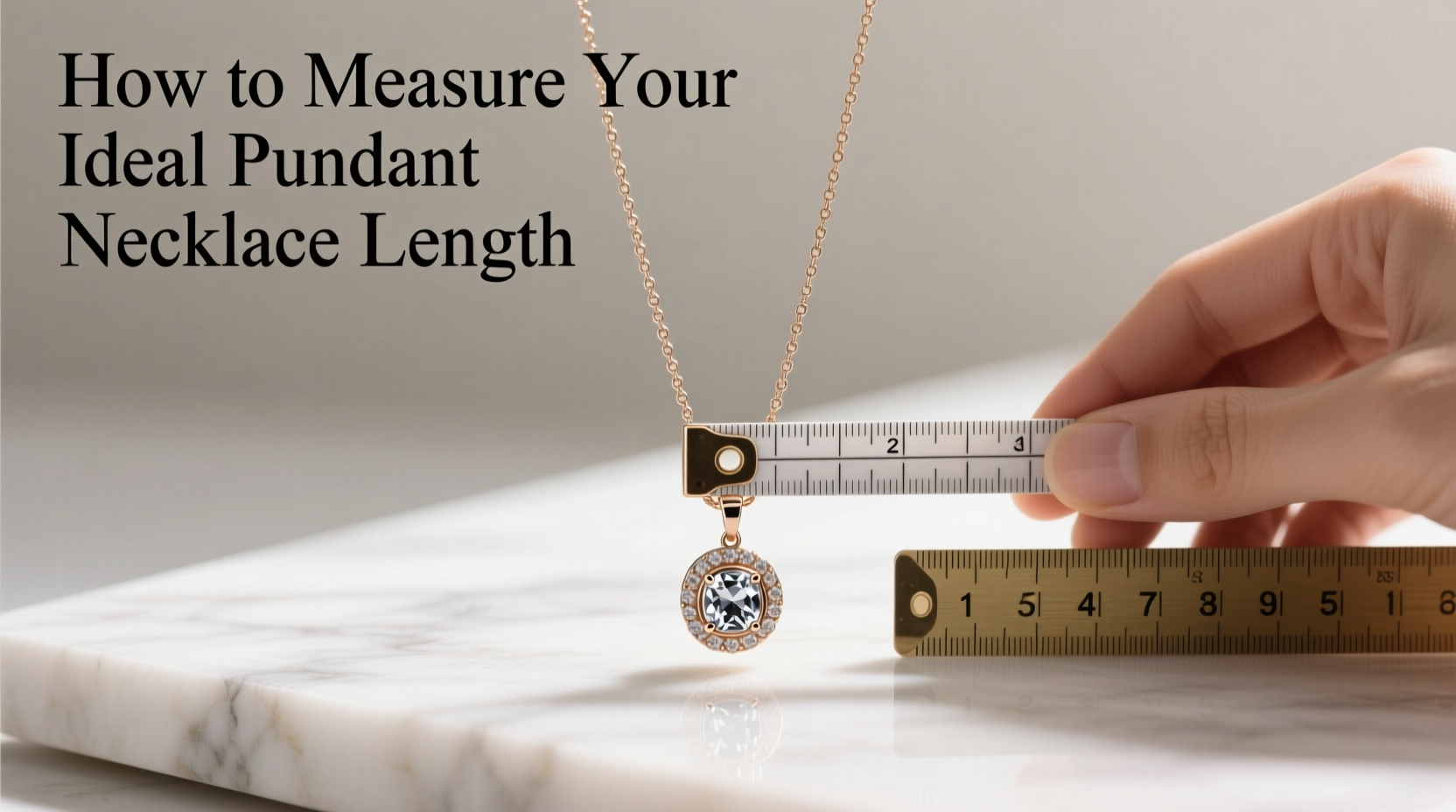
Necklaces are categorized by their total length, which determines where they rest on the body. These standard classifications help buyers and designers communicate clearly about fit and style. While personal preference plays a role, knowing these ranges provides a reliable starting point.
| Length (inches) | Name | Where It Falls | Best For |
|---|---|---|---|
| 14–16 | Choker | At or just below the base of the neck | High necklines, petite frames |
| 17–18 | Princess | Midway between collarbone and bust | Most outfits, average height |
| 19–20 | Matinee | Rests at the collarbone or top of bust | Blouses, V-necks, professional wear |
| 21–24 | Opera | Reaches the breastbone or upper bust | Evening wear, layered looks |
| 30+ | Rope or Lariat | Below the bust, often multi-strand | Statement pieces, draping styles |
Step-by-Step Guide to Measuring Your Ideal Necklace Length
To find your perfect pendant necklace length, follow this hands-on method using common household tools. Accuracy is key, especially when ordering online or commissioning custom jewelry.
- Gather materials: Use a flexible tape measure, a piece of string, and a mirror. A friend can help, but solo measurement works too.
- Stand naturally: Wear a form-fitting top and stand straight in front of a mirror. Avoid slouching or pulling your shoulders back unnaturally.
- Mark your desired drop point: Decide where you want the pendant to rest—on the collarbone, sternum, or lower chest—and lightly touch that spot.
- Measure from the base of the neck: Place the start of the tape measure at the center back of your neck (where a necklace clasp typically sits). Bring it around the front, over the shoulder, and down to your chosen endpoint.
- Record the full circumference: Double the one-sided measurement to get the total necklace length. For example, if from back to front is 9 inches, the full length is 18 inches.
- Test with string: Cut a piece of string to your measured length, tie it into a loop, and wear it for a few minutes. Observe how it drapes with different tops.
This method accounts for posture, neck width, and torso proportions—factors generic size charts ignore. Repeat the process with various endpoints to explore multiple style options.
Matching Pendant Style to Chain Length
The pendant’s size, shape, and design should harmonize with the chain length. A mismatched combination can look unbalanced or drown out the wearer’s features.
- Short chains (14–16\"): Best with small pendants (under 1 inch). Delicate lockets, initials, or minimalist symbols work well without overwhelming the neckline.
- Princess length (17–18\"): Versatile for medium pendants (1–1.5\"). Hearts, crosses, or geometric shapes draw attention to the center of the chest.
- Matinee & opera (19–24\"): Accommodate larger or vertically oriented pendants (1.5\"+). Teardrop stones, layered charms, or script designs gain visual impact.
- Rope or lariat (30\"+): Ideal for dramatic pendants or no pendant at all—these often rely on the chain’s movement and weight for effect.
“Proportion is everything in jewelry. A 2-inch pendant on a 16-inch chain will sit too high and look cramped. Let the length give the pendant room to breathe.” — Lena Torres, Jewelry Designer & Educator
Real-World Example: Choosing the Right Necklace for a Gift
Sophia wanted to surprise her sister with a personalized pendant necklace for her birthday. Her sister had mentioned liking “something elegant but wearable every day,” but Sophia wasn’t sure about sizing. She remembered her sister often wore a thin gold chain that rested just above her collarbone. Using a string, Sophia replicated that chain’s length and measured it: 18 inches. She also noted the pendant was small—a single birthstone about 0.75 inches tall.
With that reference, Sophia chose an 18-inch princess-length chain with a slightly larger initial pendant (1 inch), ensuring it would align similarly. She added a 2-inch extender for versatility. The gift arrived perfectly sized, and her sister later texted: “It sits exactly where I like it—thank you for getting it right!”
This example shows how observation and simple measurement eliminate guesswork, even when buying for someone else.
Checklist: How to Confirm Your Necklace Fit Before Buying
- ✅ Determine where you want the pendant to fall (collarbone, sternum, etc.)
- ✅ Measure your neck-to-point distance with a tape or string
- ✅ Double the one-side measurement to get total length
- ✅ Compare with standard categories (choker, princess, matinee, etc.)
- ✅ Consider adding a 1–2 inch extender for adjustable wear
- ✅ Visualize the pendant size relative to the chain length
- ✅ Test with a temporary string loop before final purchase
Frequently Asked Questions
How do I measure a necklace I already own?
Lay the chain flat on a surface, stretch it straight, and measure from clasp tip to tip using a ruler or tape measure. Include the pendant in the measurement only if it’s permanently fixed and affects drape.
Does neck size affect necklace length?
Yes. People with thicker or shorter necks may find shorter chains feel tighter, while those with long necks might prefer extra length to balance proportions. Always test fit when possible.
Can I adjust a necklace after purchase?
Absolutely. Many jewelers add extenders upon request. You can also restring longer chains or use a simple jump ring to add a few inches. Just ensure the clasp remains secure.
Final Tips for Styling Confidence
Necklace length influences not just appearance but comfort and function. A choker should allow space for a finger between the chain and skin; anything tighter risks discomfort. Longer chains should avoid constant tugging or snagging during daily activities. When layering, space each necklace by 2–3 inches in length to prevent tangling and create a deliberate cascade.
Conclusion
Measuring a pendant necklace accurately transforms jewelry from mere accessory to intentional extension of personal style. By understanding standard lengths, applying precise measurement techniques, and matching pendants to proportions, you gain confidence in every choice—whether buying, gifting, or creating. Don’t settle for guesswork when a few minutes with a tape measure can ensure lasting satisfaction. Put these steps into practice today and wear your next necklace with pride.




 浙公网安备
33010002000092号
浙公网安备
33010002000092号 浙B2-20120091-4
Comments
No comments yet. Why don't you start the discussion?