
Selecting the right Apple Watch strap isn’t just about style—it’s about comfort, functionality, and long-term wearability. With Apple Watch Series 7 through 10 offering larger display sizes and slightly different case dimensions compared to earlier models, getting the correct strap size is more important than ever. A strap that’s too tight can restrict circulation; one that’s too loose may shift during workouts or slip under clothing. This guide walks you through precise measurement techniques, compatibility considerations, and smart selection strategies tailored specifically to the latest Apple Watch generations.
Understanding Apple Watch Sizing Across Series 7–10
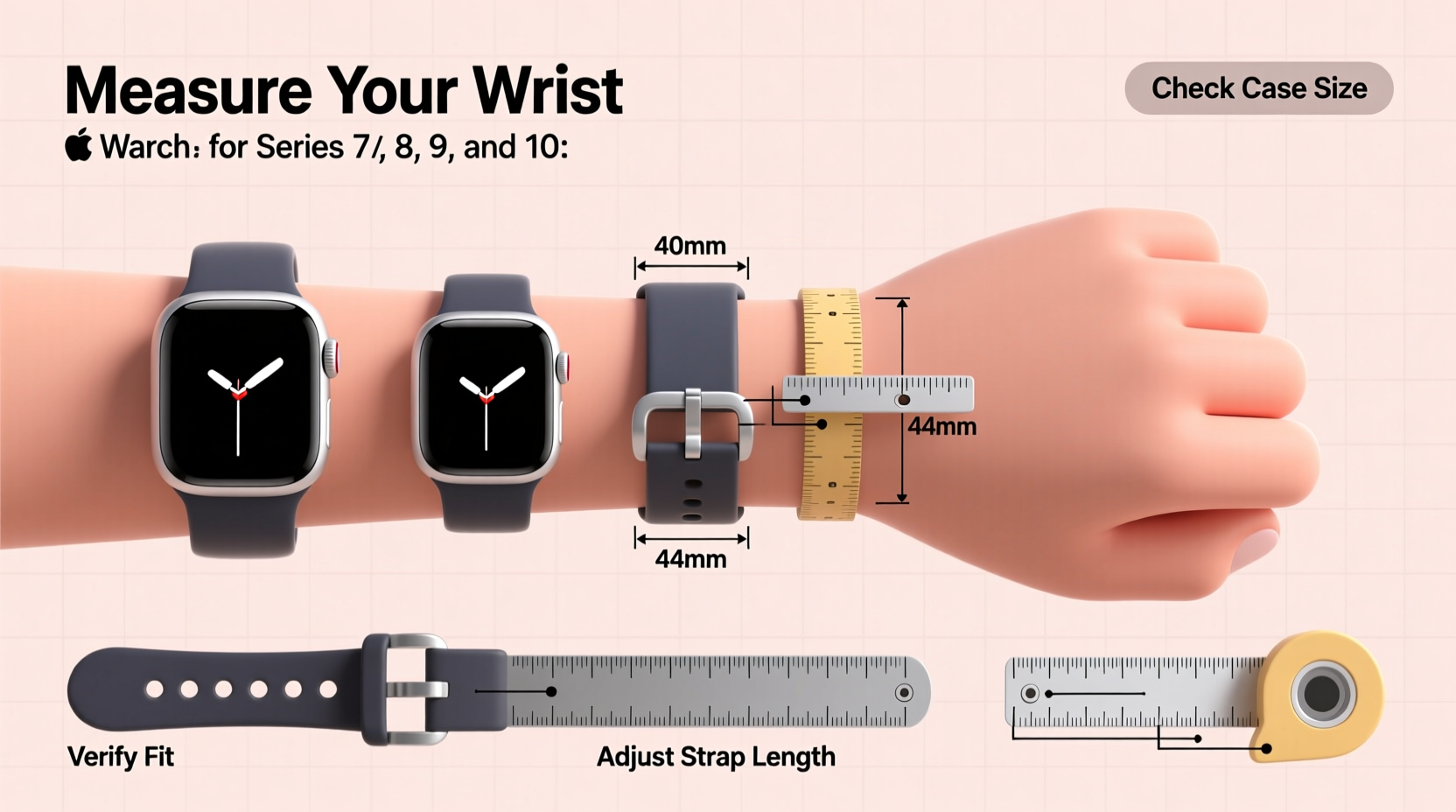
Apple Watch Series 7 introduced a refined design with flatter edges and a slightly larger footprint despite maintaining two primary case sizes: 41mm and 45mm (replacing the older 40mm and 44mm). Series 8, 9, and 10 continue this trend, ensuring backward compatibility in band attachment mechanisms but emphasizing fit precision due to increased screen real estate and snug wrist presence.
The key takeaway: while all modern bands use the same quick-release pin system and are technically interchangeable between Series 7–10, the ideal strap length depends on your wrist circumference—not just your watch model. Misjudging this can lead to discomfort, especially during sleep tracking or intense activity.
Step-by-Step Guide to Measuring Your Wrist Accurately
Accurate measurement is the foundation of a perfect fit. Follow these steps using simple household tools:
- Gather Supplies: Use a flexible measuring tape (like a tailor’s tape), or a strip of paper and a ruler.
- Position Correctly: Wrap the tape around your wrist just below the wrist bone—the spot where you naturally wear your watch.
- Tightness Matters: Keep the tape snug but not tight—allow enough space to slide a finger underneath.
- Note the Measurement: Record the circumference in millimeters or inches.
- Determine Band Size: Compare your measurement to manufacturer size charts (see table below).
If using paper, mark where it overlaps, then lay it flat and measure against a ruler. Repeat twice for consistency.
“Many users assume their watch case size dictates band choice. But wrist shape, volume, and even swelling throughout the day affect optimal fit.” — Jordan Lee, Wearable Ergonomics Consultant
Choosing the Right Strap Length by Wrist Size
Most third-party and Apple-branded bands come in three standard lengths: Small/Medium (S/M) and Medium/Large (M/L). Some premium or sport-focused brands offer additional increments.
| Wrist Circumference | Recommended Band Size | Compatible Watch Models |
|---|---|---|
| 130–160 mm (5.1–6.3 in) | Small/Medium (S/M) | All Series 7–10 (best for smaller wrists) |
| 160–200 mm (6.3–7.9 in) | Medium/Large (M/L) | All Series 7–10 (most common range) |
| 200+ mm (7.9+ in) | Extended/Large or custom bands | Available from select brands (e.g., Nomad, BeltLoop) |
For those at the edge of a range—say, 158mm—opt for S/M if you prefer a snugger fit for fitness tracking. Choose M/L if you plan to wear the watch over clothing or want room for seasonal wrist swelling.
Material and Closure Type Impact Fit Perception
Beyond length, the strap’s material and clasp influence how it feels on your wrist. Consider these factors:
- Sport Bands (Silicone): Stretch slightly over time. Start snug but not overly tight.
- Leather & Fabric Loops: Non-adjustable; rely on elastic weave. Must match your exact wrist size.
- Stainless Steel & Milanese Loops: Highly adjustable via sliders. Ideal for in-between sizes.
- Nylon Braided Bands: Minimal stretch; ensure proper hole alignment.
Real Example: Choosing the Right Strap for Active Lifestyles
Sarah, a yoga instructor and triathlete, owns an Apple Watch Series 9 (45mm). Her wrist measures 172mm, placing her comfortably in the M/L range. Initially, she bought an S/M Sport Band, assuming “smaller” would mean better security during movement. However, after prolonged wear, she noticed red marks and restricted blood flow post-workout.
She switched to an M/L Nike Sport Band with ventilation channels and found immediate relief. The extra holes allowed micro-adjustments, and the breathable material reduced sweat buildup. For evenings, she uses a Milanese Loop, which she adjusts precisely each time. Her experience underscores that accurate sizing prevents both slippage and constriction—especially critical for active users.
Checklist: How to Select Your Perfect Strap
Before purchasing any new strap, go through this checklist:
- ✅ Measure your wrist circumference accurately
- ✅ Confirm compatibility with Apple Watch Series 7–10 (all current bands are compatible)
- ✅ Decide on primary use: daily wear, sports, formal events
- ✅ Choose material based on climate and skin sensitivity
- ✅ Verify adjustability: multiple holes, sliding mechanism, or stretch
- ✅ Check return policy in case sizing is off
- ✅ Test fit immediately upon arrival—don’t wait days
Frequently Asked Questions
Can I use an older Apple Watch band on Series 7–10?
Yes. All Apple Watch bands from Series 3 onward are compatible thanks to the standardized quick-spring pin system. However, ensure the band length matches your wrist, not just the attachment type.
Why does my band leave marks on my wrist?
Persistent marks usually indicate the band is too tight. Remove it periodically and re-evaluate fit. Also consider switching to a breathable material like nylon or perforated leather.
Are there straps for very small or large wrists?
Absolutely. Apple offers S/M and M/L sizes covering most users. For extremes, explore specialty brands like MaxBands (for larger wrists) or LilWrists (for petite frames), which cater to underserved sizes.
Final Tips for Long-Term Comfort and Style
Your Apple Watch is designed for constant companionship—so its strap should feel like a natural extension of your lifestyle. Rotate straps based on activity: a rugged link bracelet for the office, a lightweight Solo Loop for running, and a woven band for casual outings. Regular cleaning extends the life of silicone and fabric materials, preserving elasticity and hygiene.
Remember, the “perfect” strap balances aesthetics, durability, and anatomical fit. Don’t settle for “close enough.” Invest time in measuring once, and enjoy years of seamless integration between technology and comfort.




 浙公网安备
33010002000092号
浙公网安备
33010002000092号 浙B2-20120091-4
Comments
No comments yet. Why don't you start the discussion?