
Choosing the right pillow cover isn’t just about style—it’s about fit. A poorly fitting cover can bunch, gap, or slip off during the night, disrupting comfort and diminishing the aesthetic of your bedding. Many people assume all standard pillows are the same size, but subtle variations between brands and types mean that guessing can lead to frustration. To achieve a clean, tailored look and ensure lasting comfort, accurate measurement is essential. This guide walks you through the precise steps, tools, and considerations needed to measure any pillow correctly—whether it's down, memory foam, or a decorative bolster.
Why Accurate Pillow Measurement Matters
A well-fitted pillow cover enhances both function and appearance. Covers that are too tight strain seams and compress the pillow, reducing support. Those that are too loose shift around, creating lumps and an unmade look. The ideal fit allows the pillow to fill the cover fully without overstretching the fabric, resulting in a smooth, hotel-quality finish.
Differences in manufacturing standards mean a \"queen\" pillow from one brand may be ½ inch larger than another. Memory foam pillows often expand slightly after unpacking, while down-filled ones compress over time. Measuring each pillow individually eliminates guesswork and ensures consistency across your bedroom or guest linens.
“Most returns for pillow covers stem from incorrect sizing assumptions. When customers measure first, satisfaction increases dramatically.” — Lena Torres, Home Textiles Product Manager at RestWell Linens
Step-by-Step Guide to Measuring Your Pillow
Follow this five-step process to get precise dimensions every time. Use these measurements when shopping for new covers or custom orders.
- Prepare the Pillow: Remove it from its current cover and let it rest on a flat surface for at least 24 hours if it was compressed in packaging. Fluff it gently to restore its natural shape.
- Gather Tools: Use a rigid measuring tape (not fabric), a pen, and paper. Avoid flexible sewing tapes, as they can bend and distort readings.
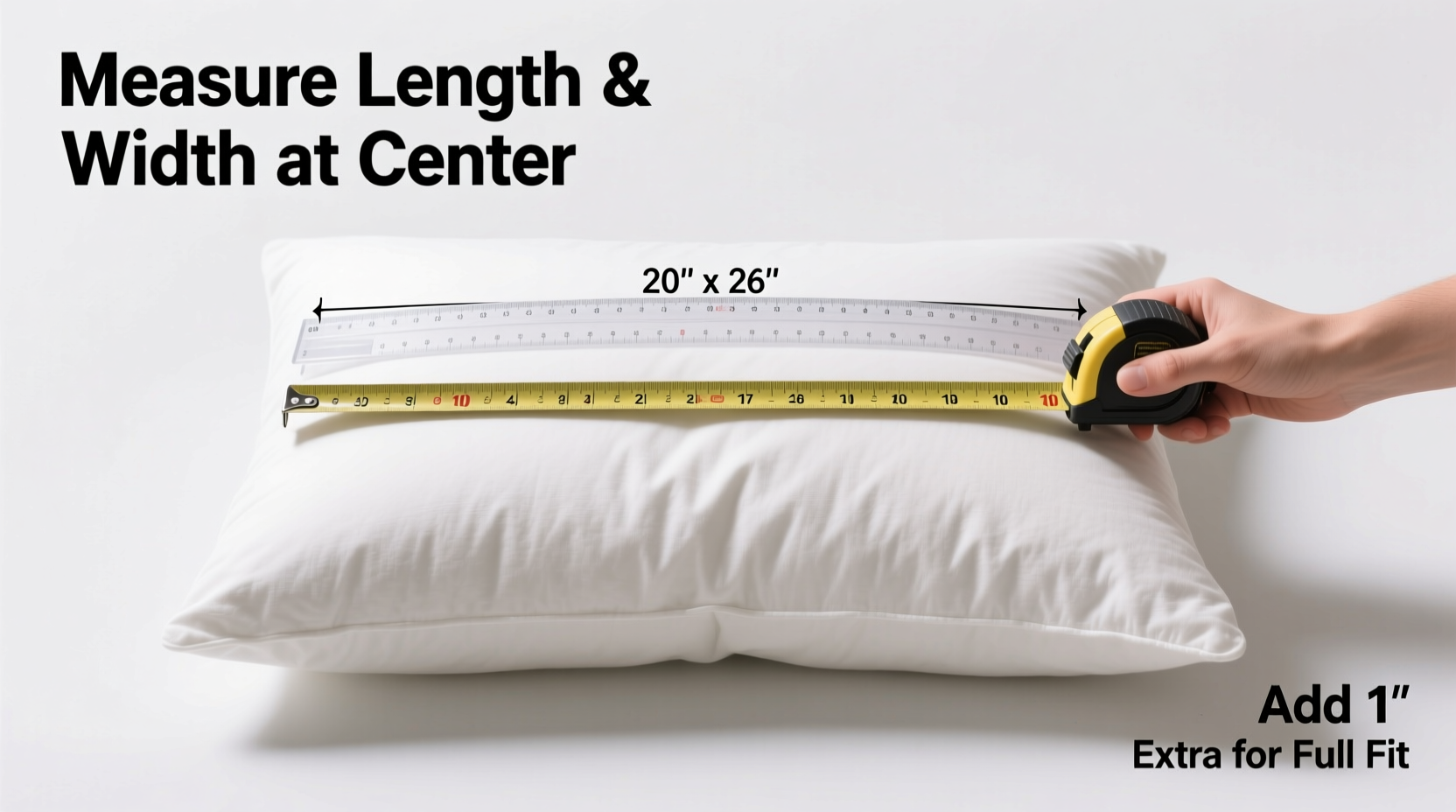
- Measure Length and Width: Place the tape across the widest points—side to side for width, top to bottom for length. Press the tape gently into the edges without compressing the pillow. Record both measurements in inches.
- Check Thickness (Gusset Height): For Euro shams or oversized decorative pillows, measure vertically from top to bottom edge. This determines whether you need a gusseted cover, which includes a side panel for depth.
- Repeat for All Pillows: Even pillows labeled the same size can vary. Measure each one individually, especially if mixing brands or materials.
Pillow Size Standards and Common Variations
While standardized sizes exist, real-world dimensions often differ. The table below compares nominal labels with actual measured ranges based on industry data.
| Label | Nominal Size (inches) | Actual Range (inches) | Cover Recommendation |
|---|---|---|---|
| Standard | 20 x 26 | 19.5–20.5 x 25.5–26.5 | 20.5 x 27 for slight ease |
| Queen | 20 x 30 | 19.75–20.75 x 29.5–30.5 | 21 x 30.5 |
| King | 20 x 36 | 19.5–21 x 35–37 | 21.5 x 37.5 |
| Euro | 26 x 26 | 25.5–26.5 x 25.5–26.5 | 27 x 27 with optional 2–3” gusset |
| Body Pillow | 20 x 54 | 19–21 x 52–56 | Custom-fit or adjustable closure |
Note that memory foam and latex pillows often swell slightly after being removed from vacuum packaging. Allow 48 hours for full expansion before measuring.
Common Measurement Mistakes to Avoid
- Measuring while compressed: Never measure a pillow straight out of a box or storage bag. It needs time to regain loft.
- Using the old cover as a guide: Old covers may have stretched or shrunk from washing. Always measure the pillow itself.
- Ignoring thickness: Deep pillows require deeper covers. Standard 20x26 covers may not accommodate high-loft down alternatives.
- Assuming symmetry: Some pillows taper or curve slightly. Measure both ends and take the largest dimension.
- Forgetting seam allowance: If making your own cover, add ½ inch per side for seams. Pre-made covers already include this.
Real-World Example: Sarah’s Bed Makeover
Sarah ordered six “standard” pillow covers online for her guest room refresh. When they arrived, two pillows fit perfectly, but four bulged at the corners and strained the zippers. Confused, she remeasured each pillow and discovered three were actually 20.5 x 27—marketed as “standard” but slightly oversized. The other three were compressed queen-sized pillows repurposed as standards.
After measuring each pillow individually and specifying exact dimensions when reordering, Sarah received a uniform set that fit flawlessly. She now keeps a labeled chart of all her household pillows’ measurements for future purchases.
Checklist: How to Ensure Perfect Pillow Cover Fit
Action Plan:
- Remove pillow from existing cover and let it rest for 24 hours.
- Use a rigid measuring tape to record length, width, and depth.
- Write down each pillow’s dimensions and label them (e.g., “Master Bed Left”).
- Compare measurements to cover size charts before purchasing.
- Select covers with 0.5–1 inch of ease for optimal fit.
- Consider envelope closures for deep or irregular pillows.
- Wash test one cover first to check shrinkage before bulk laundering.
Frequently Asked Questions
Should I size up when buying pillow covers?
Not necessarily. A cover that’s more than 1 inch larger than your pillow will result in excess fabric and a loose fit. Instead, aim for a cover that’s ½ to 1 inch larger in each dimension to allow for ease without sagging.
How do I measure a non-rectangular pillow?
For cervical, wedge, or round pillows, measure the longest horizontal and vertical points. Also note the thickest point. Custom covers may be required for unusual shapes, so provide multiple dimensions when ordering.
Do pillow inserts shrink or expand over time?
Yes. Down and down-alternative pillows compress with use and may need fluffing. Memory foam expands after vacuum packing but stabilizes within days. Re-measure only if replacing the insert; otherwise, track initial dimensions for reference.
Final Tips for Long-Term Success
Keep a small notebook or digital file with all your pillow measurements, including bed location, material, and purchase date. This saves time when replacing covers or rotating linens. For households with multiple bedding sets, color-coded labels help identify which cover belongs to which pillow.
If you frequently update your decor, consider investing in a few versatile, neutral-toned covers sized precisely to your pillows. Then, layer decorative sham covers over them for seasonal changes—this reduces wear and simplifies coordination.
Conclusion: Precision Leads to Perfection
A flawless pillow cover fit isn’t luck—it’s preparation. By taking a few minutes to measure each pillow accurately, you eliminate returns, improve comfort, and elevate your bedroom’s overall look. Whether you're refreshing your own space or styling for guests, attention to detail makes all the difference. Start measuring today, and enjoy a consistently polished bed that looks as good as it feels.




 浙公网安备
33010002000092号
浙公网安备
33010002000092号 浙B2-20120091-4
Comments
No comments yet. Why don't you start the discussion?