
A 30-meter water-resistant watch is designed to withstand splashes and brief immersion in shallow water, such as handwashing or light rain. However, this does not mean it's suitable for swimming, diving, or prolonged exposure to moisture. Over time, gaskets degrade, crowns loosen, and seals weaken—making even a \"water-resistant\" watch vulnerable to internal damage. While professional pressure testing is the gold standard, there are reliable ways to assess your watch’s condition at home with care and precision.
This guide walks you through the science behind water resistance ratings, safe at-home inspection techniques, and early warning signs of failure—so you can protect your investment and avoid costly repairs.
Understanding What “30m Water Resistant” Really Means
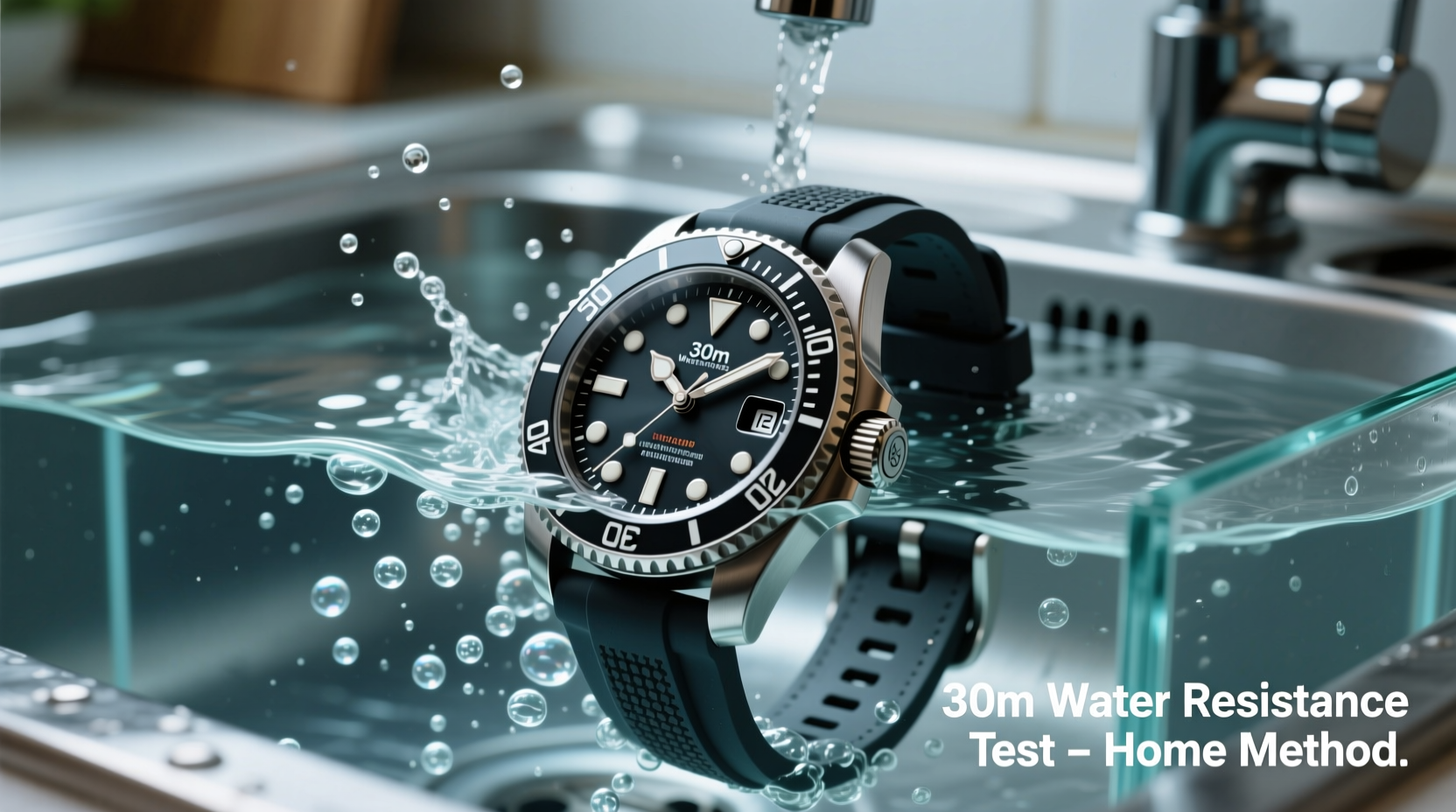
The term “30 meters water resistant” is often misunderstood. It doesn’t mean the watch can be submerged up to 30 meters deep. Instead, it refers to the static pressure the watch was tested to during manufacturing under controlled conditions. Real-world factors like water temperature, movement, depth changes, and soap exposure increase stress on seals far beyond what the rating suggests.
In practice, a 30m-rated watch should only handle:
- Splashes from handwashing
- Rain or snow exposure
- Accidental drops in puddles (briefly)
It should never be worn while:
- Swimming
- Showering (due to steam and soap)
- Snorkeling or diving
- Water sports involving impact
“Many people assume their 30m watch is swim-proof because of the number. But real-life conditions turn that rating into more like 3–5 meters of effective protection.” — Daniel Reed, Watch Restoration Specialist, Swiss Timecare Labs
Step-by-Step: How to Conduct a Safe Home Test
You cannot replicate laboratory-grade pressure tests at home, but you can perform observational checks that reveal potential seal failures. Follow this methodical approach to evaluate your watch without risking further damage.
- Inspect the Case and Crown: Examine the watch under bright light. Look for dents, corrosion, or misalignment around the crown (the winding knob). If the crown doesn’t screw down tightly (if applicable), or feels loose, water may already be entering.
- Check for Fogging: Breathe hot air onto the crystal (glass) for 10 seconds. If fog appears and lingers longer than 10–15 seconds, moisture may already be inside—or the seals are compromised.
- Condensation Observation Overnight: Place the watch in a sealed plastic bag with a damp (not wet) cotton ball for 6–8 hours. If condensation forms on the inside of the crystal, the seals are failing.
- Water Tray Test (Optional, Use Caution): Fill a shallow tray with room-temperature water about 5 cm deep. Submerge the watch for no more than 30 seconds, keeping it parallel to the surface to minimize pressure. Immediately dry thoroughly with a soft cloth. Monitor over the next 24 hours for any fogging or moisture buildup.
- Listen for Air Leaks (Advanced): In a quiet room, gently press the crown while holding the watch close to your ear. A faint hissing sound may indicate a breach in the case seal.
Do’s and Don’ts of Testing a 30m Water-Resistant Watch
| Do’s | Don’ts |
|---|---|
| Test after battery replacements or case openings | Never use hot water or steam |
| Dry the watch completely after any contact with water | Avoid pressing buttons underwater |
| Perform visual inspections monthly | Don’t rely on home tests as a substitute for professional servicing |
| Store in a dry place away from humidity | Never leave a wet watch in direct sunlight to dry |
| Use a silica gel pack in storage to absorb moisture | Don’t assume water resistance lasts forever |
Real Example: The Weekend Hiker’s Mistake
Mark, an outdoor enthusiast, owned a 30m water-resistant field watch he wore daily, including on hikes. After crossing a stream, he noticed slight fogging inside the crystal. He ignored it, assuming it would clear. Two weeks later, the hands began stuttering—the movement had corroded from internal moisture. A repair cost him $120, nearly half the watch’s value.
Had Mark performed a simple overnight condensation check after the stream crossing, he could have caught the leak early. Instead, delayed action led to irreversible damage. His story underscores the importance of vigilance—even with modest water exposure.
When to Seek Professional Testing
Home methods are excellent for detecting obvious issues, but they’re not foolproof. For peace of mind—especially before beach trips, travel, or after any impact—professional pressure testing is essential. Watchmakers use machines like the Witschi Leakmaster, which apply vacuum and pressure to simulate depth conditions and detect micro-leaks invisible to the eye.
Experts recommend professional water resistance checks every 1–2 years, or immediately after:
- Battery replacement
- Crystal replacement
- Exposure to saltwater or chemicals
- Any drop or shock to the case
Frequently Asked Questions
Can I swim with a 30m water-resistant watch?
No. Despite the label, 30m water resistance is not sufficient for swimming. Movement increases water pressure dramatically, and chlorine or salt can degrade seals. Only watches rated at 100m or higher should be used for swimming.
Why does my watch fog up even though I’ve never submerged it?
Fogging can occur due to sudden temperature changes (like moving from cold outdoors to a warm room) or compromised seals allowing humid air inside. If fog clears quickly, it may be temporary condensation. If it persists, internal moisture is likely present.
How long does water resistance last?
Water resistance isn’t permanent. Gaskets degrade over time—typically every 1–3 years depending on usage. Regular maintenance and periodic professional testing are crucial to maintaining protection.
Final Checklist: Is Your 30m Watch Still Safe?
Before exposing your watch to any moisture, run through this quick checklist:
- ✅ Crown screws down tightly (if applicable)
- ✅ No visible cracks or scratches on the crystal
- ✅ Case back is secure and undamaged
- ✅ No fogging or moisture inside the watch
- ✅ Last professional service was within the past 18 months
- ✅ No recent impacts or drops
- ✅ Stored in a dry environment
Conclusion: Protect Your Watch Before It’s Too Late
Your 30m water-resistant watch is a precision instrument, not a dive tool. Understanding its limits—and verifying its integrity through careful observation—can prevent expensive damage. While at-home tests won’t replace professional equipment, they empower you to catch problems early and act responsibly.
Make inspection part of your routine. Share these tips with fellow watch owners, and consider scheduling a professional pressure test annually. A few minutes of attention today can preserve your timepiece’s function and beauty for years to come.




 浙公网安备
33010002000092号
浙公网安备
33010002000092号 浙B2-20120091-4
Comments
No comments yet. Why don't you start the discussion?