
There’s something uniquely comforting about the scent of a real Christmas tree—crisp pine, earthy bark, and that unmistakable forest freshness. But what if you could enhance that natural fragrance with a soft, complementary aroma like cinnamon, vanilla, or balsam? With the right approach, you can introduce a gentle, lasting scent into your tree using discreet diffusers—without risking fire hazards, damaging ornaments, or accelerating needle drop.
The key lies in subtlety. Overpowering artificial scents can clash with the tree’s natural oils or overwhelm a room. The goal isn’t to mask the tree but to elevate it. By integrating safe, low-impact scent diffusion methods directly into the tree’s interior, you create an immersive experience that feels organic and inviting.
This guide walks through practical, tested techniques for embedding scent diffusers within your Christmas tree. From DIY solutions to store-bought options, we’ll cover safety considerations, material compatibility, and long-term effectiveness—all while preserving the integrity of your holiday centerpiece.
Why Subtle Scenting Works Best with Christmas Trees
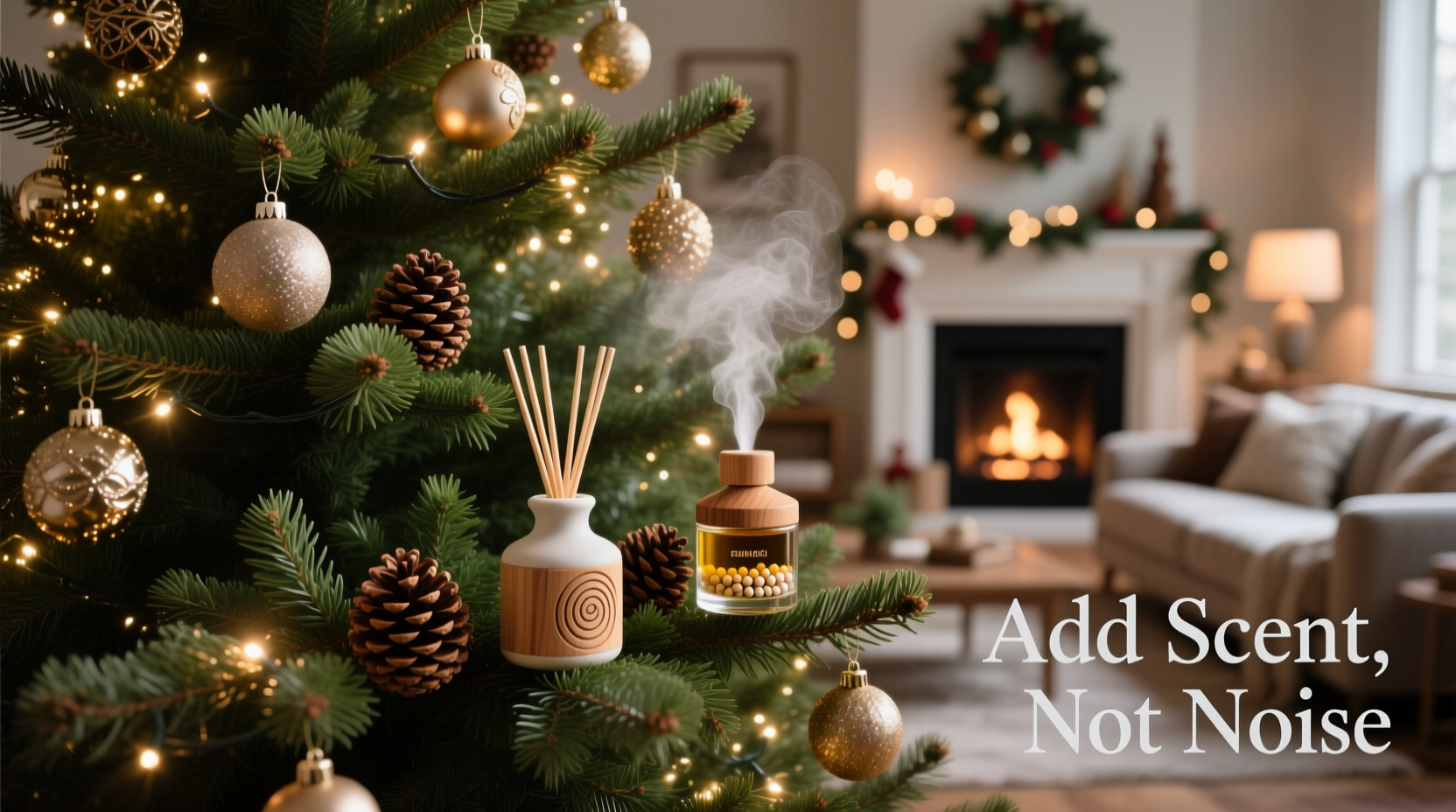
A Christmas tree is already a natural source of fragrance. Real evergreens release terpenes—aromatic compounds responsible for their woodsy smell—as they dry. Introducing additional scents should complement, not compete with, this baseline aroma.
Overpowering candles or plug-in diffusers placed near the tree can dominate a space, making it feel artificial or cloying. In contrast, placing a mild scent source *within* the tree allows the fragrance to disperse gradually through the branches, mimicking how natural scents rise from foliage on a warm day.
Subtlety also prevents olfactory fatigue—the phenomenon where your nose stops registering a constant smell after prolonged exposure. A faint, evolving aroma keeps the experience fresh throughout the season.
Safe Methods to Install Scent Diffusers Inside the Tree
Introducing scent into a Christmas tree requires careful placement to avoid contact with lights, flammable materials, or water reservoirs. The interior of the tree—between the lower and middle branches—is ideal for hidden, effective diffusion.
1. Essential Oil-Filled Fabric Sachets
Fabric sachets are among the safest and most effective ways to add scent. Use breathable cotton or muslin bags filled with dried herbs (like lavender or rosemary) or wool dryer balls lightly misted with essential oils.
To install:
- Prepare small sachets (about 2–3 inches wide).
- Add 5–10 drops of essential oil per ball or sachet.
- Nestle them deep within the tree, ideally near the trunk and away from lights.
- Refresh every 7–10 days with additional oil.
Sachets don’t require power, pose no fire risk, and blend seamlessly into the décor. They’re especially effective when placed near heat sources like radiators or vents, which help circulate the scent.
2. Reusable Reed Diffuser Sticks
Mini reed diffusers can be tucked into the base of the tree or behind outer branches. Use small glass vials (5–10 ml capacity) filled with carrier oil (like safflower or sweet almond) and 15–20 drops of essential oil.
Insert 3–5 reeds into the bottle and place it on a stable surface near the tree stand—never directly in water. The reeds passively draw up and release fragrance over 4–6 weeks.
3. Wood or Clay Aroma Discs
Natural wood slices or unglazed ceramic discs absorb essential oils and release them slowly. Soak them for 10 minutes in a mixture of water and oil (10 drops per cup), then let air-dry before placing them in the tree.
These discs last 2–3 weeks and can be refreshed by re-soaking. Their organic texture makes them nearly invisible among pine boughs.
Step-by-Step Guide: Installing a Hidden Scent System in 5 Steps
Follow this sequence to safely integrate a scent diffusion system into your Christmas tree setup.
- Set up the tree and stand: Assemble your tree and secure it in its stand. Fill the water reservoir. Wait at least 2 hours to allow the tree to settle before placing any items inside.
- Inspect lighting and wiring: Ensure all light strings are working and properly spaced. Avoid placing diffusers within 6 inches of bulbs or electrical connections.
- Choose your diffuser type: Decide between sachets, reed bottles, or aroma discs based on convenience and desired scent strength.
- Place diffusers strategically: Position 2–4 units inside the tree—at the base, mid-level, and one near the center. Distribute them evenly around the trunk for balanced diffusion.
- Monitor and maintain: Check weekly for scent fade or leakage. Reapply oils as needed. Remove any unit showing signs of excess moisture or mold.
This method ensures even fragrance distribution while minimizing maintenance and risk.
Do’s and Don’ts: Scent Diffusing Safety Table
| Do | Don’t |
|---|---|
| Use non-flammable materials like cotton, glass, or clay | Use aerosols or spray bottles directly on the tree |
| Place diffusers at least 6 inches from lights | Set diffusers in the water tray or near electrical plugs |
| Opt for essential oils diluted in carrier oils | Use undiluted fragrance oils or alcohol-based perfumes |
| Refresh scents weekly to prevent stagnation | Leave expired or moldy sachets in place |
| Test one diffuser first to gauge scent strength | Add multiple strong diffusers at once |
Real Example: A Cozy Urban Apartment Transformation
In Brooklyn, Sarah M., a freelance designer, wanted to bring warmth to her small apartment during the holidays. Her living room doubled as a workspace, and she worried traditional candles would be unsafe near papers and fabric curtains.
She opted for three muslin sachets infused with a blend of balsam fir and sweet orange essential oils. Each sachet was placed at different levels inside her pre-lit artificial tree—deep enough to be unseen but close enough to airflow.
Within two days, guests began commenting on the “fresh forest” smell. Sarah reported that the scent lasted nearly three weeks with just one refresh. She appreciated that there were no open flames, spills, or interference with her electronics.
“It felt like bringing a cabin vibe into the city,” she said. “And I didn’t have to worry about my cat knocking anything over.”
“Passive diffusion methods—like fabric or reed systems—are ideal for trees because they work with natural air currents, not against them.” — Dr. Lena Pruitt, Environmental Aromatics Researcher, Institute for Indoor Wellbeing
Checklist: Preparing Your Tree for Scent Integration
- ☐ Confirm tree is securely staked and hydrated
- ☐ Test all lights and remove any flickering strands
- ☐ Select 1–2 complementary essential oil blends (e.g., pine + cinnamon)
- ☐ Prepare 3–4 diffuser units (sachets, reeds, or discs)
- ☐ Place diffusers away from water, heat sources, and electrical components
- ☐ Mark calendar for weekly scent checks
- ☐ Keep spare oils and clean cloths nearby for maintenance
FAQ: Common Questions About Tree Scent Diffusers
Can I use these methods with an artificial tree?
Yes. In fact, artificial trees often benefit more from added scent since they lack natural fragrance. Use the same techniques—sachets, reeds, or clay discs—but avoid oil contact with plastic needles, which may degrade over time. Place diffusers near the trunk or in the base instead of weaving them through branches.
Will essential oils damage my tree or decorations?
Pure essential oils are generally safe when used correctly. However, concentrated oils can stain fabrics or tarnish certain metals. Always dilute oils in carrier oil or water before applying to absorbent materials. Avoid spraying or dripping oils directly onto ornaments, tinsel, or silk flowers.
How do I know if the scent is too strong?
If the aroma causes headaches, throat irritation, or becomes overwhelming within minutes of entering the room, it’s too strong. Remove one or more diffusers and ventilate the space. A well-balanced tree scent should only be noticeable when you're close to the branches or after entering the room following a short absence.
Final Thoughts: Elevating Tradition with Thoughtful Touches
The holiday season thrives on sensory memories—the glint of lights, the sound of carols, the warmth of shared meals. Scent plays a powerful role in memory recall, often triggering nostalgia more vividly than sight or sound.
By thoughtfully introducing a subtle aroma into your Christmas tree, you’re not just decorating—you’re crafting an atmosphere. One that feels lived-in, intentional, and deeply personal. Whether it’s the whisper of vanilla evoking childhood cookies or a hint of sandalwood adding quiet sophistication, the right scent enhances without announcing itself.
The methods outlined here prioritize safety, sustainability, and harmony with your existing décor. They’re designed to work quietly in the background, just like tradition itself—present, meaningful, and felt more than seen.




 浙公网安备
33010002000092号
浙公网安备
33010002000092号 浙B2-20120091-4
Comments
No comments yet. Why don't you start the discussion?