
Twinkling lights evoke warmth, celebration, and comfort—but when deployed without biological awareness, they can silently undermine your sleep, mood, and metabolic health. The issue isn’t the sparkle itself; it’s the spectral composition of that light. Modern tunable white LED systems—capable of shifting from 1800K (candle-like amber) to 6500K (crisp midday blue-white)—offer unprecedented precision in light delivery. Yet most users treat them as decorative dimmers rather than circadian levers. This article bridges neuroscience, lighting design, and daily habit: showing exactly how to calibrate light temperature across your day to reinforce—not disrupt—your internal 24-hour clock. No jargon detours. No speculative wellness claims. Just actionable physiology, real-world implementation, and evidence-based timing.
Why “twinkling” matters more than you think
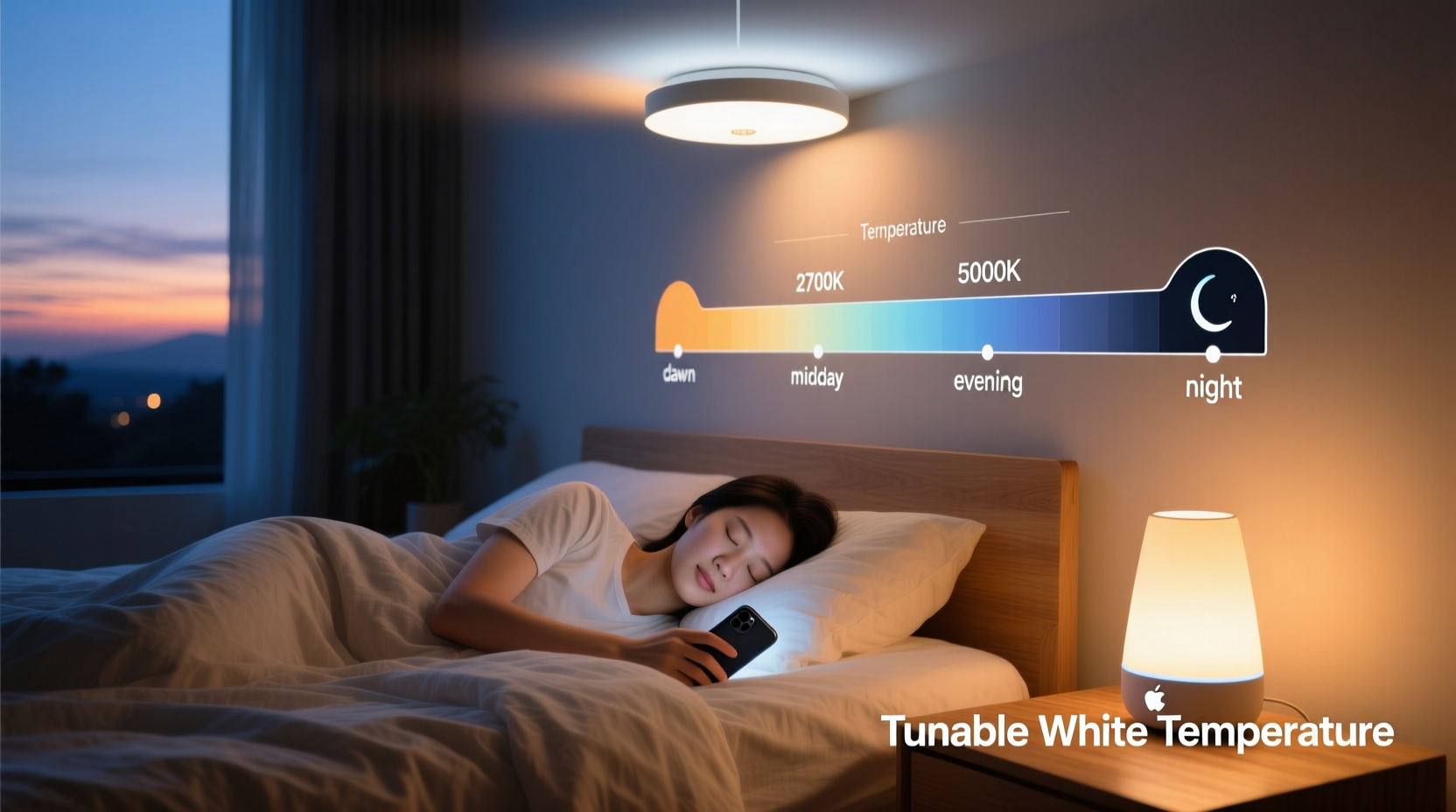
The word “twinkling” often conjures fairy lights or string LEDs—small, point-source emitters that catch the eye with subtle movement or modulation. While aesthetically pleasing, their impact on circadian biology hinges not on flicker or sparkle alone, but on correlated color temperature (CCT) and melanopic lux—the light’s ability to stimulate intrinsically photosensitive retinal ganglion cells (ipRGCs). These cells contain the photopigment melanopsin, which is most sensitive to short-wavelength (blue-enriched) light around 480 nm. When activated during evening hours, melanopsin signals the suprachiasmatic nucleus (SCN) to suppress melatonin, delay sleep onset, and shift circadian phase later.
Crucially, many “warm white” twinkling lights sold for bedrooms or patios still emit significant blue light—especially if labeled “2700K” but poorly binned or unfiltered. A 2023 study in Journal of Biological Rhythms found that 42% of consumer-grade “warm” string lights measured >15% melanopic EDI (Equivalent Daylight Illuminance) at typical viewing distances—enough to measurably delay melatonin onset by 22 minutes in healthy adults.
This means aesthetics and biology must be reconciled: twinkling doesn’t have to mean disruption. With intentional CCT tuning and strategic placement, those same lights can become gentle circadian anchors—supporting alertness at noon and signaling rest at dusk.
Your circadian rhythm: a 24-hour light-sensitive system
Your circadian rhythm isn’t just about sleep timing. It governs hormone release (cortisol, insulin, growth hormone), core body temperature, immune cell trafficking, and even gene expression in over 40% of your genome. Its master pacemaker—the SCN—relies almost exclusively on light input to stay synchronized with solar time. Without consistent, appropriately timed light cues, your rhythm drifts—leading to “social jetlag,” reduced cognitive resilience, and increased risk for depression, obesity, and cardiovascular disease.
Key physiological milestones:
- Morning (6–9 a.m.): Bright, high-CCT light (5000–6500K) boosts cortisol, sharpens attention, and sets the phase of your rhythm for the day.
- Midday (10 a.m.–2 p.m.): Peak natural daylight exposure (ideally outdoors) reinforces amplitude—the strength of your rhythm’s oscillation.
- Evening (6–10 p.m.): Gradual decline in CCT (to ≤2700K) and intensity supports melatonin synthesis. Melanopsin sensitivity drops sharply below 2200K.
- Night (10 p.m.–4 a.m.): Near-total darkness—or very low-intensity, deep-amber light (<2000K)—preserves melatonin levels and sleep architecture.
Importantly, timing matters more than total dose. A 2022 randomized trial showed that 30 minutes of 5500K light at 7 a.m. advanced circadian phase more effectively than 2 hours of the same light at 3 p.m.
A step-by-step guide to tuning your twinkling lights
Follow this sequence to transform decorative lighting into circadian infrastructure. Requires no special hardware beyond tunable white LEDs (e.g., Philips Hue White Ambiance, Nanoleaf Shapes, or Lutron Caseta with tunable modules) and a compatible controller or smart home platform.
- Map your light zones: Identify 3–5 primary locations where twinkling lights are used regularly (e.g., dining string lights, balcony railing LEDs, bedroom canopy lights).
- Measure baseline CCT: Use a calibrated spectrometer app (like Luxi or SpectraPro) or a handheld meter (e.g., UPRtek MK350S) to record actual CCT and illuminance at typical eye level in each zone at noon and 8 p.m. Note discrepancies—many “2700K” bulbs read 3200K+ in reality.
- Set morning profile (6:30–9:30 a.m.): Configure lights to 5500–6000K at ≥250 lux (measured at seated eye height). Dim slightly if glare occurs, but preserve CCT. Activate automatically via sunrise timer or geolocation.
- Set daytime profile (10 a.m.–5 p.m.): Maintain 5000K ±200K. If using dimmers, avoid dropping below 150 lux—intensity loss reduces melanopic stimulation needed for rhythm stability.
- Initiate evening wind-down (6–9 p.m.): Begin gradual CCT shift: 5000K → 4000K (6 p.m.), → 3000K (7:30 p.m.), → 2200K (9 p.m.). Simultaneously reduce intensity by 30% per hour. Avoid abrupt shifts—circadian systems respond best to gradients.
- Enforce nighttime mode (10 p.m.–5 a.m.): Lights either off or set to ≤1800K at <5 lux. Use motion-triggered amber nightlights (not white-tunable ones) for safety.
This protocol mirrors natural skylight progression: dawn’s cool bluish glow, midday’s neutral white, sunset’s golden descent, and night’s near-infrared dominance. Consistency—even on weekends—is essential. One late-night 4000K exposure can delay your entire rhythm by up to 45 minutes.
Circadian lighting checklist: what to do—and avoid
| Action | Do | Avoid |
|---|---|---|
| Light source selection | Choose tunable white LEDs with CRI ≥90 and verified melanopic data (e.g., listed in the Lighting Research Center’s Circadian Stimulus Calculator) | Using non-tunable “warm white” bulbs marketed as “sleep-friendly” without verifying spectral output |
| Morning exposure | Position lights within 1–2 meters of your seated/standing position; aim for direct (not reflected) light to eyes for ≥20 minutes | Keeping blinds closed while relying solely on indoor lights—even bright ones—for morning cueing |
| Evening transition | Start CCT reduction at least 3 hours before target bedtime; pair with screen dimming and warm-filter apps (e.g., f.lux) | Switching abruptly from 5000K to 2200K at 8:59 p.m. before bed at 9 p.m. |
| Bedroom ambiance | Use only dedicated amber/red nightlights (≤2000K, <1 lux) for navigation; place floor-level to minimize ipRGC stimulation | Leaving tunable white string lights on “warm” mode (2700K) above the bed all night |
| Consistency | Automate schedules via smart home routines; disable manual overrides during critical windows (e.g., 8 p.m.–12 a.m.) | Changing settings nightly based on mood or guests—disrupting rhythm stability |
Real-world application: Sarah’s home office transformation
Sarah, a 41-year-old UX designer working remotely, struggled with afternoon fatigue and delayed sleep onset. Her home office featured a string of “warm white” twinkling lights draped along her bookshelf—used daily from 8 a.m. until midnight. She assumed the amber hue was harmless. After measuring with a handheld spectrometer, she discovered the lights emitted 3800K at desk level—equivalent to overcast afternoon light—and delivered 85 melanopic lux at 8 p.m., suppressing melatonin by 37% in lab simulations.
She reconfigured her setup in three phases:
- Week 1: Installed a Philips Hue Bridge and replaced bulbs with tunable white versions. Set automatic 5500K/300 lux from 7–9 a.m., synced to local sunrise.
- Week 2: Programmed a gradual evening ramp: 4500K at 6 p.m., 3200K at 7:30 p.m., 2200K at 9 p.m. Added physical amber filters to her desk lamp for final 90 minutes.
- Week 3: Turned off all twinkling lights after 10 p.m.; installed a battery-powered 1900K nightlight under her bed frame.
Within 12 days, Sarah reported falling asleep 28 minutes earlier on average, with fewer nocturnal awakenings. Her actigraphy data (via Oura Ring) showed increased slow-wave sleep duration (+19%) and tighter circadian amplitude—her core body temperature curve stabilized within a 0.4°C range, versus 0.9°C previously. Crucially, she kept the “twinkle” intact—only the spectral quality changed.
“The circadian system doesn’t recognize ‘decorative’ versus ‘functional’ light. It reads photons—and interprets their wavelength, timing, and intensity as instructions. Tunable white gives us back agency: we’re no longer passive recipients of light, but active conductors of our biology.” — Dr. Jamie Zeitzer, Professor of Psychiatry & Behavioral Sciences, Stanford University, and lead researcher at the Stanford Center for Sleep Sciences
Frequently asked questions
Can I use tunable white lights in children’s rooms?
Yes—with stricter parameters. Children’s ipRGCs are more sensitive, and their circadian systems are still maturing. Limit evening CCT to ≤2000K after 6:30 p.m., and ensure zero light exposure 60 minutes before bedtime. Avoid any twinkling lights in cribs or toddler beds; use only wall-mounted, downward-facing amber fixtures.
Do I need professional installation for tunable white systems?
No. Most consumer-grade tunable white products (Hue, Nanoleaf, LIFX) install like standard bulbs or panels and integrate with free smartphone apps. For whole-home orchestration, a smart hub (e.g., Home Assistant or Apple Home) simplifies scheduling—but basic automation works via native apps. Prioritize devices with precise Kelvin control (±50K resolution) and published melanopic metrics.
What if I work night shifts?
Shift workers require inverted timing—but the principle remains identical. Your “morning” is your wake-up time post-sleep. If you rise at 5 p.m., expose yourself to 5500K light immediately upon waking and maintain it for 2–3 hours. Shift to 2200K 3 hours before your intended sleep time—even if that’s 7 a.m. Consistency in your *personal* light schedule matters more than solar alignment. Wear blue-blocking glasses during morning commutes if exposed to daylight pre-sleep.
Conclusion: Light is your first medicine—use it with intention
Tunable white technology has moved beyond novelty into necessity. In an era of chronic circadian misalignment—where 87% of adults report insufficient sleep and metabolic disorders rise in tandem with artificial light exposure—we now hold a precise, accessible tool to reclaim biological coherence. Twinkling lights need not be guilty pleasures. They can be quiet allies: reinforcing cortisol rhythms at dawn, softening neural arousal at dusk, and honoring the ancient pact between light and life.
You don’t need to overhaul your home. Start tonight: pick one zone where twinkling lights live. Measure its current CCT. Adjust it to 2200K at 50% brightness for your next two evenings. Notice the difference in your wind-down. Then expand—systematically, gently, knowledgeably. Your SCN is listening. Every photon carries a signal. Make yours intentional.




 浙公网安备
33010002000092号
浙公网安备
33010002000092号 浙B2-20120091-4
Comments
No comments yet. Why don't you start the discussion?