
False lashes can transform your look in seconds—adding volume, length, and drama with minimal effort. But too often, the promise of glamour is ruined by clumps of dried glue, visible lash band seams, or one corner peeling up by midday. The difference between amateur and expert application isn’t just skill—it’s technique, preparation, and attention to detail.
The goal isn’t just to attach lashes. It’s to make them appear as if they grew from your lash line: invisible at the base, aligned with your natural fan, and lasting all day without irritation or flaking. Achieving this requires more than a steady hand; it demands the right tools, timing, and methodical approach. Whether you're using strip lashes, clusters, or handmade wisps, eliminating glue gunk and uneven edges starts long before the lash touches your eye.
Choose the Right Lashes and Adhesive
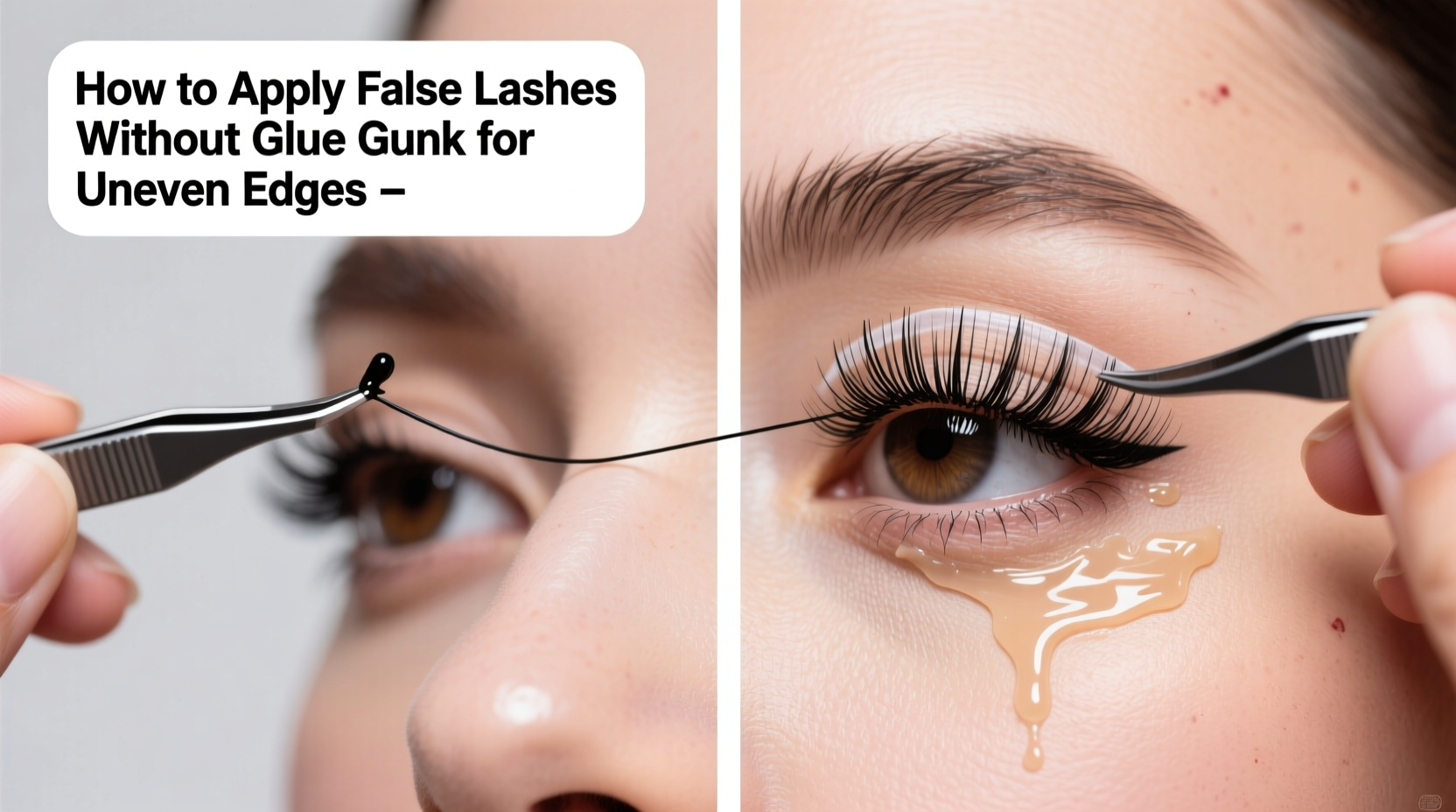
Not all false lashes are created equal—and neither are their glues. The foundation of a clean application begins with selecting compatible materials tailored to your eye shape and desired effect.
For beginners, lightweight synthetic or silk lashes with a thin, flexible band work best. Thicker, heavier mink lashes may deliver drama but increase the risk of lifting at the corners if not secured properly. Look for bands that are nearly invisible—black or nude depending on your lash color—and avoid thick plastic bases that sit above the lash line and create shadows.
Adhesive choice is equally critical. Clear glue dries faster and shows less when applied heavily, but it can be trickier to reposition once set. Black glue blends better with eyeliner and the lash band, helping disguise minor imperfections, but overuse leads to visible buildup. For precision and control, consider latex-free formulas—they’re gentler on sensitive eyes and allow slightly longer working time.
Prepare Your Natural Lashes and Eyelids
Clean, dry eyelids are non-negotiable. Any oil residue—from moisturizer, sunscreen, or leftover mascara—creates a barrier that prevents adhesive from bonding properly. This leads to premature lifting and the need for extra glue, which only worsens gunk buildup.
Start by removing all traces of eye makeup with an oil-free micellar water or gel cleanser. Follow with a toner pad (alcohol-free) to eliminate any lingering oils. Then, prime your lids lightly with translucent powder using a small brush. This creates a matte surface for optimal glue adhesion without clogging pores.
If you wear mascara, apply it *before* putting on false lashes—but use it sparingly. Heavy layers trap glue and make removal messy. A single coat of lengthening (not volumizing) mascara helps blend your naturals with the falsies later. Avoid waterproof formulas unless necessary; they’re harder to remove and can weaken the bond when reapplied.
“Prep accounts for 70% of a successful lash application. Skipping cleansing steps is the most common reason for glue failure.” — Lena Torres, Professional Makeup Artist & Lash Educator
Step-by-Step: Flawless Application Technique
The key to avoiding glue gunk and uneven edges lies in precision—not speed. Rushing leads to misalignment, excess adhesive, and repeated adjustments that degrade the bond. Follow this sequence carefully:
- Trim the lashes to fit your eye shape. Hold the lash strip against your lid and measure from the inner to outer corner. Most off-the-shelf lashes are too long for average eyes. Snip small sections from the outer end with sharp scissors. Never cut from the center—that distorts the fan pattern.
- Pre-curl and mold the band. Gently press the lash band into a curve using your fingers or a pen barrel. This mimics the natural arc of your eyelid and ensures full contact along the entire edge.
- Apply glue sparingly to both ends and center. Use a toothpick or bobby pin to dab a rice-grain-sized amount at each end and one in the middle. Avoid coating the entire band—this causes oozing when pressed down. Let it sit for 30 seconds until tacky.
- Use tweezers or a lash applicator tool. Fingers lack precision and warmth can soften glue prematurely. Position the lash starting at the center of your lid, aligning it directly on top of your natural lash line. Press gently.
- Secure inner and outer corners last. Once the center is set, nudge the inner corner into place first, then the outer. These areas lift easiest due to facial movement, so ensure full adhesion without stretching the band.
- Blend with light pressure. After placement, close your eye and press gently along the band with a clean cotton swab or the handle of an eyeshadow brush. This flattens any raised edges and improves contact.
- Touch up with liner if needed. If there's a slight gap or visible band, draw a fine line of liquid eyeliner over the seam. It conceals while reinforcing the bond.
Common Mistakes That Cause Glue Buildup and Uneven Edges
Even experienced users fall into traps that compromise the final result. Recognizing these errors helps prevent recurring issues:
- Using too much glue. Excess squeezes out when pressed, forming white crusts along the lash line. Less is more—start with three dots and add only if necessary.
- Applying immediately after gluing. Wet glue slides and spreads. Wait until it becomes sticky (about 30 seconds) for accurate placement.
- Ignoring eye asymmetry. Most people have one eye slightly larger or higher. Customize trimming and placement accordingly instead of treating both sides identically.
- Reusing old lashes improperly. Residual glue on bands creates lumps. Clean used lashes with micellar water and let them dry flat before reuse.
- Pulling lashes off at night. Tearing them off damages both natural lashes and the band. Soak a cotton pad with oil-free remover, hold it over the lash for 20 seconds, then slide it off gently.
| Mistake | Result | Solution |
|---|---|---|
| Over-applying glue | White flakes, stiff movement, discomfort | Use pinpoint dots only at stress points |
| Misaligned band | Gaps at corners, visible liner | Measure and trim before each use |
| Skipping pre-curling | Lash floats above lid, unnatural look | Mold band to eye curve before gluing |
| Using fingers to apply | Smudging, imprecise placement | Use tweezers or specialized tool |
| Not cleaning lash band | Bumpy texture, poor adhesion | Remove old glue with gentle solvent |
Real-World Example: From Frustration to Confidence
Sophia, a 28-year-old marketing executive, had given up on false lashes after multiple failed attempts. “I’d always end up with glue stuck to my eyelid or one lash pointing sideways,” she said. “I looked worse than without them.”
After attending a virtual makeup workshop, she changed her approach: she started trimming every pair—even ‘one-size’ styles—and switched to black latex-free glue. She began applying adhesive only to the lash band, not her lid, and waited 35 seconds before placing them. Using a metal lash tweezer, she anchored the center first, then adjusted the ends.
Within two tries, she achieved a seamless look. “Now I get compliments on my ‘amazing natural lashes.’ No one knows they’re fake—and that’s exactly the point.”
Pro Checklist: Lash Application Without the Mess
Follow this checklist every time for consistent, clean results:
- ✅ Remove all eye makeup and oil residue
- ✅ Trim lashes to match your eye width
- ✅ Mold the lash band to your eye curve
- ✅ Apply small dots of glue to lash band (not eyelid)
- ✅ Wait 30–45 seconds for glue to become tacky
- ✅ Use tweezers or applicator tool for placement
- ✅ Set center first, then secure inner and outer corners
- ✅ Press gently along the band with a swab for full contact
- ✅ Conceal any gaps with liquid eyeliner
- ✅ Store used lashes properly for future wear
Frequently Asked Questions
Can I wear false lashes every day?
Yes, but choose lightweight styles and give your natural lashes breaks when possible. Daily wear increases friction and shedding risk. Always remove them gently at night and avoid sleeping in them.
Why does my glue dry too fast?
Humidity, heat, and air exposure accelerate drying. Keep the bottle tightly closed and store it upright in a cool, dark place. Adding a drop of saline solution can revive thickened glue—but never water, which promotes bacteria growth.
How do I fix a lifted corner during the day?
Carry a mini glue pen and a clean spoolie. Dab a tiny amount under the lifted edge, press it down for 15 seconds, and fluff lashes gently. Avoid re-gluing large sections mid-day, as this builds up residue.
Final Thoughts: Mastery Through Method
Perfect false lash application isn’t about perfection on the first try—it’s about refining a repeatable process. The absence of glue gunk and uneven edges comes not from luck, but from disciplined prep, mindful product selection, and deliberate execution. Once you internalize the rhythm of measuring, waiting, placing, and sealing, the technique becomes second nature.
Great lashes shouldn’t announce themselves with glitter or thickness. They should simply look like the best version of your own—fuller, darker, effortlessly striking. And when done right, no one will suspect a thing.




 浙公网安备
33010002000092号
浙公网安备
33010002000092号 浙B2-20120091-4
Comments
No comments yet. Why don't you start the discussion?