
The word \"eggplant\" evokes images of glossy, deep purple vegetables nestled in farmers' market crates or simmering in rich curries. But few stop to wonder: why is it called an eggplant at all? After all, it bears no resemblance to an egg—unless you look back a few centuries. The name isn't a culinary misstep; it's a linguistic fossil, preserving a moment in agricultural and cultural history when this vegetable looked dramatically different. To understand the origin of “eggplant,” we must trace its journey across continents, languages, and evolving tastes.
The Original Eggplants Were White and Egg-Shaped
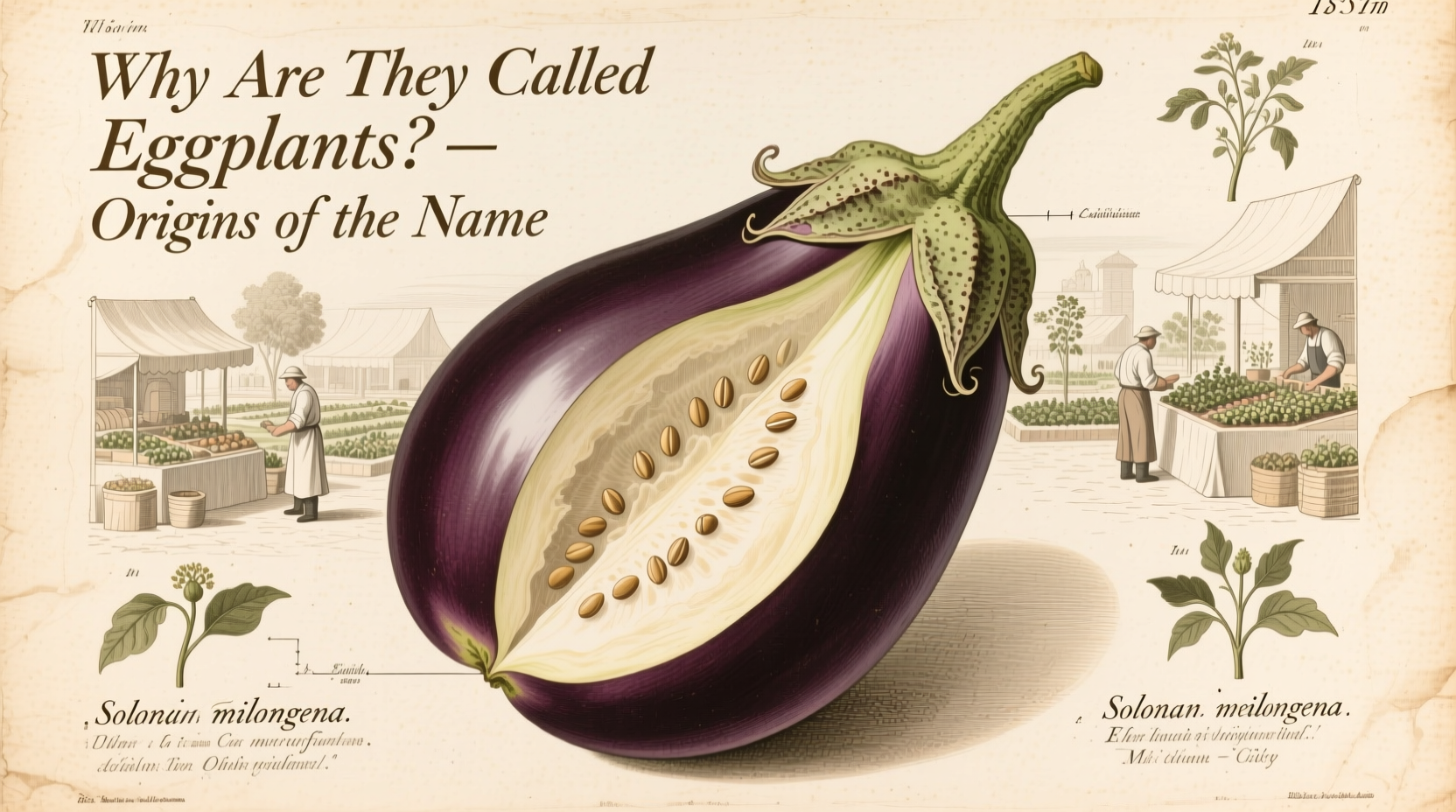
The modern eggplant (Solanum melongena) is native to South and East Asia, where it has been cultivated for over 1,500 years. Early varieties were significantly smaller than today’s standard globe eggplants and often had a pale, creamy white color. Some even resembled chicken eggs in both size and shape—oval, smooth, and ivory-hued. It was these ancestral forms that first caught the attention of European travelers and botanists in the 18th century.
When British explorers encountered these white-fruited plants in India and the Middle East, they noted their striking similarity to eggs resting on the vine. The comparison was so vivid that the term “egg plant” emerged naturally in English botanical literature by the 1760s. This descriptive naming convention wasn’t unique—many plants earned common names based on appearance, such as “lady’s slipper” orchids or “snapdragon” flowers.
A Global Vegetable with Many Names
While English speakers adopted “eggplant,” most other languages use terms rooted in Arabic or Sanskrit. The Arabic word al-badinjan gave rise to “aubergine” in French, “berenjena” in Spanish, and “baingan” in Hindi and Urdu. These variants traveled through trade routes, carried by Moorish traders into Spain and later absorbed into Romance languages.
British colonists in India encountered the local term “baingan” but chose not to adopt it. Instead, they favored the more familiar, visually descriptive “egg plant.” When the vegetable reached North America, settlers retained the British name, cementing “eggplant” in American English—while the rest of the English-speaking world, including the UK, gradually shifted toward “aubergine” in formal usage.
“Names like 'eggplant' remind us that language evolves not just from sound, but from sight and experience.” — Dr. Lila Chen, Historical Linguist at Oxford University
From Curiosity to Culinary Staple: A Timeline of Adoption
The path from exotic novelty to kitchen essential was neither quick nor uniform. Here’s how the eggplant gained global footing:
- 500 BCE: Cultivation begins in India and China; valued for medicinal uses and bitter flavor.
- 8th–9th century CE: Arab traders introduce eggplant to North Africa and Al-Andalus (Islamic Spain).
- 13th century: Appears in Andalusian agricultural texts; roasted and stewed in early Mediterranean dishes.
- 16th century: Grown in Italian gardens but distrusted due to nightshade family associations (believed to cause madness).
- 1760s: British naturalists coin “egg plant” after observing small, white cultivars in India.
- 19th century: Improved breeding reduces bitterness; becomes popular in French and Middle Eastern cuisine.
- 20th century: Global migration spreads eggplant dishes—from baba ganoush to moussaka to Sichuan-style stir-fries.
Eggplant vs. Aubergine: A Tale of Two Words
The split between “eggplant” and “aubergine” reflects deeper patterns in language adaptation. American English tends to favor literal, descriptive terms, while British English often preserves foreign loanwords, especially from French. This table outlines key differences in usage:
| Aspect | Eggplant (American English) | Aubergine (British English) |
|---|---|---|
| Origin | Descriptive (resembles an egg) | French, from Arabic al-badinjan |
| First Recorded Use | 1762 | 1785 |
| Pronunciation | /ˈɛɡˌplænt/ | /ˌɒbərˈʒiːn/ |
| Common in | USA, Canada, Australia (informal) | UK, Ireland, Commonwealth nations (formal) |
| Cultural Perception | Everyday vegetable | Slightly more gourmet or continental |
Modern Varieties and the Persistence of the Name
Today, most commercially grown eggplants are large, elongated, and deep purple—a far cry from their pale, oval predecessors. Yet the name “eggplant” endures, even though the visual rationale has faded. This persistence illustrates how language often outlives the conditions that created it. Much like “pineapple” (which resembles neither pine nor apple), “eggplant” is now a fixed term in English lexicons, regardless of accuracy.
Breeders have since revived some of the original white, egg-shaped cultivars—such as ‘Easter Egg’ or ‘White Egg’ hybrids—intentionally echoing the plant’s etymological roots. These novelty varieties are increasingly popular among home gardeners and farm-to-table chefs seeking historical authenticity.
Mini Case Study: The Heirloom Garden Revival
In Vermont, urban farmer Maya Tran runs a heritage produce stand specializing in pre-industrial crops. After reading about 18th-century eggplants in a colonial gardening journal, she sourced seeds for the ‘Listada de Gandia,’ a mottled white-and-purple variety that closely resembles early specimens brought to Europe. Her customers were intrigued—not just by the flavor, which is milder and less bitter, but by the story behind the name.
“When I tell people, ‘This is what the first eggplants actually looked like,’ it clicks,” Tran says. “They suddenly get why it was ever called an eggplant. It’s a tiny piece of living history.” Her stand now includes a small sign: “Yes, it really did look like an egg.”
Practical Guide: Choosing and Using Eggplant Today
Whether you call it eggplant or aubergine, understanding its qualities improves your cooking. Follow this checklist to make the most of it:
- Look for firm, shiny skin—dullness indicates age.
- Smaller eggplants tend to be less bitter and have fewer seeds.
- Press gently; if the skin bounces back, it’s fresh.
- Salting slices before cooking can reduce bitterness (though modern breeds often don’t require it).
- Grill, roast, or steam to enhance its creamy texture.
Frequently Asked Questions
Is eggplant really related to nightshades?
Yes. Eggplant is a member of the Solanaceae family, which includes tomatoes, potatoes, and peppers. While some people worry about alkaloids like solanine, eggplant contains only trace amounts and is safe for most diets.
Why do some recipes call for salting eggplant before cooking?
Salting draws out moisture and any residual bitterness, especially in older or larger varieties. However, most modern hybrid eggplants are bred to be mild, so salting is optional unless frying—where excess moisture can cause oil splatter.
Can you eat eggplant raw?
Technically yes, but it’s not commonly enjoyed uncooked. Raw eggplant can be tough and slightly bitter. Cooking softens its fibers and enhances its ability to absorb flavors.
Conclusion: More Than Just a Name
The term “eggplant” is more than a quirky relic—it’s a testament to how language, agriculture, and perception intertwine. What began as a simple observation about shape and color has endured through centuries of culinary transformation. Understanding the origin of the name enriches our appreciation not just of the vegetable itself, but of the long, cross-cultural journey it took to reach our plates.
Next time you slice into a glossy purple eggplant, remember: you’re holding a piece of linguistic history. Whether you call it eggplant, aubergine, or baingan, you’re partaking in a global tradition that spans continents and centuries.




 浙公网安备
33010002000092号
浙公网安备
33010002000092号 浙B2-20120091-4
Comments
No comments yet. Why don't you start the discussion?