
Applying liquid eyeliner can feel like performing surgery with a paintbrush—especially when your hands have a mind of their own. For beginners, the combination of fine motor control, precision, and the natural tremor that comes with nervousness or fatigue makes this step one of the most intimidating in makeup application. But shaky hands don’t mean you’re doomed to smudged lines or giving up on winged liner altogether. With the right tools, techniques, and mindset, even the most unsteady hand can achieve clean, confident flicks.
The key isn’t perfection—it’s adaptation. By understanding how to work with your body’s natural movements instead of fighting them, you can build a repeatable routine that delivers consistent results. Whether you're dealing with slight tremors due to caffeine, stress, or medical conditions like essential tremor, these strategies are designed to stabilize your process and boost your confidence.
Choose the Right Eyeliner Formula and Applicator
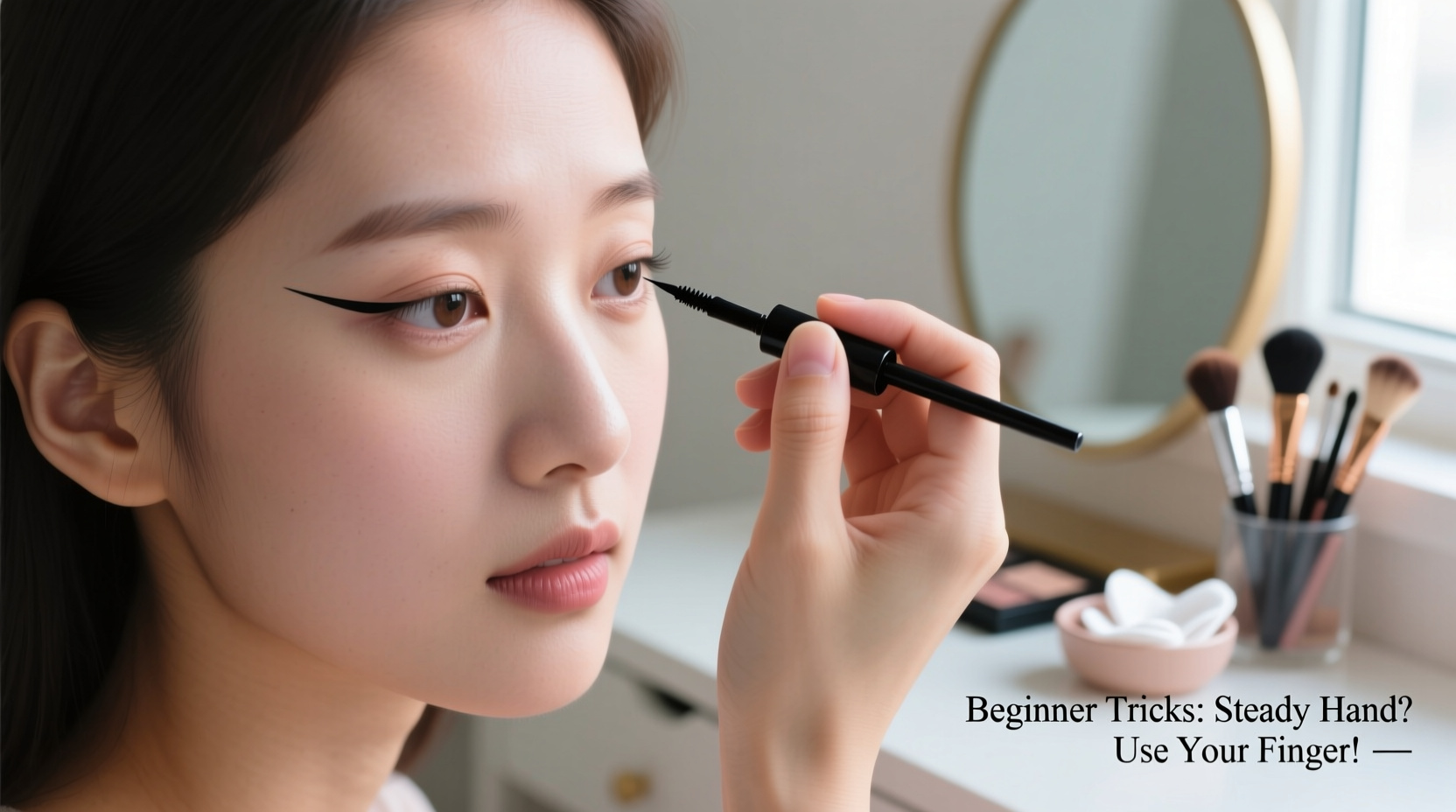
Not all liquid eyeliners are created equal—especially when it comes to managing shaky hands. The type of applicator and formula can dramatically affect control and ease of use.
| Applicator Type | Best For Shaky Hands? | Why |
|---|---|---|
| Felt-tip pen (precision tip) | ✅ Yes | Narrow, firm tip allows controlled drawing; less wobble than brush tips. |
| Brush-tip (flexible bristles) | ❌ Not ideal | Too flexible—amplifies hand movement and harder to guide steadily. |
| Sponge-tip (angled) | ✅ Recommended | Stiff edge gives structure; good for building thick lines gradually. |
| Pencil-style twist-up | ✅ Great alternative | Shorter lever arm = less shake; easier grip and pressure control. |
Felt-tip liners like those from NYX, L’Oréal Infallible, or KVD Beauty are popular among beginners for their marker-like precision. They dry quickly and allow small corrections before setting. If you find felt tips still too finicky, consider switching to a gel eyeliner applied with an angled brush—it offers more stability because you rest your elbow and pivot from the knuckles rather than freehanding with a wrist.
Stabilize Your Body and Environment
Shakiness isn't just about nerves—it's often a result of poor ergonomics. Small muscle tremors become exaggerated when larger stabilizing muscles aren’t engaged. Proper posture and surface support make a surprising difference.
- Use both elbows on a flat surface. Resting both arms reduces upper-body sway and minimizes micro-movements transmitted to your fingers.
- Sit directly in front of a well-lit mirror. Natural daylight or ring lighting eliminates shadows that force you to lean in and compromise balance.
- Tilt your head slightly forward, not sideways. Turning your face too far to see your eye distorts angles and strains neck muscles, leading to instability.
- Support your dominant hand with your non-dominant hand. Gently cup the base of your writing hand against your cheekbone or temple to dampen tremors.
One technique used by professional makeup artists is called the “three-point contact” method: elbow on table, pinky finger lightly touching cheek, and head resting gently against a wall or headrest. This creates a tripod effect, minimizing motion across three joints—shoulder, wrist, and fingers.
“We teach our trainees to treat eyeliner application like drafting—anchor the body first, then let the tool do the work.” — Dana Reyes, Celebrity Makeup Artist and Educator
Break the Process into Manageable Steps
Rushing leads to mistakes. Instead of trying to draw a perfect line in one stroke, break the task into micro-steps. This approach reduces pressure and allows for correction at each stage.
Step-by-Step Guide: Steady Application Method
- Prep your eyelid. Apply primer or a light layer of concealer and set with translucent powder. A smooth, matte surface prevents liner from catching or sliding.
- Map your wing with dots. Without lifting the pen, place three tiny dots: one at the outer corner, one where you want the wing tip, and one mid-way along the lash line. These act as guides.
- Connect the dots in segments. Draw short dashes between each dot instead of one long line. Overlap slightly to ensure continuity.
- Fill in gaps slowly. Use the edge of the applicator to thicken the line from lash roots outward, working in 2–3 millimeter strokes.
- Let it dry, then refine. Wait 20–30 seconds for the product to set, then go over any uneven areas with the very tip of the liner.
- Clean edges with concealer. Dip a flat brush into full-coverage concealer and sharpen the edge for a crisp finish.
This segmented method turns a high-pressure task into a series of low-risk actions. Each dash can be adjusted without ruining the whole line. It’s especially effective for those with Parkinson’s-related tremors or anxiety-induced shaking, as it doesn’t rely on sustained hand control.
Adapt Tools and Techniques for Maximum Control
Sometimes the solution isn’t practice—it’s modification. Simple tweaks to how you hold or use your liner can neutralize tremors.
- Hold the pen closer to the tip. Gripping near the applicator shortens the lever arm, reducing wobble—similar to holding a pencil lower when sketching details.
- Use tape as a stencil. Place a small piece of Scotch tape from the outer corner of your eye toward the end of your eyebrow. Follow the edge for a sharp, straight wing.
- Try stamping instead of drawing. Dab the liner onto the lash line in small impressions, then blend them together with the tip. Less continuous motion means fewer chances for shake.
- Switch to microliner for thin lines. If you only want definition, a super-fine tip (like Stila Stay All Day) lets you create subtle depth without bold, noticeable lines that highlight imperfections.
For those with chronic hand tremors, weighted pens or adaptive grips may help. Some users report success with arthritis-friendly styluses or modified makeup tools that offer better balance and reduced vibration transmission.
Mini Case Study: Sarah’s Morning Routine Transformation
Sarah, a 34-year-old teacher with mild essential tremor, struggled daily with her eyeliner. She’d spend ten minutes trying to get one eye right, only to wipe it off in frustration. After reading about stabilization techniques, she changed her setup: she began sitting at her kitchen table with both elbows down, using a felt-tip liner, and applying liner in dots before connecting them.
She also switched to doing her makeup after breakfast—avoiding coffee until afterward—to reduce caffeine-induced jitteriness. Within a week, she was completing both eyes in under five minutes with clean, symmetrical wings. “It’s not perfect,” she says, “but now it’s consistent. That’s what I needed.”
Avoid Common Mistakes That Worsen Shake
Even with the best intentions, certain habits amplify shakiness and lead to smudging, asymmetry, or irritation.
| Mistake | Better Alternative |
|---|---|
| Applying liner while standing or walking | Sit down with full upper-body support |
| Using old or dried-out liners | Replace every 3–6 months; test flow before starting |
| Pressing too hard on the lid | Use feather-light touches; let pigment do the work |
| Trying to fix mistakes immediately | Wait for product to dry, then clean edges with concealer |
| Skipping primer or moisturizer | Prime lids to prevent creasing and improve glide |
Another frequent error is attempting eyeliner when tired or stressed. Fatigue increases physiological tremor. If mornings are chaotic, consider doing your eyes the night before and refreshing with mascara in the morning—or save dramatic liner for evenings when you’re calmer and more focused.
Frequently Asked Questions
Can I use gel eyeliner if I have shaky hands?
Yes—and many find it easier than liquid. Gel liners applied with an angled brush allow you to rest your hand on your cheek and pivot slowly. The thicker formula also gives more control and doesn’t dry as fast, allowing time to adjust.
How do I stop my hand from shaking when applying eyeliner?
You can’t eliminate natural tremor, but you can minimize its impact. Anchor your body, use supportive techniques (like taping or dotting), choose stable applicators, and avoid stimulants like caffeine before application. Over time, muscle memory will improve consistency.
Is there a beginner-friendly eyeliner brand for shaky hands?
NYX Epic Ink Liner, L’Oréal Paris Super Liner, and e.l.f. Halo Glow Liquid Liner are all praised for their precise felt tips, quick-dry formulas, and affordability—ideal for practicing without fear of wasting expensive product.
Final Tips Checklist
- ✅ Sit down with both elbows supported
- ✅ Use a felt-tip or stamping technique
- ✅ Map your line with dots before drawing
- ✅ Avoid caffeine right before application
- ✅ Rest your pinky on your face for stability
- ✅ Clean up edges with concealer, not wipes
- ✅ Practice in short bursts, not marathon sessions
Conclusion: Confidence Comes from Control, Not Perfection
Liquid eyeliner doesn’t have to be a source of stress. For beginners with shaky hands, success lies not in eliminating tremors but in designing a system that works around them. By choosing the right tools, anchoring your body, breaking the process into steps, and practicing patience, you’ll develop a method that feels reliable—even on hectic mornings.
Remember, symmetry is an illusion created by perception, not math. Two slightly different wings aren’t flaws—they’re proof you showed up and tried. Every expert once held a trembling pen over their eyelid, wondering if they’d ever get it right. You’re not behind. You’re learning.




 浙公网安备
33010002000092号
浙公网安备
33010002000092号 浙B2-20120091-4
Comments
No comments yet. Why don't you start the discussion?