
Applying sunscreen effectively is one of the most important steps in daily skincare and sun protection. Yet, many people struggle with uneven application, sticky residues, or missed spots—especially when using traditional lotions or sprays. The air puff applicator, a lightweight sponge-like tool often included with cushion compacts, has emerged as a surprisingly effective method for applying liquid or cream sunscreens evenly and efficiently. When used correctly, it delivers a smooth, streak-free layer that adheres well to the skin while minimizing product waste.
This guide walks you through how to use an air puff to apply sunscreen properly, ensuring full facial coverage with no gaps. Whether you're new to cushion-style tools or looking to refine your technique, these steps will help you achieve consistent, reliable sun protection every day.
Why Use an Air Puff for Sunscreen?
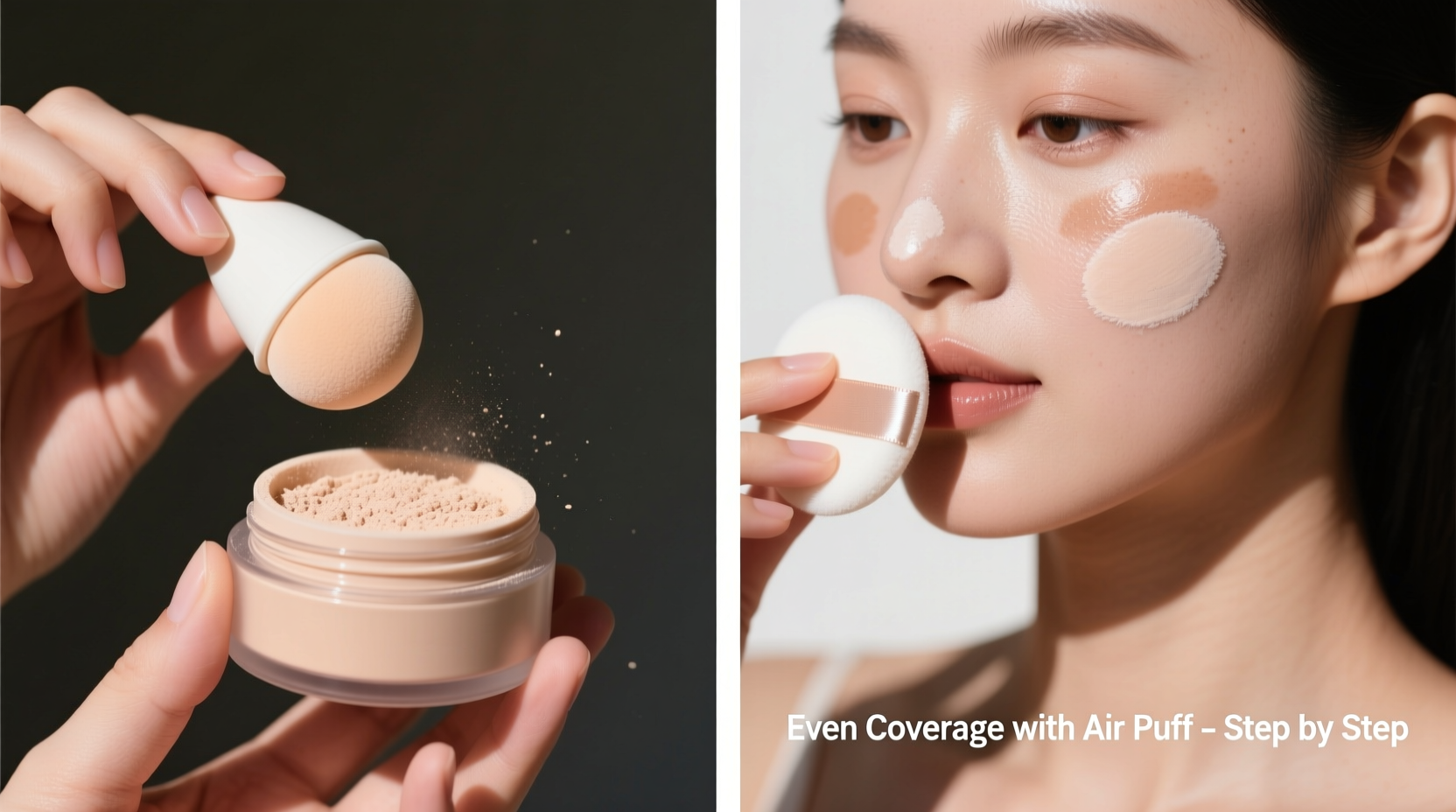
Air puffs are typically associated with makeup cushion foundations, but their design makes them ideal for sunscreen application too. Made from soft, porous foam, they absorb just the right amount of product and release it gradually upon pressing against the skin. Unlike fingers, which can leave streaks or uneven patches, or sprays, which may miss areas entirely, an air puff offers controlled, tactile distribution.
The gentle bounce-and-blend motion encourages even spreading across contours like the nose, forehead, and jawline—areas commonly missed during manual application. Additionally, because the puff limits direct hand contact, it reduces the risk of transferring dirt or bacteria onto freshly cleansed skin.
“Using a clean applicator like an air puff can improve sunscreen consistency and adherence, especially for those prone to skipping spots.” — Dr. Lena Torres, Board-Certified Dermatologist
Step-by-Step Guide: Applying Sunscreen with an Air Puff
Follow this detailed sequence to ensure maximum UV protection with minimal effort and no mess.
- Cleanse and Prep Your Skin
Start with a freshly washed face. Remove any oil, sweat, or leftover residue from the previous day. Apply toner or moisturizer if part of your routine, and allow it to fully absorb before moving on. - Select the Right Sunscreen
Choose a lightweight, non-comedogenic sunscreen formulated for daily facial use. Gel-creams, fluid lotions, or cushion-compatible formulas work best. Avoid thick ointments or mineral sticks that won’t transfer well through the puff. - Prime the Air Puff
If using a dedicated sunscreen puff (recommended), lightly press it into the sunscreen reservoir or onto a small dollop placed on the back of your hand. Do not soak it—just dampen the surface. If using a multi-use puff previously used for makeup, ensure it’s thoroughly cleaned and completely dry. - Begin at the Center of the Face
Start with the forehead, cheeks, and chin. Gently bounce the puff in outward and upward motions. Use short, repeated taps rather than dragging to avoid pulling the skin or creating thin spots. - Blend Into Hard-to-Reach Areas
Use the edge of the puff to glide along the sides of the nose, under the eyes, around the eyebrows, and near the hairline. These zones are frequently overlooked but highly susceptible to sun damage. - Don’t Forget the Neck and Ears
Extend the application down the neck using downward bounces. For ears, gently dab the front, back, and crevices. A separate swipe on the tops of the ears is crucial—they’re exposed during driving or outdoor activities. - Reapply Midday (If Needed)
After sweating, swimming, or wiping your face, reapplication is essential. Use a fresh puff or sanitize the current one with alcohol wipes between uses to prevent bacterial buildup.
Do’s and Don’ts of Air Puff Sunscreen Application
| Do | Don’t |
|---|---|
| Use a clean puff daily | Use a dirty or damp puff |
| Tap, don’t rub, for even spread | Drag the puff across skin |
| Cover ears, neck, and hairline | Skip thinner or sensitive areas |
| Wash reusable puffs weekly | Share your puff with others |
| Pair with SPF 30 or higher | Assume one coat lasts all day |
Real-Life Example: Morning Routine Upgrade
Sophie, a 32-year-old graphic designer in Austin, Texas, spent years dealing with persistent dark spots along her cheekbones despite wearing sunscreen. After consulting a dermatologist, she learned she was missing key areas—especially near her temples and jawline—when applying sunscreen with her fingers. Her doctor suggested switching to an air puff for more precise control.
She began using a silicone-edged cushion puff with a lightweight chemical SPF 50 serum. Within three weeks, she noticed fewer missed spots and smoother texture. Over six months, her hyperpigmentation improved significantly. “It felt like I was finally getting full coverage,” she said. “The tapping motion made me slow down and pay attention to every inch.”
Checklist: Perfect Air Puff Sunscreen Application
- ✅ Wash face and prep skin
- ✅ Choose a compatible sunscreen formula
- ✅ Use a clean, dry air puff
- ✅ Press lightly to load product
- ✅ Start at center and move outward
- ✅ Tap—don’t drag—on delicate areas
- ✅ Extend coverage to neck, ears, and hairline
- ✅ Clean puff weekly; replace monthly
- ✅ Reapply after sun exposure or sweating
Frequently Asked Questions
Can I use my makeup air puff for sunscreen?
You can, but only if it's cleaned regularly and used exclusively for sunscreen. Mixing products increases contamination risk and may reduce sunscreen efficacy. Ideally, keep a separate puff labeled for sun protection only.
How much sunscreen should I use with an air puff?
Use about a nickel-sized amount for the face. With a puff, you may need slightly more than usual since some product absorbs into the foam. Ensure visible coverage before blending.
Is an air puff suitable for all skin types?
Yes, especially for oily or acne-prone skin, as it avoids heavy finger contact. Those with dry skin should follow up with a light moisturizer after sunscreen absorption to prevent flakiness.
Final Thoughts
Effective sun protection isn’t just about choosing a high SPF—it’s about how well you apply it. An air puff, when used intentionally, transforms sunscreen application from a rushed step into a precise, thorough process. It promotes consistency, minimizes waste, and helps eliminate blind spots that lead to long-term sun damage.
By integrating this simple tool into your morning routine and following the steps outlined here, you’re not just protecting your skin today—you’re investing in its health for years to come.




 浙公网安备
33010002000092号
浙公网安备
33010002000092号 浙B2-20120091-4
Comments
No comments yet. Why don't you start the discussion?