
A bookshelf is more than just storage—it’s a statement. Whether in a living room, study, or bedroom, a well-arranged shelf draws the eye, creates harmony, and reflects personal taste. While function matters, aesthetics elevate the experience. Two of the most popular and effective methods for achieving visual impact are organizing books by color or by size. These approaches go beyond mere tidiness; they transform shelves into curated displays that feel intentional and inviting.
The key to success lies not just in choosing a method but in executing it with attention to detail. A poorly executed rainbow gradient can look chaotic, while an overly rigid size-based arrangement might feel sterile. The best results come from understanding the principles behind each system, preparing thoughtfully, and making adjustments based on the space and collection at hand.
Why Aesthetic Book Arrangement Matters
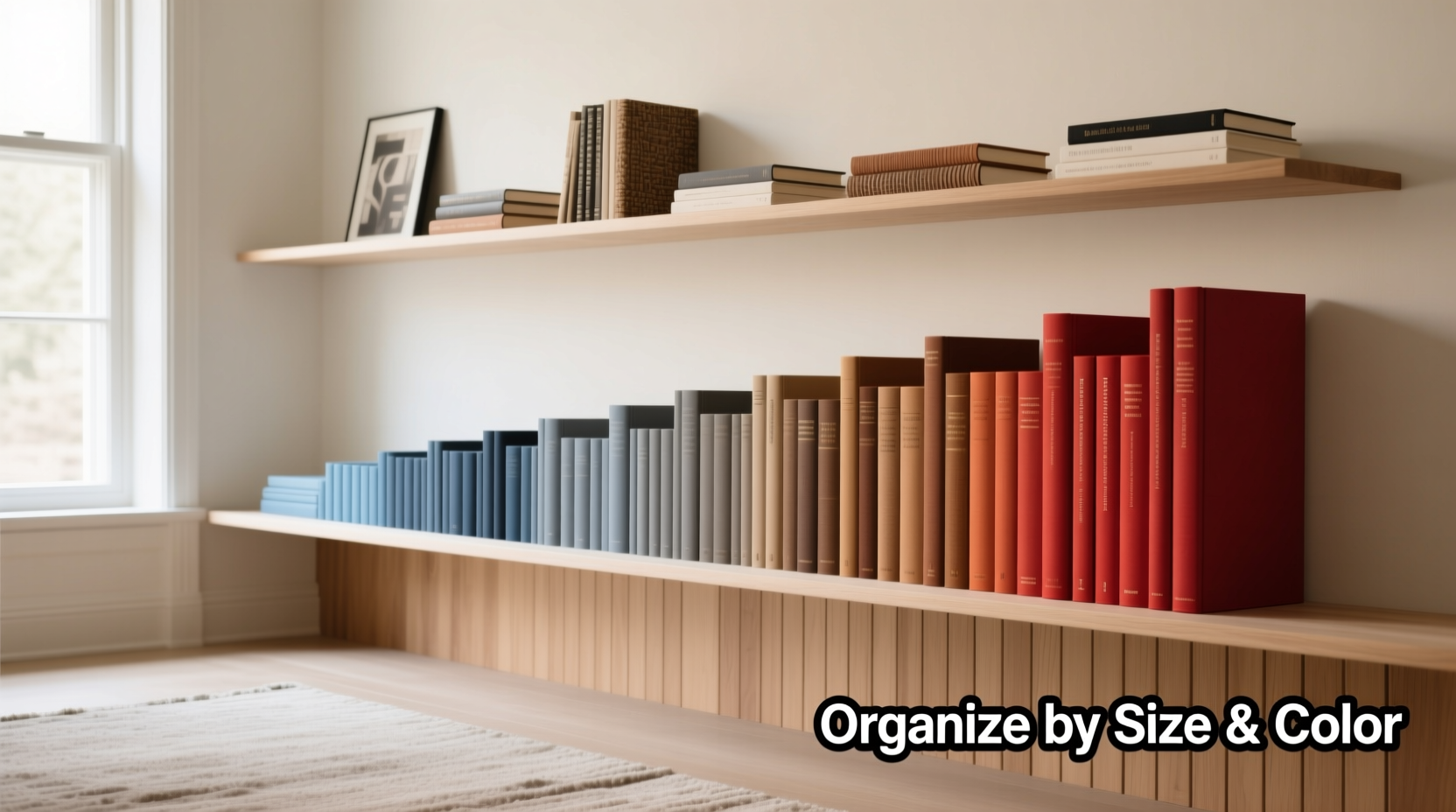
Books are inherently visual objects. Their spines feature typography, imagery, and color palettes that interact with interior design elements. When arranged without consideration, even a large collection can appear cluttered or disjointed. Aesthetic organization turns this potential chaos into cohesion.
Studies in environmental psychology suggest that organized, visually balanced spaces contribute to reduced stress and improved focus. A thoughtfully arranged bookshelf contributes to this effect by creating a sense of order and calm. It also invites engagement—guests are more likely to browse when books are displayed like art rather than hidden in disarray.
Furthermore, arranging books by color or size allows for creative expression. A monochromatic section in deep blues can evoke serenity, while a vibrant gradient from red to violet adds energy. Size-based arrangements emphasize form and structure, lending a minimalist or architectural quality to the display.
Arranging Books by Color: Creating Visual Harmony
Color-based organization is one of the most striking ways to display books. When done well, it produces a gallery-like effect that transforms shelves into focal points. This method works especially well in open-concept spaces or rooms where design plays a central role.
The first step is to sort all books by spine color. Begin by removing every book from the shelf and laying them out on a flat surface. Group them into broad categories: red, orange, yellow, green, blue, purple, black, white, and brown. Within these groups, further refine shades—navy with navy, teal with turquoise, burgundy with maroon.
Once sorted, decide on the sequence. The most common approach is a rainbow gradient, typically moving from warm to cool tones: red → orange → yellow → green → blue → purple. Some prefer the reverse, starting with violet and ending in red. Others opt for a split-complementary layout, placing neutrals (black, white, gray) in the center and radiating outward with color.
For collections lacking sufficient color variety, consider incorporating decorative objects—bookends, small plants, or ceramic figures—in hues that complement the palette. These accents can fill gaps and enhance continuity.
A major challenge with color sorting is maintaining consistency over time. As new books are added, they must be evaluated for their spine color, not just content. Keeping a “transition zone” on a less visible shelf can help integrate new arrivals before placing them in the main display.
“Color-coded shelving isn’t about perfection—it’s about rhythm. A slight variation in tone can add depth, like brushstrokes in a painting.” — Lena Torres, Interior Stylist & Author of *The Art of Living with Books*
Arranging Books by Size: Emphasizing Structure and Balance
Size-based organization prioritizes symmetry and spatial harmony. This method is ideal for those who appreciate clean lines and architectural precision. It’s particularly effective in modern or minimalist interiors where form follows function.
To begin, measure the height and thickness of each book. Group them into categories: tall (over 10 inches), standard (7–10 inches), short (under 7 inches), and oversized (coffee table or art books). Paperback editions often vary in height from hardcovers of the same title, so treat them as separate items.
Once categorized, decide on the layout. Common approaches include:
- Horizontal alignment: All books stand upright, aligned at the top or bottom for a uniform skyline.
- Stacked groupings: Place taller books together in one section, shorter ones in another, creating stepped levels.
- Mixed orientation: Combine upright books with horizontally stacked piles to add dimension.
One effective technique is to cluster oversized books at the base of a shelf or use them as bookends. This anchors the display and prevents smaller volumes from appearing lost. Horizontal stacks can hold up standing books or serve as platforms for small decor items like candles or framed photos.
The advantage of size-based sorting is its resilience to change. New books can be slotted in based on dimensions without disrupting the overall aesthetic. However, this method risks looking too rigid if not softened with variation in orientation or texture.
Step-by-Step Guide to Curating Your Shelf
Regardless of whether you choose color or size as your primary organizing principle, the process benefits from a structured approach. Follow this timeline to achieve professional results:
- Empty the shelf completely. Remove all books and clean the surface. This provides a blank canvas and forces intentionality.
- Sort and categorize. For color: group by dominant spine hue. For size: measure and classify by height and width.
- Edit your collection. Set aside books you no longer want or rarely read. Donate, sell, or store them elsewhere.
- Test layouts on the floor. Arrange books in your chosen pattern before placing them on the shelf. Take photos to compare options.
- Begin placement. Start from one end and work steadily across. Use a level if shelves are adjustable.
- Incorporate negative space. Leave some areas unoccupied to prevent overcrowding. Empty space enhances focus on individual books.
- Add complementary objects. Introduce 1–3 decorative items per shelf—vases, sculptures, or framed prints—that align with the color or theme.
- Review and refine. Step back and assess the overall flow. Adjust spacing, swap books, or remove cluttering items.
- Maintain regularly. Dust weekly and reevaluate every few months, especially after acquiring new books.
Do’s and Don’ts: Best Practices Compared
| Practice | Do | Don’t |
|---|---|---|
| Spacing | Leave 1–2 inches between groupings for breathing room | Cram books tightly together to \"fill space\" |
| Lighting | Use soft ambient or directional lighting to highlight spines | Expose books to direct sunlight, which fades colors |
| Balance | Distribute heavy and light colors evenly across shelves | Cluster all dark or bright books in one area |
| Decor | Choose objects that echo spine colors or themes | Overcrowd shelves with unrelated knickknacks |
| Consistency | Stick to one primary organizing method per shelf | Mix color and size systems haphazardly |
Real Example: Transforming a Home Office Shelf
Sarah, a graphic designer in Portland, struggled with a cluttered bookshelf in her home office. The space held over 150 books—novels, design manuals, and art monographs—but they were arranged haphazardly, grouped only by rough subject matter. The result was visually overwhelming and difficult to navigate.
She decided to reorganize by color, aiming for a calming yet inspiring atmosphere. After removing all books, she sorted them into six main color families. She noticed a predominance of black, white, and gray spines—common in design literature—so she used these as a neutral core. Around them, she built a gradient: deep reds and oranges on the left, transitioning through yellows and greens to blues and purples on the right.
To break up large blocks of dark tones, she introduced horizontal stacks of brightly covered sketchbooks and placed a small brass sculpture in the center. She left the top shelf partially empty, displaying only three oversized art books laid flat. The transformation was immediate: the room felt more cohesive, and colleagues frequently commented on the shelf during video calls.
Sarah now updates the arrangement quarterly, integrating new acquisitions and rotating out books she’s finished. Her shelf has become both functional and expressive—a true extension of her creative identity.
Frequently Asked Questions
Can I combine color and size organization?
Yes, but with caution. A hybrid approach works best when one method dominates. For example, organize primarily by color, then align books within each color group by height. Avoid switching methods shelf by shelf, as this can create visual confusion.
What if my books don’t have colorful spines?
Many academic or older books feature plain covers. In such cases, consider using book sleeves or reversible book covers in solid colors. Alternatively, shift to a size-based system and enhance visual appeal with decorative objects in vibrant hues.
How do I maintain the arrangement long-term?
Set a monthly 15-minute maintenance window to reset displaced books and dust shelves. Keep a small tray nearby to temporarily place books while adjusting the display. Labeling less visible shelves by category (e.g., “Fiction,” “Reference”) helps ensure misplaced books are easily returned.
Checklist: Your Aesthetic Shelving Action Plan
- ☐ Remove all books and clean the shelf
- ☐ Sort books by color or size (or both, if combining)
- ☐ Edit collection—remove unwanted or infrequently used books
- ☐ Test layout on the floor before final placement
- ☐ Align books uniformly (top, bottom, or center)
- ☐ Add 1–3 decorative objects per shelf for balance
- ☐ Ensure even visual weight across all shelves
- ☐ Install appropriate lighting to enhance visibility
- ☐ Schedule quarterly reviews to refresh the display
- ☐ Enjoy and share your curated space!
Conclusion
Arranging books on a shelf aesthetically by color or size is not merely decorative—it’s an act of curation that blends practicality with personal expression. Whether you’re drawn to the emotional resonance of a color gradient or the structural elegance of size-based alignment, the process invites mindfulness and creativity. The effort invested pays dividends in daily enjoyment and the impression your space makes on others.




 浙公网安备
33010002000092号
浙公网安备
33010002000092号 浙B2-20120091-4
Comments
No comments yet. Why don't you start the discussion?