
Floating shelves are a modern favorite in home decor—sleek, space-saving, and versatile. They offer both function and style, providing storage while showcasing personal items like books, plants, or art. But when improperly styled, even the most elegant floating shelves can quickly turn into visual noise, making walls feel busy and overwhelming. The key isn’t just in what you place on them, but how you curate, organize, and balance the display. With thoughtful planning and intentional design, it’s entirely possible to use floating shelves to elevate your space without sacrificing clarity or calm.
Start with Strategic Placement and Spacing
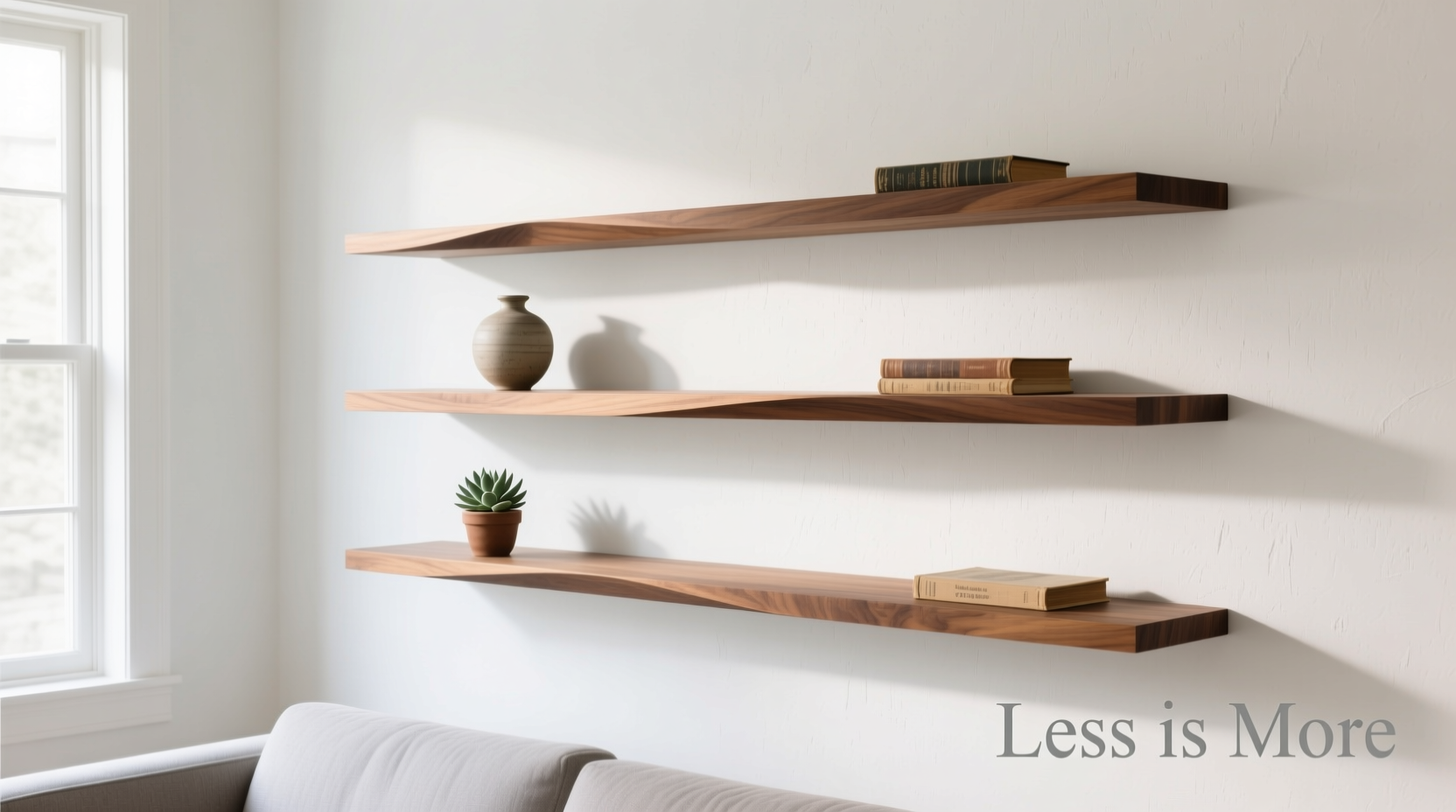
The foundation of uncluttered floating shelves begins before anything is placed on them. Where you install them and how much space exists between each shelf dramatically influences the final aesthetic.
Shelves that are too close together force objects into tight quarters, creating a cramped appearance. Conversely, excessive gaps can make the arrangement feel disjointed. A general rule is to leave between 10 to 14 inches of vertical space between shelves for balanced proportions. This allows enough breathing room for taller items while maintaining cohesion across the set.
Consider the eye-level zone—the area between 48 and 60 inches from the floor—as prime real estate. This is where people naturally focus their attention. Place your most meaningful or visually appealing items here. Lower shelves can hold heavier or utilitarian objects, while higher ones work well for lightweight decor or infrequently used items.
Curate with Intention: Less Is More
One of the most common mistakes is treating floating shelves like storage zones rather than curated displays. Every item should earn its place based on purpose, proportion, or personal significance. Random knickknacks or mismatched books might seem harmless individually, but grouped together, they contribute to visual clutter.
Begin by editing ruthlessly. Remove everything that doesn’t serve one of three functions: utility, beauty, or emotional value. Then, group remaining items into categories—books, ceramics, framed photos, greenery—and evaluate how they interact when arranged.
Think in terms of visual weight. A large ceramic vase carries more presence than a small candle. Balance heavy-looking items with open space or lighter pieces. For example, pair a tall plant on one end with a stack of two hardcover books and an empty corner on the other. Asymmetry can be dynamic, but imbalance leads to discomfort.
“Clutter isn't defined by quantity—it's defined by lack of intention. A shelf with ten thoughtfully chosen objects feels serene; one with five random things can feel messy.” — Lena Torres, Interior Stylist & Author of *Calm Spaces*
Create Rhythm with Grouping and Alignment
How you position items on the shelf impacts perception. Aligning objects along the back edge creates depth, allowing the front portion of the shelf to remain open and airy. Avoid lining everything up in the middle or crowding the front edge, which flattens the display and reduces dimensionality.
Grouping items in threes or odd numbers tends to be more visually pleasing than symmetrical pairs. Try clustering a tall vase, a medium-sized sculpture, and a small framed photo at slightly varying depths. Leave negative space around the group to let it stand out.
Vary heights and textures for interest, but maintain a consistent color palette or material theme. For instance, a mix of matte black pottery, warm wood tones, and soft linen-covered books creates harmony even when shapes differ. Too many contrasting colors or finishes compete for attention and fracture focus.
| Do’s | Don’ts |
|---|---|
| Leave 30–50% of shelf space empty | Cover every inch of surface |
| Use books as risers for smaller objects | Stack books haphazardly |
| Align object backs for clean lines | Let items jut forward unevenly |
| Mix materials with shared undertones | Combine clashing metals, colors, or styles |
| Rotate seasonal or thematic items | Leave the same setup for years |
A Real-Life Example: From Cluttered to Calm
Sarah, a graphic designer in Portland, installed four floating shelves in her living room to display her growing book collection and travel souvenirs. Within months, the shelves became overcrowded—paperbacks stacked sideways, small trinkets from trips piled together, and multiple candles competing for space. The wall felt chaotic, and guests often remarked that it looked “busy.”
She decided to reset. First, she removed everything and sorted items into keep, donate, and store categories. She kept only five books that she loved or planned to read soon, chose three meaningful souvenirs (a carved stone from Morocco, a vintage compass, and a hand-painted tile from Portugal), and added a trailing pothos plant for life.
She arranged the books vertically on the bottom shelf with the compass resting atop them. The middle shelves held the stone and tile, spaced apart with ample breathing room. The top shelf featured the plant in a neutral pot, its vines cascading gently. By editing aggressively and focusing on flow, Sarah transformed the wall into a serene focal point that reflected her personality without overwhelming the room.
Step-by-Step Guide to Styling Floating Shelves Thoughtfully
Follow this sequence to achieve a polished, clutter-free look:
- Clear the shelves completely. Start fresh to assess what you truly want to display.
- Edit your items. Keep only what you love, use regularly, or holds deep meaning.
- Measure and plan spacing. Decide on vertical distance between shelves and ensure alignment across all units.
- Sort by category and size. Group similar items and separate by visual weight—tall, wide, or dense objects versus light and small ones.
- Create vignettes. Arrange 2–4 items per shelf in small clusters, leaving space around them.
- Incorporate height variation. Use books, boxes, or stands to elevate smaller objects.
- Add greenery or texture. A single plant, woven basket, or textured ceramic introduces warmth without clutter.
- Step back and assess. View the entire wall from different angles and distances. Adjust until the composition feels balanced.
- Limit future additions. Adopt a “one in, one out” rule to prevent gradual accumulation.
Functional Checklist for Clutter-Free Floating Shelves
- ✅ Measure vertical spacing (10–14 inches between shelves)
- ✅ Install shelves level and aligned with room architecture
- ✅ Edit displayed items—keep only essentials and favorites
- ✅ Limit each shelf to 1–3 curated groupings
- ✅ Use books or boxes as platforms to vary height
- ✅ Maintain 30–50% negative space per shelf
- ✅ Stick to a cohesive color scheme or material family
- ✅ Incorporate one living element (e.g., small plant)
- ✅ Rotate items seasonally to refresh the look
- ✅ Clean shelves weekly to preserve clarity and order
Common Pitfalls and How to Avoid Them
Even with good intentions, certain habits undermine the goal of minimalism. Recognizing these traps helps maintain long-term success.
One major issue is the “collector’s instinct”—the desire to display every souvenir, award, or inherited object. While sentimental, showing everything dilutes impact. Instead, rotate meaningful items periodically. Store extras neatly and bring them out for special occasions or seasons.
Another trap is using shelves as temporary drop-zones. Mail, keys, or daily accessories might seem convenient to leave on a shelf, but they break the intentional aesthetic. Designate a separate functional area—a console table or entryway tray—for everyday items.
Finally, avoid over-lighting. While LED strip lights under shelves can enhance ambiance, too many bright spots draw excessive attention and fragment focus. Use subtle lighting sparingly, ideally on one shelf or in the background, to highlight rather than overwhelm.
Frequently Asked Questions
How many items should I put on each floating shelf?
There’s no fixed number, but aim for 1 to 4 thoughtfully arranged items per shelf. The goal is cohesion, not quantity. A single large art book paired with a small plant can be more effective than five unrelated trinkets.
Can I use floating shelves in a small room without making it feel crowded?
Absolutely. In small spaces, floating shelves are especially valuable because they don’t take up floor space. Just keep arrangements minimal—use upper shelves for light decor and lower ones for essential storage in matching baskets or bins. Stick to neutral tones to maintain openness.
What’s the best way to style shelves in high-traffic areas like the kitchen or bathroom?
In functional rooms, prioritize utility with a touch of style. In the kitchen, display a few attractive jars, a wooden spoon, and a small herb plant. In the bathroom, use shelves for folded towels, a soap dispenser, and a reed diffuser. Keep surfaces mostly clear for ease of use and cleaning.
Final Thoughts: Design for Calm, Not Clutter
Floating shelves should enhance your environment, not dominate it. When arranged with care, they become frames for your story—highlighting what matters while letting silence speak too. The absence of clutter isn’t emptiness; it’s clarity. It allows individual pieces to shine and gives the eye a place to rest.
Great shelf styling isn’t about perfection. It’s about rhythm, restraint, and resonance. By choosing fewer items, arranging them with purpose, and maintaining consistency, you create displays that feel both personal and peaceful. Over time, this approach fosters a deeper connection to your space—one shelf at a time.




 浙公网安备
33010002000092号
浙公网安备
33010002000092号 浙B2-20120091-4
Comments
No comments yet. Why don't you start the discussion?