
The Megir oversized watch has carved a niche in the fashion accessory world—not just for its bold aesthetic but also for its functional design. While many are drawn to its striking presence on the wrist, few take full advantage of one of its most useful features: the ability to read time quickly and accurately at a glance. Whether you're commuting, in a meeting, or simply on the go, mastering quick time reading can enhance both efficiency and confidence. This guide breaks down practical techniques, common pitfalls, and real-world applications that transform your Megir watch from a stylish statement into a precision tool.
Understanding the Design Advantage
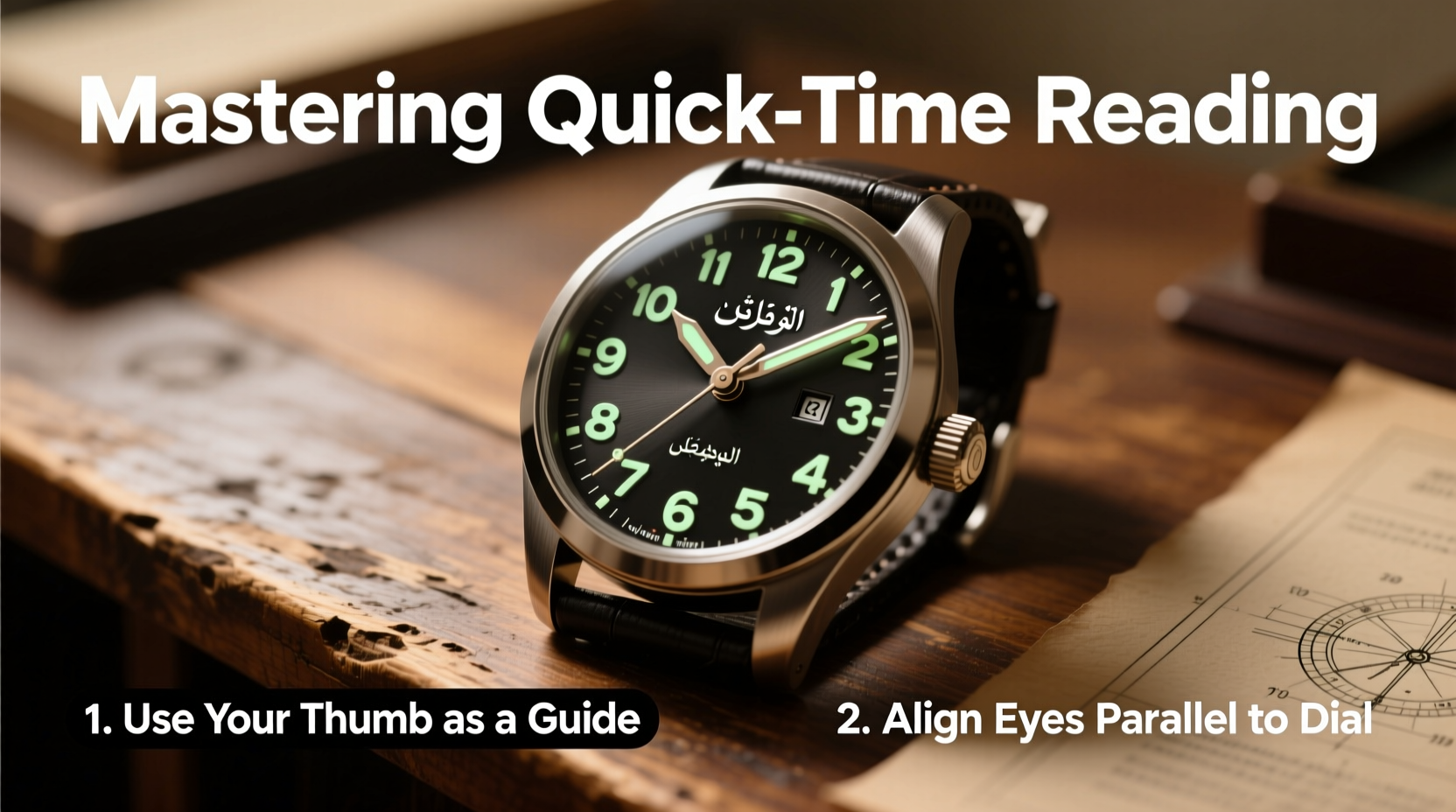
Megir’s oversized watches feature large dials, high-contrast numerals, and often luminous hands and markers—design choices that aren’t just about aesthetics. These elements serve a functional purpose: they make time easier to read under various conditions. The larger face allows for greater spacing between hour markers, reducing visual clutter. Bold fonts and glowing components improve legibility in low light, while the symmetrical layout supports intuitive pattern recognition.
This design philosophy aligns with principles used in aviation and military timepieces, where split-second readability is critical. By understanding how these features work together, you can train yourself to interpret the time almost instantly—without squinting or adjusting your wrist.
Step-by-Step Guide to Quick Time Recognition
Reading time quickly isn’t about faster eyesight—it’s about training your brain to recognize patterns. Follow this five-step process to develop instinctive time reading skills:
- Familiarize Yourself with Your Watch’s Layout: Spend 5–10 minutes each day studying the dial. Note the position of numerals, sub-dials (if any), and the movement of the hands. This builds mental mapping.
- Practice Glance Training: Set a timer and flash your watch face for two seconds. Look away and recall the exact time. Repeat 10 times daily. Over time, your accuracy will improve dramatically.
- Use Landmark Hours as Anchors: Train your mind to identify key positions—3 (9:00), 6 (6:00), 9 (3:00), and 12 (12:00)—as reference points. From there, estimate minutes based on hand distance from these anchors.
- Minimize Hand Movement: Instead of rotating your entire forearm, lift your wrist slightly and tilt your hand inward. This subtle motion brings the dial into view faster and more discreetly.
- Simulate Real-World Scenarios: Practice reading the time while walking, typing, or engaging in conversation. The goal is to achieve accurate reading without breaking focus on your primary task.
Do’s and Don’ts of Efficient Time Reading
| Do’s | Don’ts |
|---|---|
| Keep the watch clean and free of smudges for maximum clarity | Ignore fogging or condensation under the crystal—this impairs visibility |
| Adjust the strap for a snug fit to prevent slippage during quick glances | Wear the watch too loose, causing it to rotate on the wrist |
| Use ambient light to your advantage by positioning your wrist correctly | Struggle to read in dim lighting without utilizing luminescent markers |
| Practice daily for at least one week to build muscle memory | Expect instant mastery without consistent practice |
Real Example: How a Busy Professional Gained Back Minutes Each Day
James, a project manager in London, wears his Megir 50mm chronograph daily. He noticed he was frequently pausing conversations to check his phone for the time. After learning about glance-based time reading, he applied the anchor-point method and practiced for ten minutes each morning. Within a week, he could read the time in under half a second—without disrupting meetings or losing eye contact. “It sounds minor,” he said, “but eliminating those micro-pauses added up. I feel more present and in control.”
Over a month, James estimated he saved nearly three hours previously lost to distractions—time now reinvested in focused work and better client engagement.
Expert Insight on Visual Processing and Watch Design
“Human brains excel at recognizing spatial patterns. A well-designed watch leverages this by offering clear symmetry and contrast. With minimal training, users can cut their reading time in half.” — Dr. Lena Patel, Cognitive Ergonomics Researcher, University of Edinburgh
This insight underscores why oversized dials like those on Megir watches are not just fashionable—they’re cognitively efficient. The brain processes radial layouts faster when key elements are spaced and differentiated effectively. Luminous materials further reduce cognitive load in suboptimal lighting, allowing for near-instantaneous interpretation.
Checklist: Mastering Quick Time Reading in One Week
- ✅ Clean your watch face and ensure no scratches obstruct visibility
- ✅ Adjust the strap for a secure, comfortable fit
- ✅ Study the dial layout for 5 minutes daily
- ✅ Perform 10 rounds of 2-second glance drills each day
- ✅ Practice reading time while multitasking (e.g., walking, typing)
- ✅ Test yourself in low-light conditions using luminescent markers
- ✅ Reflect at the end of the week: Can you read the time without hesitation?
Frequently Asked Questions
Can I apply these techniques to other watch brands?
Absolutely. While Megir’s oversized design enhances legibility, the principles of pattern recognition, anchor points, and glance training apply universally. Watches with clear dials, contrasting colors, and luminous hands will yield the best results.
What if my watch doesn’t have luminous markers?
If your model lacks glow-in-the-dark features, maximize natural or artificial light by angling your wrist toward the nearest source. Consider upgrading to a Megir model with enhanced luminescence for improved low-light performance.
How long does it take to master quick time reading?
Most users report noticeable improvement within 3–5 days of consistent practice. Full mastery—reading time in under one second—typically takes 7 to 10 days with daily drills.
Final Thoughts and Call to Action
Your Megir oversized watch is more than an accessory—it’s a tool designed for speed, clarity, and confidence. By embracing intentional practice and leveraging the watch’s thoughtful design, you unlock a subtle yet powerful skill: the ability to know the time instantly, anywhere, anytime. This small upgrade in awareness ripples outward, improving punctuality, presence, and personal efficiency.




 浙公网安备
33010002000092号
浙公网安备
33010002000092号 浙B2-20120091-4
Comments
No comments yet. Why don't you start the discussion?