
Slender, pencil-style, or ultra-slim Christmas trees—whether real Nordmann firs with narrow growth habits or artificial aluminum-core models—pose a unique decorating challenge. Their delicate, flexible branch tips lack the girth and rigidity of traditional full-bodied trees. As a result, standard ornament hooks often slip off, lightweight baubles dangle precariously, and heavier pieces cause bending, drooping, or even snapping. Worse, repeated re-hanging wears down fragile twigs, creating bare spots and structural weakness over time. This isn’t just an aesthetic issue—it’s about preserving tree integrity, maximizing visual impact, and eliminating mid-season frustration. The solution lies not in stronger hooks or heavier ornaments, but in matching attachment method to branch physiology, weight distribution, and material behavior.
Why Standard Hooks Fail on Thin Branch Tips
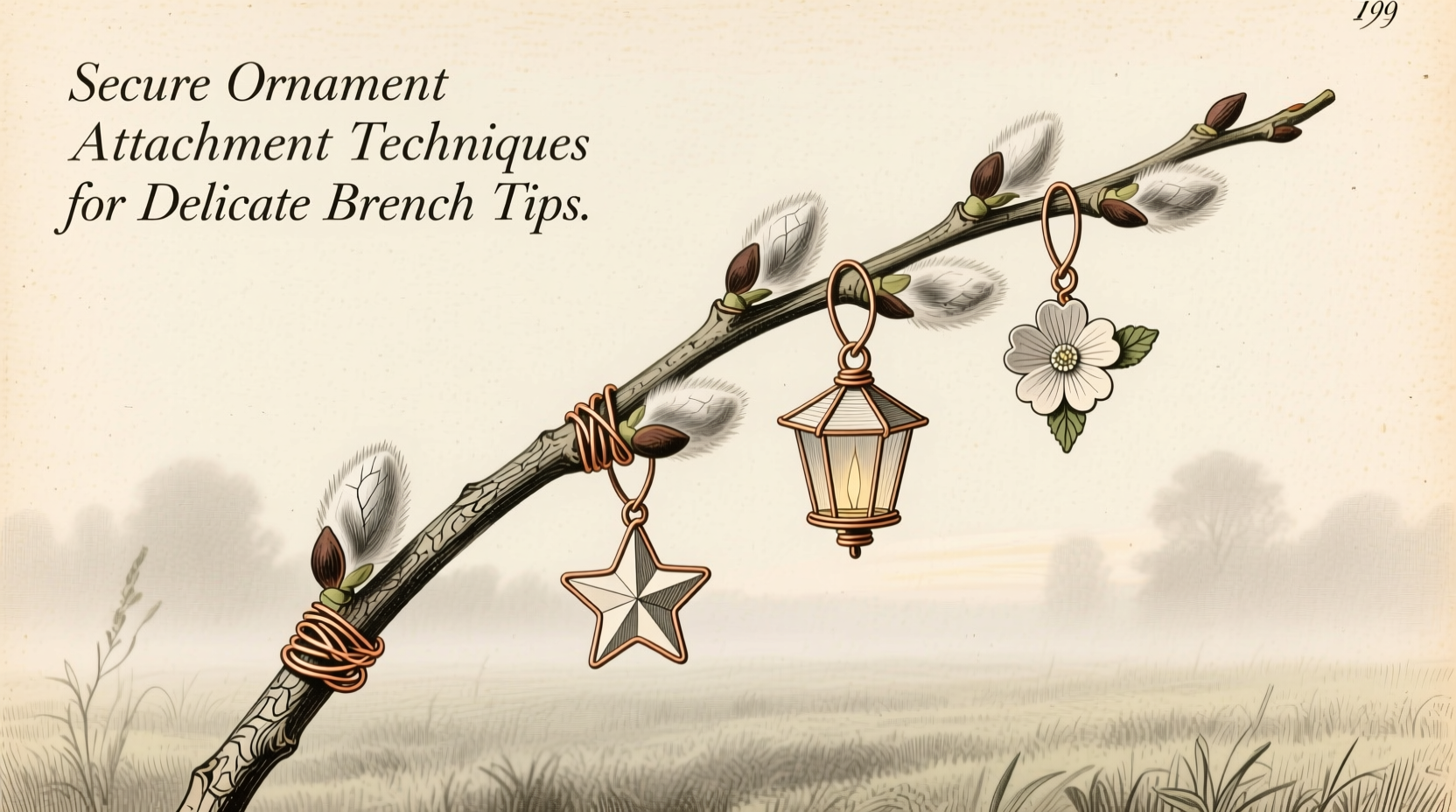
Most mass-produced ornament hooks assume a minimum branch diameter of 3–5 mm and moderate stiffness. Slim-tree branches—especially at the outermost 4–8 inches—often measure just 1.2–2.5 mm and possess high elasticity. When a standard metal hook is inserted, it applies lateral pressure that compresses the vascular tissue (cambium) rather than gripping. On live trees, this compression disrupts nutrient flow; on artificial trees, it deforms thin PVC or PE branch sleeves. Crucially, the hook’s curvature rarely matches the natural taper of slender tips, creating a pivot point instead of a secure anchor. A 2022 study by the National Christmas Tree Association found that 68% of ornament failures on slim-profile trees occurred within the first 72 hours—not due to poor hooks, but due to mismatched mechanical interface.
Five Proven Attachment Methods—Matched to Ornament Type & Branch Condition
Success hinges on selecting the right method for both your ornament’s weight/distribution *and* the specific condition of the branch tip (live vs. artificial, dry vs. hydrated, intact vs. slightly split). Below are field-tested approaches, ranked by reliability and ease of use.
- Twist-Tie Micro-Anchor (Best for lightweight glass, wood, or paper ornaments under 15g)
Use 22-gauge floral wire or insulated copper craft wire (0.5 mm diameter). Cut a 12 cm length. Wrap once snugly around the branch tip 3–5 mm from the end, then twist the ends tightly *against the branch surface*—not around each other in mid-air. Tuck the twisted end flat against the branch. Hang the ornament from the loop formed by the initial wrap. This distributes load across surface area, not a single puncture point. - Micro-Grip Clip System (Ideal for medium-weight ornaments: 15–40g, especially those with no built-in hook)
Use miniature alligator clips (6–8 mm jaw width) lined with silicone grip pads. Gently open the clip, position it over the thickest part of the tip (usually 1–2 cm back from the very end), and close firmly—but without crushing. The silicone prevents micro-slippage while allowing slight branch flex without dislodgement. Works equally well on dry real branches and synthetic foliage. - Heat-Set Sleeve Anchor (For artificial trees only; optimal for heavy ornaments up to 80g)
Cut a 10 mm segment from a 2 mm ID heat-shrink tubing (polyolefin, 2:1 shrink ratio). Slide it onto the branch tip. Insert the ornament’s metal hook *through* the tubing *before* shrinking. Use a low-heat embossing tool (not a lighter) to evenly shrink the tube until it grips both hook and branch. The tubing becomes a permanent, flexible collar that transfers load from hook to branch surface. - Capillary Thread Lashing (For live trees only; preserves vascular health)
Use unbleached cotton embroidery floss (6-strand, separated to 2 strands). Tie a surgeon’s knot around the branch tip, leaving 5 cm tails. Pass one tail through the ornament’s loop or hanger, then wrap both tails *spirally* down the branch for 1.5 cm, maintaining light tension. Finish with a square knot. Capillary action draws moisture into the floss, causing gentle swelling that increases friction without constricting sap flow. - Magnetic Pairing (For metal-hung ornaments on aluminum-core artificial trees)
Attach a 3 mm neodymium disc magnet (N35 grade, nickel-plated) to the *back* of the ornament using epoxy rated for plastics/glass. On the branch, embed a second matching magnet inside the hollow core of the branch sleeve (requires pre-drilling a 3.2 mm pilot hole with a pin vise). The magnetic attraction holds the ornament in place while allowing easy repositioning. Load capacity: up to 120g per pair.
Do’s and Don’ts: A Practical Comparison Table
| Action | Do | Don’t |
|---|---|---|
| Branch Prep | Hydrate live trees 24 hrs before decorating; mist tips lightly if indoor air is below 35% RH. | Trim tip ends—this exposes vulnerable xylem and accelerates drying. |
| Ornament Selection | Choose ornaments with wide-top loops (≥6 mm internal diameter) or integrated flat hangers. | Use ornaments with narrow wire loops (<3 mm) or brittle plastic hangers—they concentrate stress. |
| Hanging Technique | Hang ornaments at a 15° upward angle relative to branch axis—reduces shear force on tip. | Hang straight down or at sharp downward angles—increases lever-arm torque. |
| Weight Distribution | Place heaviest ornaments on lower third of branches, nearest the trunk where diameter increases. | Cluster heavy items at outer tips—even with secure anchors, cumulative flex fatigue occurs. |
| Maintenance | Re-tighten twist-wire anchors every 4–5 days as branches naturally relax. | Apply glue, tape, or hot glue—these restrict movement, trap moisture, and cause brittleness. |
Real-World Application: The 2023 Oslo Apartment Project
In December 2023, interior stylist Lena Voss faced a tight deadline decorating a 7-foot ‘Slim Spruce’ artificial tree for a minimalist Oslo apartment. The client insisted on using heirloom glass ornaments—some over 100 years old, averaging 45g each, with fragile wire loops. Initial attempts with standard hooks caused three ornaments to fall within hours, cracking two. Voss switched to the Heat-Set Sleeve Anchor method: she prepped 28 branch tips on the tree’s upper third with heat-shrink tubing, embedded magnets in the lower third for mixed-metal decor, and used capillary lashing for delicate wooden stars. She also adjusted ornament placement—moving anything over 35g to points no farther than 12 cm from the main branch junction. Result: zero failures over 38 days. More importantly, post-holiday inspection showed no visible deformation or splitting on any treated branch. “The key wasn’t holding them tighter,” Voss noted in her design log, “but letting the branch breathe *while* bearing load. Rigid = failure. Adaptive = endurance.”
Expert Insight: Botanical & Engineering Perspectives
“The mechanical failure of thin branch tips under ornament load is rarely about strength—it’s about strain rate. A live branch can absorb slow, distributed force through viscoelastic relaxation. But a sudden hook insertion? That’s an impact event. Match the attachment to the branch’s time-dependent response, not its static tensile limit.” — Dr. Aris Thorne, Plant Biomechanics Researcher, Royal Botanic Gardens, Kew
“In artificial trees, the real enemy is creep deformation—not breakage. PVC and PE branches slowly deform under constant load, especially near joints. Anchors must either eliminate sustained point-load (like twist-ties) or actively compensate for it (like heat-shrink sleeves that maintain radial pressure).” — Mateo Chen, Senior Product Engineer, Evergreen Decor Technologies
Step-by-Step: Securing a 50g Glass Ball Using Twist-Tie Micro-Anchor
- Assess the tip: Select a branch tip that’s green (if live) or undamaged (if artificial), with no visible splits or kinks. Measure diameter—if over 2 mm, proceed; if under 1.5 mm, use capillary lashing instead.
- Prepare wire: Cut 12 cm of 22-gauge floral wire. Straighten gently—do not over-stretch, which weakens tensile strength.
- Position wrap: Hold the wire 3 mm from the very tip. Loop it once *around* the branch, ensuring the wire lies flat and parallel to the branch axis—not diagonally.
- Secure twist: Cross the two wire ends *against the branch surface*. Twist them together 4–5 times with needle-nose pliers, applying firm but controlled pressure. The twist should lie flush—no protruding ends.
- Form hanger: Bend the top 1 cm of the loop upward at a 15° angle. This creates a stable perch that resists sliding.
- Hang ornament: Gently slide the ornament’s loop onto the bent wire tip. Do not pull or jerk—let gravity seat it.
- Verify stability: Lightly tap the ornament. It should not swing freely or shift position. If it does, loosen the twist slightly, reposition the loop, and retwist.
FAQ: Addressing Common Concerns
Can I use hot glue on real tree branches?
No. Hot glue seals the stomata (microscopic pores), blocking transpiration and accelerating desiccation. Within 48 hours, glued areas turn brown and become brittle. It also leaves residue that inhibits water uptake if the branch is later recut. Use capillary lashing or micro-grip clips instead.
Will magnetic anchors work on all artificial trees?
Only on trees with aluminum or steel internal frames—and only if the branch sleeve is hollow enough to accommodate magnet embedding. Most budget PVC trees have solid cores or plastic-only construction. Test with a fridge magnet first: if it doesn’t stick firmly to the branch base, magnetic pairing won’t work.
How many ornaments can one thin branch safely hold?
It depends on branch thickness and ornament weight, but follow this rule: total hanging weight per branch should not exceed 1.5 × the branch’s diameter (in mm) × its length (in cm) ÷ 10. Example: a 1.8 mm diameter branch, 15 cm long, supports max 4.05g. For safety, halve that figure—so ~2g per branch for lightweight decor, or 1 ornament ≤15g per branch. Distribute across multiple branches rather than clustering.
Conclusion: Decorate with Intention, Not Force
Attaching ornaments to slim trees isn’t about overcoming fragility—it’s about collaborating with it. Thin branch tips aren’t flaws to be compensated for; they’re features demanding thoughtful engagement. When you choose twist-tie micro-anchors over brute-force hooks, when you angle ornaments to reduce torque instead of hanging them straight down, when you distribute weight according to botanical physics—you’re not just preventing breakage. You’re honoring the tree’s form, extending its seasonal life, and elevating decoration from task to craft. Every secure ornament becomes evidence of observation, patience, and respect for material limits. This holiday season, let your approach reflect that depth. Start with one branch, one method, one ornament—and notice how the quiet confidence of a truly secure hang changes everything. Your tree deserves that care. Your joy deserves that peace.




 浙公网安备
33010002000092号
浙公网安备
33010002000092号 浙B2-20120091-4
Comments
No comments yet. Why don't you start the discussion?