
Selecting the right iPhone case is more than a style decision—it’s an investment in protecting one of your most essential daily tools. With so many options on the market, it's easy to be misled by flashy marketing claims that promise “military-grade” or “ultra-durable” protection without delivering real-world resilience. A truly durable shockproof case must balance impact resistance, precise design, usability, and long-term durability. Understanding what actually works—and what doesn’t—can save you from costly screen repairs and frustration.
Understanding Shockproof Protection: What It Really Means
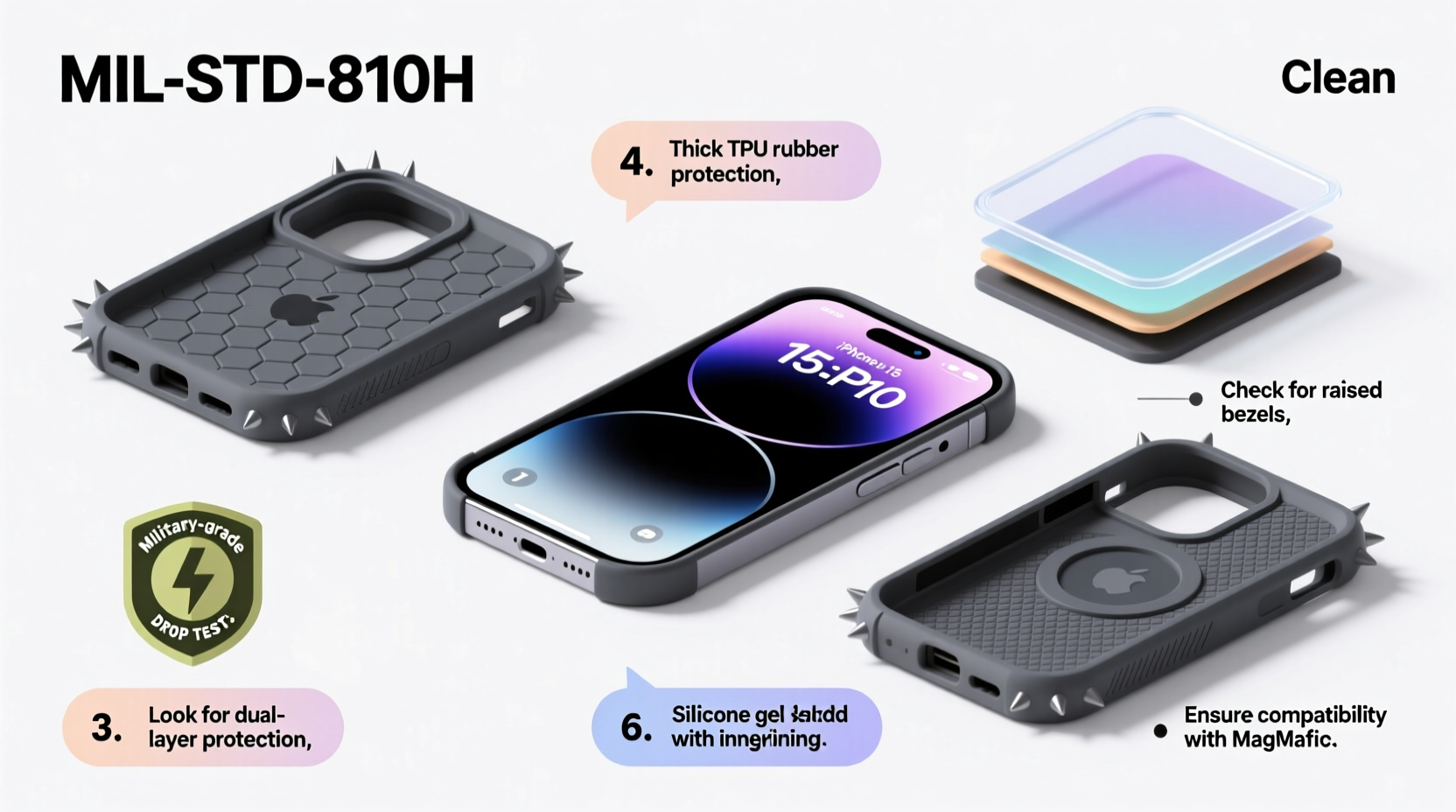
The term \"shockproof\" is often used loosely, but true shock absorption involves multiple layers of engineering. A high-performing shockproof case dissipates energy from drops through structural design and materials that compress, flex, or deform slightly upon impact. This reduces the force transferred to your iPhone’s glass and internal components.
Independent testing standards, such as MIL-STD-810G (a U.S. military drop-test benchmark), are commonly cited by reputable brands. However, not all cases undergo third-party verification. Look for models tested to withstand repeated drops from at least 6 feet onto concrete—a realistic height for accidental slips from pockets, tables, or hands.
“Drop protection isn’t just about thickness—it’s about intelligent layering. The best cases use dual-material construction to absorb and redirect impact.” — Daniel Ruiz, Mobile Device Engineer at TechShield Labs
Key Features of a Durable Shockproof iPhone Case
Not all rugged cases are created equal. Below are the essential characteristics that separate genuinely protective models from those that merely look tough.
- Multi-Layer Construction: Most top-tier shockproof cases combine a rigid outer shell (usually polycarbonate) with a flexible inner liner (like TPU). This creates a “bumper” effect that absorbs shocks while maintaining structural integrity.
- Elevated Bezels: Raised edges around the screen and camera lens prevent direct contact with surfaces when placed face-down, reducing scratch and shatter risks.
- Precise Cutouts: Accurate port, button, and speaker alignment ensures full functionality without compromising access or protection.
- Grip Texture: Textured sides or rubberized coatings improve handling and reduce slip potential, especially in wet or cold conditions.
- Wireless Charging Compatibility: A good case shouldn’t require removal for charging. Ensure the design supports Qi wireless charging without interference.
Material Comparison: Pros and Cons
| Material | Impact Resistance | Durability Over Time | Weight & Bulk |
|---|---|---|---|
| TPU (Thermoplastic Polyurethane) | High (flexible shock absorption) | Moderate (may yellow over time) | Light to moderate |
| Polycarbonate | Moderate to high (rigid protection) | High (resists scratches) | Low to moderate |
| Dual-Material (TPU + PC) | Very High (best of both worlds) | High (if UV-stabilized) | Moderate |
| Silicone | Low to moderate | Low (prone to tearing and dust buildup) | Light |
Expert Tips for Choosing the Right Case
Even with advanced materials, user habits and environment play a major role in how well a case performs. Follow these evidence-based recommendations to make a smarter purchase.
- Match the Case to Your Lifestyle: If you work outdoors, hike frequently, or carry your phone in a tool bag, opt for maximum protection with reinforced corners. For office use, a slimmer hybrid case may suffice.
- Avoid Overly Thick Designs That Compromise Usability: Some ultra-rugged cases add excessive bulk, making them hard to fit in pockets or connect to car mounts. Balance protection with practicality.
- Check Real-World Reviews: Look beyond star ratings. Read customer feedback mentioning specific incidents like “dropped from second-floor balcony” or “survived cement stairs.” These provide insight into actual performance.
- Verify Brand Reputation: Stick with established brands known for consistent quality control—such as OtterBox, Spigen, UAG, or Supcase. Avoid no-name brands offering “identical specs” at half the price.
- Consider Replacement Frequency: Even durable cases degrade. TPU can become brittle after two years, especially with sun exposure. Plan to replace every 18–24 months for optimal protection.
Real-World Example: How One Case Prevented a Costly Repair
Mark, a landscape photographer based in Colorado, regularly carries his iPhone 15 Pro while hiking steep trails. During a sudden rainstorm, he slipped on a wet rock, dropping his phone from chest height onto jagged stone. The device landed screen-down with significant force.
He was using a dual-layer Spigen ToughArmor case rated for 8-foot drops. Upon inspection, the case had cracked slightly at one corner—but the iPhone itself showed no damage. The screen remained intact, and all functions worked normally. Mark estimates that avoiding a screen replacement saved him over $329.
This scenario highlights how proper edge reinforcement and internal air-cushioning zones in quality cases can make the difference between a minor scare and a major expense.
Step-by-Step Guide: How to Evaluate a Shockproof Case Before Buying
Follow this checklist to ensure you’re getting genuine protection—not just marketing hype.
- Review Product Specifications: Confirm whether the case meets MIL-STD-810G or equivalent standards. Look for exact drop heights (e.g., “tested up to 10 feet”).
- Examine Independent Testing: Search YouTube or review sites for hands-on drop tests performed by trusted tech reviewers.
- Inspect Corner Design: Corners take the brunt of impacts. Reinforced, cushioned corners with internal air pockets offer superior protection.
- Test Button Responsiveness: If purchasing in-store, press volume and power buttons. They should feel crisp, not muffled or loose.
- Check for Added Features: Some premium cases include belt clips, kickstands, or RFID-blocking wallets. Only prioritize these if they align with your usage patterns.
- Assess Long-Term Maintenance: Can the case be cleaned easily? Does it resist dirt buildup in seams? A case that yellows or cracks quickly loses both function and appeal.
Frequently Asked Questions
Do all shockproof cases work with MagSafe accessories?
Not all do. Cases with thick or uneven back panels may interfere with magnetic alignment or charging efficiency. Choose models explicitly labeled as “MagSafe compatible” and ideally featuring a centered metal ring built into the design.
Can a case protect against water damage?
Most shockproof cases are not waterproof unless specifically designed as sealed waterproof enclosures (like Lifeproof). Standard rugged cases protect against drops and dust but won’t survive submersion. For water exposure, pair impact protection with a waterproof pouch or choose a fully sealed model.
Is it worth paying more for a premium brand?
In most cases, yes. Premium brands invest in rigorous testing, better materials, and refined manufacturing. While some mid-tier options perform well, budget cases often cut corners on corner reinforcement, material consistency, and longevity. For critical protection, spending $35–$50 is usually justified.
Final Thoughts: Make Protection a Priority
Your iPhone is a powerful tool, but also fragile. A single fall on tile or pavement can result in hundreds of dollars in repair costs—or worse, data loss. Choosing a durable shockproof case isn’t about adding unnecessary bulk; it’s about ensuring reliability in unpredictable moments.
Focus on verified performance, thoughtful design, and compatibility with your daily routine. Whether you're commuting, traveling, or working in demanding environments, the right case acts as your first line of defense.




 浙公网安备
33010002000092号
浙公网安备
33010002000092号 浙B2-20120091-4
Comments
No comments yet. Why don't you start the discussion?