
Scrapbooking is more than a hobby—it’s a way to preserve memories in a tactile, artistic format. Every choice you make, from layout design to adhesive type, contributes to the final look and longevity of your pages. One of the most impactful decisions? Whether to use matte or glossy photo prints. This seemingly small detail affects not only how your photos appear but also how they age, interact with light, and fit into your overall aesthetic. Understanding the differences between matte and glossy finishes empowers you to make intentional choices that align with your creative vision and preservation goals.
Understanding Matte and Glossy Finishes
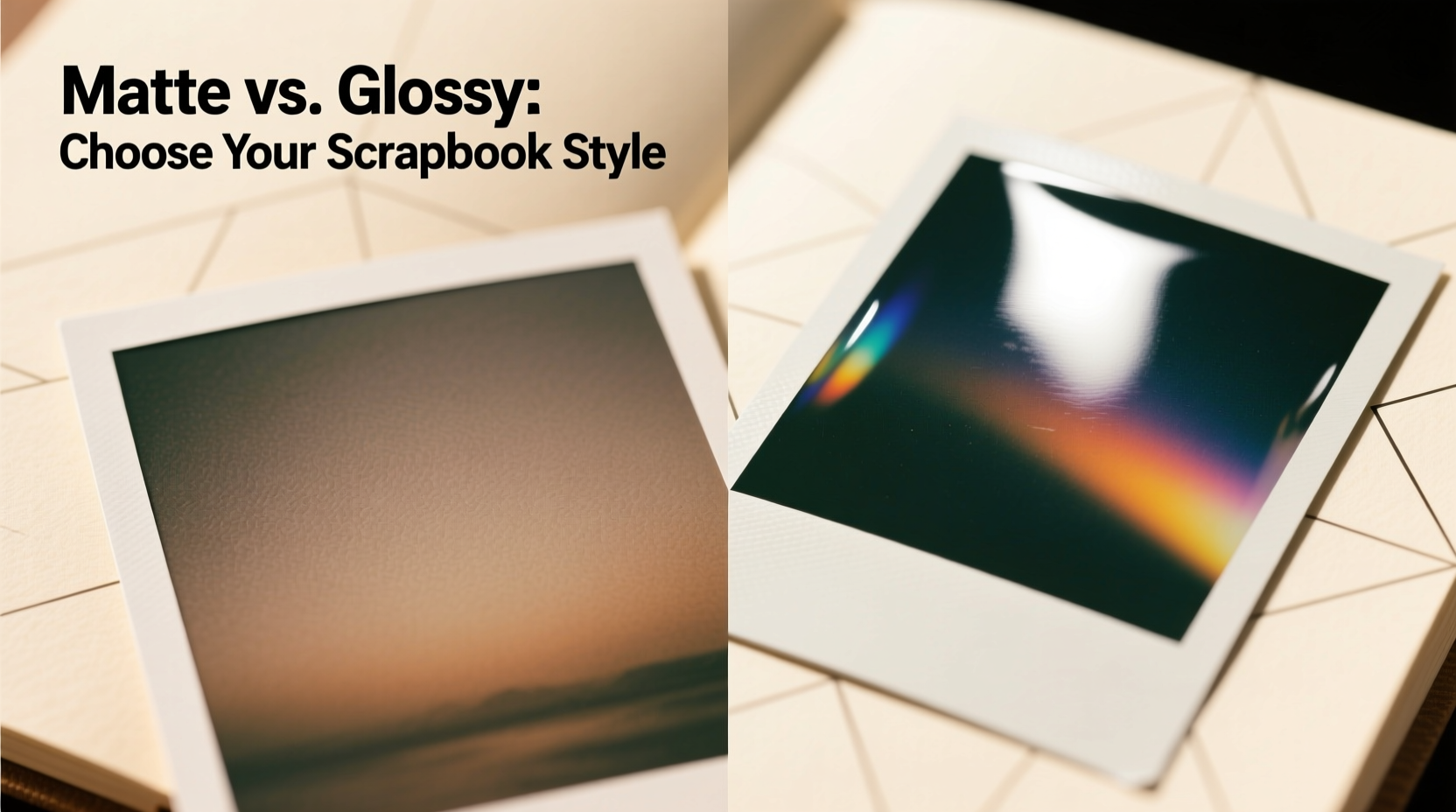
The distinction between matte and glossy photo finishes lies in their surface texture and light interaction. A glossy finish has a smooth, reflective coating that enhances color vibrancy and contrast. It gives photos a “wet” look, making reds pop and blacks appear deeper. In contrast, a matte finish is non-reflective, with a soft, velvety texture that diffuses light rather than reflecting it. This results in a more subdued, elegant appearance.
Glossy prints are often associated with professional photography and modern aesthetics. They’re commonly used in magazines and framed displays where visual impact is key. Matte finishes, on the other hand, are favored in fine art photography and archival projects for their timeless quality and resistance to glare.
From a technical standpoint, both finishes start with the same photographic paper base. The difference comes from the final coating applied during printing. Glossy coatings are typically polymer-based and seal the ink layer beneath, while matte coatings include micro-particles that scatter light, reducing shine without sacrificing image integrity.
Visual Impact and Aesthetic Considerations
Your choice of finish significantly influences the mood and tone of your scrapbook. Glossy prints command attention. Their high reflectivity makes them ideal for focal-point images—birthdays, weddings, or travel shots where you want the viewer’s eye to be drawn immediately. However, this reflectiveness can become a drawback under bright lighting or when viewed at an angle, creating glare that obscures details.
Matte finishes offer a softer, more understated elegance. They integrate seamlessly into layered layouts with journaling cards, stickers, and textured papers. Because they don’t reflect light, matte prints maintain consistent visibility regardless of viewing angle or ambient light. This makes them particularly effective in multi-photo spreads or albums meant to be shared in varied environments, such as family gatherings or school events.
Aesthetic cohesion matters. If your scrapbook uses neutral tones, vintage elements, or handwritten captions, a matte finish complements the organic, handcrafted feel. Conversely, if your theme is bold, modern, or celebratory—featuring vibrant patterns and metallic accents—a glossy finish may enhance the dynamic energy.
“Finish isn’t just about shine—it’s part of the storytelling. A matte portrait feels intimate; a glossy action shot feels alive.” — Lila Nguyen, Documentary Photographer and Scrapbook Artist
Practical Differences: Durability and Handling
Beyond appearance, practical concerns play a crucial role in your decision. Glossy prints, while visually striking, are more prone to fingerprints, smudges, and surface scratches. Oils from fingers transfer easily onto the smooth surface, and even careful handling can leave marks over time. For scrapbooks frequently handled by children or passed around among relatives, this can be a significant downside.
Matte prints are inherently more forgiving. Their textured surface resists fingerprints and is less likely to show wear from turning pages. They also adhere better to album pages because the matte coating bonds more effectively with adhesives like double-sided tape or glue dots. This reduces the risk of photos peeling or bubbling over time.
However, matte finishes are not indestructible. They can be more susceptible to abrasion if rubbed against rough materials. Some lower-quality matte papers may also develop a chalky residue if overhandled. Choosing a reputable printing service ensures you get a durable, archival-grade matte finish that resists degradation.
| Feature | Matte Finish | Glossy Finish |
|---|---|---|
| Glare Resistance | Excellent | Poor |
| Fingerprint Visibility | Low | High |
| Color Saturation | Moderate | High |
| Scratch Resistance | Moderate | Low |
| Adhesion to Pages | Strong | Weak |
| Suitability for Layered Layouts | High | Low |
Preservation and Longevity
One of the core purposes of scrapbooking is long-term memory preservation. Both matte and glossy prints can last decades when produced with archival inks and acid-free materials. However, their aging characteristics differ subtly.
Glossy prints may develop a phenomenon known as “bronzing,” where certain dark areas take on a metallic sheen over time, especially when exposed to UV light. This is more common with pigment inks on glossy surfaces and can detract from image quality. Additionally, the plastic-like coating on glossy paper can degrade, becoming sticky or cloudy in high-humidity environments.
Matte prints, particularly those using cotton-rag or baryta paper bases, are often preferred for heirloom projects. They resist bronzing and are less reactive to environmental changes. When stored in a cool, dry place away from direct sunlight, matte prints retain their original appearance longer. Many museums and archives use matte finishes for digitized historical photographs for precisely this reason.
Mini Case Study: Two Sisters, Two Styles
Sisters Clara and Maya both created scrapbooks documenting their grandmother’s 90th birthday celebration. Clara opted for glossy prints to highlight the vibrant decorations and joyful expressions. She displayed the album at the event, where guests admired the vivid colors under overhead lights. However, within six months, several photos showed visible fingerprints, and one corner had scratched against a metal clasp.
Maya chose matte prints for her version. Her layout included handwritten letters and pressed flowers alongside photos. The matte finish allowed every element to coexist harmoniously without visual competition. A year later, her album remained pristine despite frequent handling by extended family. While the colors were slightly less intense, viewers praised the warmth and intimacy of the presentation.
Their contrasting experiences illustrate that neither finish is universally superior—each excels in different contexts. Clara’s glossy approach worked well for immediate impact, while Maya’s matte selection supported long-term preservation and emotional depth.
Step-by-Step Guide to Choosing the Right Finish
Follow this five-step process to confidently select between matte and glossy for your next scrapbook project:
- Evaluate the photo’s purpose. Is it a centerpiece image or part of a supporting collage? Focal images benefit from glossy; background or narrative photos suit matte.
- Assess the lighting environment. Will the scrapbook be viewed under bright lights or near windows? High-glare settings favor matte.
- Consider the audience. If children or multiple people will handle the book, matte is more durable and easier to maintain.
- Match the theme and color palette. Bold, colorful themes lean toward glossy; soft, vintage, or monochrome schemes align with matte.
- Test with samples. Order 4x6 prints in both finishes from your chosen lab. Place them in your intended album and view them at different times of day before committing.
Hybrid Approach: Combining Both Finishes
You’re not limited to choosing one finish for your entire scrapbook. Many experienced scrapbookers use a hybrid strategy to maximize visual interest and functionality. For example, a double-page spread might feature a large glossy central photo surrounded by smaller matte images that tell the story leading up to or following the moment.
This technique creates depth and hierarchy. The glossy photo draws the eye first, while the matte images invite closer inspection. It also allows you to balance durability with drama—using glossy sparingly on protected, less-handled pages and matte for everyday sections.
To execute this effectively, maintain consistency in framing or matting. Use uniform borders or corner mounts so the mix of finishes feels intentional rather than haphazard. Label your prints during assembly to avoid confusion later.
Frequently Asked Questions
Can I mix matte and glossy prints in the same album?
Yes, and many designers do so intentionally. Mixing finishes adds dimension and guides the viewer’s attention. Just ensure the transition feels deliberate and supports the narrative flow of your pages.
Do matte prints fade faster than glossy ones?
No. Fade resistance depends on ink type, paper quality, and storage conditions—not the finish. Archival pigment inks on acid-free paper last equally long in both matte and glossy forms when protected from UV light and humidity.
Are there special adhesives for glossy photos?
Glossy surfaces require stronger bonding agents. Use photo tabs designed for slick materials or acid-free rubber cement. Avoid liquid glues that can seep under the edges and cause warping. Matte photos work well with standard double-sided tape or glue dots.
Checklist: Choosing Your Photo Finish
- ☑ Determine the primary viewing environment (lighting, handling frequency)
- ☑ Identify the role of each photo (focal point vs. supporting image)
- ☑ Order sample prints in both finishes for comparison
- ☑ Check archival quality of paper and ink with your printer
- ☑ Test adhesion with your preferred mounting method
- ☑ Decide whether a uniform or mixed finish better suits your theme
- ☑ Store finished scrapbook away from direct sunlight and moisture
Final Thoughts
The choice between matte and glossy photo prints is not merely cosmetic—it’s a decision that shapes how your memories are seen, shared, and preserved. Glossy offers brilliance and immediacy, ideal for moments meant to dazzle. Matte provides subtlety and resilience, perfect for stories told softly over time. There is no single correct answer, only what best serves your vision and values.
As you plan your next scrapbook, consider not just how you want your photos to look today, but how you want them to feel in ten or twenty years. Will they still invite touch, spark conversation, withstand the passage of time? By thoughtfully selecting your print finish, you honor both the past you’re preserving and the future who will one day turn those pages.




 浙公网安备
33010002000092号
浙公网安备
33010002000092号 浙B2-20120091-4
Comments
No comments yet. Why don't you start the discussion?