
For cat owners, the holiday season brings more than festive cheer—it introduces a new set of environmental hazards. A towering evergreen may look magical under twinkling lights, but to a feline, it’s an irresistible vertical playground, scent-rich curiosity object, and potential source of toxic ingestion. Every year, veterinary clinics report spikes in cases of pine needle impaction, essential oil toxicity from tree water additives, and tinsel-related gastrointestinal obstructions—all linked to holiday trees and cats. The choice between real and artificial isn’t just aesthetic or ecological; it’s a safety calculus shaped by feline biology, instinct, and individual temperament. This article cuts through seasonal marketing and anecdotal advice to deliver evidence-based, behaviorally grounded recommendations—backed by veterinary toxicology, feline ethology, and real-world owner experience.
Why Cats Are Especially Vulnerable to Tree Hazards
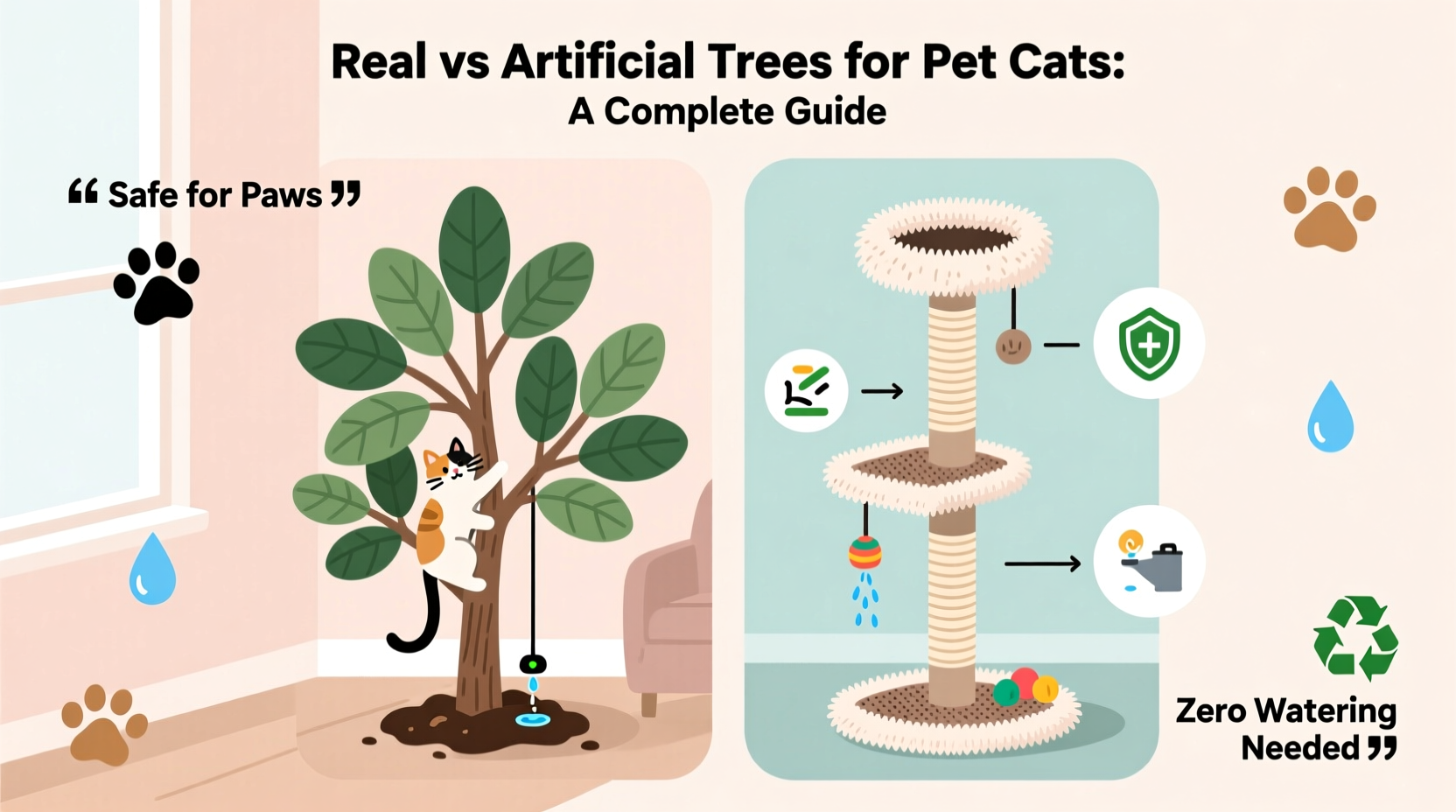
Cats interact with their environment in ways that make traditional holiday trees uniquely risky. Their natural behaviors—climbing, chewing, pawing, and scent-marking—align dangerously with common tree features. Unlike dogs, cats lack the ability to metabolize many plant-derived compounds, including the terpenes (e.g., pinene, limonene) abundant in pine, fir, and spruce sap and needles. These compounds irritate mucous membranes, cause vomiting and drooling, and—in larger ingestions—can lead to central nervous system depression. Equally concerning is the physical hazard: sharp, fibrous needles can puncture oral tissue or lodge in the esophagus or intestines, while water reservoirs often contain fertilizers, preservatives, or even aspirin-based additives marketed to “keep trees fresh”—all highly toxic to cats.
Artificial trees introduce different risks. Many older or budget models use PVC plastics containing phthalates or lead stabilizers, which degrade over time into dust that cats ingest during grooming. Tinsel, ribbons, and lightweight ornaments are especially perilous: cats rarely distinguish them from prey-like strings, and once swallowed, linear foreign bodies can cause life-threatening intestinal telescoping (intussusception). Even seemingly safe elements like battery-operated lights pose electrocution risk if chewed through.
Real Trees: Benefits, Risks, and Mitigation Strategies
A real Christmas tree offers undeniable sensory appeal—its rich aroma, textured bark, and natural needle drop mimic outdoor stimuli that many indoor cats find fascinating. For some, this engagement is enriching. However, that same authenticity carries measurable health trade-offs.
The safest real tree species for homes with cats are Fraser fir and Noble fir, both low in volatile oils and less irritating than balsam fir, Scotch pine, or white pine. Avoid trees treated with flame retardants or pesticide sprays—ask your lot vendor directly about post-harvest treatments. Always rinse needles thoroughly before bringing the tree indoors to remove dust, mold spores, and surface residues.
Water management is non-negotiable. A covered reservoir prevents access while allowing capillary uptake. Veterinarians at the ASPCA Animal Poison Control Center confirm that over 70% of reported tree-water poisonings involve cats drinking from uncovered stands. A simple DIY cover—like a sturdy plastic lid with a slit cut for the trunk—adds critical protection without compromising hydration.
Needle ingestion remains the most common real-tree injury. While small amounts rarely cause obstruction, repeated chewing can erode tooth enamel and inflame gums. If your cat persistently chews needles, consider redirecting with cat-safe alternatives: silver vine sticks, valerian root toys, or supervised play sessions near a window bird feeder to satisfy hunting instincts away from the tree.
Artificial Trees: Material Safety, Design Pitfalls, and Smart Selection Criteria
Artificial trees eliminate botanical toxins—but not all are created equal. The primary concern lies in material composition and construction quality. Older PVC trees (especially those manufactured before 2010) may contain detectable levels of lead and phthalates, confirmed in independent lab testing by the Ecology Center. Modern PE (polyethylene) and PE/PVC blend trees generally pose lower chemical risk, but only if certified lead-free and labeled as meeting ASTM F963-17 (U.S. toy safety standard for heavy metals).
Structural design matters just as much as chemistry. Lightweight, flimsy trees with narrow bases tip easily under a cat’s weight—especially when scaled. Look for models with weighted metal bases, reinforced trunk joints, and wide footprints (minimum 24-inch diameter for a 6-foot tree). Avoid trees with dangling wires, exposed batteries, or thin, flexible branches that encourage climbing and bending.
Ornament selection is where many owners underestimate risk. Skip glass, mercury-doped vintage bulbs, and anything with small detachable parts. Opt instead for shatterproof acrylic ornaments hung *only* on the upper third of the tree—and secure them with twist-ties, not hooks. Reserve the lower two-thirds for large, immovable decorations like fabric bows or wooden stars mounted on thick-gauge wire.
“Cats don’t see ‘decoration’—they see texture, movement, and opportunity. An ornament that sways, reflects light, or makes noise becomes irresistible. Your job isn’t to stop curiosity; it’s to structure the environment so curiosity doesn’t become crisis.” — Dr. Sarah Lin, DVM, Feline Behavior Specialist, Cornell Feline Health Center
Comparative Risk Assessment: Real vs. Artificial Trees for Cat Households
The decision shouldn’t hinge on preference alone. Below is a side-by-side comparison grounded in clinical data from the ASPCA APCC, Pet Poison Helpline, and peer-reviewed veterinary literature (e.g., Journal of Feline Medicine and Surgery, 2022). Each factor is weighted by likelihood of exposure and severity of outcome.
| Risk Factor | Real Tree | Artificial Tree |
|---|---|---|
| Toxic Ingestion (needles, sap, water) | High | Low (unless coated with unsafe chemicals) |
| Physical Injury (puncture, impaction) | Moderate-High | Low (if no sharp edges or loose parts) |
| Electrocution/Fire Hazard | Low | Moderate (if lights/controls poorly insulated) |
| Climbing & Toppling Risk | High (natural grip + height) | Moderate-High (depends on base stability) |
| Long-Term Environmental Exposure | Short-term (2–4 weeks) | Persistent (dust, off-gassing, wear debris) |
Step-by-Step: Building a Cat-Safe Tree Setup (Regardless of Type)
Whether you choose real or artificial, safety depends on implementation—not just selection. Follow this sequence to minimize risk while preserving holiday spirit:
- Assess your cat’s baseline behavior. Does she climb bookshelves? Chew cords? Knock things over? Observe for one week before setup to identify high-risk tendencies.
- Choose location strategically. Place the tree away from furniture that provides launch points (sofas, armchairs, cat trees). Anchor it to a wall stud using a breakaway strap—not duct tape or string.
- Install physical barriers. Use a freestanding baby gate, decorative lattice panel, or tension-mounted pet barrier to create a 3-foot no-access perimeter. Train your cat to respect it using positive reinforcement (treats outside the zone, not near it).
- Secure all wiring. Bundle lights and extension cords tightly with Velcro straps and route them behind furniture or inside cord covers. Never leave loose ends dangling within paw’s reach.
- Introduce gradually. Set up the bare tree first (no lights or ornaments) for 48 hours. Monitor for interest, then add one element per day—lights, then top branch, then upper ornaments—pausing if your cat shows fixation or attempts contact.
- Maintain daily vigilance. Check for fallen needles, loose ornaments, frayed wires, or signs of chewing. Remove any item showing wear immediately.
Mini Case Study: Maya’s Maine Coon and the Fraser Fir Experiment
Maya adopted Leo, a 3-year-old Maine Coon, six months before her first holiday as a solo cat owner. Leo was athletic, curious, and had already knocked over two potted plants. She wanted the authenticity of a real tree but feared disaster. After consulting her veterinarian, she chose a 5.5-foot Fraser fir from a local organic lot, rinsed all needles, and installed a custom plywood cover over the water reservoir with a 2-inch trunk slot. She anchored the tree to a ceiling joist using aircraft-grade nylon webbing and erected a 36-inch hexagonal barrier made of powder-coated steel mesh—painted forest green to blend in.
She hung only five large, felt-wrapped ornaments on the top tier and placed a cardboard box filled with catnip and crinkle balls *beside* (not under) the barrier as a designated “tree-adjacent” play zone. For the first three days, Leo circled the barrier intently but never attempted entry. By Day 5, he’d lost interest entirely—opting instead for the box and a new sisal-wrapped scratching post nearby. Maya kept the tree up for 28 days with zero incidents. “It wasn’t about stopping him,” she says. “It was about giving him better options—and making the tree boring by comparison.”
FAQ: Addressing Common Cat Owner Concerns
Can I use citrus-scented sprays to deter my cat from the tree?
No. While cats dislike citrus odors, many commercial deterrent sprays contain concentrated d-limonene or other essential oils that are hepatotoxic when inhaled or ingested during grooming. Safer alternatives include double-sided tape on lower branches (cats dislike the stickiness), motion-activated air canisters (like Ssscat), or placing aluminum foil around the base—textures most cats avoid.
Are pine-scented candles or diffusers safer than the tree itself?
No—they’re significantly more dangerous. Essential oil diffusers aerosolize concentrated terpenes directly into the air your cat breathes, causing respiratory irritation, aspiration pneumonia, and liver damage. Candles pose burn and fire risks. Skip scented products entirely during the holidays.
My cat loves lying under the tree. Is that safe?
Only if the tree is fully secured, the base is covered, and there are no loose ornaments, tinsel, or low-hanging lights within reach. Even then, monitor closely: falling needles or shifting branches could startle or trap your cat. A better alternative is a cozy bed placed 2 feet away—positioned to catch falling light reflections for visual enrichment.
Conclusion: Prioritize Safety Without Sacrificing Joy
Choosing between real and artificial trees with cats in the home isn’t about perfection—it’s about informed compromise. A real tree demands rigorous water management, species selection, and vigilant supervision. An artificial tree requires careful material vetting, structural anchoring, and thoughtful ornament placement. Neither is inherently “safe”; both become safe through deliberate, consistent action. What matters most isn’t the tree’s origin, but how thoughtfully you integrate it into your cat’s world. When you anchor the trunk, cover the water, remove temptation, and offer compelling alternatives, you honor your cat’s instincts while protecting her well-being. That balance—between wonder and wisdom, tradition and responsibility—is the truest expression of holiday care.




 浙公网安备
33010002000092号
浙公网安备
33010002000092号 浙B2-20120091-4
Comments
No comments yet. Why don't you start the discussion?