
As winter sets in, selecting the right pair of boots becomes more than a fashion decision—it’s about balancing warmth, comfort, durability, and personal expression. Among the most debated design elements is the toe shape: square versus pointed. While both styles have loyal followings, the choice significantly affects fit, function, and long-term wearability. Understanding the differences—and how they align with your lifestyle—can make all the difference in staying cozy and stylish through the coldest months.
Understanding Toe Shapes: Design and Purpose
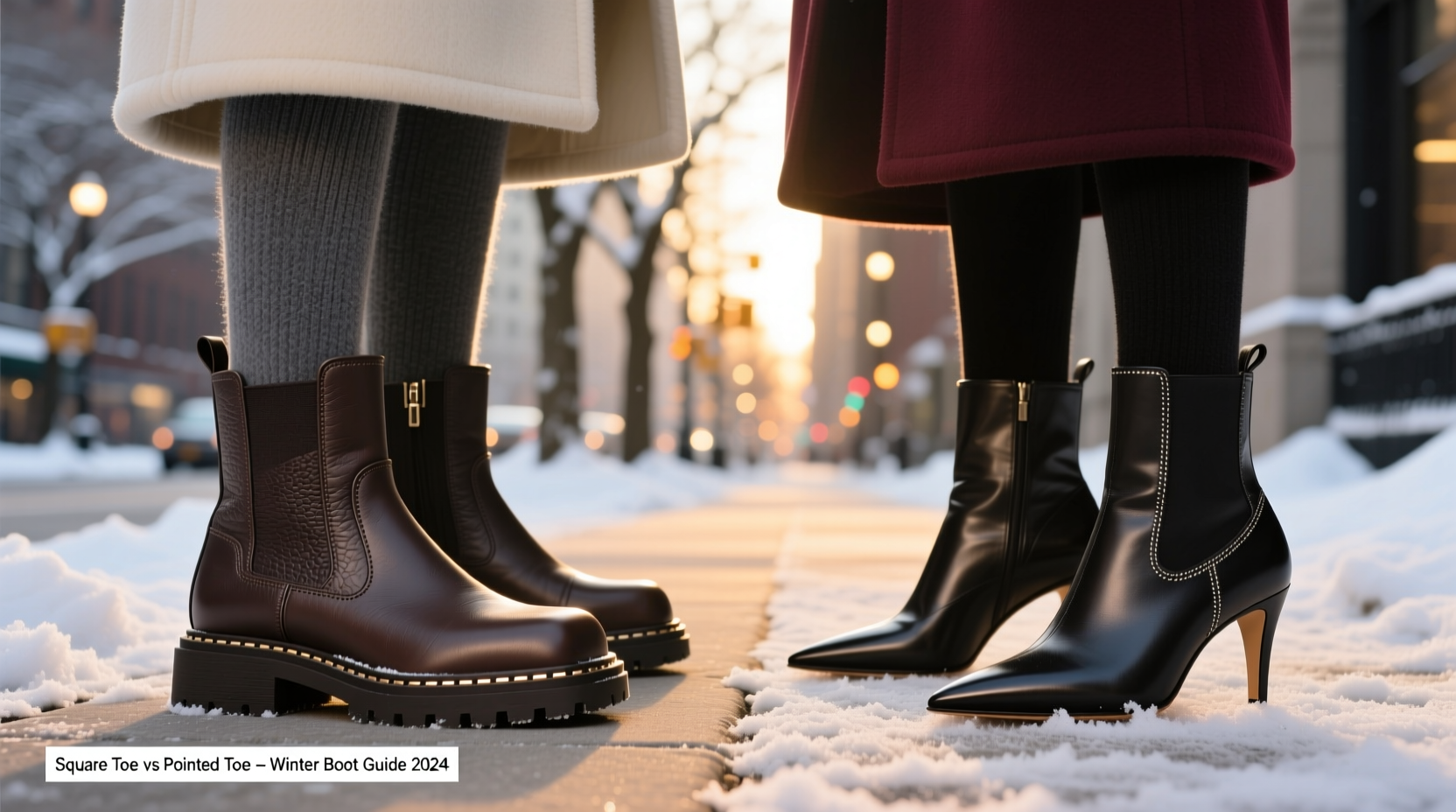
The silhouette of a boot’s toe isn’t just aesthetic; it influences foot space, weight distribution, and even insulation efficiency. Square toe boots feature a broad, flat front that follows the natural width of the forefoot. This design emerged from workwear traditions, where room for toe movement and thick socks was essential. Pointed toe boots taper sharply toward the front, creating a sleek, elongated profile often associated with formal or fashion-forward footwear.
In winter conditions, these structural differences impact more than appearance. A square toe allows toes to spread naturally, reducing pressure during prolonged wear. In contrast, a pointed toe may compress the metatarsals and restrict circulation—especially problematic when feet are already prone to cold due to reduced blood flow in low temperatures.
Comfort and Fit: What Your Feet Need in Cold Weather
Winter demands footwear that supports healthy circulation. When temperatures drop, extremities like fingers and toes are the first to feel the chill. Constricting shoes can worsen this by limiting blood flow, increasing the risk of numbness or frostnip in extreme cases. Square toe boots generally offer superior internal volume, allowing toes to remain relaxed and warm.
Podiatrists emphasize the importance of proper toe alignment. Dr. Lena Torres, a clinical podiatrist based in Minneapolis, notes:
“Prolonged use of narrow, pointed footwear in winter can contribute to neuromas, bunions, and poor microcirculation. For people who walk frequently on icy surfaces, a wider toe box helps maintain balance and reduces strain.” — Dr. Lena Torres, DPM
That said, not all pointed toe boots are inherently harmful. Some modern designs incorporate slight tapering without sacrificing interior space, especially in premium brands that prioritize ergonomic lasts (the mold around which boots are shaped). Look for terms like “roomy forefoot” or “wide ball girth” in product descriptions, regardless of external silhouette.
Square toe models, while roomier, aren’t automatically comfortable either. Poor arch support or stiff soles can offset the benefits of extra toe space. Always try boots on with the socks you intend to wear and walk on a hard surface before deciding.
Weather Performance and Practicality
Functionality matters when navigating snow, slush, and ice. Here, material, sole construction, and water resistance play larger roles than toe shape alone—but the latter still contributes indirectly.
- Snow accumulation: A broad square toe can act as a minor snowplow, pushing light powder aside. However, deep snow tends to pack into any boot opening regardless of toe style.
- Traction stability: Wider toe boxes distribute body weight across a broader base, potentially improving lateral stability on slippery terrain.
- Boot entry and exit: Pointed boots may be harder to slip on when wearing bulky winter socks, especially lace-up styles with tight openings.
Waterproofing is critical, but toe shape influences seam placement and stress points. Square toes often require reinforced stitching at the corners, which can become weak spots if not sealed properly. High-quality manufacturers address this with welded seams or rubber toe caps. Pointed toes concentrate pressure at the tip, making them more susceptible to creasing and cracking in leather over time—particularly in freeze-thaw cycles.
Comparative Overview: Square vs. Pointed Toe Boots in Winter Conditions
| Feature | Square Toe Boots | Pointed Toe Boots |
|---|---|---|
| Toespace & Circulation | Excellent – promotes natural toe splay | Fair to Poor – may compress forefoot |
| Stability on Ice | Good – wider base improves balance | Average – narrower footprint increases slip risk |
| Style Versatility | Moderate – leans casual or rustic | High – pairs well with tailored looks |
| Durability at Toe | Varies – corner seams need reinforcement | Lower – concentrated stress leads to cracks |
| Sock Compatibility | High – fits thick socks easily | Limited – may require sock adjustment |
| Fashion Longevity | Cyclical – popular in heritage trends | Consistent – staple in dress collections |
Style Considerations for Everyday Wear
While comfort and function are paramount, aesthetics influence real-world choices. The way boots complement outerwear, pants, and personal style determines how often they’re worn—and thus their practical value.
Square toe boots project a rugged, utilitarian vibe. They pair naturally with denim, cargo pants, puffer jackets, and flannel shirts. Brands like Wolverine, Blundstone, and Tecovas build square toe designs rooted in outdoor utility. These are ideal for weekend errands, dog walks, or rural commutes where polished presentation isn’t required.
Pointed toe boots, particularly chukkas, Chelsea styles, or dress ankle boots, elevate an outfit instantly. A sleek black or dark brown pointed boot works under tailored trousers or slim jeans, making it suitable for office environments or evening outings. Designers such as Cole Haan, Saint Laurent, and Common Projects favor clean lines that emphasize leg length—a benefit in winter when layered clothing can add bulk.
The key is proportion. Shorter individuals may benefit visually from the elongating effect of a pointed toe. Taller or broader-framed people might find square toes better match their overall silhouette without appearing disproportionate.
Real-World Scenario: Two Commuters, Two Choices
Consider Sarah and James, both living in Chicago and commuting 30 minutes daily during harsh winters.
Sarah works in marketing at a creative agency. Her office has a smart-casual dress code. She owns both types of boots but defaults to a pair of matte-black pointed Chelsea boots lined with shearling. They slide easily under her dark jeans, look polished with coats, and she rarely walks more than five blocks in snow. Though slightly snug, she only wears them on days with minimal outdoor exposure.
James is a field technician who inspects HVAC systems across the metro area. His job requires walking through parking lots, climbing ladders, and standing in freezing garages. He chose wide-fit square toe Timberlands with Vibram soles and waterproof nubuck uppers. Despite initial concerns about looking “too bulky,” he finds them indispensable. His feet stay warm, he avoids tripping on uneven ground, and he no longer suffers from tingling toes after shifts.
Their experiences highlight a central truth: the best winter boot depends less on trend and more on routine. Function should anchor form.
How to Choose: A Step-by-Step Decision Guide
Follow this sequence to determine which toe shape suits your winter needs best:
- Assess your daily activities: Do you spend most of your time indoors, or are you outside for extended periods? More outdoor time favors square toes.
- Evaluate your typical footwear: List the socks and pants you wear regularly. Thick socks demand more volume.
- Measure your shoe size accurately: Use a Brannock device or trace your foot. Note whether you have wide feet, bunions, or hammertoes. <4> Try both styles on in-store: Wear winter-weight socks and walk for several minutes. Pay attention to pressure points near the big and little toes.
- Test on different surfaces: Walk on tile (simulates ice) and carpet (indoor flooring) to assess grip and flexibility.
- Check return policies: Buy online only if returns are free and easy, especially for specialty widths.
- Weigh style against sustainability: Will you wear these boots frequently? Or are they situational? Prioritize versatility.
Common Misconceptions Debunked
Several myths persist about winter boot design:
- Myth: Pointed toes are always less warm. Truth: Insulation depends on lining material (e.g., Thinsulate, fleece), not toe shape.
- Myth: Square toes are outdated. Truth: Heritage and workwear styles are resurgent in mainstream fashion.
- Myth: All wide boots look clunky. Truth: Modern square toe designs use streamlined uppers and slim soles to reduce visual bulk.
The reality is that neither toe shape is universally superior. It’s about matching design to purpose.
Frequently Asked Questions
Can I wear pointed toe boots in heavy snow?
Yes, but with caveats. Choose models with aggressive treads, waterproof construction, and adequate insulation. Avoid wearing them in deep snow for long durations, as restricted toe movement can reduce circulation and increase fatigue.
Do square toe boots run larger than pointed ones?
Not necessarily in length, but they often run wider. You may need to size down half a size in some square toe brands to avoid heel slippage, especially if you have narrow heels. Always consult brand-specific sizing guides.
Are there hybrid options available?
Increasingly, yes. Some brands offer “soft square” or “rounded square” toes that blend volume with elegance. Others use anatomical lasts that widen internally while maintaining a semi-tapered exterior. Look for terms like “ergonomic fit” or “3D-molded footbed” when searching for balanced designs.
Final Recommendations by Use Case
- Urban professionals with short commutes: Opt for sleek pointed toe boots with thermal lining and non-slip soles.
- Outdoor workers or frequent travelers: Choose square toe boots with maximum toe room, durable uppers, and high-traction outsoles.
- People with foot conditions (bunions, plantar fasciitis): Prioritize internal volume—square toes are typically safer.
- Fashion-focused wearers: Invest in one pair of stylish pointed boots for dry days and a rugged square toe pair for bad weather.
Conclusion: Make the Choice That Serves You All Season
Selecting between square toe and pointed toe boots for winter shouldn’t hinge on fleeting trends or assumptions about masculinity or femininity. It should center on what keeps your feet warm, supported, and pain-free—while fitting seamlessly into your life. Whether you value the timeless polish of a sharp silhouette or the generous comfort of a roomy fit, the right choice empowers confidence with every step.




 浙公网安备
33010002000092号
浙公网安备
33010002000092号 浙B2-20120091-4
Comments
No comments yet. Why don't you start the discussion?