
Selecting the perfect Christmas lights goes beyond plugging in strands and draping them along eaves. The visual impact of your holiday lighting hinges on two critical factors: brightness (measured in lumens) and color temperature (measured in Kelvins). When matched thoughtfully to your home’s size, architectural features, and surrounding environment, the right combination creates a display that is balanced, inviting, and professional—not overwhelming or underwhelming. Many homeowners invest in quality lights only to be disappointed by the final result because they overlooked these fundamentals. Understanding how house dimensions and ambient warmth influence perception allows you to design a lighting plan that enhances your property rather than competes with it.
Understanding Brightness: Lumens vs. Wattage
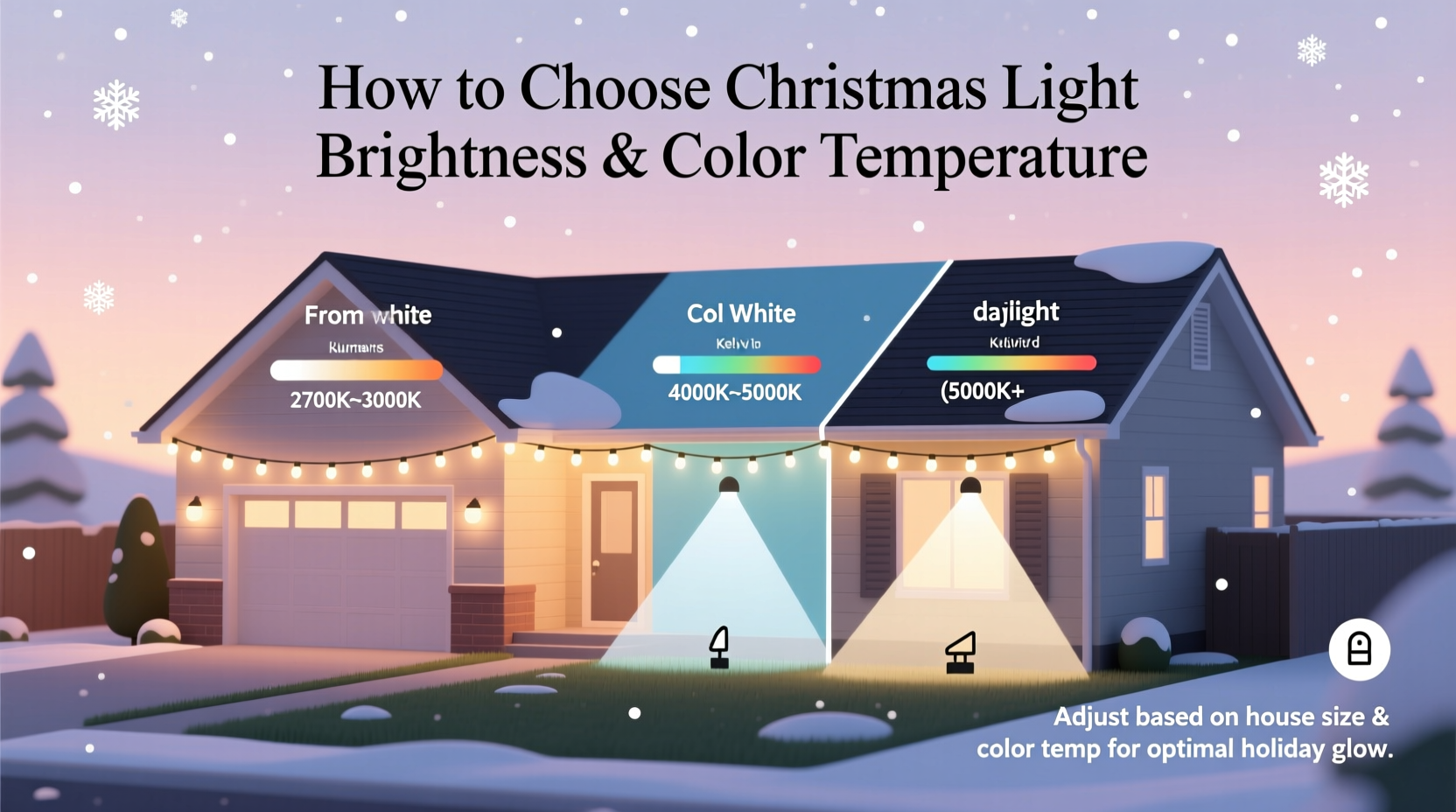
One common misconception is equating wattage with brightness. Wattage measures energy consumption, not light output. Brightness is measured in lumens—the higher the lumen count, the more visible and intense the light appears. For Christmas lights, individual bulbs typically range from 0.5 to 5 lumens depending on type and technology. LED strings, now the standard for efficiency and longevity, produce significantly more lumens per watt than incandescent options.
When evaluating brightness for outdoor use, consider visibility distance and ambient light. A small bungalow viewed from the street may require less total lumen output than a two-story colonial surrounded by trees or competing neighborhood displays. Over-lighting a compact home can create glare and visual clutter, while under-lighting a large structure makes it appear sparse or incomplete.
Matching Light Output to House Size
The scale of your home directly influences how much light it can visually support. A mismatched approach—either too dim or excessively bright—undermines curb appeal. Here’s how to align brightness with architectural proportion:
- Small homes (under 1,500 sq ft): Cape Cods, bungalows, and cottages benefit from moderate brightness. Aim for warm white or soft white LEDs (2700K–3000K) with lower lumen density. Over-lighting can overwhelm their charm. Focus on outlining key features like porch railings, windows, and front doors rather than full perimeter coverage.
- Medium homes (1,500–3,000 sq ft): These include most ranches, split-levels, and modest two-stories. They can handle balanced illumination. Use consistent spacing (6–12 inches between bulbs) and aim for even distribution across rooflines, gutters, and landscape elements. Total lumen output should be sufficient to define shape without creating hotspots.
- Large homes (over 3,000 sq ft): Colonials, Tudors, and multi-wing estates demand higher lumen totals to maintain presence at night. Consider using brighter LEDs (up to 5 lumens per bulb) and tighter bulb spacing (4–6 inches). Layering—combining outline lighting with accent lighting on columns, trees, and walkways—adds depth and prevents flatness.
Remember: brightness isn’t just about quantity—it’s about distribution. A large home lit only around the front door will look unbalanced. Plan coverage strategically across all visible elevations, especially corners and gables, to ensure cohesive dimensionality.
Color Temperature: Setting the Mood and Tone
Color temperature shapes the emotional tone of your display. Measured in Kelvins (K), it describes how “warm” or “cool” the light appears:
- Warm White (2700K–3000K): Mimics traditional incandescent bulbs and candlelight. Ideal for historic homes, craftsman styles, and neighborhoods with a cozy, classic aesthetic. Enhances wood tones and brick, making exteriors feel welcoming.
- Natural White (3500K–4000K): A neutral, clean white with minimal yellow or blue tint. Works well on modern or transitional homes. Offers clarity without appearing clinical. Great for snowy climates where contrast against white ground cover matters.
- Cool White (5000K–6500K): Crisp, bluish-white light. Often used in commercial settings or for high-visibility displays. Can appear harsh on residential properties unless intentionally paired with icy themes (e.g., “winter wonderland” setups with blue accents).
“Color temperature affects perception more than raw brightness. A 3000K string on a brick facade feels richer and deeper than a 5000K set, even if both have identical lumen output.” — Daniel Reyes, Lighting Designer & Holiday Display Consultant
For most homes, warm white remains the top choice due to its universal flattery. However, pairing color temperature with architectural style improves harmony. Stucco and contemporary homes often suit natural white, while Victorian or farmhouse designs shine with warmer tones.
Practical Step-by-Step Guide to Choosing Your Lights
Follow this sequence to select the optimal brightness and color temperature for your home:
- Measure your home’s exterior footprint. Walk the perimeter and note linear feet of roofline, eaves, porches, and railings. This determines total string length needed.
- Assess surrounding light conditions. Is your street well-lit? Are there tall trees or shadows? Heavily shaded areas may need slightly higher lumen output to remain visible.
- Determine desired effect. Cozy and traditional? Go warm white (2700K–3000K). Modern and crisp? Try natural white (3500K–4000K). Avoid cool white unless part of a themed design.
- Select bulb spacing based on size. Small homes: 12-inch spacing. Medium: 6–8 inches. Large: 4–6 inches. Tighter spacing increases perceived brightness and smoothness.
- Calculate total lumens. Multiply number of bulbs by average lumen per bulb (typically 2–4 for standard LEDs). For reference:
- 100-count string (mini lights): ~300 lumens total
- 50-count string (C9 bulbs): ~1,000 lumens total
- Test before installation. Hang a sample strand in the evening to evaluate color and brightness in real conditions. View from multiple distances—driveway, sidewalk, across the street.
- Layer lighting for depth. Combine outline lighting with spotlights on trees, pathway markers, and architectural details to avoid a flat, “outlined” look.
Comparison Table: Light Recommendations by Home Type
| Home Size & Style | Recommended Color Temp | Bulb Spacing | Brightness Level | Best Bulb Type |
|---|---|---|---|---|
| Small (Cape Cod, Cottage) | 2700K–3000K (Warm White) | 10–12 inches | Low to medium | Mini LED, fairy lights |
| Medium (Ranch, Split-Level) | 3000K–3500K (Warm to Natural) | 6–8 inches | Medium | Mini or M5 LED |
| Large (Colonial, Tudor, Estate) | 3000K–4000K (Natural preferred) | 4–6 inches | Medium to high | C7 or C9 LED |
| Modern/Contemporary | 3500K–4000K (Neutral) | 6–8 inches | Medium, even | Linear tape or flush-mount LED |
Real Example: Lighting a 2,200-Square-Foot Colonial
Sarah in suburban Ohio owns a two-story colonial with a wraparound porch and prominent gables. Initially, she installed cool white mini lights with 12-inch spacing. From the street, the display looked faint and washed out, especially under her neighbor’s warm-lit oak tree. After consulting a local lighting guide, she switched to 3000K warm white LEDs with 6-inch spacing. She added C9 bulbs along the roof peaks and porch columns for emphasis. The new setup enhanced the home’s symmetry and created a rich, inviting glow that stood out without appearing garish. Total lumen output increased by 40%, but the warmer tone made it feel more elegant than bright.
Checklist: Final Pre-Installation Review
Before hanging a single strand, verify the following:
- ✅ Measured all exterior edges needing coverage
- ✅ Chosen color temperature that complements siding and roofing
- ✅ Selected bulb spacing appropriate for home size
- ✅ Calculated total number of light strings required
- ✅ Tested sample strand at dusk for color and brightness accuracy
- ✅ Planned power source locations and extension cord routes
- ✅ Considered layered lighting (outlines + accents)
- ✅ Checked local ordinances or HOA rules on display duration and types
Frequently Asked Questions
Can I mix color temperatures in one display?
It’s generally not recommended unless intentionally designed. Mixing warm and cool whites creates visual inconsistency—like having some windows lit with candles and others with flashlights. If layering effects (e.g., warm outlines with cool blue icicle accents), keep dominant areas uniform and use contrasting temps sparingly as highlights.
Do brighter lights consume more energy?
With modern LEDs, higher brightness doesn’t necessarily mean high energy use. A 5-lumen LED still uses only 0.05–0.1 watts per bulb. Even a large display of 1,000 bulbs running 6 hours nightly costs less than $10 for the season. Focus on lumens for visibility, not wattage for cost concerns.
How do I prevent my lights from looking too harsh at night?
Use diffused bulbs instead of clear ones, opt for warmer color temperatures (under 3500K), and avoid clustering too many strands in one area. Also, install lights at varying depths—some close to the surface, others slightly protruding—to create soft shadows and dimension.
Conclusion: Illuminate with Intention
Choosing Christmas light brightness and color temperature isn’t guesswork—it’s design. Your home’s size sets the stage for how much light it can carry, while color temperature fine-tunes the emotional resonance of your display. By measuring, planning, and testing deliberately, you achieve a look that feels intentional, harmonious, and festive. Whether you live in a cozy bungalow or a sprawling estate, the right lighting doesn’t shout; it speaks with clarity and charm. Take the time this season to assess your home’s unique proportions and character. Then, light it not just to be seen—but to be remembered.




 浙公网安备
33010002000092号
浙公网安备
33010002000092号 浙B2-20120091-4
Comments
No comments yet. Why don't you start the discussion?