
Selecting the right pair of sunglasses goes beyond UV protection and brand names. The perfect pair should enhance your facial features, balance proportions, and reflect your personal style—all while requiring minimal trial and error. Many people waste time and money cycling through countless frames only to settle for something “close enough.” But with a clear understanding of your face shape and the principles of frame proportion, you can confidently choose sunglasses that flatter your look from the first pick.
The key lies in aligning frame geometry with your natural bone structure. When done correctly, sunglasses don’t just shield your eyes—they elevate your entire appearance. Whether shopping online or browsing in-store, knowing what works for your face shape eliminates guesswork and streamlines your decision-making process.
Understanding Face Shapes: The Foundation of Frame Selection
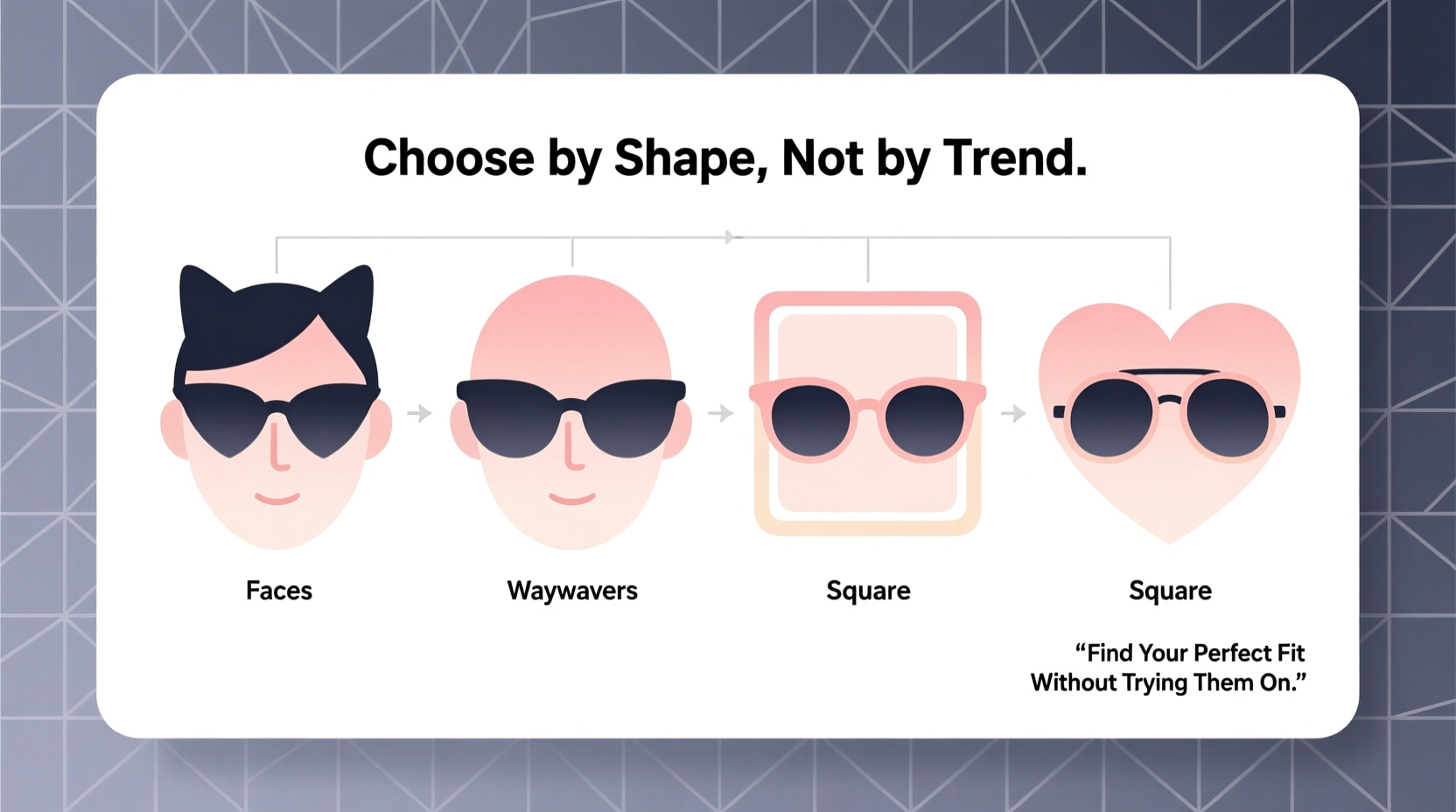
Before selecting a sunglass style, identify your face shape. This isn't about vanity—it's about symmetry and visual harmony. There are six primary face shapes: oval, round, square, heart, diamond, and oblong. Each has distinct characteristics that respond differently to frame design.
To determine your face shape, stand in front of a mirror and trace the outline of your face with a washable marker or use a well-lit selfie. Then compare the proportions:
- Oval: Forehead slightly wider than the jawline, with soft contours and balanced length-to-width ratio.
- Round: Width and length are nearly equal, with full cheeks and a gently curved jaw.
- Square: Strong jawline, broad forehead, and angular features with similar width across forehead, cheekbones, and jaw.
- Heart: Wider forehead and temples, tapering down to a narrow chin.
- Diamond: Narrow forehead and jaw, with high, dramatic cheekbones as the widest point.
- Oblong: Face is longer than it is wide, with parallel sides and a flat forehead or jawline.
Once identified, use this as your foundation for choosing frames that either contrast or harmonize with your shape—depending on the desired effect.
Matching Sunglasses to Your Face Shape
Each face shape benefits from specific frame styles that correct perceived imbalances and highlight strengths. Here’s how to pair them effectively.
Oval Faces: The Most Versatile
Oval faces have balanced proportions, making them compatible with nearly any sunglass style. However, the goal is to maintain that balance—not disrupt it. Avoid overly large or small frames that throw off symmetry.
Bold aviators, rectangular wayfarers, or cat-eye shapes work well. Steer clear of frames that extend beyond the width of your face or sit too high on the forehead.
Round Faces: Add Definition
Rounded faces benefit from angular frames that create contrast. The objective is to elongate the face and introduce structure.
Rectangular, square, or geometric frames with strong lines are ideal. Styles like clubmasters or classic wayfarers draw attention outward, giving the illusion of length. Avoid circular or overly rounded lenses—they emphasize roundness.
“Angular frames on a round face do more than look stylish—they create optical balance by introducing vertical emphasis.” — Daniel Kim, Eyewear Designer at Luxer Optics
Square Faces: Soften the Angles
With strong jawlines and broad foreheads, square faces need frames that soften sharp edges. Round, oval, or slightly curved frames help achieve this.
Round wire-rims, teardrop shapes, or oversized circular lenses work beautifully. Avoid boxy or narrow frames that accentuate width. Frames should be equal to or wider than the broadest part of your face to prevent a top-heavy look.
Heart-Shaped Faces: Balance the Forehead and Chin
Heart-shaped faces feature a wider upper third and narrow chin. Sunglasses should minimize forehead width and add visual weight to the lower face.
Frames with detailing on the bottom rim—like browline or butterfly styles—help achieve this. Cat-eye and round frames are excellent choices. Avoid heavy top bars or thick upper frames that widen the forehead further.
Diamond Faces: Highlight the Eyes, Soften the Angles
Diamond faces have high cheekbones and narrow forehead/jaw. The focus should be on drawing attention to the eyes while balancing width.
Frames like oval, rimless, or cat-eye styles with decorative temples work well. Aviators are also a strong choice—their teardrop shape complements cheekbone prominence. Avoid narrow or geometric frames that exaggerate angularity.
Oblong Faces: Shorten the Appearance
Oblong faces are longer than average, so the goal is to reduce perceived length and add width.
Choose wide, deep-set frames with bold horizontal lines. Wraparound styles, square frames, or those with prominent temple designs add dimension. Avoid small or round frames—they make the face appear longer.
Frame Proportions and Fit: Beyond Shape
Even if a frame suits your face shape, poor fit can ruin both comfort and aesthetics. Proportion is just as critical as geometry.
A well-fitting pair of sunglasses should:
- Sit comfortably on the bridge of your nose without pinching.
- Rest evenly on your ears without tilting forward or backward.
- Extend no wider than the sides of your face.
- Cover your eyebrows but not press against your forehead.
Nose bridges vary significantly—especially among different ethnicities. If you have a low or narrow bridge, look for frames with adjustable silicone pads. High bridges often require frames with deeper nose contact points to prevent sliding.
Lens size matters too. Oversized lenses offer more UV coverage but can overwhelm smaller faces. Small lenses may not provide adequate protection and can look outdated. Aim for lenses that span the width of your face and cover the outer corners of your eyes.
Material and Weight Considerations
Lightweight materials like acetate, titanium, or TR-90 plastic improve comfort during extended wear. Heavy metal frames may leave marks or cause slippage, especially in heat. For active use, prioritize flexible, durable materials that hold their shape.
| Face Shape | Best Frame Styles | Styles to Avoid |
|---|---|---|
| Oval | Wayfarers, Aviators, Rectangular | Overly small or oversized frames |
| Round | Square, Rectangular, Geometric | Round, small circular lenses |
| Square | Rounded, Oval, Wire-rim | Narrow, boxy frames |
| Heart | Cat-eye, Browline, Butterfly | Top-heavy, wide upper frames |
| Diamond | Aviator, Rimless, Oval | Geometric, narrow lenses |
| Oblong | Wide square, Wraparound, Deep lenses | Small, round, vertically narrow frames |
Step-by-Step Guide: Choosing Sunglasses Without Trying Them On
You don’t need a dressing room to find the right pair. Follow this five-step method to make informed decisions—even when shopping online.
- Take Clear Front and Side Photos: Use natural lighting and a neutral background. Make sure your hair is pulled back to see your true face shape.
- Measure Key Dimensions: Use a soft tape measure to record forehead width, cheekbone width, jaw width, and face length (hairline to chin).
- Identify Your Dominant Shape: Compare measurements using the guidelines above. If unsure, consult a trusted friend or use a face-shape app with moderate accuracy.
- Research Frame Dimensions: Check product specs for lens width, bridge size, and temple length. Add these numbers to estimate total width. It should closely match your face width.
- Select Based on Style Rules: Use the table and descriptions in this article to filter options. Prioritize frames designed for your shape and within 5–10mm of your face width.
This system works particularly well for repeat purchases. Once you know your best-performing frame model, stick with its dimensions across brands—many follow standardized sizing.
Real Example: Sarah’s Online Shopping Success
Sarah, a freelance photographer with a round face, used to dread buying sunglasses online. She’d order multiple pairs, keep one, and return the rest—a costly habit. After learning her face shape and measuring her previous favorite frames (a pair of rectangular Ray-Ban Clubmasters), she applied the step-by-step guide.
She measured her face: 5.7 inches wide at the cheeks, 5.5 inches long. She looked for frames with a total width of 5.6–5.8 inches and angular profiles. She selected a pair of matte black rectangular acetate sunglasses from a lesser-known brand based solely on specs and style alignment.
The glasses arrived fitting perfectly—both structurally and stylistically. They emphasized her cheekbones and added definition. By relying on data instead of trial, Sarah saved time, reduced returns, and found a new go-to pair she now recommends to clients.
Frequently Asked Questions
Can I wear trendy shapes if they don’t match my face?
You can—but with caution. Trend-driven styles like ultra-small lenses or exaggerated cat-eyes may look striking in photos but can distort facial balance in daily wear. If you love a trend, choose a version that incorporates elements of your ideal frame shape. For example, a slightly oversized cat-eye can work for heart-shaped faces, while a softened square frame keeps trends wearable for round faces.
What if I have multiple face shape traits?
Many people fall between categories. In such cases, prioritize the most dominant feature. For instance, if you have a square jaw but a narrow chin, you might lean toward a heart shape. Or, if your face is long with angular features, consider yourself oblong-square and choose wide, rounded frames that soften angles and shorten length.
Do gender norms matter in sunglass selection?
Not anymore. Modern eyewear is increasingly unisex. Focus on fit, proportion, and personal style rather than traditional “men’s” or “women’s” labels. A well-chosen frame transcends gendered marketing.
Final Checklist Before You Buy
- ✅ Identified my face shape accurately
- ✅ Measured my face width and lens area
- ✅ Selected frames within 5–10mm of my face width
- ✅ Chosen a style that contrasts or balances my shape
- ✅ Verified UV400 protection and lens quality
- ✅ Checked return policy (for online orders)
- ✅ Confirmed bridge fit based on nose structure
Conclusion: Confidence Through Clarity
Choosing sunglasses that complement your face shape doesn’t require a closet full of options or endless mirror time. It requires knowledge—of your face, of proportions, and of how design influences perception. With the right framework, you can shop smarter, save money, and consistently look your best.
Whether you're upgrading your summer wardrobe or replacing a worn-out pair, apply these principles with confidence. The next time you browse a collection online or scan a rack in-store, you won’t need dozens of tries. One thoughtful choice is all it takes.




 浙公网安备
33010002000092号
浙公网安备
33010002000092号 浙B2-20120091-4
Comments
No comments yet. Why don't you start the discussion?