
Selecting the right pair of sunglasses goes beyond UV protection and brand preference. The ideal frame enhances your facial features, balances proportions, and complements your personal style. Many people make the mistake of choosing sunglasses based solely on trends or celebrity influence, only to find they don’t suit their face shape. Understanding your face shape—and which frames harmonize with it—can transform your look from average to effortlessly stylish.
This guide breaks down the six most common face shapes, explains the optical principles behind flattering frame choices, and provides practical advice backed by fashion experts and stylists. Whether you're shopping online or in-store, this knowledge ensures every pair you try will be evaluated with precision and confidence.
Understanding Face Shapes: The Foundation of Frame Selection
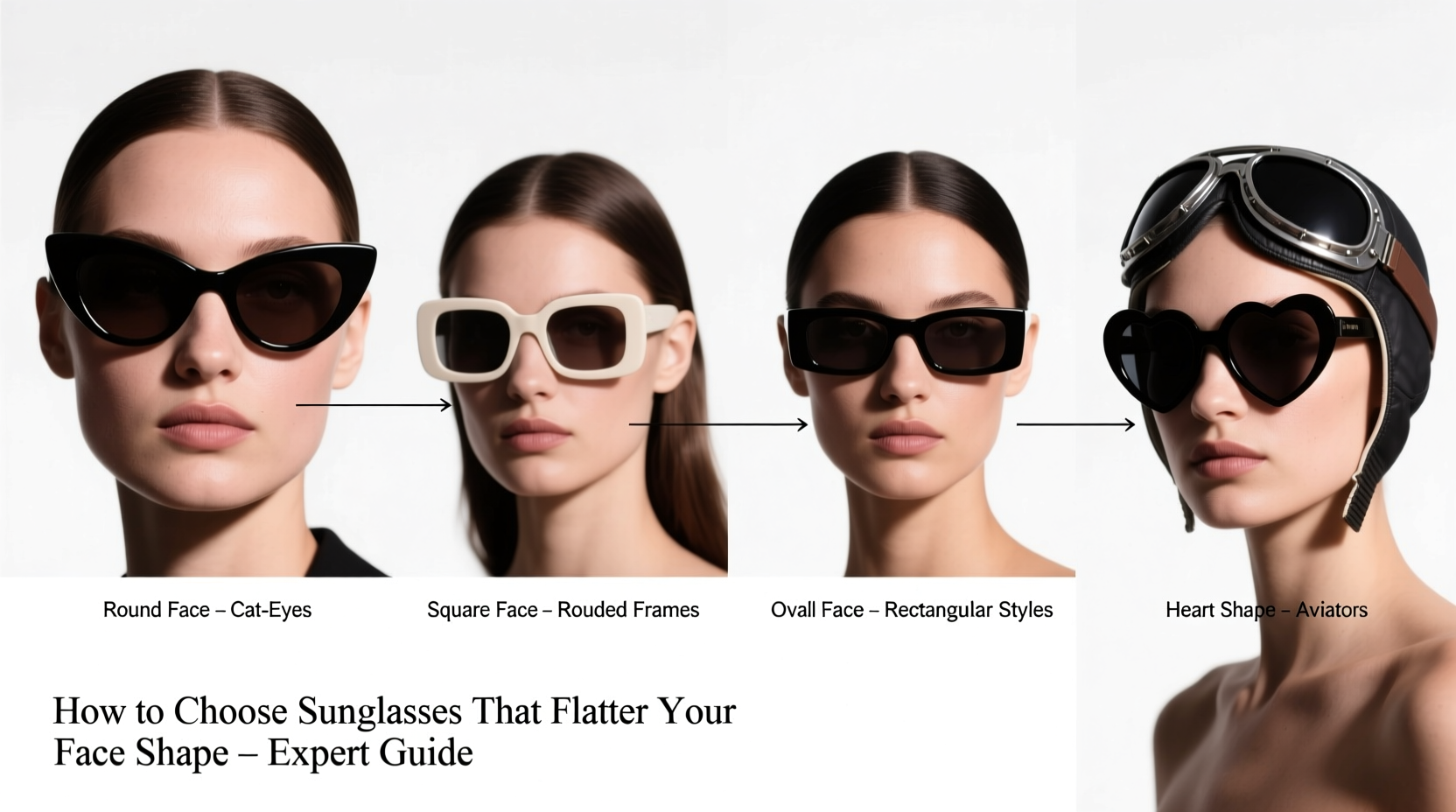
The first step in choosing flattering sunglasses is identifying your face shape. While no two faces are identical, most fall into one of six primary categories: oval, round, square, heart, diamond, and oblong. Each has distinct proportions and angles that respond differently to various frame styles.
To determine your face shape, stand in front of a mirror with your hair pulled back. Use a washable marker to trace the outline of your face on the glass. Step back and analyze the shape:
- Oval: Forehead slightly wider than the jawline, with soft contours and balanced length-to-width ratio.
- Round: Equal width and length, full cheeks, and a softly curved jawline.
- Square: Strong jaw, wide forehead, and angular features with nearly equal proportions.
- Heart: Broad forehead tapering to a narrow chin, often with high cheekbones.
- Diamond: Narrow forehead and jawline with prominent cheekbones—the rarest shape.
- Oblong: Face longer than it is wide, with a straight cheek line and possibly a long chin.
Once identified, use your face shape as a blueprint for selecting frames that create visual harmony.
Matching Sunglasses to Your Face Shape
Each face shape benefits from specific frame characteristics that balance proportions and highlight strengths. Below is a detailed breakdown with recommended styles and real-world rationale.
Oval Face: The Versatile Canvas
If you have an oval face, consider yourself fortunate—most sunglass styles work well. This shape is naturally balanced, so the goal is to maintain proportion without overwhelming the face.
Best choices: Wayfarers, aviators, cat-eye, rectangular frames.
Avoid: Oversized frames that extend beyond the cheekbones or extremely small lenses that minimize facial presence.
Round Face: Add Definition and Angles
Rounded features benefit from structured, geometric frames that elongate the face and add contrast to soft curves.
Best choices: Square, rectangular, or angular frames with strong top lines. Styles like clubmasters or flat-top aviators draw the eye horizontally, creating the illusion of length.
Avoid: Round or overly curved frames—they echo existing contours and make the face appear fuller.
“Angular frames act like contouring in makeup—they create shadows and definition where needed.” — Lena Torres, Celebrity Stylist
Square Face: Soften the Edges
A strong jaw and broad forehead call for frames that soften angles and introduce curves.
Best choices: Round, oval, or slightly curved frames. Cat-eye designs also work well by drawing attention upward and balancing the lower face.
Avoid: Box-shaped or sharp-cornered frames that emphasize angularity.
Heart Face: Balance the Forehead and Chin
With a wider forehead and narrow chin, the objective is to visually widen the lower face and minimize the upper third.
Best choices: Bottom-heavy frames like aviators or wayfarers with thicker lower rims. Rimless or semi-rimless styles can also reduce top-weight.
Avoid: Top-heavy or oversized upper frames (e.g., dramatic cat-eyes) that exaggerate forehead width.
Diamond Face: Highlight Cheekbones, Frame the Eyes
Diamond-shaped faces have striking cheekbones but narrower foreheads and jaws. Frames should align with the eyes and add width at the top and bottom.
Best choices: Oval, rimless, or cat-eye frames with decorative temples. Butterfly or rounded aviators complement the natural symmetry.
Avoid: Narrow or straight-edged frames that don’t follow the cheekbone curve.
Oblong Face: Shorten the Visual Length
An elongated face needs frames that add width and break up vertical lines.
Best choices: Wraparound, wide rectangular, or deep-lens frames. Bold, oversized styles help shorten the face by filling space horizontally.
Avoid: Small, narrow, or vertically oriented frames that emphasize length.
Step-by-Step Guide to Choosing Your Perfect Pair
Follow this five-step process the next time you shop for sunglasses—whether online or in person—to ensure a flattering, comfortable fit.
- Determine your face shape using the tracing method or a digital face analysis app.
- Measure key facial dimensions: temple width, distance between eyes, nose bridge, and cheekbone span. These numbers help filter online options.
- Identify your dominant feature: Are your eyes wide-set? Is your nose prominent? Choose frames that either accentuate or balance these traits.
- Try multiple styles within your category: Don’t settle for the first “recommended” frame. Test variations—color, size, material—for subtle differences.
- Assess comfort and function: Ensure the arms don’t pinch, the bridge fits snugly, and lenses provide full coverage without obstructing vision.
Frame Features That Impact Flattery
Beyond shape, several design elements influence how well sunglasses suit your face:
- Frame Width: Should not extend beyond your cheekbones. Too wide = clownish; too narrow = pinched.
- Bridge Fit: Especially important for smaller noses. Adjustable nose pads or keyhole bridges prevent slipping and improve alignment.
- Temple Arms: Should rest comfortably over ears without pressure. Thick arms can overwhelm smaller faces.
- Color and Finish: Neutral tones (black, tortoiseshell, gold) are universally flattering. Bold colors work best if they contrast nicely with skin tone and hair color.
For example, a warm tortoiseshell frame enhances golden undertones in medium to dark skin, while silver or rose-gold metal suits cooler complexions. Consider your wardrobe palette—neutral frames pair easily with more outfits.
Do’s and Don’ts by Face Shape
| Face Shape | Do’s | Don’ts |
|---|---|---|
| Oval | Experiment with bold shapes; prioritize comfort and lens quality | Choose frames too large or too small—maintain balance |
| Round | Opt for angular, wide frames to elongate the face | Wear round lenses—they emphasize roundness |
| Square | Select round or oval frames to soften jawlines | Use boxy or sharp-edged styles that enhance angles |
| Heart | Pick bottom-heavy or rimless frames to balance the chin | Go for top-heavy or oversized upper frames |
| Diamond | Choose frames that align with cheekbones—cat-eye or butterfly | Select narrow or straight frames that don’t follow facial curves |
| Oblong | Wear wide, deep frames to add horizontal emphasis | Pick small or vertically elongated lenses |
Real Example: Transforming Style Through Smart Selection
Maria, a 34-year-old marketing executive with a round face, had always avoided sunglasses, feeling they made her look “chubby.” She typically reached for trendy round frames inspired by influencers, unaware they amplified her facial softness.
After a consultation with a stylist, she switched to angular, slightly oversized rectangular frames in matte black. The sharper lines created contrast against her curves, and the width balanced her cheekbones. Not only did colleagues compliment her new look, but Maria reported feeling more confident during client meetings and outdoor events.
Her experience underscores a critical point: trends are secondary to structure. What works for one face may not work for another—even if it's popular.
Checklist: How to Confirm Your Sunglasses Suit You
Before purchasing, go through this checklist to ensure your choice is both flattering and functional:
- ✅ Frame width aligns with or slightly exceeds cheekbone span
- ✅ Brow line intersects the top edge of the lenses
- ✅ Nose pads (if present) don’t press uncomfortably
- ✅ Temples don’t dig behind the ears
- ✅ Lenses provide full UV protection (look for UV400 label)
- ✅ Front view shows symmetry—frames sit level
- ✅ Side profile shows lenses aren’t too far from the face (reduces peripheral distortion)
- ✅ Color complements skin tone and regular attire
“The right sunglasses don’t just protect your eyes—they elevate your entire presence.” — Daniel Kim, Optician & Eyewear Designer
Frequently Asked Questions
Can I wear round sunglasses if I have a round face?
Generally, it’s best to avoid round-on-round combinations, as they can make the face appear fuller. However, if you love the style, opt for a subtly angular variation—like a hexagonal frame—or pair them with a slim metal rim to add definition. Keep the size moderate and ensure the frame sits high on the face to elongate it slightly.
What if my face shape falls between categories?
Most faces are hybrids. Focus on your most dominant trait—length, width, or jawline—and choose frames that address that. For example, if you have a square forehead but a rounded chin (a blend of square and oval), prioritize softening the upper face with slightly curved frames while maintaining balance. Try multiple styles and observe which ones feel most harmonious.
Do gender-specific styles matter?
Modern sunglass design is increasingly unisex. Instead of relying on “men’s” or “women’s” labels, focus on proportions and fit. A well-chosen frame transcends gender norms. For instance, classic wayfarers or aviators suit all genders when sized appropriately. Prioritize craftsmanship, lens quality, and facial harmony over marketing categories.
Final Thoughts: Confidence Starts with the Right Fit
Choosing sunglasses that flatter your face shape isn’t about following rigid rules—it’s about understanding how design influences perception. With the right pair, you’re not just shielding your eyes from harmful rays; you’re enhancing your natural symmetry, expressing your personality, and stepping out with quiet confidence.
Take the time to assess your face shape, test different styles mindfully, and invest in quality over trendiness. Remember, the best sunglasses don’t just look good—they feel like they were made for you.




 浙公网安备
33010002000092号
浙公网安备
33010002000092号 浙B2-20120091-4
Comments
No comments yet. Why don't you start the discussion?