
Selecting the right tissue box size might seem like a minor detail, but it plays a surprisingly significant role in both functionality and aesthetics. Whether you're stocking a home bathroom, equipping an office conference room, or managing supplies for a healthcare facility, the wrong tissue box can lead to inefficiency, waste, or clutter. The ideal choice balances practicality with spatial harmony—ensuring tissues are accessible when needed without dominating the environment. Understanding the variety of available sizes, their typical uses, and how they align with different environments allows for smarter purchasing decisions and improved daily convenience.
Understanding Standard Tissue Box Sizes
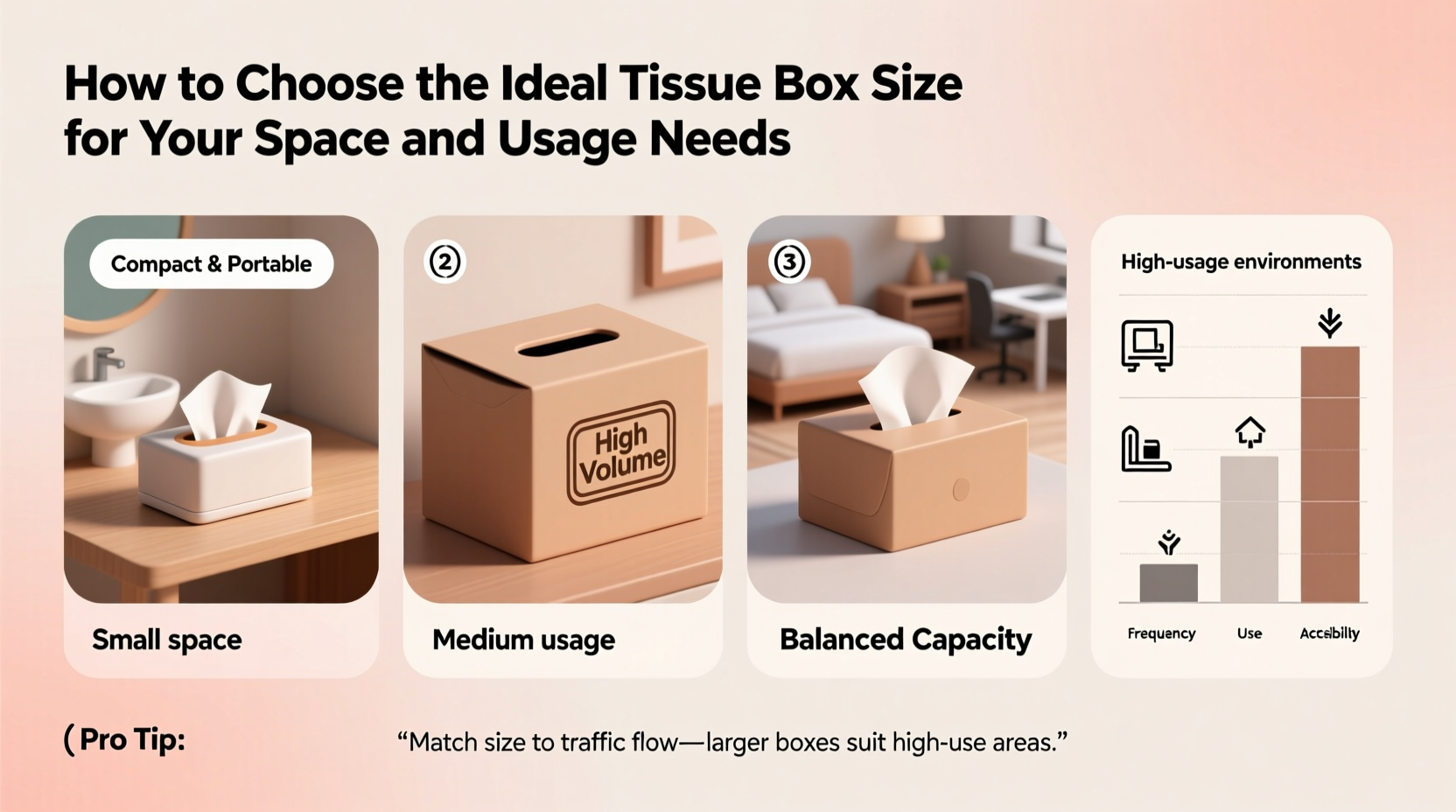
Tissue boxes come in several standard dimensions, each designed for specific use cases. While brands may vary slightly in measurements, most fall into three primary categories: compact, regular, and bulk or jumbo. Familiarizing yourself with these helps narrow down options based on your space and consumption patterns.
| Size Type | Average Dimensions (inches) | Sheets per Box | Best For |
|---|---|---|---|
| Compact | 4.5 x 3.5 x 2.5 | 60–80 | Small bathrooms, nightstands, travel, children’s rooms |
| Regular | 5.5 x 3.5 x 2.75 | 100–120 | Most household bathrooms, desks, entryways |
| Bulk / Jumbo | 6.5 x 4 x 3.5 | 150–200+ | High-traffic areas, offices, clinics, shared spaces |
The compact size is ideal where space is limited or usage is low. Regular boxes strike a balance between capacity and footprint, making them the default choice in many homes. Bulk boxes reduce refill frequency in busy settings but require more surface area and may not suit minimalist decor.
Matching Box Size to Room Function and Traffic
The function of a room directly influences the optimal tissue box size. A guest bathroom used occasionally doesn’t need a jumbo box, while a pediatric clinic waiting room likely benefits from high-capacity dispensers to minimize interruptions.
- Residential Bathrooms: Regular-sized boxes work best in master and shared bathrooms. Compact boxes fit neatly on small vanities or in powder rooms.
- Kitchens: Often overlooked, kitchens benefit from tissues near sinks or dining areas. A regular box stored in a drawer or on a counter edge supports spills and quick cleanups.
- Home Offices & Living Rooms: These communal zones see moderate use. A stylish regular box complements decor while remaining functional.
- Commercial Spaces: Offices, lobbies, and medical facilities should prioritize bulk boxes or wall-mounted dispensers to reduce maintenance demands.
- Children’s Rooms: Smaller hands mean smaller reach. A compact box placed at child height encourages independence while minimizing mess.
“Choosing the right tissue size isn’t just about volume—it’s about matching human behavior to product design.” — Dr. Lena Torres, Environmental Psychologist
Space Constraints and Aesthetic Integration
In modern interiors, even utilitarian items contribute to visual harmony. A large tissue box on a sleek glass shelf can disrupt an otherwise curated look. Conversely, a tiny box in a spacious living room may appear out of place or require constant refilling.
Consider both physical space and design language. Built-in cabinets, floating shelves, and console tables often have limited depth. A deep jumbo box might overhang or block adjacent objects. In such cases, switching to a compact box—or using a recessed tissue holder—maintains flow.
For design-conscious spaces, opt for neutral-colored regular boxes or invest in fabric-covered or wooden tissue box covers. These allow you to maintain a consistent theme while concealing branded packaging that may clash with décor.
Usage Frequency and Replenishment Habits
Your household or organization’s tissue consumption rate should guide size selection. Families with young children or members prone to seasonal allergies go through tissues faster than single occupants. Similarly, offices with frequent visitors need higher-capacity solutions.
Assess your current usage by tracking how often you replace boxes in key areas over a two-week period. Then apply this insight:
- If a box lasts less than four days in a location, consider upgrading to a larger size or installing a dual-box holder.
- If a box takes more than three weeks to finish, downsizing may reduce waste and improve storage efficiency.
- For shared spaces, pair bulk boxes with backup spares stored nearby to prevent shortages.
Automated subscription services for tissue delivery can complement high-usage setups, ensuring continuity without last-minute runs to the store.
Mini Case Study: Office Reception Area Upgrade
A mid-sized law firm in Portland was receiving complaints about empty tissue boxes in its waiting area, especially during flu season. The receptionist spent valuable time checking and replacing them multiple times a day. After assessing usage, they replaced standard boxes with jumbo-sized ones and installed a discreet wall-mounted dispenser behind the seating area. Refill frequency dropped from every 1.5 days to once every five days, reducing staff burden and improving guest experience. The new setup also looked cleaner and more professional.
Checklist: Choosing Your Ideal Tissue Box Size
Before making a purchase, walk through this practical checklist to ensure the best fit for your environment:
- ✅ Measure the available space where the box will sit (width, depth, height)
- ✅ Assess daily tissue usage in the area (low, medium, high)
- ✅ Consider who will use it (children, elderly, guests, employees)
- ✅ Evaluate aesthetic compatibility with existing décor
- ✅ Determine refill frequency tolerance (how often are you willing to replace?)
- ✅ Decide if a cover, dispenser, or open box works best
- ✅ Test one box type for a week before bulk ordering
Frequently Asked Questions
Can I use non-standard tissue boxes in decorative holders?
Some decorative holders are designed specifically for standard 5.5” x 3.5” boxes. Using oversized or undersized tissues may result in poor fit, difficulty pulling sheets, or damage to the cover. Always verify compatibility before purchasing.
Are larger tissue boxes more cost-effective?
In high-usage settings, yes. Bulk boxes typically offer a lower cost per sheet and reduce labor associated with frequent replacements. However, in low-traffic areas, larger boxes may expire before use, leading to waste.
What should I do if I love a large-capacity box but lack counter space?
Explore vertical storage: use under-sink baskets, wall-mounted dispensers, or slim pull-out organizers inside cabinets. You can also store a full large box nearby and transfer tissues to a smaller, attractive desktop box as needed.
Conclusion: Make the Right Choice for Your Environment
Choosing the ideal tissue box size goes beyond convenience—it reflects thoughtful attention to daily routines, spatial dynamics, and user needs. By evaluating your space, understanding usage patterns, and considering both practical and aesthetic factors, you can eliminate guesswork and enhance comfort in any environment. Whether you’re optimizing a cozy apartment or managing supplies across a commercial building, the right tissue solution improves functionality and reduces friction in everyday life.




 浙公网安备
33010002000092号
浙公网安备
33010002000092号 浙B2-20120091-4
Comments
No comments yet. Why don't you start the discussion?