
Turtlenecks have long been a staple in modern wardrobes, offering both style and function. But when worn for extended periods—whether during work hours, travel, or casual outings—comfort becomes just as important as appearance. A poorly chosen turtleneck can feel itchy, constricting, or overheated by midday. The key lies not in avoiding them altogether but in selecting the right combination of fabric, cut, weight, and construction that supports all-day ease without sacrificing elegance.
The ideal lightweight turtleneck should feel like a second skin: breathable enough to regulate temperature, soft against the neck, and flexible enough to move with you. With so many materials and fits available—from merino wool to cotton blends and synthetic knits—it’s essential to understand what sets truly wearable options apart from those best reserved for short stints.
Understanding Fabric: The Foundation of Comfort
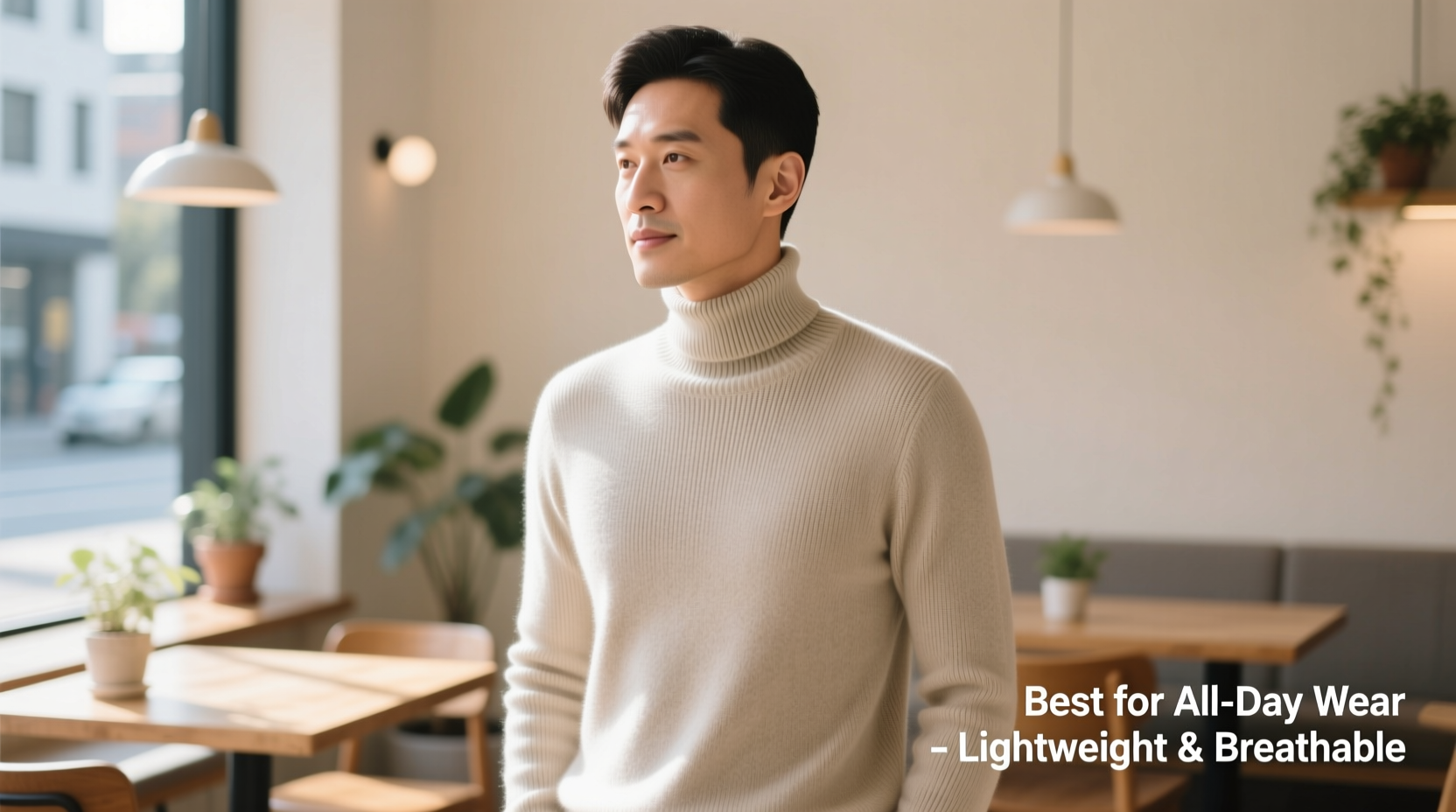
The material of a turtleneck determines more than just texture; it influences breathability, moisture management, warmth, and durability. For all-day wear, prioritize natural or semi-synthetic fibers known for their comfort and performance under prolonged use.
- Merino Wool: Exceptionally soft, naturally odor-resistant, and excellent at regulating body temperature. Despite being wool, fine merino is lightweight and non-irritating, making it perfect for sensitive skin.
- Pima or Supima Cotton: These premium cottons are longer-fibered, resulting in smoother, stronger, and more durable fabric. They’re breathable and soft but may retain moisture if worn in humid conditions.
- TENCEL™ (Lyocell): Made from sustainably sourced wood pulp, TENCEL™ offers a silky feel, excellent drape, and high moisture-wicking properties. It resists wrinkling and stays cool, ideal for layering.
- Blends with Elastane: Fabrics combining cotton, wool, or TENCEL™ with 2–5% elastane add stretch, improving mobility and maintaining shape throughout the day.
“Lightweight doesn’t mean flimsy. The best all-day turtlenecks balance thinness with integrity—retaining shape after eight hours of wear.” — Lena Torres, Sustainable Apparel Designer
Finding the Right Fit and Neck Height
A well-fitting turtleneck enhances comfort significantly. Too tight, and it restricts movement and circulation around the neck; too loose, and it bunches or gapes, defeating the purpose of a sleek silhouette.
Look for a snug but not restrictive fit around the torso and arms. The ribbing at the cuffs and hem should hold its shape without digging in. As for the collar, there are three main styles:
| Neck Style | Best For | Wear Consideration |
|---|---|---|
| Skinny Roll (Single) | Casual layering, warmer climates | Less coverage, minimal bulk |
| Double Fold | Cooler weather, formal settings | Can feel warm over time; ensure fabric is ultra-light |
| Mock Neck (Short Turtleneck) | All-day office wear, sensitive necks | Offers turtleneck look without full coverage |
If you wear glasses, ties, or frequently adjust your posture (such as when working at a desk), consider a slightly lower mock neck or single-roll design to prevent chafing behind the ears or jawline.
Step-by-Step Guide: How to Test a Turtleneck Before Buying
- Feel the inside seam: Run your fingers along the inner neck seam. Flatlock or bonded seams reduce irritation.
- Stretch the collar: Gently pull the neckline. It should return to shape without sagging.
- Check underarm mobility: Raise your arms fully. There should be no pulling across the back or shoulders.
- Wear it for 10 minutes: If shopping in-store, try layering it under a jacket to simulate real-world conditions.
- Assess breathability: After light movement, notice if heat builds up quickly—this indicates poor ventilation.
Construction and Seam Quality Matter More Than You Think
Beyond fabric and fit, the way a turtleneck is constructed affects longevity and comfort. Garments with visible internal stitching, bulky seams, or rough labels can cause friction, especially during long wear.
Seek out brands that use flatlock seams, which lie flush against the skin, or seamless knitting technology that eliminates side seams entirely. These details may not stand out on a hanger, but they make a tangible difference after several hours of wear.
Additionally, check the rib knit density. A tighter rib provides better elasticity and holds its shape longer. Loose, floppy ribs tend to stretch out by afternoon, creating an unkempt look.
Real-World Example: A Week in the Life of a Remote Worker
Sophie, a UX designer based in Portland, wears turtlenecks daily for video calls and long coding sessions. Last winter, she switched from a standard cotton blend to a merino-TENCEL™ hybrid top. “I used to take mine off by noon because my neck would get sweaty and itchy,” she says. “Now I forget I’m even wearing it. It doesn’t wrinkle, keeps me warm without overheating, and looks polished on camera.”
Her new turtleneck weighs only 180 grams but performs across seasons—layered under a blazer in meetings or worn solo during home workouts. This shift didn’t just improve comfort; it reduced her decision fatigue and laundry frequency thanks to the fabric’s natural odor resistance.
Essential Checklist for Choosing Your Ideal Lightweight Turtleneck
- ✅ Fabric is breathable and soft (e.g., merino, Pima cotton, TENCEL™)
- ✅ Contains slight stretch (2–5% elastane) for ease of movement
- ✅ Neck height allows free jaw movement without pressure
- ✅ Seams are flat or hidden to prevent chafing
- ✅ Hem and cuffs maintain tension without squeezing
- ✅ Holds shape after simulated wear (stretch test passed)
- ✅ Machine washable or easy-care (for frequent use)
- ✅ Available in neutral tones for versatile layering
Frequently Asked Questions
Can I wear a turtleneck every day?
Yes, provided it’s made from breathable, durable fabric and cared for properly. Rotate between two or three to extend lifespan and allow fibers to recover between wears. Merino and TENCEL™ are particularly suited for daily rotation due to their odor resistance and resilience.
Are lightweight turtlenecks warm enough for winter?
Layering is key. A lightweight base-layer turtleneck made of merino wool (ideally 150–180gsm) traps heat efficiently when paired with a sweater or coat. In fact, thin thermal layers often outperform thick, stiff ones by managing moisture and allowing better airflow regulation.
How do I care for delicate turtleneck fabrics?
Always follow the care label. For merino and TENCEL™, hand wash or use a gentle machine cycle with cold water and mild detergent. Lay flat to dry to preserve shape and prevent shoulder stretching. Avoid direct sunlight and high-heat drying, which degrade fibers over time.
Final Thoughts: Prioritize Wearability Over Trends
Choosing the most comfortable and lightweight turtleneck isn’t about chasing seasonal styles—it’s about investing in pieces that support your lifestyle. Whether you're commuting, working remotely, or attending back-to-back meetings, the right turtleneck should disappear into your routine, leaving you focused on your day, not your clothes.
Focus on quality materials, thoughtful construction, and a tailored-but-relaxed fit. When these elements align, you’ll find a turtleneck that doesn’t just look good—it feels effortless.




 浙公网安备
33010002000092号
浙公网安备
33010002000092号 浙B2-20120091-4
Comments
No comments yet. Why don't you start the discussion?