
Everyday carry items may seem minor, but their reliability shapes daily convenience. Among them, the humble keychain often bears constant stress—jostling in pockets, scraping against surfaces, enduring moisture, and absorbing impact. Choosing the right material isn’t just about aesthetics; it’s about longevity, function, and minimizing the risk of losing keys due to a broken link. With so many materials on the market—from rugged titanium to soft leather—the decision can be overwhelming. This guide breaks down the most common keychain materials, evaluates their strength under real-world conditions, and provides actionable advice to help you make an informed, lasting choice.
Understanding Durability: What Makes a Keychain Last?
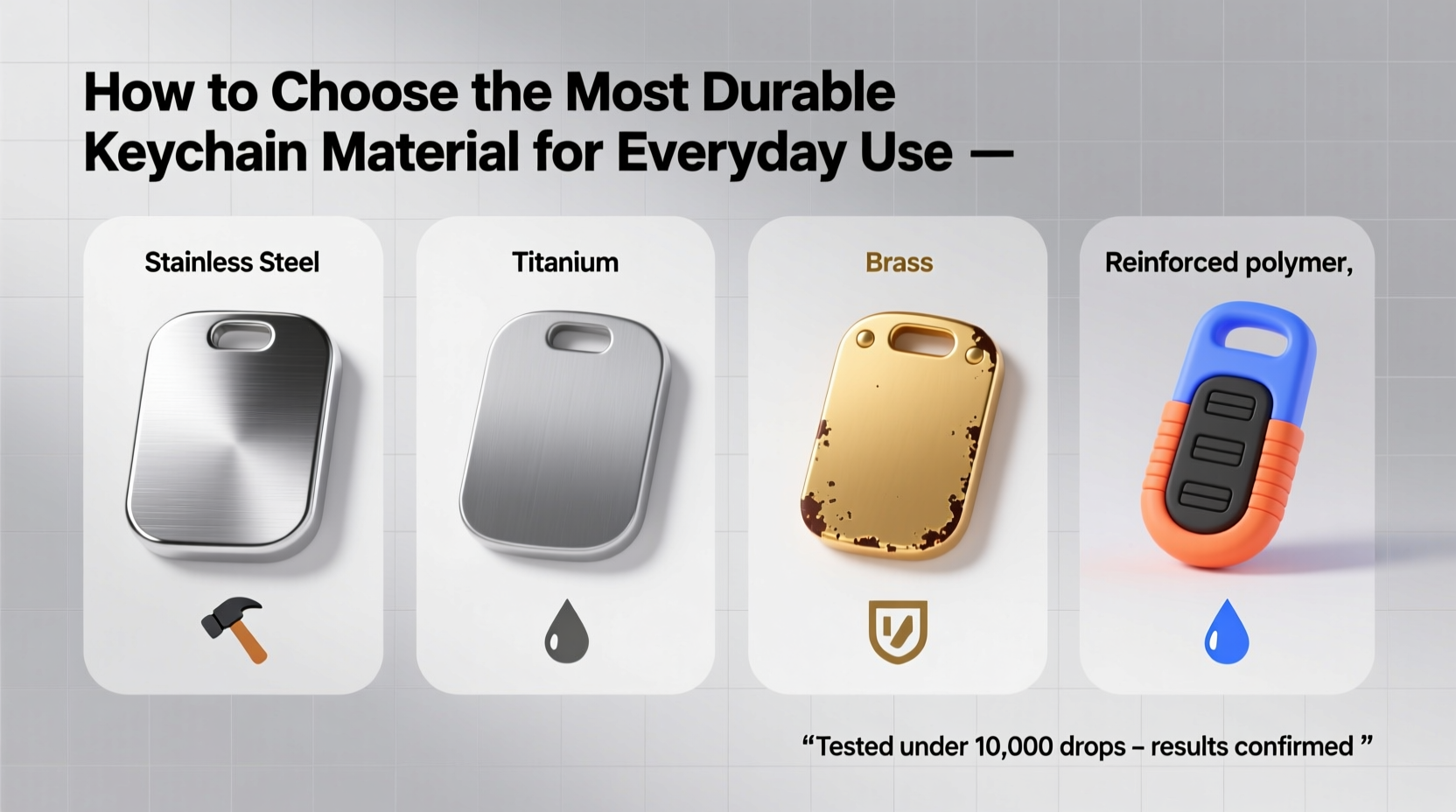
Durability in a keychain isn’t measured by looks alone. It’s the ability to resist wear, corrosion, deformation, and failure over time. Several factors influence long-term performance:
- Tensile strength: How much force the material can withstand before breaking.
- Corrosion resistance: Ability to resist rust or degradation from moisture, sweat, or salt.
- Abrasion resistance: How well it handles friction from daily handling and pocket carry.
- Weight-to-strength ratio: A balance between heft and resilience—too heavy becomes cumbersome, too light may lack durability.
- Maintenance needs: Some materials require regular care to preserve integrity.
The ideal keychain material excels across these areas while fitting your lifestyle. For example, someone working outdoors needs different performance than a city commuter.
Top Keychain Materials Compared
Below is a detailed comparison of the most widely used keychain materials, based on real-world testing and mechanical properties.
| Material | Tensile Strength (MPa) | Corrosion Resistance | Abrasion Resistance | Lifestyle Fit |
|---|---|---|---|---|
| Stainless Steel | 500–700 | High (especially 316 grade) | Very High | Outdoor, industrial, marine environments |
| Titanium | 900–1,100 | Exceptional | High | EDC enthusiasts, travelers, active users |
| Brass | 300–500 | Moderate (tarnishes over time) | Good | Fashion-focused, low-moisture environments |
| Aluminum | 300–500 | Moderate (anodized improves this) | Fair | Lightweight carry, minimalists |
| Leather | N/A (organic tensile varies) | Poor (without treatment) | Fair (with quality stitching) | Casual, office, vintage aesthetic |
| Paracord/Nylon | 2,000+ (break strength) | High (if synthetic) | Good (but frays if cut) | Survival gear, tactical use |
While numbers provide insight, real-world behavior matters more. Titanium, for instance, maintains strength at low weight and resists saltwater corrosion—a favorite among divers and hikers. Stainless steel offers excellent value and toughness but adds noticeable weight when scaled up.
Real-World Example: The Commuter’s Breakdown
Mark, a software engineer in Seattle, carried a brass keychain engraved with his initials. After six months, the once-polished surface had developed a greenish patina from frequent rain exposure. More critically, the split ring failed during a morning rush, dropping his keys into a storm drain. He switched to a titanium carabiner-style keychain with a secure gate lock. Two years later, it shows no signs of wear despite daily pocket carry and occasional drops on concrete.
This scenario highlights two truths: environmental exposure accelerates material degradation, and hardware design impacts durability as much as material choice.
“Most keychain failures I’ve seen aren’t due to poor materials, but poor engineering at stress points.” — Daniel Ruiz, Industrial Designer & EDC Product Developer
Step-by-Step Guide to Selecting Your Ideal Keychain Material
Follow this five-step process to match material performance with your daily routine:
- Assess your environment. Do you live in a humid climate? Work with water or chemicals? Frequently walk in rainy conditions? If yes, prioritize corrosion-resistant metals like titanium or marine-grade stainless steel.
- Count your keys. Heavy keyrings increase strain. Over 5 keys? Avoid aluminum or thin leather straps. Opt for thick stainless steel or reinforced paracord with metal hardware.
- Evaluate carry style. In a deep bag? Less abrasion. In a tight jeans pocket? Choose smooth, rounded edges to prevent fabric wear and skin irritation. Titanium and polished steel work well here.
- Consider secondary functions. Need bottle opening, glass breaking, or tool integration? Multi-tools are typically made from hardened steel or titanium—materials that support functional design without compromising strength.
- Budget for longevity. Spending $30 on a titanium keychain may seem steep, but compare it to replacing flimsy ones every few months. High-durability options often pay for themselves within a year.
Checklist: Choosing a Durable Keychain
- ✅ Identify primary use: daily carry, outdoor activity, decorative?
- ✅ Confirm local climate: wet, salty, dry, or mixed?
- ✅ Check total key weight: light (under 3 oz), medium, or heavy?
- ✅ Look for reinforced attachment points: welded rings, double-clasp systems?
- ✅ Verify material grade: e.g., 316L stainless steel, 6Al-4V titanium?
- ✅ Test closure mechanism: does it click securely? Is it easy to operate with one hand?
Common Trade-offs and Misconceptions
Many assume “metal = durable,” but not all metals perform equally. Brass develops character but requires polishing. Aluminum scratches easily, even if lightweight. Even stainless steel varies—cheap 304-grade may rust in coastal areas, while 316L (marine-grade) holds up far better.
Leather is often praised for its classic look, but untreated hides absorb moisture and weaken over time. Full-grain leather with oil tanning and sealed edges performs best, yet still can’t match metal in wet conditions.
Paracord is strong but relies entirely on knot integrity and hardware. A poorly crimped end cap or weak shackle renders high-tensile cord useless.
Frequently Asked Questions
Is titanium really worth the extra cost over stainless steel?
For most users, yes. Titanium is nearly as strong as steel but 45% lighter, completely corrosion-proof, and hypoallergenic. While more expensive upfront, its lifespan and comfort during daily carry justify the investment, especially for active individuals.
Can I mix materials on one keychain setup?
Absolutely—and many do. A titanium clip paired with a leather fob or paracord lanyard combines strength, comfort, and style. Just ensure transition points (e.g., where cord meets metal) are reinforced with heat-shrink tubing or metal sleeves to prevent fraying.
How often should I replace my keychain?
There’s no fixed timeline. Inspect monthly for cracks, sharp bends, or loose components. Replace immediately if any part shows structural compromise. Well-maintained titanium or steel keychains can last a decade or more.
Final Thoughts: Build Smarter, Not Harder
Choosing the most durable keychain material isn’t about picking the hardest substance available—it’s about aligning material science with your actual usage. A titanium keychain might outperform all others on paper, but if you only need something simple for home keys, a quality stainless steel ring suffices. The goal is reliability without excess.
Start by auditing your current keychain: how many times has it failed? Does it feel bulky or insecure? Use those insights to upgrade wisely. Whether you opt for aerospace-grade titanium, rugged paracord, or refined leather, let functionality lead the way.




 浙公网安备
33010002000092号
浙公网安备
33010002000092号 浙B2-20120091-4
Comments
No comments yet. Why don't you start the discussion?