
The halter neckline has long been a favorite in both swimwear and evening wear, celebrated for its elegant lift, shoulder-baring allure, and ability to accentuate the collarbone. Yet, not every halter style flatters every body type. Choosing the right version of this timeless design can enhance your natural proportions, draw attention to your best features, and provide confidence in fit and form. Understanding how different halter cuts interact with various body shapes is essential to making a choice that feels as good as it looks.
Understanding Halter Neckline Variations
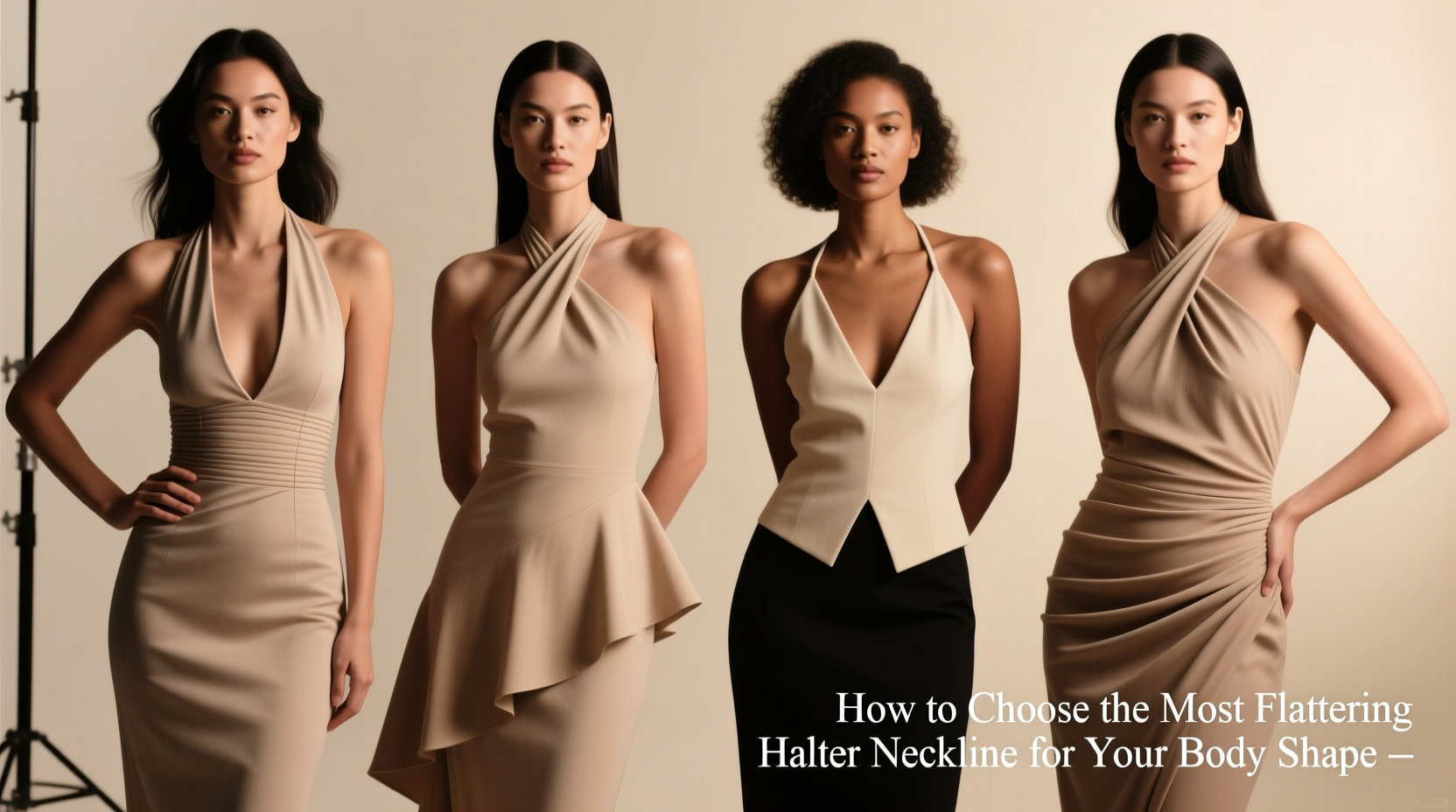
A halter neckline typically wraps around the neck and ties or fastens at the back of the neck or upper back, leaving the shoulders and arms exposed. While the basic concept remains consistent, several variations exist—each offering distinct visual effects:
- Classic Triangle Halter: Features two triangular fabric panels that meet at the neck, creating a plunging front. Ideal for adding cleavage definition and elongating the torso.
- Bandeau Halter: A straight-across top with a strap that wraps behind the neck. Offers moderate support and a clean, minimalist look.
- Twist-Front Halter: Incorporates a twisted center panel that adds volume and structure. Works well for smaller busts by creating the illusion of fullness.
- Halter with Wide Straps: Broader neck straps distribute weight more evenly and provide extra support, especially beneficial for fuller busts.
- Asymmetrical Halter: One shoulder exposed with a single strap draping across the opposite side. Adds drama and draws attention upward.
Each variation alters the eye’s focal point and impacts silhouette balance. The key is matching these structural qualities to your body’s natural lines.
Matching Halter Styles to Body Shapes
Your body shape determines which halter styles will harmonize with your proportions. Below is a breakdown of common body types and the halter designs that complement them best.
| Body Shape | Flattering Halter Style | Why It Works |
|---|---|---|
| Hourglass | Triangle halter with low front | Emphasizes balanced bust-to-hip ratio and highlights the waist when paired with a fitted cut. |
| Pear (Trapezoid) | Bandeau or wide-strap halter with embellished top | Distracts from hips by drawing eyes upward; wider straps add proportionate shoulder presence. |
| Inverted Triangle | Twist-front or ruched halter with softer neckline | Adds volume to the bust area, balancing broader shoulders and creating symmetry. |
| Rectangle (Straight) | Halter with gathering, ruffles, or asymmetric detail | Creates curves where there are fewer natural ones; defines the bust and adds dimension. |
| Apple (Round) | High-cut halter with moderate coverage and supportive straps | Provides tummy control when part of a one-piece; avoids cutting across the midsection awkwardly. |
Step-by-Step Guide to Selecting Your Perfect Halter
- Identify your dominant body shape. Stand in front of a mirror in a fitted tank top and assess whether your shoulders, bust, waist, and hips create an hourglass, pear, rectangle, etc.
- Determine your support needs. If you have a larger bust, prioritize structured cups, underwire, or thicker straps. For smaller busts, soft padding or twist details can enhance volume.
- Decide on exposure level. Consider how much skin you’re comfortable showing. A high-neck halter offers modesty; a deep V-triangle makes a bolder statement.
- Evaluate back design. Some halters tie at the nape, others have crisscross backs. Choose based on comfort and whether you’ll wear open-back cover-ups.
- Try before committing. Move around in the garment—raise your arms, sit down, lean forward. Ensure the neckline stays secure and doesn’t dig into the neck.
Real-Life Example: Finding Confidence Through Fit
Sophia, a fitness instructor with an inverted triangle build, had always avoided halter tops, believing they emphasized her broad shoulders. After consulting a stylist, she tried a ruched twist-front halter bikini with soft, curved neckline lines. The added texture across her bust created visual balance, while the lower back tie kept the look sporty and secure during workouts. “I didn’t realize a small detail like ruching could make such a difference,” she said. “Now I reach for halters first.”
“Fit isn’t just about size—it’s about proportion. A well-chosen halter can rebalance the entire silhouette.” — Lena Torres, Celebrity Stylist & Fashion Consultant
Common Mistakes to Avoid
- Choosing overly thin straps if you need support. Delicate strings may look elegant but often slip and lack stability.
- Ignoring neck length. Women with shorter necks should avoid high halter ties that cut across the base of the neck; opt for lower ties or open-front styles instead.
- Overlooking fabric stretch. Stiff materials can restrict movement and create unflattering tension lines, especially in swimwear.
- Mismatching occasion and style. A plunging halter gown may be stunning for a gala but overwhelming at a daytime garden party.
Frequently Asked Questions
Can petite women wear halter necklines?
Absolutely. Petite individuals should opt for halters with narrower straps and minimal bulk to avoid overwhelming their frame. Avoid excessively high neck ties; instead, choose styles that connect closer to the hairline or feature a subtle scoop. This preserves vertical line continuity and prevents shortening the torso.
Are halter necklines suitable for larger busts?
Yes, but with thoughtful selection. Look for halters with wide, padded straps, built-in underwire, and U-shaped or deep-V fronts that provide lift without spillage. Avoid flimsy fabrics or string ties that can dig into the neck or fail to support adequately.
How do I prevent my halter from slipping?
Ensure the neck strap fits snugly but comfortably—not so tight it leaves marks, nor so loose it slides off. Adjustable closures help. In swimwear, silicone grip strips along the inner edge can increase traction. For dresses, consider fashion tape for extra security during events.
Final Checklist Before You Buy
- ✅ Identified my body shape accurately
- ✅ Chosen a halter style that complements my proportions
- ✅ Checked for adequate bust support and comfort
- ✅ Ensured the neck strap is secure and non-restrictive
- ✅ Tested mobility—can move arms freely without slippage
- ✅ Confirmed fabric is breathable and appropriate for the occasion
- ✅ Verified care instructions match my maintenance preferences
Conclusion: Wear What Enhances You
The halter neckline is more than a trend—it’s a design element with enduring appeal because it celebrates the shoulders, elongates the neck, and frames the face. But its true power lies in customization. By aligning the neckline’s structure with your unique body shape, you transform a simple garment into a statement of confidence and intention. Whether you're selecting a swimsuit for vacation or a cocktail dress for a summer soirée, take the time to choose wisely. The most flattering halter isn’t the one everyone else is wearing—it’s the one that makes you feel effortlessly radiant.




 浙公网安备
33010002000092号
浙公网安备
33010002000092号 浙B2-20120091-4
Comments
No comments yet. Why don't you start the discussion?