
Selecting the right brow pencil shade is more than a cosmetic decision—it’s an act of precision that can enhance facial symmetry, define your expression, and elevate your everyday look. Yet many people avoid purchasing brows online or sight unseen because they fear choosing the wrong tone. The truth is, you don’t need to swatch every option at the counter to find your ideal match. With a clear understanding of your undertones, hair color dynamics, and lighting conditions, you can confidently select a brow pencil that blends seamlessly with your natural brows—no trial and error required.
Understand Your Skin’s Undertone
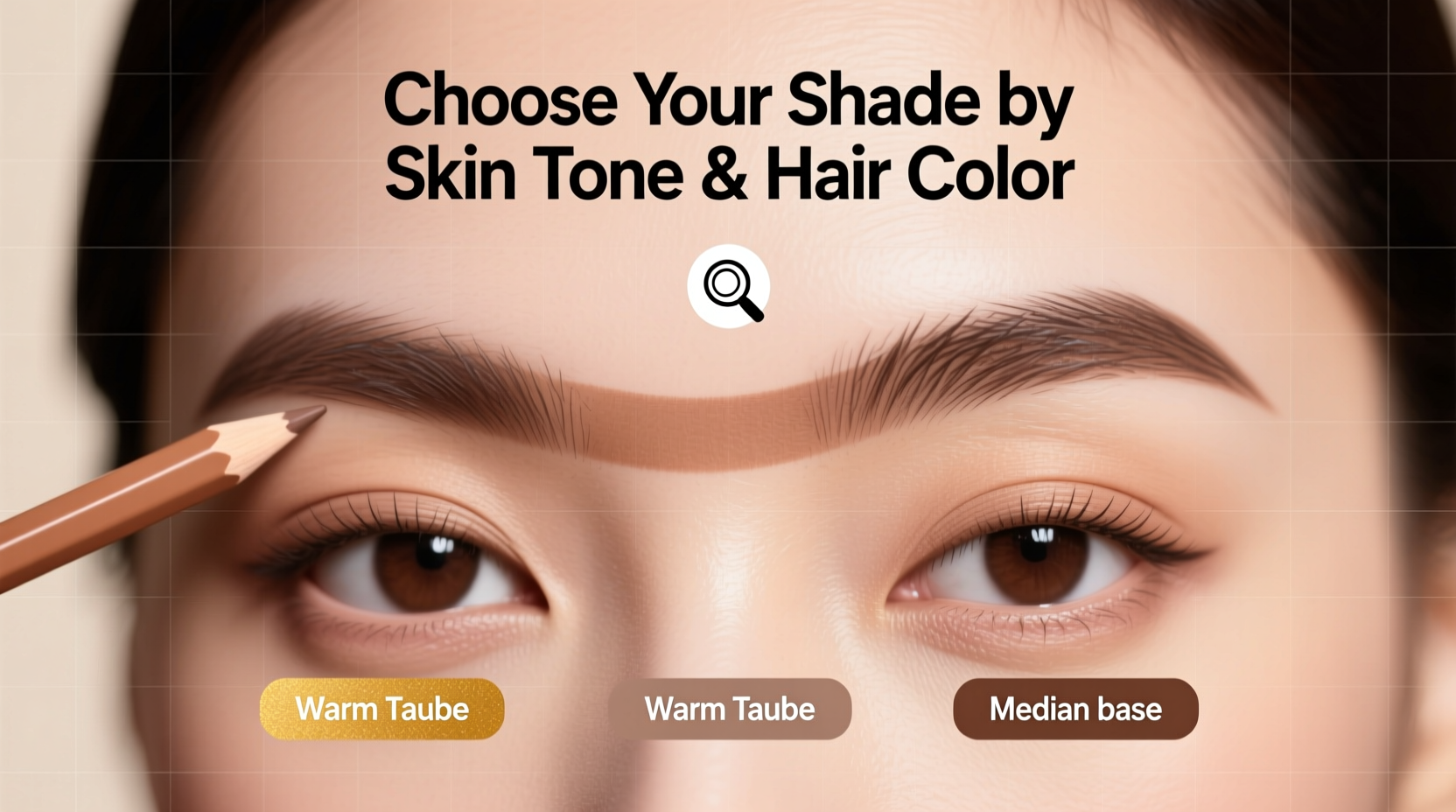
Your skin’s undertone plays a critical role in how a brow pencil appears once applied. Unlike surface-level redness or tan, undertone refers to the consistent hue beneath your skin that remains unchanged regardless of sun exposure or seasonal shifts. There are three primary undertones: warm, cool, and neutral.
A warm undertone typically features golden, peachy, or yellowish hues. If your veins appear greenish when viewed under natural light, or if gold jewelry complements your complexion better than silver, you likely have warm undertones. For these complexions, brow pencils with taupe-brown, soft chestnut, or ash blonde bases work best to prevent a harsh contrast.
Cool undertones reveal themselves through pink, red, or bluish undertones in the skin. People with cool undertones often notice their veins look blue or purple and tend to favor silver jewelry. In this case, opt for brow pencils with ashy, grayish-brown pigments—colors labeled “cool brown” or “ash taupe” will harmonize naturally.
Neutral undertones sit between warm and cool, making them more versatile. You might see a mix of green and blue in your veins, or both gold and silver jewelry suit you equally. Those with neutral skin can experiment slightly but should still lean toward balanced shades—never too red, never too ashy.
Match Brow Pencil to Hair Color—With Nuance
While it may seem logical to simply match your brow pencil to your hair color, doing so without context can lead to overly harsh or cartoonish results. Instead, use your hair as a starting point, then adjust based on realism and dimension.
If you have dark brown or black hair, resist the urge to pick a jet-black brow pencil. True black often creates a sharp, unnatural contrast against most skin tones—even deep ones—and can make brows look drawn-on rather than feathery. Instead, choose a soft black or dark brown shade. These provide definition while maintaining softness and depth.
For medium to light brown hair, go one shade deeper than your root color. This adds subtle fullness without overpowering. A rich medium brown works well for most, especially those with olive or warm-neutral skin. Avoid reddish browns unless your hair has strong auburn or copper tones; otherwise, the result may look outdated or theatrical.
Blondes face a common dilemma: going too dark makes brows look fake, but going too light renders them invisible. The solution? Choose a shade two to three levels darker than your hair. Ash blonde, soft taupe, or mushroom gray are excellent choices. Never use a blonde pencil that matches your roots exactly—it will disappear under bright light and fail to define the arch.
Redheads require special attention. Their brows are often lighter than their hair due to lower eumelanin (dark pigment) concentration. A cool-medium brown with neutral or slightly warm undertones mimics natural redheaded brows better than anything with orange or rust undertones.
“Brows should frame the face, not dominate it. The ideal shade enhances what’s already there—not replaces it.” — Lena Torres, Celebrity Makeup Artist and Brow Specialist
The Lighting Factor: How Environment Affects Perception
One of the biggest reasons people misjudge brow pencil shades is poor lighting. Department store mirrors are notorious for uneven illumination—some areas too bright, others casting shadows—that skew color accuracy. Learning to assess shade suitability under realistic conditions gives you an edge when shopping remotely or relying on product photos.
Natural daylight is the gold standard. Morning or midday sunlight provides the most accurate representation of how a color interacts with your skin. When evaluating potential shades mentally—or comparing options online—imagine them applied under this kind of light. Ask yourself: Would this look like my natural hair in sunshine? Does it cast a blue or orange cast?
Indoor lighting varies drastically. Incandescent bulbs emit a warm, yellow glow that makes cool-toned pencils appear duller or muddy. Fluorescent lights, common in retail spaces, add a clinical bluish tint that exaggerates ashiness. LED lighting spans the spectrum, so check multiple sources if possible.
When browsing online, zoom into high-resolution images showing the pencil swatched on someone with similar skin and hair tones. Look beyond influencer marketing shots—seek out user-generated content or review photos where application is visible in varied lighting.
Step-by-Step Guide: Choosing Your Shade Without Swatching
Follow this five-step process to identify your optimal brow pencil shade from home or during a quick online purchase.
- Determine your undertone using the wrist vein test or jewelry preference method. Note whether you're warm, cool, or neutral.
- Assess your natural brow hair, not just your scalp hair. Are your brows significantly lighter or darker than your head hair? This is your true reference point.
- Select a base shade according to the following guideline:
- Dark hair → Soft black or dark brown
- Medium brown → Medium brown (slightly deeper than brows)
- Light brown → Taupe or ash brown
- Blonde → Gray-brown or mushroom
- Red → Neutral medium brown
- Adjust for undertone: Warm skin? Avoid ashy grays. Cool skin? Skip red-based browns. Neutral? You have flexibility but aim for balance.
- Simulate application by drawing a thin line on paper in the candidate shade, then hold it near your eyebrow in daylight. If it visually merges rather than contrasts, it's likely a good match.
Do’s and Don’ts: Brow Pencil Selection Table
| Category | Do | Don't |
|---|---|---|
| Skin Tone Matching | Choose a shade that disappears into brows under daylight | Pick a pencil that looks obviously different from your natural hairs |
| Hair Color Logic | Go one shade deeper than your brow hair (except for blondes: two to three shades deeper) | Use pure black unless you have very deep skin and truly black brows |
| Undertone Alignment | Warm skin → golden-neutral browns; Cool skin → ashy grays | Apply cool grays on warm olive skin or warm red-browns on fair cool skin |
| Application Realism | Opt for pencils with soft, buildable pigment | Choose ultra-matte, opaque formulas if aiming for natural effect |
Real Example: Choosing Blindly—but Successfully
Sophia, a 34-year-old teacher with shoulder-length ash-blonde hair and fair, cool-toned skin, had always relied on in-store swatching to buy makeup. When she moved abroad and needed a new brow pencil, local options were limited. Using the guidelines above, she analyzed her natural brow hair—light taupe with hints of gray—and realized most blonde pencils would be too warm or too light.
She researched brands known for cool-toned ranges and selected a “Soft Taupe” shade described as “a neutral-gray brown for fair complexions.” She ordered it online, tested it upon arrival, and found it blended perfectly—adding definition without looking drawn-on. By trusting the principles of undertone alignment and relative depth, she made an accurate choice without ever touching a swatch card.
Frequently Asked Questions
Can I use the same brow pencil if I dye my hair?
Not necessarily. Temporary or semi-permanent dyes don’t change your natural brow color, so your original pencil may still work. But if you’ve gone significantly darker or lighter (e.g., from blonde to brunette), revisit your brow shade. It should still align with your skin tone and eye color, even if your hair changes.
What if my brows are patchy or sparse?
In cases of thinning brows, the goal is to mimic natural growth, not create a solid block of color. Choose a shade that matches the predominant tone of your remaining hairs or your root color. Use light, hair-like strokes rather than filling in solidly. A pencil with a fine tip offers greater control for realistic results.
Is it better to go lighter or darker with brow pencils?
Generally, it’s safer to go slightly lighter. A shade that’s too dark draws attention and can look severe, especially as the day progresses and pigment oxidizes. Lighter shades can be layered gradually for intensity, while overly dark applications are difficult to correct without makeup remover.
Final Checklist Before Buying
- ✅ I know my skin’s undertone (warm, cool, or neutral)
- ✅ I’ve examined my actual brow hair, not just my scalp hair
- ✅ I’ve ruled out shades with incompatible undertones (e.g., warm pencils on cool skin)
- ✅ I’ve considered lighting conditions where I’ll wear the brows daily
- ✅ I’ve compared product descriptions and user reviews for real-life performance
- ✅ I’m choosing a formula that suits my skill level (mechanical pencils for precision, powders for softness)
Conclusion: Confidence Comes From Knowledge
You don’t need a mirror-lit counter or a beauty advisor to choose the right brow pencil. What you do need is awareness—of your skin, your hair, and the subtle interplay between color and light. Armed with these insights, you can shop smarter, save time, and achieve polished results every time. The perfect brow shade isn’t about following trends; it’s about finding harmony with your natural features. Trust the process, apply the principles, and step forward with confidence—one precise stroke at a time.




 浙公网安备
33010002000092号
浙公网安备
33010002000092号 浙B2-20120091-4
Comments
No comments yet. Why don't you start the discussion?