
For many, a morning coffee ritual is more than just a caffeine fix—it’s a sensory moment of calm, warmth, and personal indulgence. While much attention goes to mugs, beans, and brewing methods, one subtle yet essential element often goes overlooked: the saucer. Far from being merely decorative, the right saucer can transform your coffee experience by improving functionality, protecting surfaces, and enhancing aesthetic harmony. Choosing the perfect coffee cup saucer isn’t about tradition alone; it’s about intentionality in design, material, size, and use.
Why the Saucer Matters More Than You Think
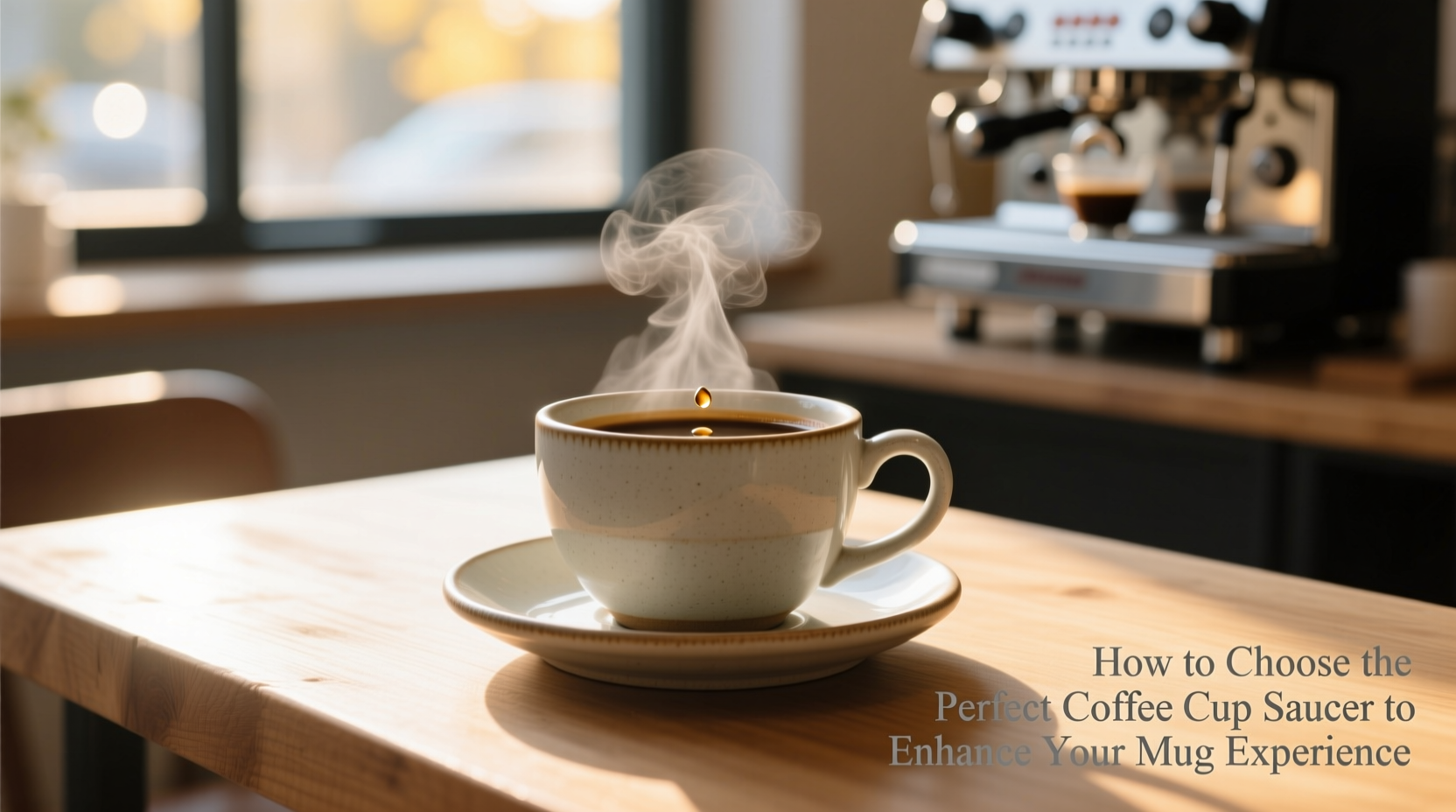
The saucer is not an afterthought. Historically, it served practical purposes—catching drips, holding sugar cubes, or even cooling hot liquids by transferring them briefly. Today, its role remains both functional and symbolic. A well-chosen saucer stabilizes your mug, prevents heat damage to furniture, and adds a layer of elegance to your table setting. In formal dining or specialty coffee service, the saucer completes the presentation, signaling care and attention to detail.
More than that, the tactile experience of lifting a mug from a properly sized, balanced saucer contributes to the overall enjoyment. The weight distribution, the smooth glide of porcelain, and the visual symmetry all play into the ritual. When mismatched or poorly chosen, a saucer can feel awkward, unbalanced, or out of place—even if you can’t immediately pinpoint why.
Key Factors in Choosing the Right Saucer
Selecting the ideal saucer involves balancing several elements. Consider these five critical factors before making your choice:
- Diameter and Proportion: The saucer should be at least 1 to 1.5 inches wider than the mug’s base. Too small, and the mug overhangs dangerously; too large, and it looks disproportionate.
- Material Compatibility: Match the saucer material to your mug—porcelain with porcelain, stoneware with stoneware—for consistent thermal response and durability.
- Rim Depth and Edge Design: A slightly raised rim (about ¼ inch) helps contain spills. Rounded edges are safer and more comfortable to handle than sharp ones.
- Color and Pattern Coordination: Even if mixing styles, ensure tonal harmony. Neutral saucers pair well with bold mugs; patterned saucers should complement, not compete with, the mug design.
- Intended Use: Daily use calls for durable, dishwasher-safe options. For display or special occasions, delicate china or artisan pieces may be appropriate.
Material Guide: What Works Best
| Material | Pros | Cons | Best For |
|---|---|---|---|
| Porcelain | Smooth, elegant, heat-resistant, easy to clean | Fragile if dropped, can chip | Everyday and formal settings |
| Stoneware | Durable, rustic charm, retains heat well | Heavier, less refined finish | Casual home use, farmhouse style |
| Bone China | Lightweight, translucent, luxurious | Expensive, delicate, not microwave-safe | Special occasions, tea service |
| Tempered Glass | Modern look, resistant to thermal shock | Can feel cold, slippery surface | Contemporary kitchens, espresso bars |
“Harmony between mug and saucer is like pairing wine with cheese—it’s not just about matching, but about creating a balanced experience.” — Clara Mendez, Tableware Curator at The Crafted Table
Design Harmony: Matching vs. Mixing Styles
While traditional etiquette favors matched sets, modern aesthetics embrace curated mismatches. The key is intentional contrast. For example, a minimalist white mug gains character when paired with a hand-painted saucer in earthy tones. Conversely, a vibrant, patterned mug should rest on a neutral saucer to avoid visual clutter.
Consider the context: a formal brunch calls for coordinated elegance, while a weekend solo coffee moment might welcome creative expression. If mixing, stick to a cohesive color palette or shared texture—matte finishes with matte, glossy with glossy.
Real Example: The Home Barista’s Upgrade
Sophie, a remote worker and home barista in Portland, used mismatched thrift-store saucers for years. Her favorite ceramic mug had no companion, so she placed it on random plates. After reading about tableware ergonomics, she invested in a set of 5-inch porcelain saucers. “The difference was immediate,” she said. “My mug stopped sliding, my desk stayed dry, and honestly, I felt more present during my morning pour-over. It made the ritual feel respected.”
She later added two colored saucers—one terracotta, one slate gray—to match her kitchen’s seasonal themes. “It’s small, but it makes me smile every time I see it,” she noted.
Step-by-Step Guide to Selecting Your Ideal Saucer
- Measure your mug’s base: Use a ruler to determine diameter. Add 1–1.5 inches to find the ideal saucer size.
- Evaluate your usage frequency: Daily users need durable, dishwasher-safe materials; occasional users can opt for delicate options.
- Assess your current tableware: Check existing colors, textures, and materials. Aim for cohesion, not necessarily uniformity.
- Test for stability: Place the mug on potential saucers. Ensure it doesn’t wobble and has enough edge clearance to grip comfortably.
- Consider storage space: Stackable saucers save room. Avoid oversized or irregular shapes if cabinet space is limited.
- Purchase one sample first: Try a single saucer before buying a full set. Live with it for a few days to assess real-world performance.
Common Mistakes to Avoid
- Choosing saucers too small: Risk instability and spillage.
- Ignoring material compatibility: Mixing reactive metals with acidic drinks can cause corrosion.
- Overlooking ergonomics: Sharp edges or overly heavy saucers reduce comfort.
- Following trends blindly: Oversized saucers may look stylish but are impractical for small mugs.
- Forgetting maintenance: Some materials stain easily or require hand-washing—be realistic about your cleaning habits.
FAQ
Can I use any plate as a coffee saucer?
Technically, yes—but standard dinner or side plates are often too large and flat. True saucers have a slight depression and are proportionally designed to cradle mugs securely. Using a proper saucer improves safety and presentation.
Are vintage saucers safe to use?
Many are, but check for cracks, lead-based glazes (especially in pre-1970s pieces), or worn edges. If in doubt, use vintage saucers for display only. Modern reproductions offer the same charm with updated safety standards.
Do espresso cups need saucers?
Absolutely. Espresso cups are small but prone to condensation and spillage. Their saucers often include space for a demitasse spoon and sugar cube, making them functionally essential in traditional service.
Final Checklist Before You Buy
- ✅ Mug base diameter measured
- ✅ Saucer at least 1 inch wider than mug base
- ✅ Material matches or complements mug
- ✅ Rim height sufficient to catch drips
- ✅ Color/pattern enhances, not clashes with, mug
- ✅ Dishwasher and microwave safe (if needed)
- ✅ Comfortable to carry when loaded
- ✅ Fits in your cupboard or drawer
Conclusion: Elevate Every Sip
The perfect coffee cup saucer isn’t about luxury for luxury’s sake—it’s about honoring the details that shape your daily rituals. Whether you’re savoring a quiet morning brew or hosting guests, the right saucer adds balance, protection, and a touch of mindfulness to the experience. It’s a small object with an outsized impact on both function and feeling.




 浙公网安备
33010002000092号
浙公网安备
33010002000092号 浙B2-20120091-4
Comments
No comments yet. Why don't you start the discussion?