
Selecting a Christmas tree is one of the most anticipated holiday traditions. Yet, many people make the same mistake every year: choosing a tree that’s too tall for their space. A tree that scrapes the ceiling or requires constant trimming to fit through a doorway ruins the magic before the lights are even strung. The key to a seamless setup isn’t just about aesthetics—it’s about proportion, safety, and long-term enjoyment. The ideal tree height depends not only on your ceiling height but also on your room layout, stand depth, and decorative plans. Getting this right ensures your tree becomes a centerpiece, not a compromise.
Why Ceiling Height Matters More Than You Think
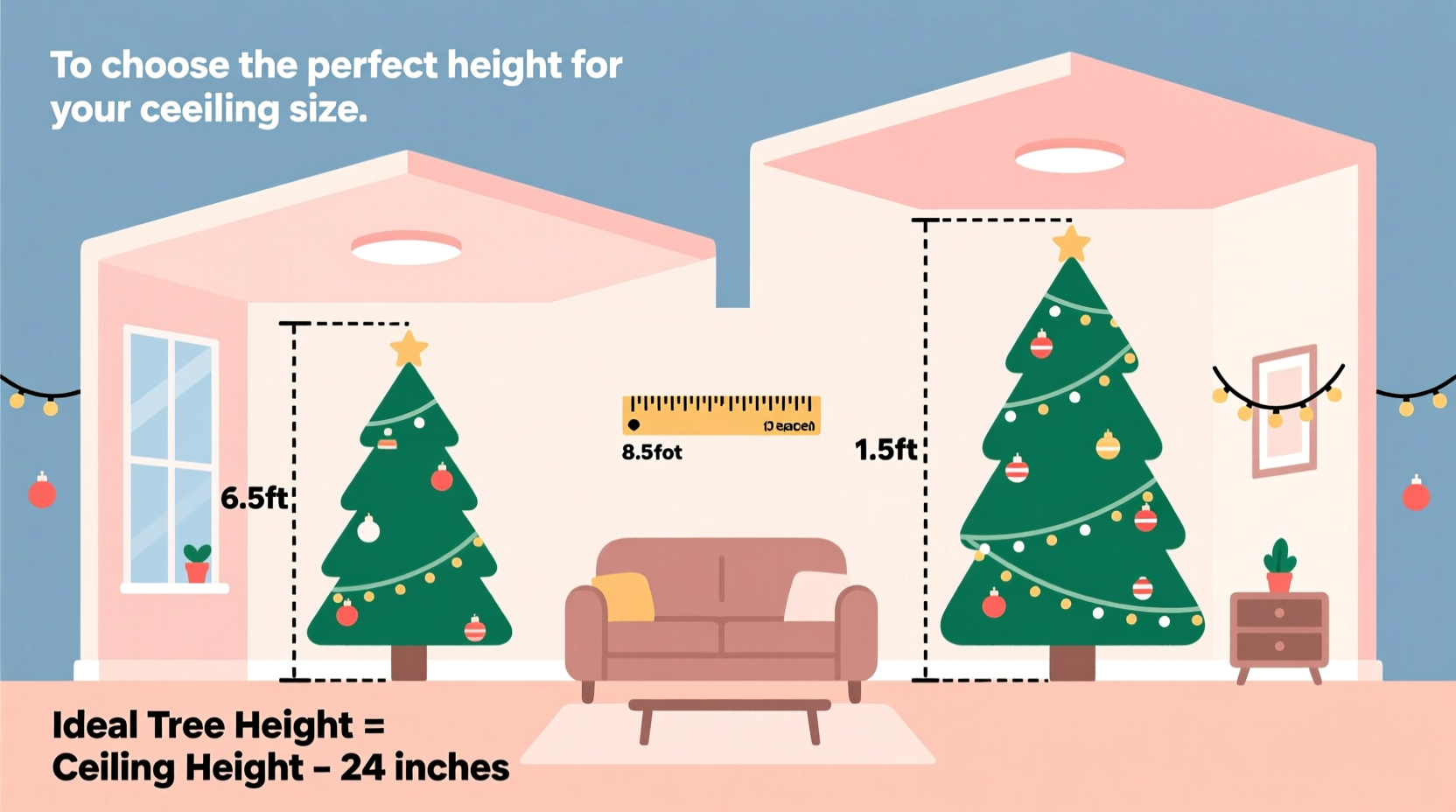
Ceiling height is the primary constraint when selecting a Christmas tree, yet it's often overlooked in favor of visual appeal or tradition. Most standard residential ceilings range from 8 to 9 feet, though modern homes may have vaulted ceilings up to 12 feet or more. Regardless of your ceiling height, allowing clearance between the top of the tree and the ceiling is essential. Without adequate space, the tree appears cramped, risks damage to both the ceiling and branches, and limits your ability to add a tree topper—a crucial finishing touch.
A general rule is to leave **6 to 12 inches** of clearance above the tree. This buffer prevents the tree from touching the ceiling, accommodates any upward fluffing of branches during decorating, and allows room for a star, angel, or other ornament at the peak. For example, in a room with an 8-foot (96-inch) ceiling, the tallest suitable tree would be around 84 to 90 inches high—roughly 7 to 7.5 feet.
Step-by-Step Guide to Measuring for the Ideal Tree
Choosing the right tree starts with precise measurement and planning. Follow this five-step process to ensure your tree fits perfectly in your space.
- Measure your ceiling height. Use a tape measure to determine the exact distance from the floor to the ceiling at the intended tree location. Note any variations—some rooms have sloped ceilings or recessed lighting that reduce usable height.
- Determine your tree stand height. Most stands add 4 to 8 inches to the overall height of the tree. If you already own a stand, measure its base-to-top height. If not, assume an average of 6 inches when calculating.
- Subtract clearance and stand height from ceiling height. For example:
- Ceiling height: 96 inches (8 feet)
- Clearance needed: 6 inches
- Stand height: 6 inches
- Maximum tree height: 96 – 6 – 6 = 84 inches (7 feet)
- Account for the tree topper. If you plan to add a large topper like a 10-inch star, subtract that as well—or include it in your clearance buffer.
- Check doorways and hallways. Ensure the tree can fit through entry points without excessive bending or branch breakage. Trees are often transported vertically, so height matters during transport too.
This method prevents guesswork and ensures a smooth setup. It’s especially useful when buying online or pre-ordering from a lot, where returns may not be possible.
Tree Size Guidelines by Ceiling Height
To simplify decision-making, here’s a reference table matching common ceiling heights with recommended tree sizes. These recommendations assume a 6-inch stand and 6–12 inches of clearance, including space for a topper.
| Ceiling Height | Max Tree Height (inches) | Recommended Tree Size (feet) | Notes |
|---|---|---|---|
| 8 feet (96\") | 84–90\" | 7–7.5 ft | Ideal for standard living rooms. Allows room for a topper. |
| 9 feet (108\") | 96–102\" | 8–8.5 ft | Great balance of presence and proportion. |
| 10 feet (120\") | 108–114\" | 9 ft | Impressive without overwhelming. Consider two-tier toppers. |
| Vaulted / 12+ feet | 120–132\"+ | 10–11 ft+ | Ensure structural support and safe access for decorating. |
Note that larger trees require heavier stands and may need anchoring for safety, especially in homes with pets or small children. Also, taller trees consume more lights and ornaments—plan your budget accordingly.
Real-World Example: The Overlooked Clearance Mistake
Sarah, a homeowner in Denver, excitedly purchased a 9-foot pre-lit artificial tree for her family room with 9-foot ceilings. She assumed it would “just fit.” However, she hadn’t accounted for the 7-inch stand or the 8-inch angel topper she planned to use. When assembled, the tree reached 111 inches—3 inches above her 108-inch ceiling. The top branches bent under pressure, damaging the wiring of the built-in lights. Frustrated, Sarah had to trim the trunk, weakening the tree’s stability, and lost several light nodes in the process.
After consulting a holiday decorator, she learned the importance of pre-measurement. The following year, she opted for an 8.5-foot tree with a low-profile stand and left 9 inches of clearance. The result was a balanced, elegant display that became the focal point of her holiday decor—without any last-minute fixes.
Expert Insight: Proportion Over Size
Interior designers emphasize that visual harmony matters more than sheer height. A tree that fills the space without dominating it creates a welcoming atmosphere.
“People often go as tall as possible, but a tree that’s too tall feels oppressive. Aim for a tree that’s about two-thirds the height of the room for ideal proportions.” — Lena Torres, Interior Designer & Holiday Stylist
Torres also recommends considering the width of the tree. A full 7.5-foot tree can span 5 to 6 feet in diameter. Ensure at least 12 to 18 inches of clearance from walls, furniture, and walkways to prevent fire hazards and maintain traffic flow. In smaller rooms, a slimmer profile tree or a pencil-shaped design may be more appropriate—even if ceiling height allows for taller options.
Checklist: How to Choose the Right Tree Height
Use this checklist before purchasing your next Christmas tree to avoid common pitfalls:
- ✅ Measure ceiling height at the exact tree location
- ✅ Measure or estimate your tree stand height
- ✅ Decide on clearance (6–12 inches) and topper size
- ✅ Subtract stand and clearance from ceiling height to find max tree height
- ✅ Check doorway and staircase clearance for transport
- ✅ Consider room width and furniture layout
- ✅ Verify power outlet proximity for pre-lit trees
- ✅ Choose a stable stand that matches the tree trunk diameter
Print or save this list on your phone for easy reference while shopping.
Frequently Asked Questions
Can I cut the bottom of a tree to make it fit?
Yes, but only if absolutely necessary. Trimming the trunk reduces water absorption in real trees and can destabilize artificial ones. If cutting is required, remove no more than 1–2 inches and ensure the remaining trunk fits securely in the stand.
What if my ceiling is higher than 10 feet?
You have flexibility, but consider scale. A 10- or 11-foot tree works in large foyers or great rooms, but ensure you have a sturdy ladder and helper for safe decorating. Some homeowners use false ceilings or fabric drapes to visually lower the space and improve proportion.
Do pre-lit trees affect height differently?
Not in terms of physical height, but the added weight of lights may require a heavier-duty stand. Also, check that the light strings don’t extend beyond the tree’s tip, which could reduce available clearance.
Final Tips for a Perfect Fit
Beyond measurements, consider the emotional impact of your tree. A well-proportioned tree enhances the coziness of your home, while an ill-fitting one distracts and frustrates. If you have a mix of ceiling heights—such as a two-story foyer—consult a professional installer for oversized trees. They can secure the tree safely and ensure it complements the architecture.
For renters or those with limited space, consider alternative solutions like wall-mounted trees, tabletop versions, or corner trees. These can deliver festive charm without compromising functionality.
Lastly, involve your household in the decision. Children might dream of a towering tree, but practicality ensures everyone enjoys the season without stress.
“The best Christmas tree isn’t the tallest one—it’s the one that fits your home, your heart, and your holiday spirit.” — Mark Reynolds, Holiday Home Stylist & Author
Conclusion
Choosing the perfect Christmas tree height isn’t about chasing grandeur—it’s about thoughtful planning and respect for your space. By measuring carefully, accounting for stands and toppers, and prioritizing proportion, you create a display that feels intentional and joyful. Whether your ceiling is 8 feet or 14, the right tree will elevate your holiday experience without a single branch out of place.




 浙公网安备
33010002000092号
浙公网安备
33010002000092号 浙B2-20120091-4
Comments
No comments yet. Why don't you start the discussion?