
Selecting a phone case with a built-in wallet seems straightforward—until you’re juggling too many cards or realize it doesn’t fit in your pocket. For iPhone users, especially those relying on convenience and minimalism, the right wallet case can streamline daily life. But getting the size wrong leads to bulkiness, discomfort, or even damage to your device. The key isn't just finding *a* wallet case—it's finding the one that fits your lifestyle, phone model, and carry habits perfectly.
With dozens of brands offering slim, mid-capacity, and multi-slot designs, making an informed choice requires understanding dimensions, material thickness, card capacity, and how these elements interact with your specific iPhone model. This guide breaks down exactly what to consider when selecting the ideal wallet case size—so you get function without compromise.
Understand Your iPhone’s Exact Dimensions
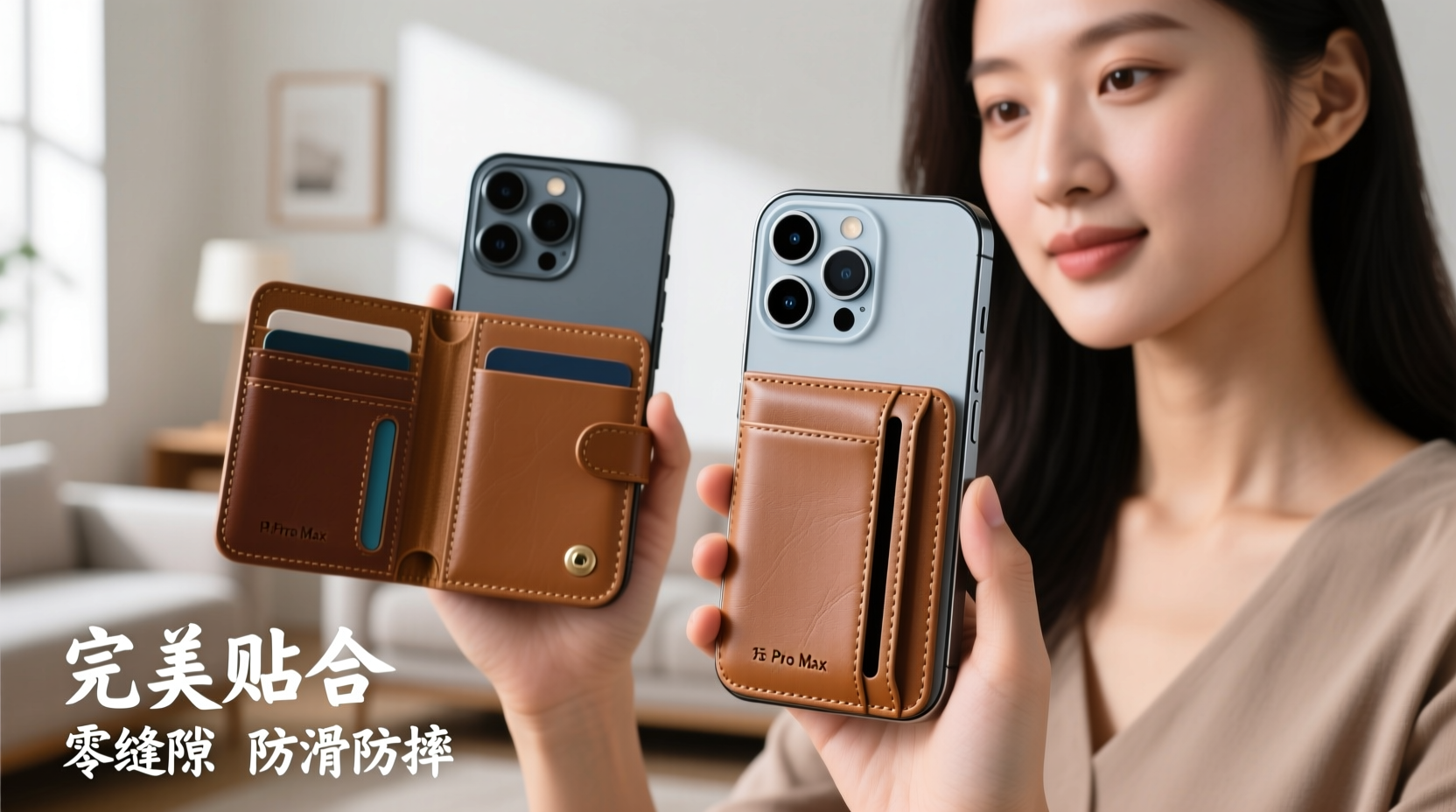
The foundation of any good fit starts with knowing your iPhone’s measurements. Apple designs each generation with slight variations in height, width, and thickness. A case made for an iPhone 14 may not accommodate an iPhone 15 Pro Max—even if they look similar. Always verify compatibility before purchasing.
Below is a comparison of current flagship iPhone models (as of 2024) to help determine baseline dimensions:
| iPhone Model | Height (mm) | Width (mm) | Thickness (mm) |
|---|---|---|---|
| iPhone 15 | 147.6 | 71.6 | 7.8 |
| iPhone 15 Plus | 160.9 | 77.8 | 7.8 |
| iPhone 15 Pro | 146.6 | 70.6 | 8.2 |
| iPhone 15 Pro Max | 159.9 | 76.7 | 8.2 |
Wallet cases typically add between 3–6mm in thickness depending on materials and internal structure. If you're using a MagSafe-compatible model, account for magnetic alignment rings and added layer depth. Cases designed specifically for your exact iPhone model ensure precise cutouts for cameras, speakers, and charging ports—critical for both protection and usability.
Determine Your Realistic Card Capacity Needs
Most wallet cases offer space for 1 to 4 cards. Some advertise “holds up to 6,” but overloading creates pressure on the phone’s edges and increases drop risk. Consider this: How many cards do you actually use daily?
- Slim profile (1–2 cards): Ideal for commuters who only need ID and transit pass.
- Mid-capacity (2–3 cards): Balanced option for those carrying credit, debit, and access badge.
- High-capacity (4+ cards): Useful for travelers or professionals needing multiple payment methods—but often adds noticeable bulk.
Overstuffing stretches case materials and misaligns cards, making removal difficult and increasing wear. Leather expands slightly over time; TPU and polycarbonate do not. Choose a capacity that matches your routine—not worst-case scenarios.
“Most people carry more cards than they actually need. A minimalist approach improves both comfort and security.” — Jordan Lee, Mobile Lifestyle Consultant
Balance Size With Daily Carry Comfort
A wallet case should enhance convenience, not hinder it. Evaluate how the added size affects real-world use:
- Pocket Fit: Will it slide into your front or back jeans pocket without strain? Measure your pocket opening first.
- One-Handed Use: Does the extra width make reaching across the screen awkward?
- Grip Security: Thicker cases may improve grip, but oversized ones increase fumble risk.
- Bulk vs. Protection: More cards mean less flexibility during impact. Shock absorption diminishes when rigid layers compress the case walls.
For example, a user with small hands might find the iPhone 15 Plus with a 3-card wallet case unwieldy. Conversely, someone wearing jackets daily may welcome the extra thickness as negligible under layers.
Mini Case Study: Commuter vs. Minimalist
Take two users: Alex, a city commuter, and Taylor, a remote worker. Alex takes public transit, uses a contactless card, carries health insurance ID, and prefers tap-to-pay via Apple Pay linked to a physical backup card. A slim 2-slot wallet case fits perfectly in a coat pocket and reduces clutter.
Taylor works from home, drives occasionally, and only needs a driver’s license and gas card when leaving the house. After trying a bulky 4-card case, they switched to a snap-on folio used only when traveling—keeping everyday carry light.
Their experiences highlight a universal truth: optimal size depends on usage patterns, not marketing claims.
Step-by-Step Guide to Choosing the Right Fit
Follow this five-step process to identify your ideal wallet case size:
- Confirm your iPhone model. Check Settings > General > About > Model Name, or locate the model number on the back.
- List essential daily cards. Remove anything non-critical from your current wallet.
- Measure your primary carry space. Use a ruler on your most-used pocket, purse slot, or jacket interior.
- Research compatible cases. Filter by exact iPhone model and max card capacity. Read reviews focusing on “fits tightly” or “too thick.”
- Test within 30 days. Purchase from retailers with return policies. Try it during commutes, workouts, and social outings.
This method eliminates guesswork and ensures long-term satisfaction. Many users return cases after realizing advertised “slim” designs still exceed pocket depth by several millimeters.
Checklist: Before You Buy a Wallet Case
- ✅ Confirmed iPhone model match
- ✅ Verified card capacity matches actual needs (not maximum)
- ✅ Measured pocket/bag space against product specs
- ✅ Checked for MagSafe compatibility (if applicable)
- ✅ Reviewed drop-test performance and material durability
- ✅ Ensured easy access to buttons, ports, and camera
- ✅ Confirmed return policy in case of fit issues
Frequently Asked Questions
Can I use a wallet case with Apple Pay?
Absolutely. In fact, wallet cases complement Apple Pay by reducing the need to carry cash or multiple cards. Keep one backup card inside the case while storing others digitally or at home.
Do wallet cases interfere with wireless charging?
Some do—especially those with metal plates or excessive card stacks. Opt for RFID-blocking models with thin shielding or removable inserts. For MagSafe users, choose cases explicitly labeled “MagSafe compatible” to maintain charging efficiency.
Will a wallet case damage my iPhone over time?
Poorly designed cases with tight inner linings can trap moisture or scratch finishes. Select cases with soft microfiber interiors and ventilation around the charging port. Avoid keeping damp cards inside, as humidity buildup accelerates corrosion.
Final Thoughts: Prioritize Function Over Form
The perfect wallet case doesn’t just hold cards—it integrates seamlessly into your movement, clothing, and habits. Too small, and you’re pulling out loose cards. Too large, and you abandon it entirely. Precision in sizing transforms a simple accessory into a reliable extension of your routine.
Start by auditing what you truly need on a typical day. Then, match that reality with accurate measurements and thoughtful design features. Whether you prefer sleek minimalism or structured utility, the right fit exists—if you know how to look for it.




 浙公网安备
33010002000092号
浙公网安备
33010002000092号 浙B2-20120091-4
Comments
No comments yet. Why don't you start the discussion?