
Selecting the ideal red lipstick can feel like searching for a needle in a haystack. The same bold hue that looks striking on one person might appear harsh or dull on another. The secret lies not just in skin tone, but in something more fundamental: your skin’s undertone. Understanding whether you have warm, cool, or neutral undertones is the key to unlocking a red lipstick that enhances your natural coloring, brightens your complexion, and feels effortlessly elegant.
Red lipstick is timeless, powerful, and expressive—but its success depends on harmony with your skin. A well-chosen red will make your teeth look whiter, your eyes pop, and your overall appearance radiant. Get it wrong, and even the most expensive formula can look off. This guide breaks down the science and art of matching red lipstick to your undertone with precision, offering actionable steps, real-life examples, and expert-backed insights.
Understanding Skin Undertones
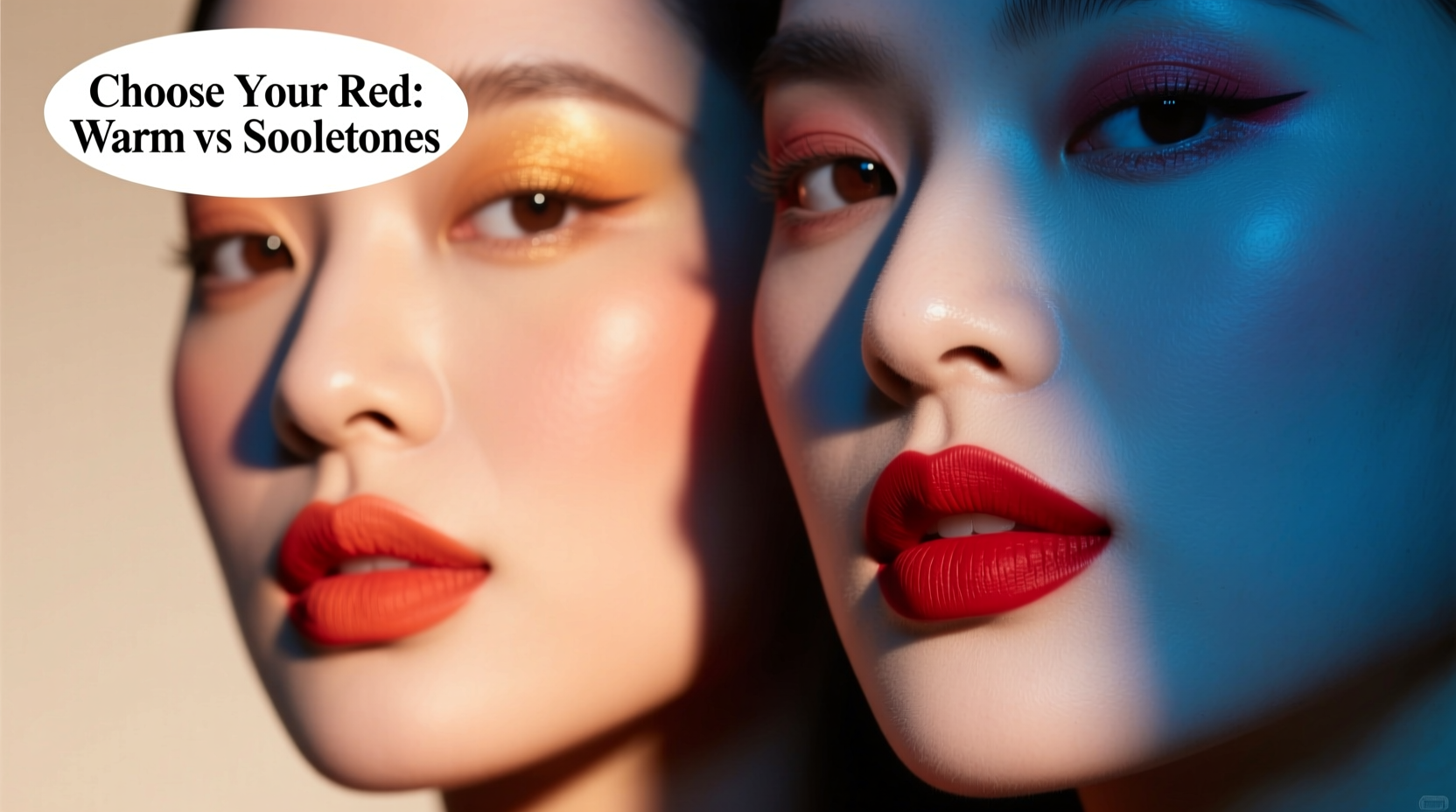
Your skin’s undertone is the subtle hue beneath the surface—different from your surface color (fair, medium, deep) and far more influential when choosing makeup. There are three primary undertones: warm, cool, and neutral. Warm undertones lean toward yellow, golden, or peachy hues; cool undertones have pink, red, or bluish bases; and neutral undertones are a balanced mix of both.
Unlike surface tone, which can change with sun exposure, your undertone remains constant throughout your life. It affects how jewelry complements your skin, which clothing colors flatter you, and, crucially, which lipstick shades harmonize best with your natural palette.
The Jewelry Test: A Quick Indicator
One of the most reliable at-home methods involves comparing how gold and silver jewelry look against your skin. Hold each metal near your face in natural light:
- Gold enhances your glow — warm undertones
- Silver makes you look brighter — cool undertones
- Both look good — neutral undertone
This isn’t foolproof—some warm-toned people wear silver beautifully due to contrast—but it’s a strong starting point. Makeup artist Pat McGrath once noted:
“Undertone is the compass of color. Once you know yours, every shade decision becomes intuitive.”
Warm Undertones: Choosing the Right Red
If your skin has warm undertones, your best reds live in the orange-red, brick, terracotta, and coral-red spectrum. These shades align with the golden or yellow base in your skin, creating cohesion rather than contrast.
Think classic Hollywood stars like Sophia Loren or Beyoncé—they often wear tomato-red or coppery-red lipsticks that glow against their complexions. Avoid blue-based reds, which can make warm skin look sallow or ashy.
| Recommended Reds for Warm Undertones | Brand Examples | Why They Work |
|---|---|---|
| Orange-Red (Tomato) | MAC \"Russian Red\", Fenty Beauty Stunna Lip Paint in \"Unveil\" | Complements golden undertones; adds vibrancy without clashing |
| Brick/Cinnamon Red | NARS \"Dragon Girl\", Maybelline Color Sensational in \"Touch of Spice\" | Earthy warmth mirrors skin’s natural depth |
| Copper-Red | Charlotte Tilbury Matte Revolution in \"Carina\" | Metallic warmth enhances radiance |
Avoid These Shades if You’re Warm-Toned
- Blue-based reds (e.g., cherry, raspberry)
- Fuchsia-leaning reds
- Deep burgundy with plum undertones
These tend to create visual disharmony, making the skin appear tired or uneven. That doesn’t mean you can never wear them—but they require careful balancing with correctors or foundation adjustments.
Cool Undertones: Finding Your Ideal Red
Cool undertones thrive with blue-based reds—the kind that resemble classic crimson, cherry, or wine. These shades echo the pink or rosy base in your skin, resulting in a crisp, clean contrast that feels polished and vibrant.
Icons like Audrey Hepburn and Kristen Stewart often wear cool reds that look icy and precise. The right red for cool skin should make your complexion appear luminous, not washed out.
Look for descriptors like “blue-red,” “cherry,” “berry-red,” or “true red” on packaging. Matte finishes work well, but satin or gloss can add softness if you want to soften high contrast.
| Recommended Reds for Cool Undertones | Brand Examples | Why They Work |
|---|---|---|
| Blue-Red (True Red) | MAC \"Ruby Woo\", Dior Rouge in \"999\" | Creates sharp, flattering contrast; universally iconic |
| Berry-Red | NARS \"Bette Davis\", YSL Rouge Pur Couture in \"Le Rouge\" | Enhances natural pink undertones |
| Cherry-Wine Red | Chanel Rouge Allure in \"Vamparis\" | Rich depth without warmth interference |
Shades to Approach with Caution
- Orange-reds
- Yellow-based corals
- Brick or rust tones
These can clash with cool undertones, introducing an unwanted warmth that distracts from facial harmony. If you love a warm red, consider wearing it with a neutral eyeshadow to balance the contrast.
Neutral Undertones: The Best of Both Worlds?
Neutral undertones are a blend—neither distinctly warm nor cool. Some people fall evenly in between; others shift slightly depending on season or lighting. If your veins appear blue-green and both gold and silver jewelry suit you, you’re likely neutral.
Good news: neutrals have more flexibility. You can experiment across the red spectrum, though slight preferences still exist. For instance, some neutral-warm types favor orange-reds, while neutral-cool leans toward blue-reds.
“We often say neutrals can wear anything, but that’s misleading. They simply have a wider range. Even within neutrality, there’s a ‘home base’ where color feels most natural.” — Dr. Lila Nguyen, Cosmetic Dermatologist
How Neutrals Can Refine Their Choice
- Test in natural light: Apply two contrasting reds—one warm, one cool—and observe which blends seamlessly.
- Check your reaction: Does one shade make your skin look brighter? That’s likely your closer match.
- Consider seasonal shifts: In summer, you may tan slightly warm; in winter, your cool side may emerge. Adjust accordingly.
Neutrals often excel with “universal reds”—formulas designed to adapt, like NARS \"Ladybird\" or Revlon Super Lustrous in \"Fire & Ice\". These are formulated with balanced pigments to flatter a broad range of undertones.
Step-by-Step Guide: Find Your Perfect Red
Follow this five-step process to confidently select your ideal red lipstick:
- Determine your undertone: Use the vein test, jewelry test, or observe how your skin reacts to sun (burns = cool, tans = warm).
- Swatch in daylight: Artificial lighting distorts color perception. Always test on your lips or inner wrist under natural light.
- Compare warm vs cool reds: Try one orange-red and one blue-red side by side. Notice which makes your face look more awake.
- Assess longevity and finish: Matte may emphasize dryness; gloss may highlight texture. Choose based on comfort and skin condition.
- Wear it for an hour: Let the lipstick oxidize. Some formulas darken or shift. See how it settles.
Mini Case Study: From Mismatched to Magnetic
Lena, a 34-year-old graphic designer with medium olive skin, always loved red lipstick but felt hers looked “costumey.” She’d tried several popular shades—MAC \"Velvet Teddy\" (a mauve), then \"Russian Red\" (orange-red)—but neither felt quite right. After learning about undertones, she realized her skin had subtle greenish veins and flushed easily—a sign of cool undertones.
She switched to MAC \"Ruby Woo\", a blue-based matte red. The transformation was immediate. Her skin appeared clearer, her eyes more defined, and coworkers commented she looked “expensive.” Lena said, “I didn’t think I could pull off red. Turns out, I just needed the right red.”
Checklist: Choosing Your Red Like a Pro
- ✅ Identify your undertone using the vein or jewelry test
- ✅ Rule out incompatible families (e.g., avoid blue-reds if warm)
- ✅ Swatch at least two contenders in natural light
- ✅ Check how the color looks after 30 minutes (oxidation test)
- ✅ Ensure the formula suits your lip texture (hydrating for dry lips, long-wear for oily)
- ✅ Confirm it complements your everyday wardrobe and eye color
Frequently Asked Questions
Can I wear red lipstick if I have dark skin?
Absolutely. Deep skin tones can carry bold reds with incredible impact. Look for rich, saturated formulas with warm or neutral bases—brick reds, mahogany, or wine reds work beautifully. Brands like Fenty Beauty, Pat McGrath Labs, and Black Opal offer inclusive ranges tailored to deeper complexions.
Does age affect which red I should choose?
Not directly, but lip texture and skin clarity evolve. Mature lips may benefit from creamy or satin finishes over ultra-matte, which can settle into fine lines. However, undertone rules remain consistent. A warm 60-year-old still suits orange-reds just as much as a warm 25-year-old.
What if my undertone changes with the seasons?
Many do. If you tan significantly in summer, you might temporarily lean warmer. Keep two reds on hand—one warm-leaning, one cool—and rotate as your tone shifts. Alternatively, opt for a neutral-red hybrid that adapts well.
Final Thoughts: Own Your Red
Choosing the perfect red lipstick isn’t about following trends—it’s about understanding yourself. Warm or cool, fair or deep, there’s a red that doesn’t just sit on your lips but elevates your entire presence. By tuning into your undertone, testing deliberately, and trusting your instincts, you transform lipstick from a cosmetic choice into a statement of confidence.
The right red doesn’t shout; it resonates. It’s the shade that feels like you’ve worn it forever, even the first time. Whether you're drawn to fiery orange-reds or icy blue-based crimsons, let your undertone be your guide—not a restriction, but a revelation.




 浙公网安备
33010002000092号
浙公网安备
33010002000092号 浙B2-20120091-4
Comments
No comments yet. Why don't you start the discussion?