
Selecting the right rug is more than a matter of aesthetics—it’s about balance, proportion, and function. A poorly sized rug can make a room feel disjointed or cramped, while the perfect fit anchors furniture, defines zones, and adds warmth underfoot. Yet, many homeowners default to standard sizes without considering their space’s unique dimensions or traffic patterns. The key isn’t guessing; it’s measuring with intention and understanding how rugs interact with furniture and flow.
Rugs serve as visual glue in interior design, tying together color schemes, textures, and layouts. But choosing the ideal size depends on more than just square footage. Room shape, ceiling height, furniture arrangement, and even foot traffic all influence what works best. Whether you’re furnishing a compact studio apartment or a sprawling living room, the principles of proper rug sizing remain consistent: prioritize coverage, maintain clearance, and align with your room’s purpose.
Understand the Role of Rug Size in Room Proportion
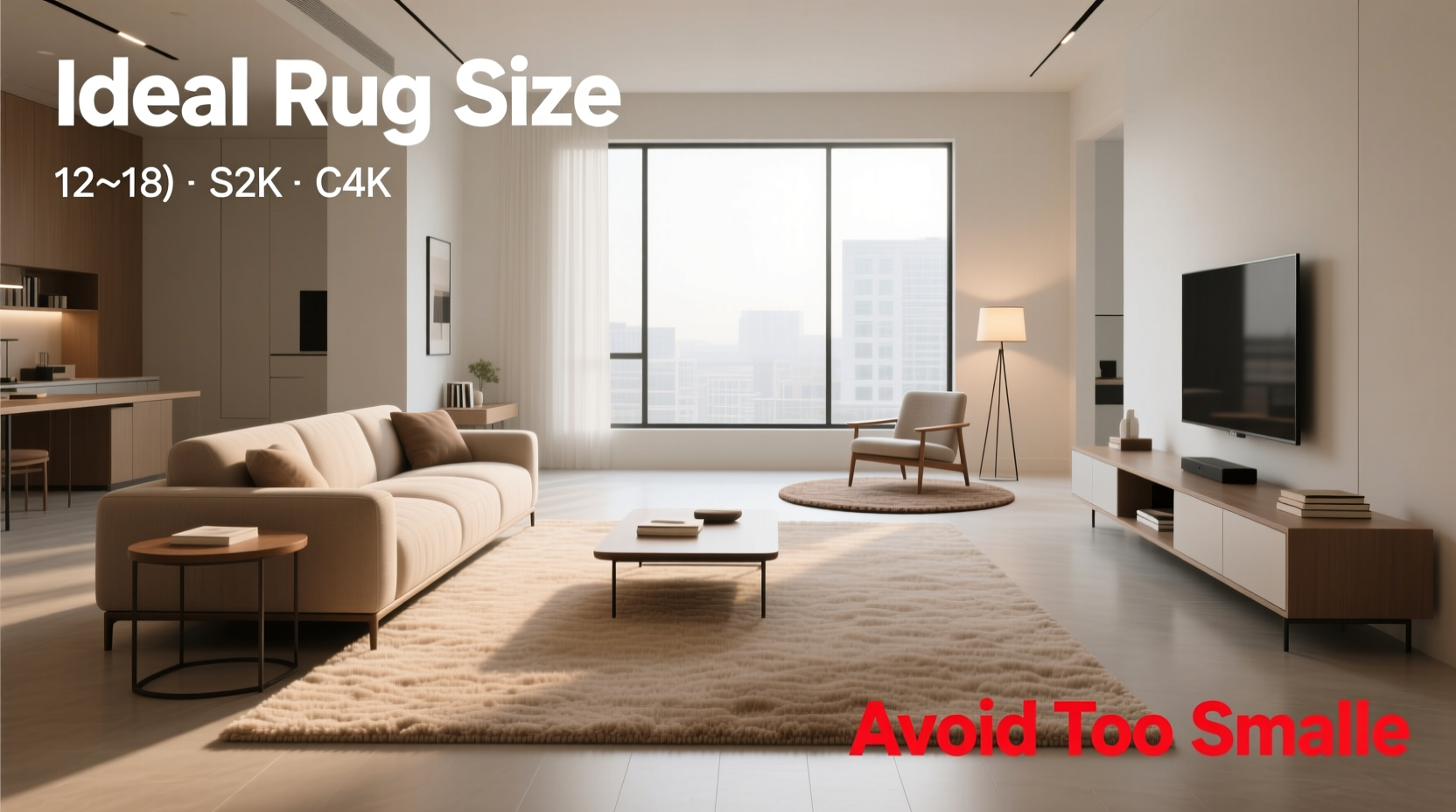
The size of a rug directly impacts how spacious or cozy a room feels. Too small, and it floats like an island lost at sea. Too large, and it overwhelms the space, leaving no breathing room around the edges. The goal is harmony—ensuring the rug complements rather than competes with the room’s architecture.
In general, a rug should extend beyond the outer edges of key furniture pieces. In a living room, for example, the front legs of sofas and chairs should rest on the rug, creating a unified grouping. This approach visually connects individual elements into a cohesive conversation area. When rugs are too small to accommodate even the front legs, furniture appears to be perched awkwardly on top, breaking the sense of continuity.
Room proportions also affect perception. Long, narrow rooms benefit from horizontal rectangular rugs that emphasize width, while square rooms can handle larger round or square rugs that draw focus inward. High ceilings allow for bolder, larger rugs that fill vertical space, whereas low-ceilinged rooms may require slightly smaller rugs to avoid feeling weighed down.
Room-by-Room Sizing Guidelines
Different rooms have different functional demands, which influence rug selection. Below is a breakdown of optimal rug sizes based on common room types and furniture arrangements.
| Room Type | Furniture Layout | Recommended Rug Size | Key Notes |
|---|---|---|---|
| Living Room (Medium) | Sofa + two chairs | 8' x 10' | All front legs on rug; back legs may hang off |
| Living Room (Large) | Full sectional or expansive seating | 9' x 12' or larger | All furniture legs on rug for grounded look |
| Dining Room | Table + chairs | Extend 24\" beyond table edges | Ensures chairs stay on rug when pulled out |
| Bedroom (Queen Bed) | Beds centered with nightstands | 8' x 10' or 9' x 12' | At least 18–24\" of rug visible on three sides |
| Bedroom (King Bed) | King bed with nightstands | 9' x 12' or 10' x 14' | Rug extends under nightstands or beyond |
| Entryway / Hallway | Narrow passage or foyer | 3' x 5' or 4' x 6' | Aligns with mat zone; doesn’t obstruct door swing |
These guidelines serve as starting points. Actual room dimensions and furniture configurations may require slight adjustments. For instance, a long dining table flanked by benches might need a longer runner-style rug instead of a rectangle. Similarly, open-concept spaces often benefit from multiple rugs defining distinct zones—such as one under the sofa group and another beneath the dining set.
Step-by-Step Guide to Measuring for the Perfect Fit
Choosing the right rug begins with accurate measurement and thoughtful planning. Follow this step-by-step process to ensure your rug enhances—not hinders—your space.
- Sketch your room layout. Draw a simple floor plan including walls, doors, windows, and permanent fixtures. Note where furniture will go.
- Measure the room. Record length and width in feet. Pay attention to obstructions like radiators or built-ins that limit placement options.
- Determine furniture positioning. Decide whether you want all legs on the rug (ideal for formal or symmetrical setups) or just front legs (common in smaller rooms).
- Measure key furniture groups. For a seating area, measure the overall footprint of the sofa and chairs. Add 30–36 inches total (15–18\" on each side) to determine minimum rug width and length.
- Account for door swings and traffic paths. Ensure the rug doesn’t block doors or create tripping hazards in high-traffic areas.
- Check standard sizes. Compare your ideal dimensions to common rug sizes (e.g., 5'x8', 8'x10', 9'x12'). Choose the closest match that meets your coverage goals.
- Order a sample or template. Use painter’s tape to outline the rug’s intended perimeter on the floor. Walk around the space to test flow and proportion.
This method eliminates guesswork and allows you to visualize how the rug integrates with daily use. It’s especially helpful in irregularly shaped rooms or when layering rugs for texture and depth.
Avoid Common Rug Sizing Mistakes
Even experienced decorators occasionally misjudge rug scale. Awareness of frequent pitfalls helps prevent costly errors.
- Choosing too small a rug. A 5'x8' in a 15'x20' living room looks lost and disrupts visual cohesion.
- Ignoring traffic flow. Placing a rug where it impedes door operation or walking paths creates safety and usability issues.
- Forgetting rug thickness. Thick pile rugs can raise floor level, interfering with sliding doors or transitions between rooms.
- Mismatching shape to room geometry. Round rugs in sharp-cornered rooms can feel disjointed unless intentionally used as focal points.
- Overlapping rugs haphazardly. Layering works best when shapes complement each other and edges align intentionally.
“Rug size is the silent foundation of great room design. Get it wrong, and everything else feels off.” — Lila Monroe, Interior Designer & Author of *Grounded Spaces*
Real-World Example: Transforming a Misfit Living Room
Consider a client’s 16'x18' open-plan living area furnished with a 7' sofa, two armchairs, and a coffee table. Initially, they placed a 5'x8' rug under just the coffee table. The result? Furniture appeared scattered, with no visual connection. The rug looked like an afterthought.
After reassessment, we measured the entire seating group: 8' wide and 9' deep. Adding 18\" on each side suggested a minimum 11'x12' rug. Since that size wasn’t standard, we opted for a 9'x12'—slightly narrower but deep enough to accommodate all front legs and part of the back legs.
The change was immediate. The seating area felt unified and intentional. Foot traffic flowed naturally around the anchored zone, and the rug’s pattern helped define the lounge space within the larger open floor plan. The room gained both comfort and clarity.
Expert Checklist for Rug Selection Success
Before purchasing, run through this checklist to confirm your choice aligns with both design and practical needs.
- ✅ Measured room and furniture groupings accurately
- ✅ Determined whether all or only front legs will sit on the rug
- ✅ Verified clearance (12–18\") between rug edge and walls
- ✅ Confirmed rug doesn’t interfere with door swings or drawers
- ✅ Matched rug shape to room geometry (rectangular for long rooms, square/round for balanced spaces)
- ✅ Tested proportions using tape or cardboard cutout
- ✅ Considered pile height for door clearance and vacuum access
- ✅ Selected material appropriate for room usage (e.g., low-pile for high-traffic areas)
Frequently Asked Questions
Can I use a round rug in a rectangular room?
Yes, but strategically. Round rugs work well under circular tables, in alcoves, or as softeners in angular spaces. In a rectangular living room, place a large round rug under a curved sofa or conversational grouping to add visual interest without disrupting flow.
What size rug should go under a king bed?
For a king bed, aim for a rug that extends at least 18–24 inches beyond each side of the bed. A 9'x12' rug typically works if nightstands are close to the bed. For greater luxury and full under-bed coverage, consider a 10'x14'. If using two runners, each should be at least 2'6\" wide and extend 12–18\" past the foot of the bed.
Should area rugs be the same size throughout the house?
No. Rugs should be tailored to each room’s function and furniture layout. Consistency in style, color, or texture creates cohesion, not uniform size. A 3'x5' entry runner and a 9'x12' living room rug can coexist beautifully when linked by design elements.
Final Thoughts: Let the Rug Anchor Your Space
The perfect rug doesn’t just cover the floor—it completes the room. By prioritizing size relative to furniture and layout, you create a foundation that supports both comfort and design. Whether you're refreshing a single bedroom or reimagining an entire home, taking the time to measure, plan, and visualize ensures your rug does more than decorate: it unifies, guides, and elevates.




 浙公网安备
33010002000092号
浙公网安备
33010002000092号 浙B2-20120091-4
Comments
No comments yet. Why don't you start the discussion?