
Wooden storage boxes are more than just functional containers—they blend practicality with timeless craftsmanship. Whether you're organizing keepsakes, storing seasonal items, or adding rustic charm to your home decor, choosing the right size is crucial. A box that’s too small won’t accommodate your contents; one that’s too large may dominate the space or become awkward to handle. The key lies in matching dimensions to both your storage goals and environment. With thoughtful planning and a few expert guidelines, you can select a wooden storage box that fits seamlessly into your lifestyle.
Assess Your Storage Needs First
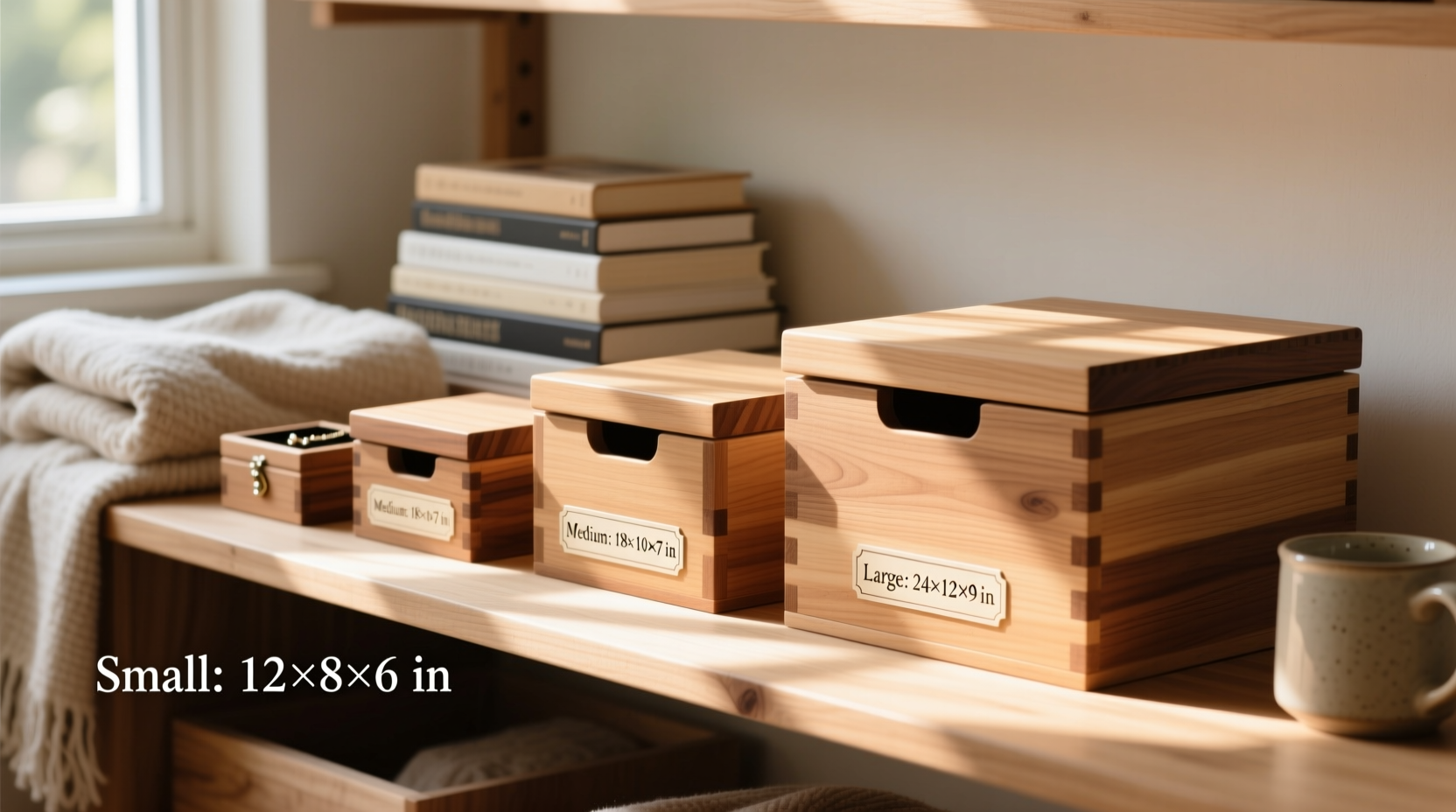
Before considering aesthetics or wood type, define what you’re storing. Different items demand different spatial considerations. Books, linens, tools, and heirlooms all vary in volume, weight, and fragility. Start by categorizing your intended contents:
- Fragile items: Photo albums, vintage jewelry, glassware—require snug interiors with padding options.
- Bulky textiles: Blankets, scarves, or winter clothing expand and compress, so allow extra depth and width.
- Daily-use objects: Remote controls, stationery, or kitchen utensils benefit from smaller, accessible boxes.
- Long-term archives: Documents or memorabilia need secure lids and protection from moisture and pests.
Measure a representative sample of your items. For example, stack three blankets you plan to store and measure their height. Add 10–15% clearance to avoid forcing items in and out. This gives you a baseline internal dimension requirement.
Understand Dimensions: Internal vs. External Measurements
Many buyers overlook the difference between internal and external dimensions, leading to poor fit. Wooden walls have thickness—typically between 0.5” to 1” depending on construction quality. A box advertised as “12x8x6 inches” usually refers to external measurements.
To determine usable space, subtract twice the wall thickness from each dimension. For example:
| External Size (inches) | Wall Thickness | Internal Usable Space |
|---|---|---|
| 12 × 8 × 6 | 0.75\" | 10.5 × 6.5 × 4.5 |
| 18 × 12 × 10 | 1.0\" | 16 × 10 × 8 |
| 24 × 16 × 12 | 0.75\" | 22.5 × 14.5 × 10.5 |
Always confirm whether listed dimensions are internal or external when shopping online. When in doubt, contact the seller. Precision here prevents disappointment upon delivery.
Match the Box to Its Environment
A wooden storage box doesn’t exist in isolation—it interacts with your space. Consider where it will live and how it will be used daily.
Living room or bedroom? Opt for medium-sized boxes (12–18 inches long) that double as side tables or ottoman inserts. These should be proportionate to nearby furniture. A massive crate beside a delicate nightstand disrupts visual harmony.
Attic or garage? Prioritize capacity and durability over design. Larger boxes (20+ inches) work well for infrequently accessed items like holiday decorations or toolkits. Ensure there's enough clearance for lifting and opening.
Under-bed storage? Height is critical. Measure the gap between your mattress and floor—typically 6 to 10 inches. Choose low-profile boxes with handles for easy sliding.
“Function follows form only when form respects context. A beautiful box fails if it doesn’t fit the space or task.” — Daniel Reeves, Furniture Designer & Woodcraft Consultant
Step-by-Step Guide to Sizing Your Ideal Wooden Storage Box
Selecting the right size doesn't have to be guesswork. Follow this five-step process for confidence in your choice:
- Inventory your items: List everything you want to store together. Group by category (e.g., craft supplies, baby clothes).
- Measure the largest item: Include packaging or wrapping materials if applicable. Add 2 inches for wiggle room.
- Determine access frequency: Daily access favors smaller, lighter boxes. Long-term storage allows for larger, heavier builds.
- Measure the destination space: Account for shelves, under-bed clearance, closet depth, or stacking potential.
- Compare specs carefully: Check internal dimensions, weight capacity, and lid type. Confirm material thickness impacts usable volume.
This methodical approach eliminates impulse buys and ensures your wooden box performs exactly as needed.
Common Sizing Mistakes and How to Avoid Them
Even experienced organizers misjudge box sizes. Here are frequent pitfalls—and how to sidestep them:
| Mistake | Consequence | Solution |
|---|---|---|
| Choosing based on external appearance only | Box looks good but can’t hold required items | Always verify internal capacity before purchase |
| Ignoring weight when full | Too heavy to lift safely, especially for elderly users | Pick manageable sizes; add casters if mobility is a concern |
| Overlooking lid clearance | Lid won’t open fully in tight spaces | Allow at least 6 inches above the box for lift-off lids |
| Buying one oversized box instead of multiples | Difficult to move, encourages disorganization | Use several modular boxes for flexibility and easier access |
Real-World Example: Organizing a Home Craft Studio
Sarah, a hobbyist crafter in Portland, struggled with scattered yarn, fabric scraps, and embroidery tools. She bought a single large wooden chest hoping to consolidate everything. It looked beautiful but proved unwieldy—she avoided opening it due to its weight and deep interior.
After reassessing, she switched to three medium-sized boxes (14×10×8 inches internally): one for yarn, one for thread and needles, and one for fabric swatches. Each had dividers and was light enough to pull out easily. By downsizing and segmenting, her workspace became more inviting and functional. The change wasn’t about less storage—it was about smarter sizing.
Checklist: Final Verification Before Purchase
Before committing to a wooden storage box, run through this checklist:
- ✅ Have I measured my items including padding or wrapping?
- ✅ Do I know the internal dimensions, not just external?
- ✅ Will the box fit in the intended space with room to open the lid?
- ✅ Is the weight manageable when full?
- ✅ Does the wood type suit the environment? (e.g., cedar for closets, oak for living areas)
- ✅ Are handles or cutouts included for easy transport?
- ✅ Am I buying from a reputable source with clear specifications?
Answering “yes” to all ensures a confident decision.
Frequently Asked Questions
How do I know if a wooden box is too big for my space?
If placing the box requires rearranging furniture, blocks pathways, or makes the room feel cluttered, it’s likely too large. Also, if you can’t comfortably lift it when filled, scale down. Proportion matters as much as function.
Can I customize the size of a wooden storage box?
Yes—many artisan woodworkers offer custom builds. Provide your exact internal dimension requirements, preferred wood type, and lid style. While more expensive than off-the-shelf options, custom boxes maximize utility and aesthetic integration.
What’s the most versatile size for general household use?
A box around 16×12×10 inches (external) with an internal volume of roughly 1,000 cubic inches is highly adaptable. It holds books, toys, accessories, or kitchen supplies without dominating shelf space. Look for models with trays or dividers for added versatility.
Make the Right Choice with Confidence
Selecting the perfect size wooden storage box isn’t about finding the biggest or most ornate option—it’s about alignment. The ideal box fits your items, your space, and your habits. By measuring thoughtfully, understanding construction details, and learning from real-world examples, you invest in lasting order and beauty. Whether preserving family heirlooms or streamlining daily clutter, the right wooden box becomes a trusted companion in your home.




 浙公网安备
33010002000092号
浙公网安备
33010002000092号 浙B2-20120091-4
Comments
No comments yet. Why don't you start the discussion?